Central Valley surpassed all of California in job losses this year. Here’s why
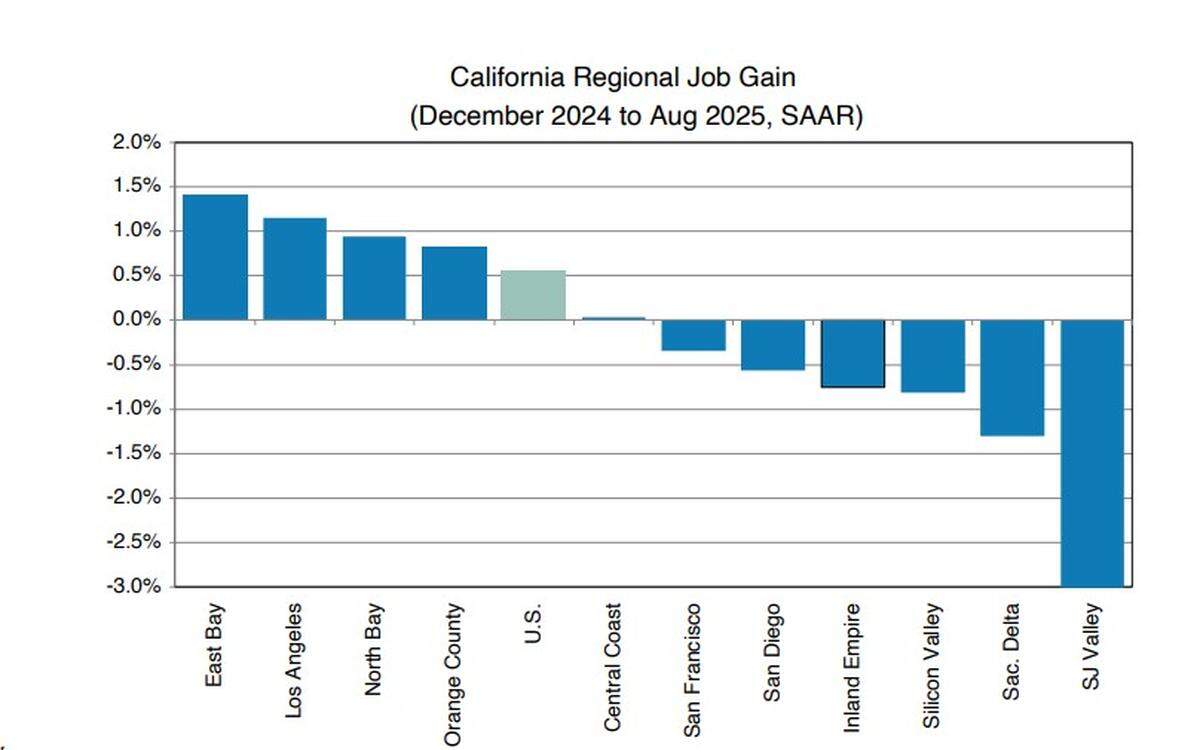
The San Joaquin Valley had the largest number of job losses in the first eight months of the year compared to other regions in the state, according to a new report.
Between last December to August, the Valley region saw a -0.3% regional job gain, the report found.
Most of these Valley job losses were concentrated in business services, construction and mining, logistics, and manufacturing, the UCLA Anderson School of Management’s December 2025 forecast found.
Certain sectors of the California economy continue to grow, driven by artificial intelligence and venture capital investment in technology sectors.
But a combination of factors have hindered parts of California’s economy, including state and local government deficits, the Trump administration’s immigration crackdown, tariff-induced inflation and weak labor markets.
Counties such as those in the Valley that have a higher percentage of foreign born residents and a larger percentage of jobs in agriculture, construction and leisure and hospitality have already begun to see elevated unemployment relative to other counties in the state, the report found.
Every county in the central San Joaquin Valley voted for Trump.
The San Joaquin Valley comprises eight counties: Fresno, Kern, Kings, Madera, Merced, Stanislaus, San Joaquin, and Tulare./
The findings didn’t come as a surprise to Central Valley business and labor officials.
“In any economic downturn, we get it the worst,” said Clint Olivier, president and executive director of the Central Valley Business Federation, a nonpartisan membership-based organization that serves dozens of the region’s employers across various industries.
“What I hear from employers is that the economy hasn’t recovered from the COVID shutdowns,” he said. Some employers say it’s still difficult to fill jobs that are open and available across a number of public and private sectors. Olivier said he thinks a combination of inflation, tariffs, federal policies and the overregulation of business in California play a role.
“It concerns me because no one wants a recession, especially not us here in the Central Valley,” Olivier said. The region tends to be the last in the state to emerge from an economic downturn, he said.
Statewide, the payroll job losses through the first eight months of 2025 marked the first sustained decline since the pandemic, according to the report.
California’s annual average unemployment rate is 5.5%, and is expected to remain at this rate until late 2026.
Dillon Savory, executive director of the Fresno-Madera-Tulare-Kings Central Labor Council, said the region’s lack of economic diversification for most of the last century also plays a role.
“The region was intentionally designed as a plantation-style economy where very large industries could extract fossil fuels and nutrients from soil using low wage labor,” he said.
Unions, workforce development groups and other regional partners have been working since the Great Recession to diversify the economy and train workers for emerging economies, he said.
“It’s a slow process with inconsistent support from the state and federal governments, particularly as it relates to energy demands for new business growth,” he said.
Inland, ag regions disproportionately impacted by deportation
Inland parts of the state and the agricultural coastal valleys will be disproportionately impacted by immigration policies of mass deportation, the report said, as well as food processing and agriculture sectors.
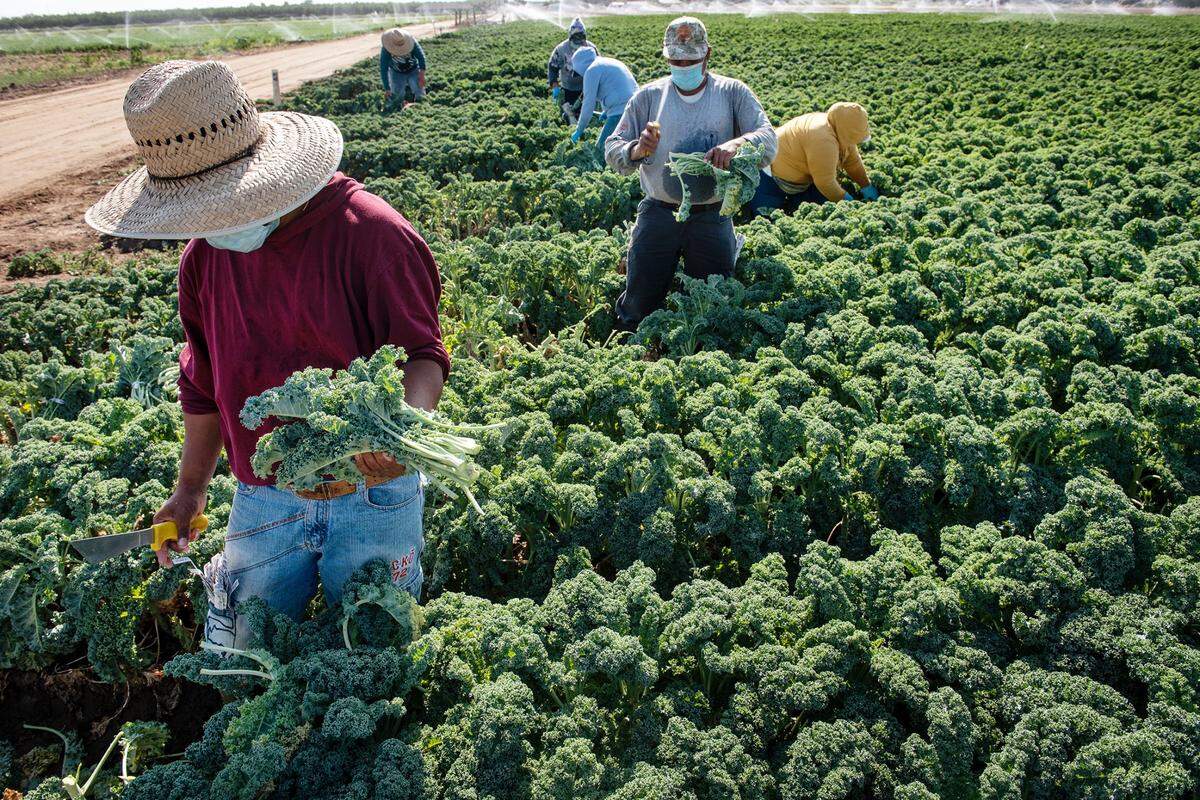
The UCLA forecast highlighted historic examples of mass deportations in the past century and their negative impacts on the economy as indicative of what’s to come. President Franklin D. Roosevelt’s Great Depression-era deportation of an estimated 400,000 Mexican and Mexican-Americans; President Dwight D. Eisenhower’s deportation of approximately 1.3 million mostly Mexican nationals in the 1950s; and, more recently, the Secure Communities Program under President Barack Obama, that resulted in the deportation of about 300,000 people.
“The results are almost always unambiguously negative: higher unemployment among U.S.-born Americans and immigrants with legal status, lower wage growth and less housing demand,” it said.
UCLA economists said the results of the Trump administration’s deportation efforts aren’t immediately clear. And there’s a gap in available data due to the government shutdown.
Still, except for in leisure and hospitality, the report said “we are beginning to see the impact of deportations on the unemployment rates.”
To address immigration-related labor shortages, Olivier said the BizFed is supporting The Dignity Act of 2025, a bipartisan bill that would offer a seven-year temporary legal status for undocumented immigrants who have been in the United States for five years or more and can meet certain other requirements, such as passing a criminal background check.
Kern County loses 900 oil and gas jobs
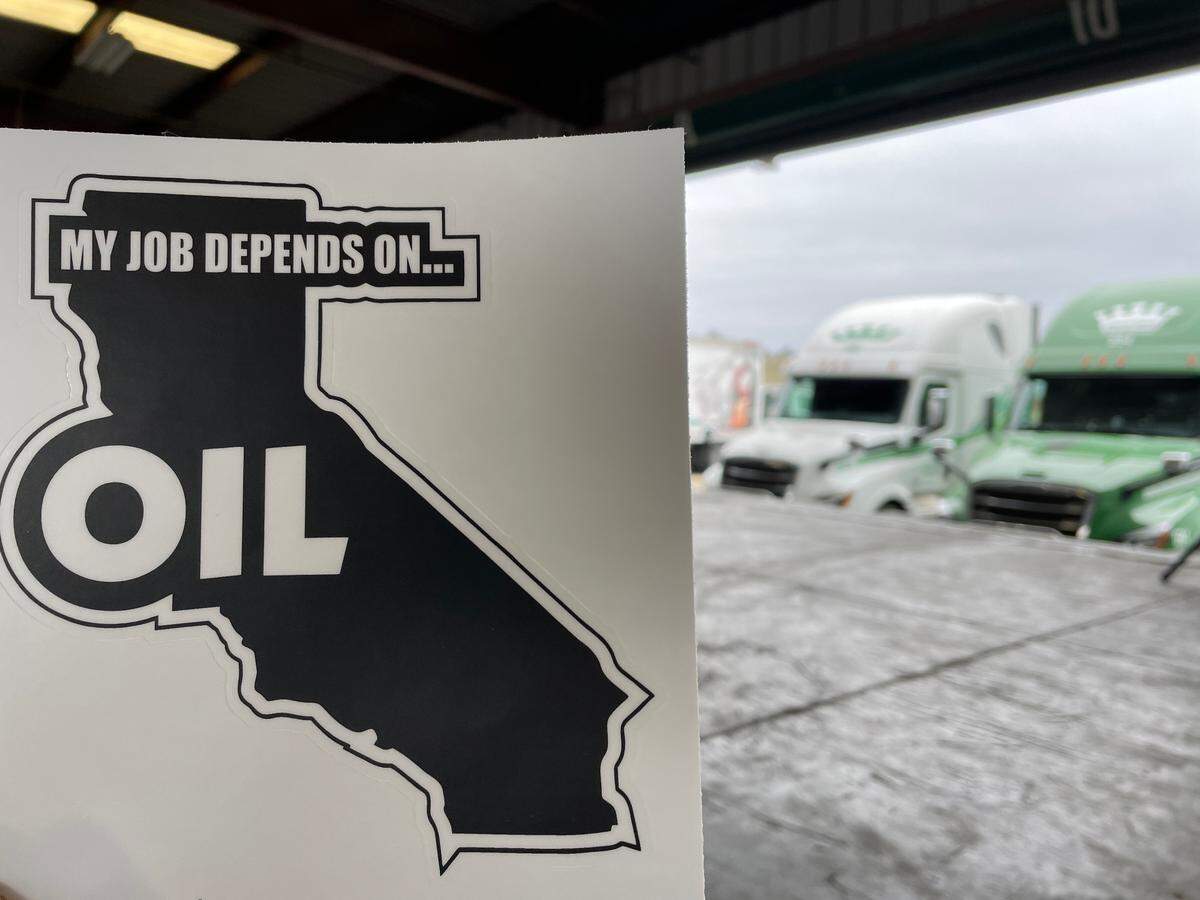
Among the Valley job losses were 900 jobs in oil and gas extraction in Kern County, according to the forecast’s analysis of state Employment Development Department Data.
Earlier this year, the California legislature passed a new energy bill aimed at reversing the decline in Central Valley oil and gas extraction employment. “But the impact on employment in this sector will not be immediate,” the report said.
Savory said the labor council is fighting to retain highly-skilled energy production jobs.
“But the truth is we need new industries to stabilize loss in any one sector,” he said.
This story was originally published December 21, 2025 at 10:00 AM with the headline "Central Valley surpassed all of California in job losses this year. Here’s why."