
Controversial plan to build 45,000 homes in southeast Fresno nears approval
A massive residential development proposed in southeast Fresno has united a broad coalition of groups in opposition who argue it would negatively impact the city’s existing neighborhoods and public resources.
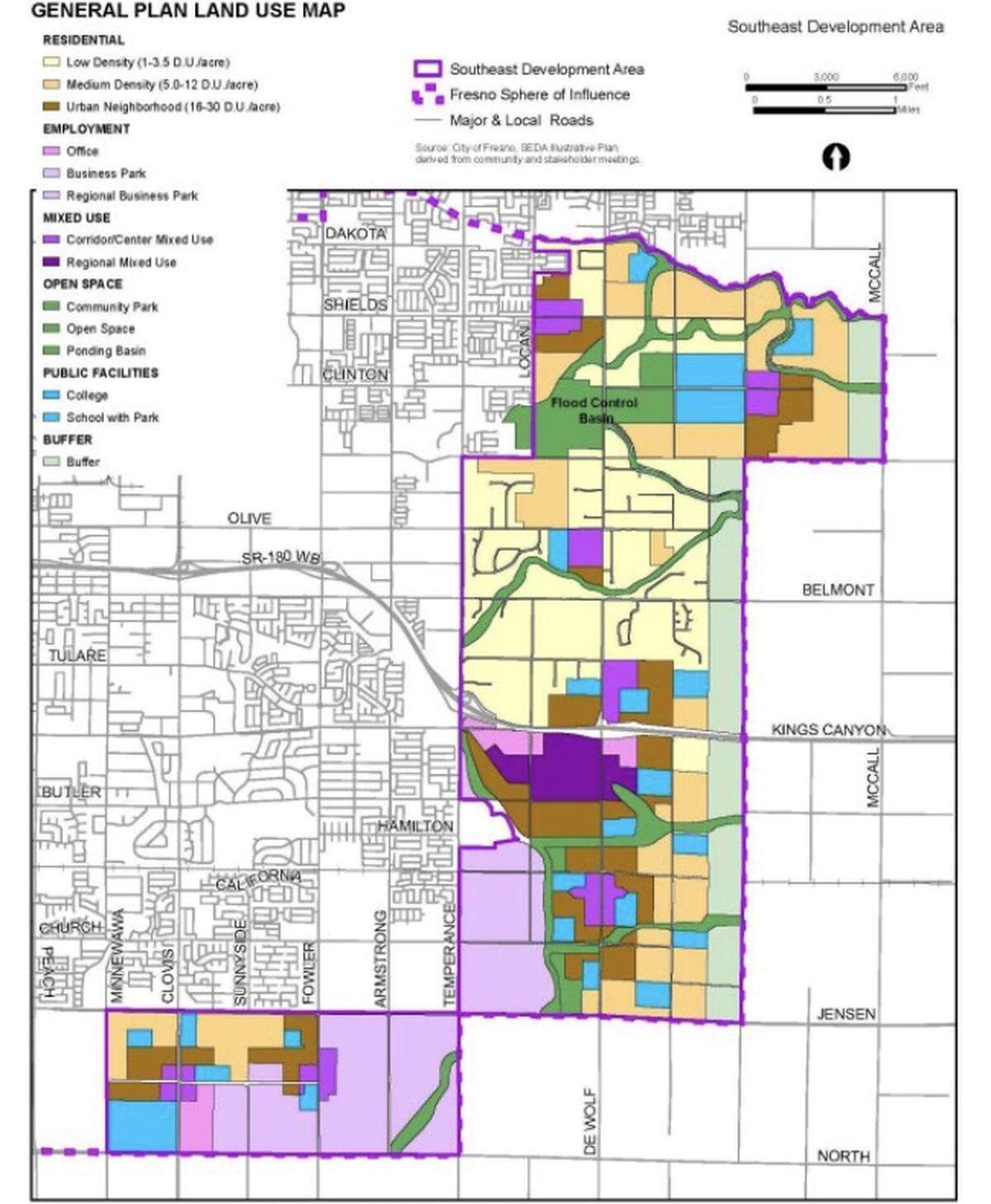
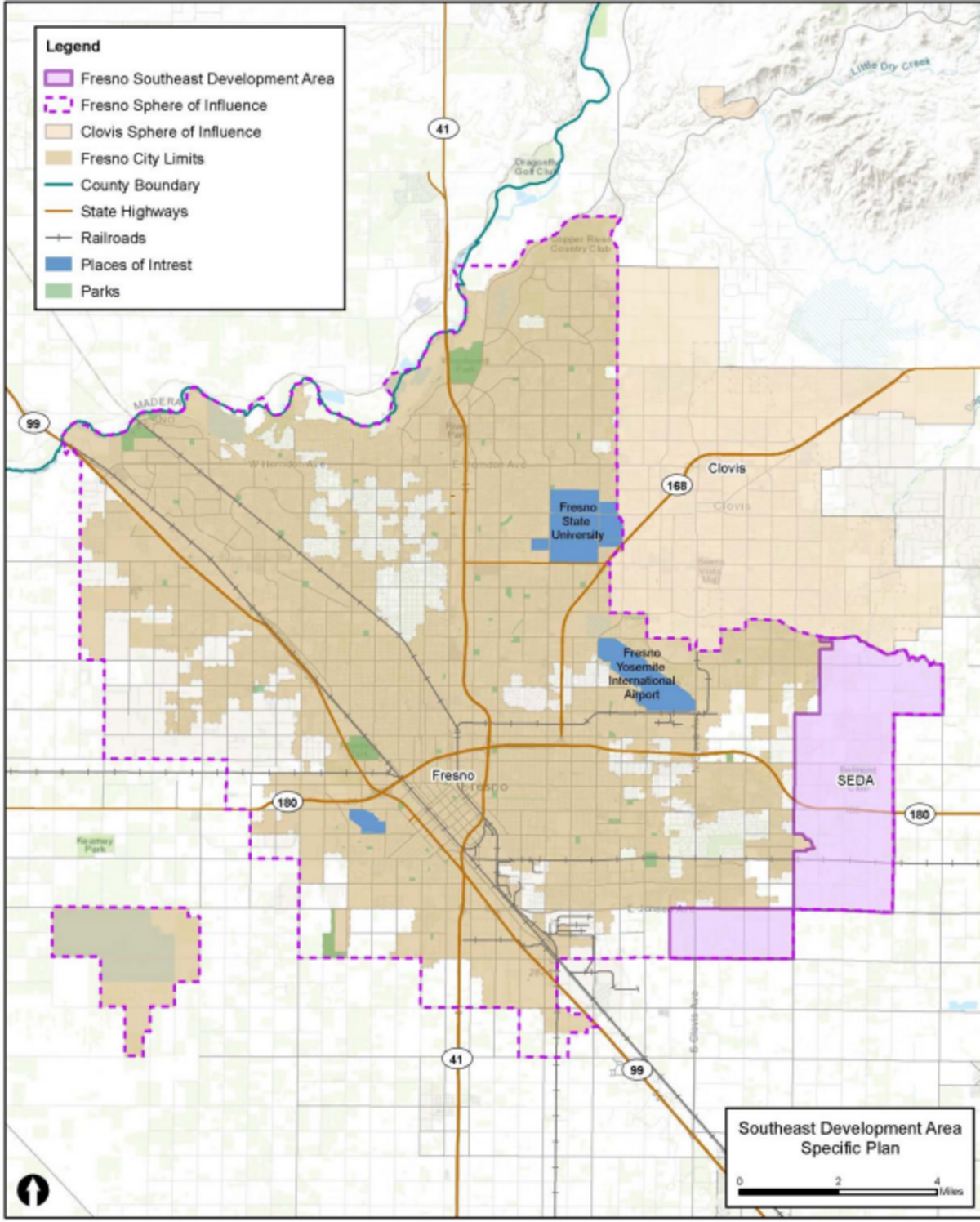
The Southeast Development Area, or SEDA, is the city’s proposal to turn 9,000 acres of mostly agricultural land east of Temperance Avenue and south of Jensen Avenue into 45,000 housing units. SEDA, one of California’s largest residential development projects, is projected to cost about $4.3 billion. It has a $3 billion funding shortfall for essential infrastructure.
The proposed large-scale expansion faces stiff pushback from a coalition of 20 organizations, politicians and residents who say the major funding gap will drain resources from existing city neighborhoods or public utility funds to pay for the infrastructure, among other things. Opponents include the Central Labor Council, State Assemblymember Joaquin Arambula, the Greenfield Coalition, representatives from the Fresno DRIVE initiative and various neighborhood groups.
“There’s a serious, serious possibility that this could someday bankrupt the city, because it’s a ponzi scheme,” said Dillon Savory, executive director of the Central Labor Council.
The Fresno City Council was set to approve the plan Thursday before the final vote got pushed back to Dec. 18. The city’s planning commission approved the SEDA plan Nov. 21 on a 4-3 vote.
SEDA has been in the works for decades and aims to combat the region’s housing shortage and fulfill the state’s mandated housing goals. Fresno Mayor Jerry Dyer has been a steadfast supporter of the plan despite a city-commissioned report’s projections that developer fees will cover only about $1 billion, leaving a $3 billion gap that the private sector is unlikely to finance.
Savory pointed to west Fresno, where a specific plan was passed in October establishing about 40,000 housing units in the area.
“There’s incomplete neighborhoods all over the place over there, and that is where the future growth of Fresno should be,” he said.
If the Fresno City Council approves the SEDA proposal, the Central Labor Council plans to sue, Savory said.
Savory said SEDA’s environmental impact report notes the development plan is as walkable as a city like New York or San Francisco, which is how the project circumvents the pollution restrictions that California mandates on vehicle miles.
The coalition is also potentially prepared to initiate a citywide referendum that would outlaw growth on the land planned for SEDA.
The 124-page draft plan was reintroduced in 2022 after the initial project from 2006, previously known as SEGA, was delayed by the uncertainty of the recession in 2010.
The housing developed for SEDA would be of varying types, sizes, densities and affordability levels, according to the plan. Additionally, it would incorporate 11.2 million square feet of new retail, office, and industrial development, 1,700 acres of new public and quasi-public development and 5.5 million square feet of new civic buildings, with an objective to accommodate up to 37,000 jobs.
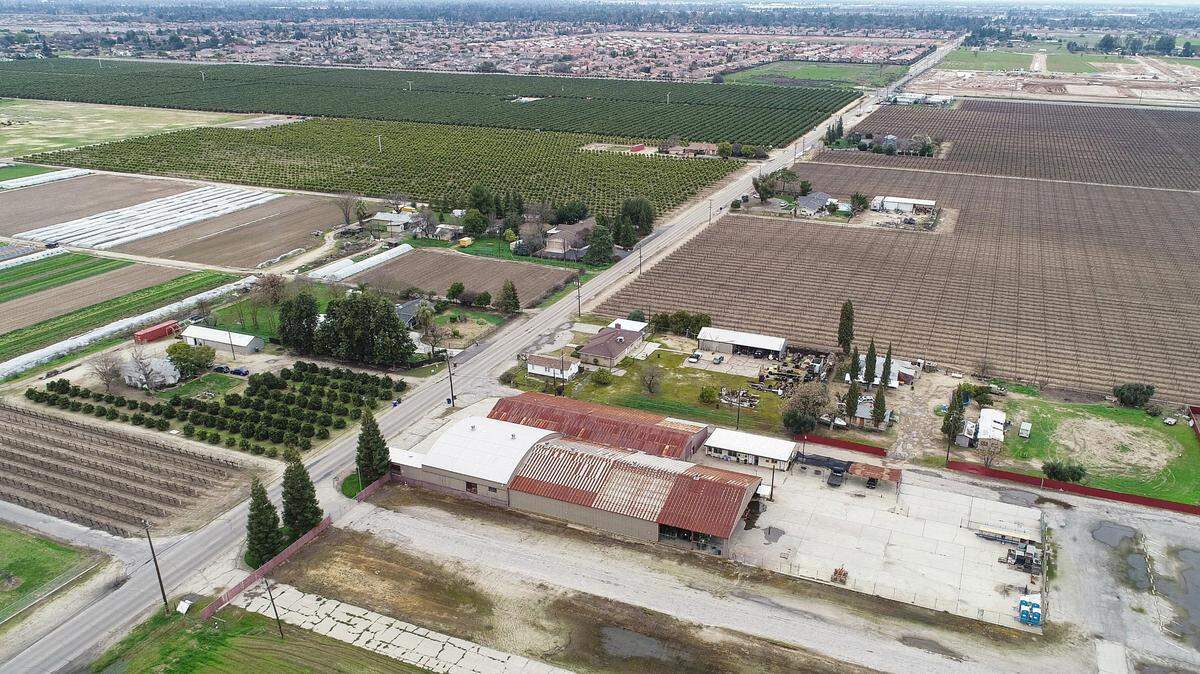
There are about 1,800 acres in SEDA’s scope that are already developed as low-density homes and small ranches. The plan states this land has been designated as rural residential to align with and support the existing neighborhoods, anticipating that it will remain in place.
This story was originally published December 5, 2025 at 11:57 AM.