
Late city buses threaten livelihoods, Fresno rider says. Why are there delays?
Wanda Johnston depends on the bus to get to work each day, but recent delays have threatened her livelihood.
Johnston takes the Fresno Area Express #9 line’s first stop of the day, and then connects to line #1 to get to Fort Miller Middle School, where she works in food service, ensuring students have breakfast each morning.
Johnston, 57, told The Bee that since the school year started, the 5:52 a.m. #9 bus, the first of the day on that route, has been significantly late over 20 times. Not only has the first bus not shown up, at times, but also the next two scheduled buses, she said, resulting in overcrowding when a bus finally does arrive. They are scheduled to run every 15 minutes on that route.
Each missed bus makes Johnston late for her 6:30 a.m. start time, causing her to lose hours and wages and adding additional stress to her life, she told The Bee. She has faced issues with late buses for years, but in the past two months, it has gotten progressively worse, she said.
“I feel like us bus riders don’t matter, don’t count,” Johnston said.
Fresno’s Director of the Department of Transportation, Gregory Barfield, acknowledged that FAE has faced delays, but he questioned whether Johnston’s stated experience was an exact representation.
“It is part of running a bus system, but it’s the part I’d like to see less of,” he said. “There are things out of your control — construction, an accident — and there are things that you know we could do better.”
The department is always looking to improve its service and hear from riders’ experiences, Barfield said. The department has identified manpower issues as the top reason for delays in early morning routes. Beginning next Friday, 15 new staff members will start work, Barfield said.
FAX has a budget of over $172 million for the city’s 18 routes and 130 buses that operate 365 days a year, according to the city website. A single ride costs $1 with free fares for seniors 65 and older, children under 12, people with disabilities, Medicare cardholders and active military/veterans with valid ID.
The department tracked eight trip cancellations for the #9 route and eight trip cancellations for the #1 route on weekdays in September and October, though construction or accidents that may have caused delays are not included, Barfield said.
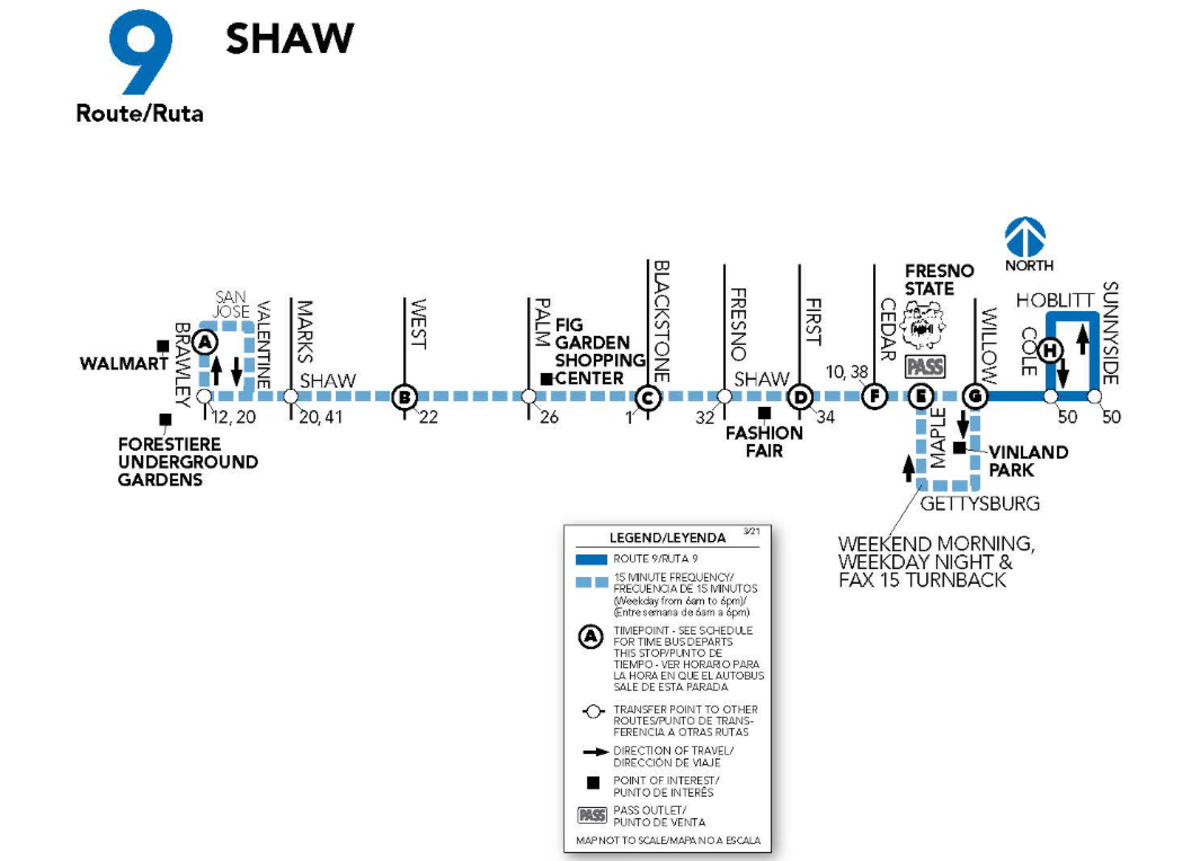
The #9 bus operates seven stops along Shaw Avenue, scheduled to stop at each location every 15 minutes. Departures occur as early as 5:50 a.m. and as late as just before midnight on weekdays.
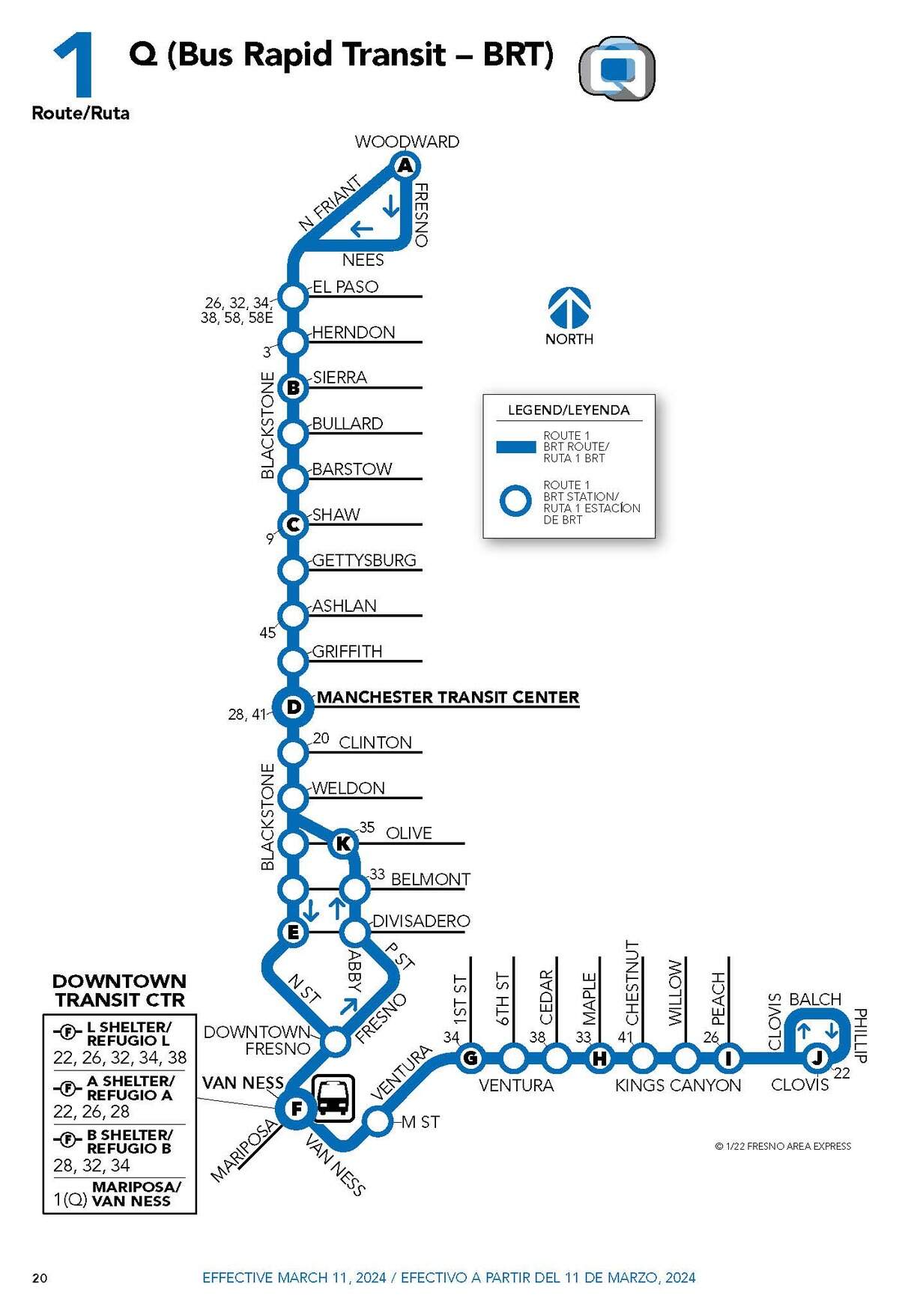
The #1 bus line runs 25 stops from Woodward Station to Clovis Station along Blackstone Avenue and Ventura/Kings Canyon Road, scheduled to stop at each location every 10 minutes during peak hours and every 15 minutes during off-peak hours.
There has been no recent construction on Shaw that would affect the eastbound route, but there has been construction on various parts of Blackstone that may have affected the southbound route, according to Barfield.
All of the #9 and #1 bus stop cancellations reported by the city in September and October occurred before 7 a.m., according to Department of Transportation data.
“People who are working at this time are generally very essential people,” Wanda’s husband, Kevin Johnston, said. “There’s many, many others that do the setup before other people get to work. So, they’re key people to getting a lot of businesses operating.”
The most common causes of delays are mechanical and manpower issues, particularly on the first routes of the day, Barfield said. That could be broken windshield wipers on a rainy day or an employee calling out of work.
Between 5 and 6:30 a.m. is when the city’s 110 buses pull out of the yard for the day. If a driver calls in or does not show for their shift, that is when a trip may get canceled while trying to find a driver to fill in, Barfield.
“It becomes a puzzle piece at that time,” Barfield said.
Johnston said that when the bus is late, she will often ask the driver what happened. She has heard that bus drivers have quit, drivers don’t know the routes or that the first bus never left the yard.
For the #9 and #1 routes on weekdays in September and October, 75% of cancellations were due to manpower issues and 25% were due to equipment issues, the data show.
Mechanical issues can be harder to predict or control than manpower issues, and that’s something the Department of Transportation will “continue to work on,” Barfield said.
The department expects each of its bus drivers to work 1,770 hours a year, and that has not been happening, with most cases at 1,500 hours, according to Barfield. Meaning drivers will use their protected leave to the point where it is affecting the number of hours worked over the year.
Barfield said the department plans to work with the bus driver union to help assess how it can ensure its employees meet their expected annual hours of work. Plus, the addition of 15 new staff members beginning work next Friday will help fill that gap, Barfield said.
“We’re here to get you where you need to go, whether it’s school, work or a medical appointment, and so we will continue to try to do the best we can to make sure you’re always able to make it to your appointments,” Barfield said.
“But you also have to understand that sometimes there are things that are beyond our scope that we can’t overcome,” he said.
Barfield encourages Fresno city bus riders who run into issues to let the Department of Transportation know, and that it will do what it can to address them. Additionally, to keep an eye on the FAX social media accounts for rider alerts on delays.
To contact FAX customer service, call (559) 621-RIDE.
This story was originally published November 16, 2025 at 5:30 AM.