
Did water well dispute lead to massive fish kill in Madera County community lakes?
AI-generated summary reviewed by our newsroom.
- CDFW attributes the die-off to low dissolved oxygen driven by algae bloom.
- Die-off occurred during water council and HOA dispute legal dispute over billing.
- Both sides blame the other for conditions that led to fish die-off.
In a gated community in east Chowchilla, a legal battle over water has turned ugly between a homeowners’ association and the Water Resource Council that oversees the neighborhood’s lakes.
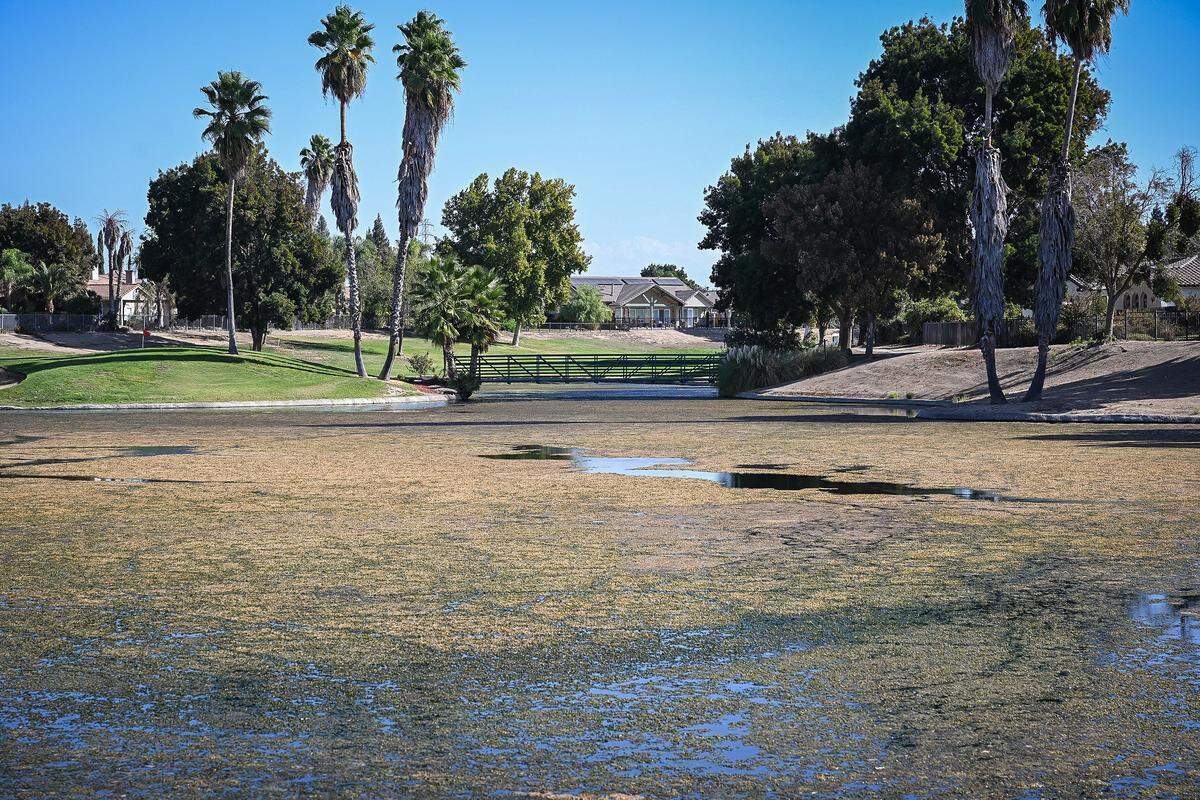
So ugly, that each side is blaming the other for causing the conditions that led to a mass fish die-off last month from lack of oxygen in the area’s community lakes.
The HOA told The Fresno Bee it has reason to believe a lawsuit it filed in June, alleging fraudulent billing, led the water council to escalate tensions by shutting off the lakes’ oxygenation system. The water council, for its part, told The Bee it stopped flows into the lakes and had the right to turn off their oxygenation system because the HOA has refused to pay more than $100,000 in water delivery system costs.
“It was so terrible,” said John Campbell, president of the Greenhills Master Association, which is the HOA for the 905-unit Greenhills Estates community. “If this is a case of weaponizing something to the extent that you’re going to murder fish on a large scale to get leverage in a legal dispute, that’s a very bad thing.”
Matthew Backowski, attorney for the water council, said the fish died as a result of deteriorated lake conditions caused by the HOA’s refusal to pay debts. He said the system that delivers water into the lakes can no longer be maintained without the HOA’s payment.
“This is all at their behest,” Backowski said of the HOA. “The result is traumatic and tragic. It’s resulting in these lakes being deteriorated, fish being killed, and money being spent on litigation.”
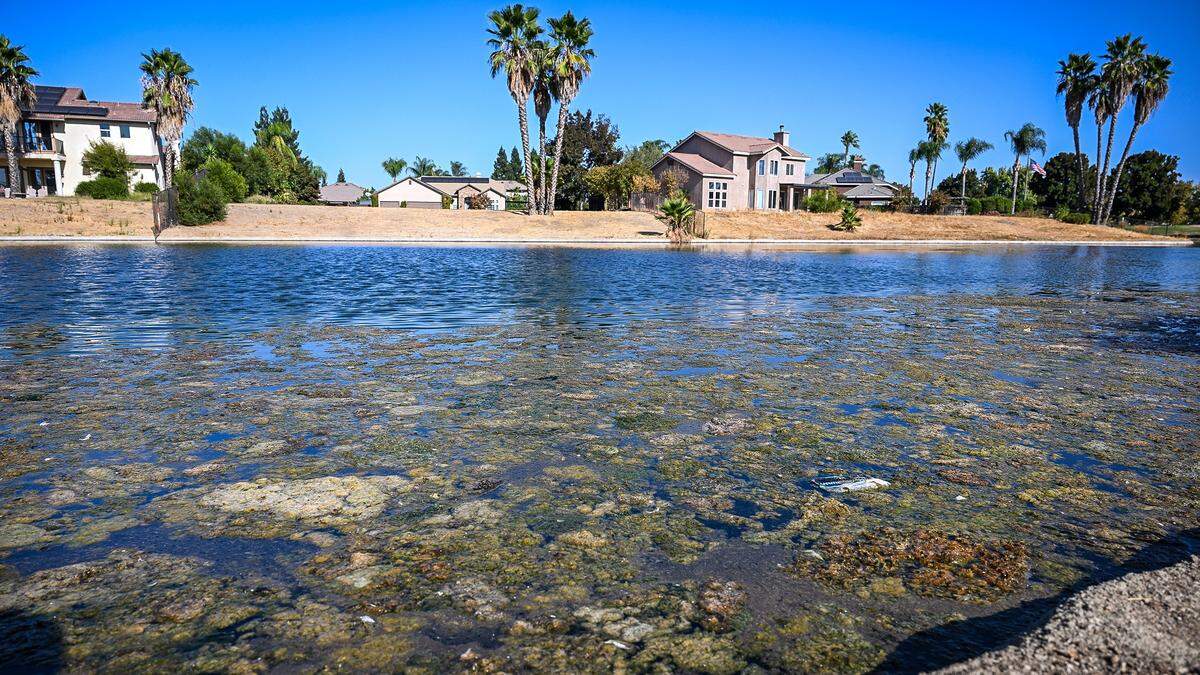
Water bill lawsuit precedes Chowchilla fish die-off
The HOA says problems began when it started questioning the water council’s board about how and why it approved expensive water well bills over the years.
The board was created in 2021 with representatives from Greenhills, the Pheasant Run Golf Club, The Lakes RV and Golf Resort, and another adjacent residential community called The Villas. The four entities share more than a dozen man-made lakes primarily intended to store excess water from Pheasant Run wells for golf course maintenance and irrigation.
It was decided the Greenhills HOA generally would pay 66.77% of water delivery system costs. Costs for projects resulting in disproportionate benefit to one of the entities must be board-approved.
HOA leaders decided to reject well costs in June and sued the water council.
Jacob Sarabian, the HOA’s attorney, told The Bee the dispute is not about Greenhills’ willingness to pay its fair share. Rather, he said, it’s a case of a golf course developer “trying to burden a homeowner’s association with the cost to irrigate his golf course.”
Over the summer, the water council cut off the flows that feed into the lakes. Backowski said, based on the water council’s recorded agreement, the board has the right to stop deliveries when it determines there is no excess water available.
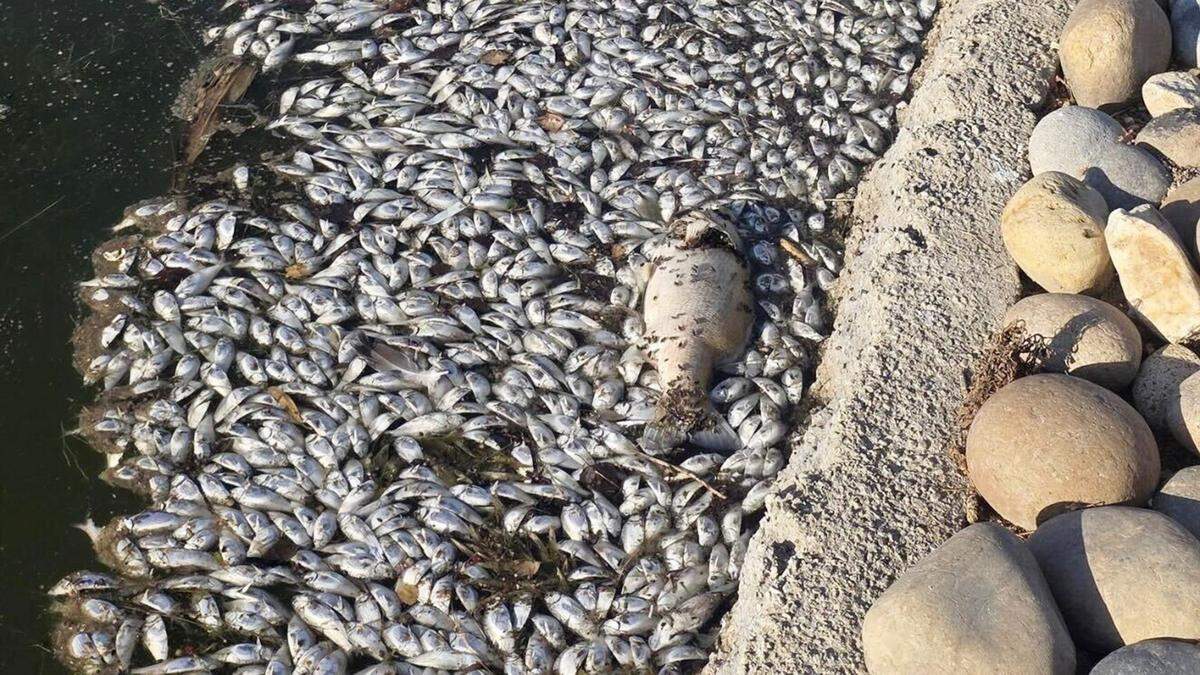
Then, in September, Greenhills residents witnessed fish of varying sizes and species suffocating in the water.
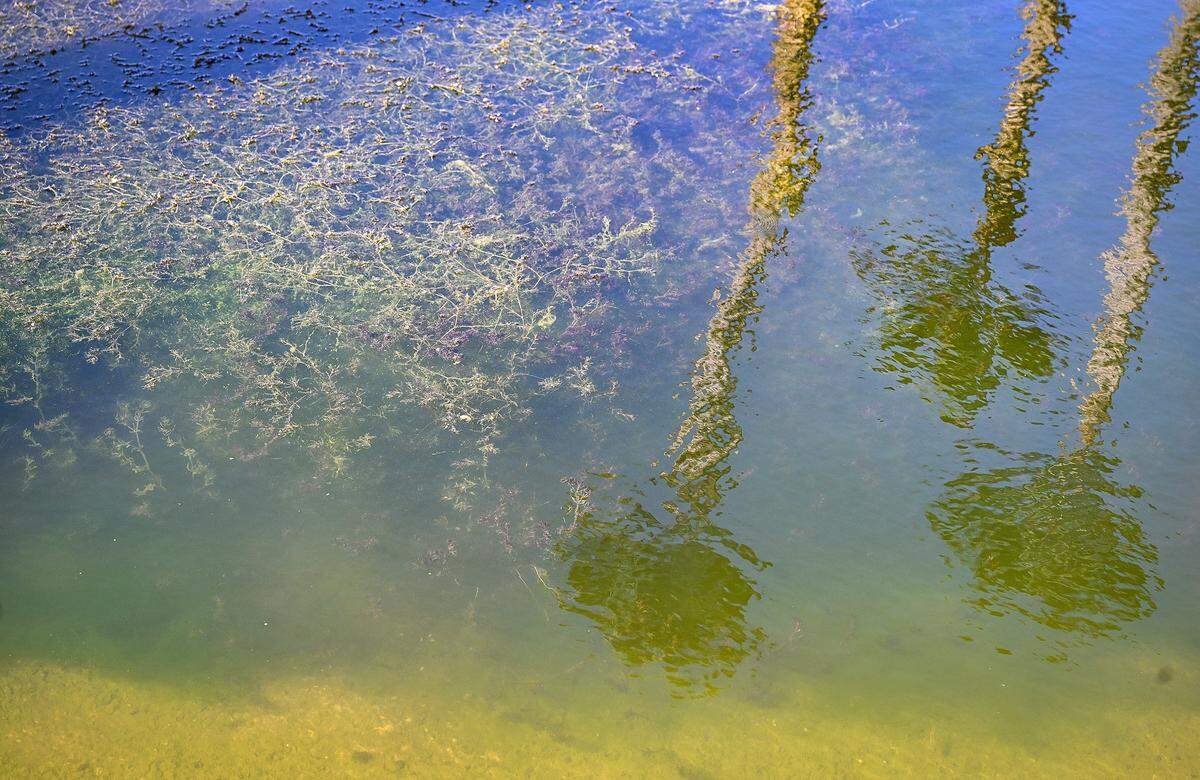
California’s Department of Fish and Wildlife (CDFW) quickly investigated, finding the fish died due to “low dissolved oxygen” likely caused by algae blooms, which deplete oxygen levels in water.
But Campbell shared a PG&E statement with The Bee that shows the Greenhills lakes’ pump and aerator system, which promotes water circulation and oxygen levels, suddenly stopped using any power about a week before residents witnessed fish dying — even though the HOA had paid its electricity bill.
Though the system is paid by the HOA, Campbell said its operation is controlled by Pheasant Run and its daily operations agent, Sierra Golf Management.
Backowski confirmed the golf course did shut off the pump and aerator system in September. Martin Boone, the golf course developer and a water council board member, told The Bee that turning it off is well within his entity’s rights.
“They weren’t going to pay for the wells,” he said. “Without the water, we have the right to turn it off whether they’re paying or not because there was no excess water to fill the lakes.”
Backowski said the HOA can “claim they paid this PG&E bill,” but that does not negate that the HOA has refused to pay all that it owes for the water delivery system.
“The reality is they (the bills) have not been paid,” he said.
Sarabian, the HOA’s lawyer, said the evidence gives reason to believe the shut-off was done “maliciously and punitively.”
“It appears to be a strong art in tactic to bully the association into continuing to subsidize Mr. Boone’s golf course irrigation,” he said.
Fraudulent water well billing alleged
According to Greenhills’ lawsuit against the water council, the HOA paid $17,337.87 to fix the “Edinburgh” well in June 2021, but it was deteriorated beyond repair and was only used for a few months. The complaint says the board knew the well recorded no usage of electricity from September 2021 to March 2025, but it continued to approve monthly invoices to the HOA for well maintenance from Sierra Golf Management.
The complaint says a $49,409.80 invoice came to the HOA last December for the “Kona” well, which was registered to a suspended California corporation, not to Pheasant Run. Another $50,000 invoice came before the water council board in March for another rehabilitation of the “Edinburgh” well, the complaint says.
Meanwhile, the HOA declared its representative on the water council, Sheila Stocker, no longer an HOA member of that body. It appointed Campbell and the HOA’s vice president, Cheryl Salter, to the water council. But the group declined to make the changes and then removed another HOA representative, who the complaint says suspected fraudulent billing and had begun requesting budgets, invoices and meeting minutes.
“You just have unelected people who have no formal fiduciary responsibility to the HOA, who can sit there until they die like Supreme Court justices representing God knows whose interests,” Campbell said.
Campbell and Salter say it appears it’s been the plan all along to use Greenhills to pay for expensive well projects for the benefit of Boone, the water council member and golf course developer, though residents may never benefit from them.
“I’m just one vote on the board,” Boone told The Bee, “and we follow the agreement.”
Backowski said the water council disputes the accusations the HOA has made in its complaint. To him, it’s a case of Greenhills current leadership trying to escape the cost-sharing structure in the legally-binding agreement that the HOA itself approved several years ago.
“It’s just more of them wanting a discount, or others to subsidize or pay for things that their association has already previously approved,” he said.
CDFW investigates Chowchilla fish die-off
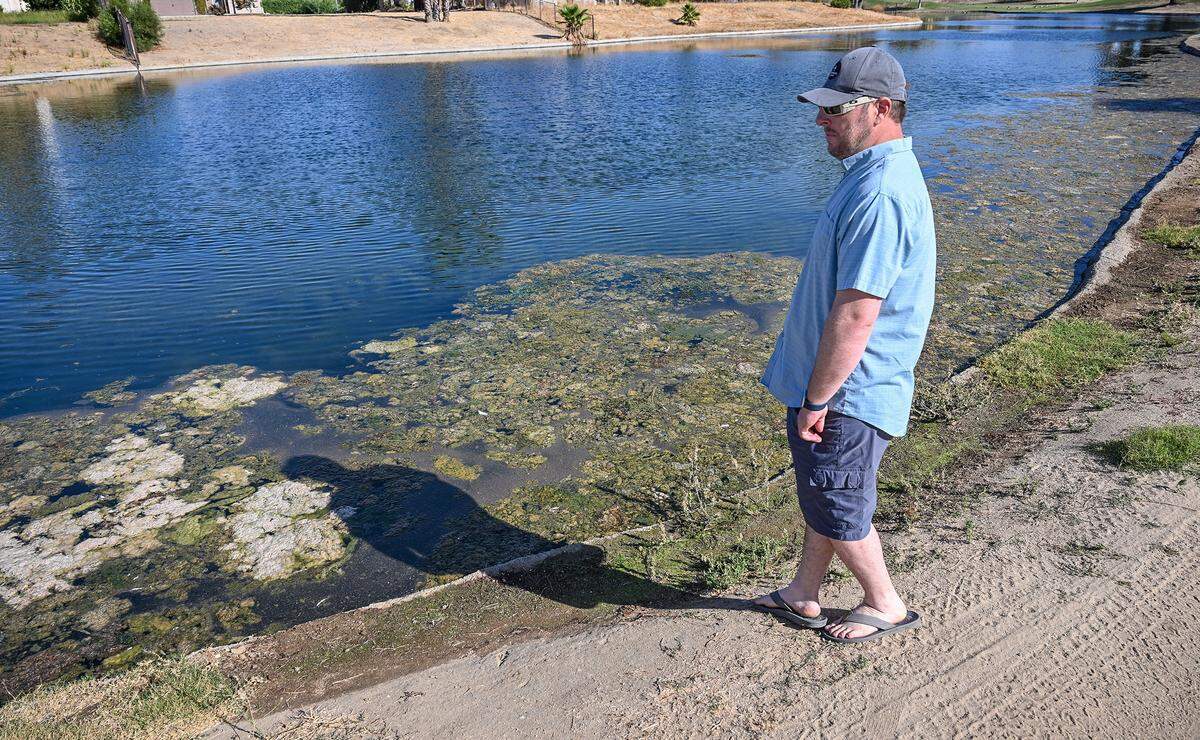
The lake decay is on private land, so the state cannot intervene unless it begins to pose “a greater risk to public resources,” CDFW told The Bee. But the agency said it has responded to fish die-offs in the Greenhills neighborhood multiple times in the past. Fish die-offs are “fairly common in small artificial ponds,” which often don’t have adequate water circulation and also have fertilizers flowing into them, CDFW said.
“These conditions fuel algae blooms, which can create very low dissolved oxygen conditions,” CDFW said. “Without enough oxygen, the fish end up dying.... Improved aeration often helps mitigate low dissolved oxygen in artificial water bodies.”
A PG&E statement viewed by The Bee shows that, though the HOA had paid the electricity bill for the pump and aerator, the system stopped using any power Sept. 12. By Sept. 20, residents observed fish suffocating in real time.
On Sept. 21, Campbell contacted Dan Bacci, an administrator with Sierra Golf Management, asking about the apparent failure of the pump and aerator. The system resumed power usage the following day, the PG&E statement shows.
Backowski said it has not been determined that the system’s shut-off is what killed the fish, and that past fish die-offs have occurred in the lakes even when the system was operating. He said the water delivery system could not be maintained once the HOA withheld well payments – the “Kona” well could not be activated, leading to a deterioration of water levels and circulation.
“They’re not paying the funds necessary to keep these wells producing water,” he said. “It results in the lakes not having water. That’s what’s killing the fish.”
Citing a statement to the water council from the city of Chowchilla, Campbell said the “Kona” well could not legally have added more water to the system. Its activation, he said, was unrelated to the oxygen loss that killed the fish.
Backowski said the opposite, adding that this well is one of two intended to provide “essential supplemental water to maintain lake levels and quality.” He said two of the golf course’s lakes were already nearly dry at the time of the shut-off of flows because there was not enough excess water.
Campbell said “video and records show” the mass die-off was not a result of a gradual decline, but instead was a “sudden, disturbing and catastrophic event.”
“We view this as an escalation,” he said of the pump and aerator system’s shut-off. “Cooler heads need to prevail on that side of the dispute before this becomes something even worse.”
This story was originally published October 29, 2025 at 5:30 AM.