From Fresno to Madera: A children’s book helping students challenge self-doubt
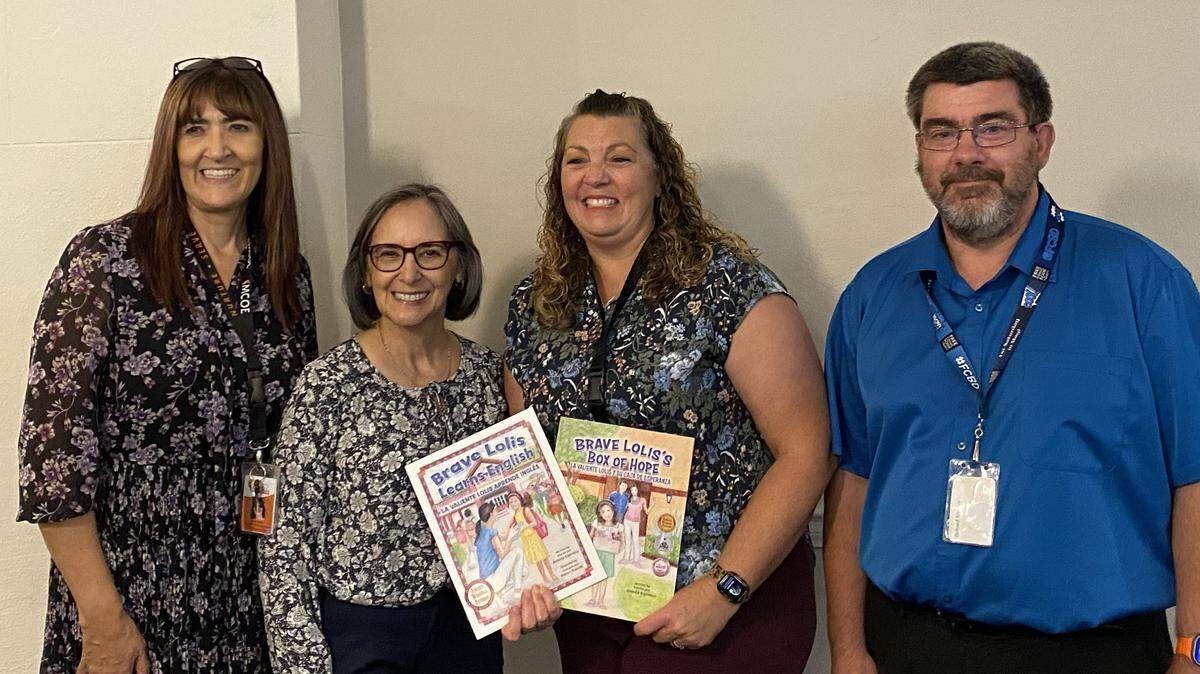
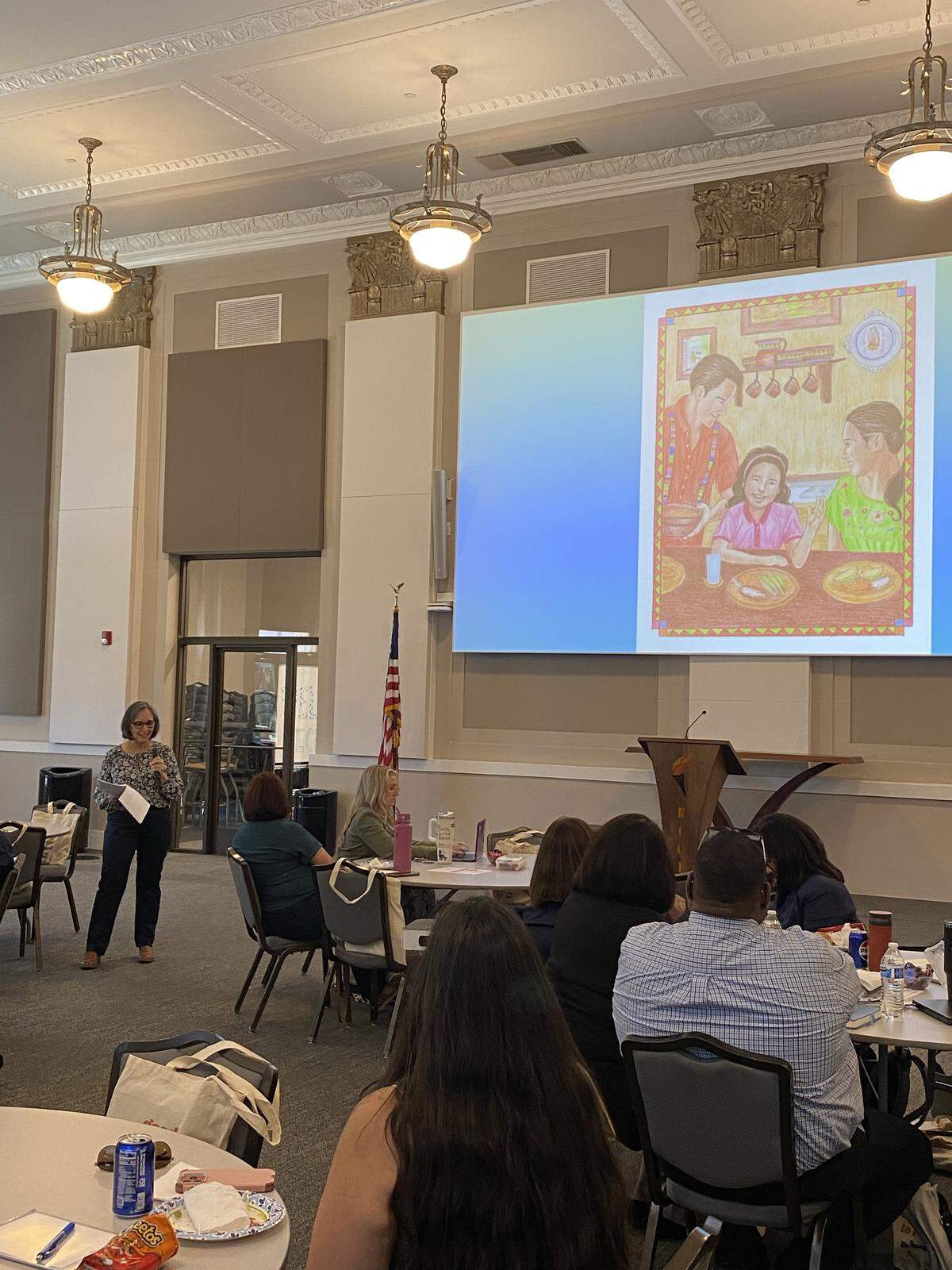
The room went quiet when Armida Espinoza finished reading from “Brave Lolis Learns English” to a group of teachers in Madera County.
“Would anyone like to share a time they felt like Lolis?” she asked.
At first, no one raised their hand. Then a teacher spoke up, a little teary eyed, she remembered the day her younger brother was brought into her fourth-grade class to help her with math. She recalled the embarrassment that she felt having all her peers see and this memory stayed with her for decades later.
Moments like this, Espinoza says, are why she wrote her first book at age 64.
“It’s about being mindful and self-aware of those negative thoughts,” she said. “I tell students we are always learning, we are lifelong learners. Even adults. So when you are learning something new, you’re always going to be challenged.”
For Espinoza, the story began with her own first-grade memory. A teacher pulled her aside and asked her to recite the alphabet. She froze at G.
“That little negative voice guided me through the 12 years I was in school,” she said. “Nobody ever said to me: ‘Learning is incremental.’”
As the youngest of six children in a low-income family, Espinoza grew up in the Fresno projects. Her parents had come from Mexico and neither had literacy in English or Spanish. At school, she kept her struggles secret. At home, her mother encouraged her to “fake it till you make it” when it came to learning English.
The shame of not knowing her ABCs planted a fear of asking for help throughout her years in school and in life.
“That impostor syndrome is very real,” she said.
Espinoza eventually became a kindergarten, first- and second-grade teacher. After leaving the classroom to care for family, she rediscovered her love of writing during the COVID-19 pandemic. A children’s writing class gave her the encouragement to self-publish Brave Lolis Learns English in 2022.
Since then, she has been visiting classrooms and teacher workshops, where her story continues to spark emotional recognition in children and in adults.
“I feel like you wrote my story”
At Juan Felipe Herrera Elementary School in Fresno, bilingual kindergarten teacher Maria Rivera reads Espinoza’s book every September, during the first weeks of school and Hispanic Heritage Month.
“We read it in Spanish, then we also read it in English,” Rivera said. “Even though the story is about a Mexican little girl, my students are African-American, Anglo, Hmong — they still make that connection. They start talking about their families.”
Rivera has been a bilingual teacher for 22 years and a teacher for 32 years. When she first read the book, she told Espinoza, “I feel like you wrote my story.”
“I came from Mexico, and I didn’t want to speak English,” Rivera said. “I was embarrassed. I thought they were going to laugh at me.”
For Rivera, the book is a mirror and a teaching tool. She shows her students pictures of Espinoza reading to her class, reminding them that the author once sat where they sit now.
“I think every teacher should read it, especially in a dual-immersion program,” Rivera said.
The weight of resilience
For other educators, Espinoza’s story touches on painful memories of their own.
Maria Ocegueda, a former first- and second-grade teacher, was in the audience when Espinoza presented her book.
“To see her, like, choke up when she’s reading her story. I was like, ‘Oh, my gosh,’” Ocegueda said. “Because you don’t even know what to do with it then. You just kind of survive.”
Ocegueda grew up speaking Spanish at home before transferring in fifth grade to a diverse school where she suddenly felt out of place. She recalls being ridiculed by teachers for misspelling words and being placed in the lowest reading group.
“Teachers act like nobody knows, but we know exactly what group we’re in,” she said. “I was so embarrassed because I didn’t want everybody to know that I couldn’t read.”
Even as an adult, Ocegueda said, the insecurity lingers.
“I love to write, and I just don’t, because I’m so afraid of being found out that I’m not as smart as everybody else,” she said.
She partly rejects the common idea that “children are resilient.”
“While I believe that’s true, I don’t believe I should have to experience moments where I must be,” she said. “Why does it have to be the norm to have to survive school or survive these teachers?”
That is why, she believes, Espinoza’s book matters.
“These books make a world of a difference, especially just to see yourself,” Ocegueda said. “Even if it’s just, ‘Oh yeah, I speak Spanish too,’ or, ‘It’s hard.’ It helps us be seen, and our struggles be seen.”
Not just a story
For longtime educator Yolanda Lucero, reading Espinoza’s book felt like reliving her own childhood.
“I could almost transport myself to that little girl’s bed and crying with her, thinking, I can’t do this,” Lucero said. “When I first read the book, I told her [Armida], you are telling my story.”
Lucero, who has a master’s degree in critical literacy and now works with dual-language teachers and parents across California, said the story resonates across cultures and age groups.
“We read it to adults, to teachers, education classes and parent education meetings, just like if they were a child, because it does really transport them to that place in their life where they had a similar struggle.”
She believes the book offers a powerful message of perseverance.
“I think that our children need that message, that don’t give up, you know, you can do this,” Lucero said.
Lucero also points to the importance of teachers who validate their students. She remembers a moment in second grade when her teacher praised her idea for a classroom bulletin board.
“She looked at me with these big eyes, and she goes, ‘You are brilliant,’” Lucero said. “Nobody had ever said that to me. I just felt so validated, so seen.”
For her, “Brave Lolis Learns English” offers the same kind of validation.
“Every child should feel that they have power to do things, to meet their goals, to keep moving forward instead of sliding back,” she said. “They are heroes in their own stories.”
Espinoza said she is humbled that her book has resonated not only with students but also with teachers who carry their own memories of shame and doubt.
“English itself is difficult enough, even for English-speaking students,” she said. “But the message is we all have a negative voice. We need to switch it, control it, and have the tenacity to change it.”