Death at California meatpacking plant stirs grief and anger over working conditions
AI-generated summary reviewed by our newsroom.
- Cal-OSHA launched a formal investigation into the Central Valley Meat fatality.
- Employees and advocates raised workplace safety concerns following the death.
- The worker's death sparked public mourning, protest calls and online criticism.
Current and former employees of one of the San Joaquin Valley’s largest meatpacking plants are speaking out about unsafe working conditions following a worker’s tragic death.
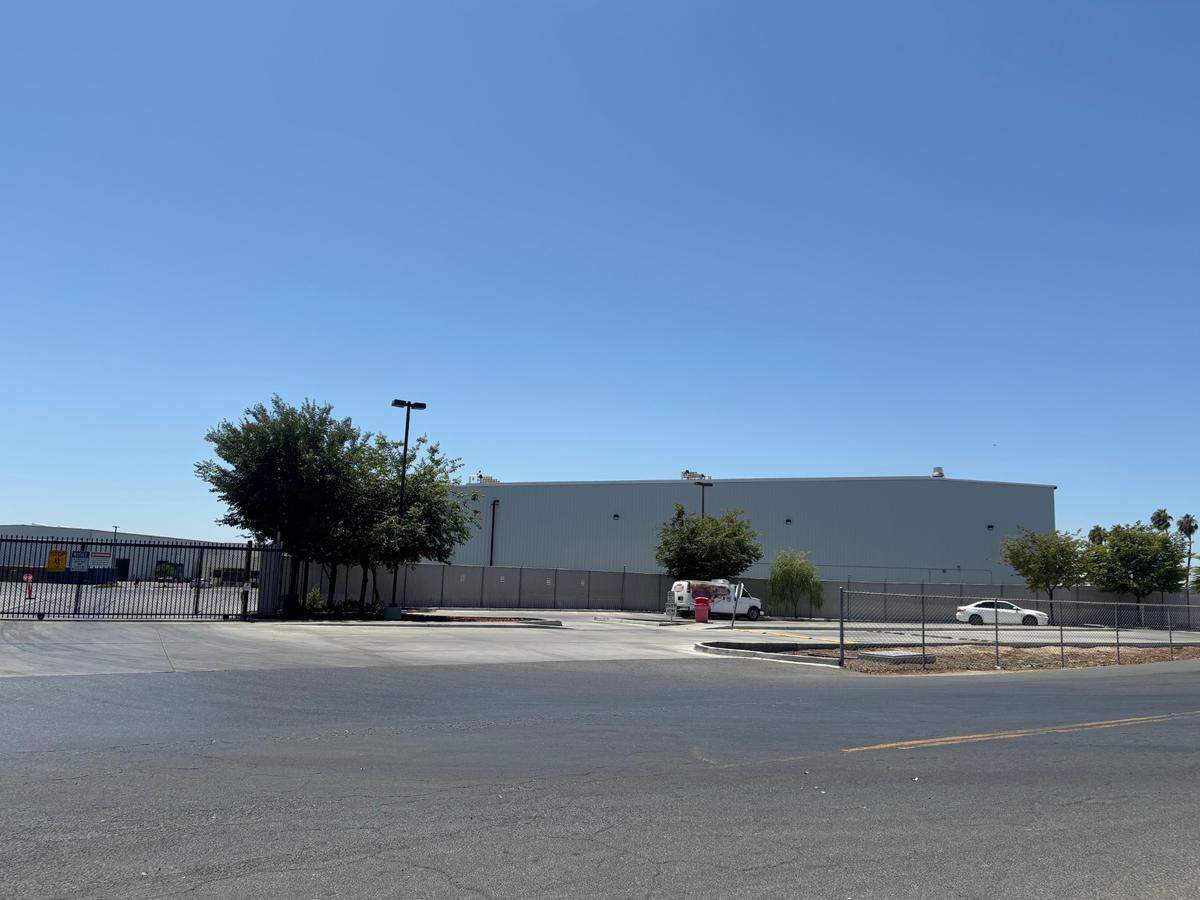
On Wednesday, June 18, Juan Carlos Soto, 47, died by suicide at Central Valley Meat Co. in Hanford.
The Kings County Sheriff’s Office confirmed they responded to a medical emergency at Central Valley Meat Co. in Hanford around 6:50 a.m., where Soto was found with self-inflicted, life threatening injuries, according to department spokesperson Christopher Martin.
Soto died at the scene, Martin said.
Cal-OSHA, the state’s workplace health and safety regulator, confirmed the agency is investigating the fatality but was unable to comment on the pending investigation.
”We are saddened by the recent loss of our colleague,” Central Valley Meat Co. said in a statement. “Our thoughts and deepest condolences are with his family, friends, and coworkers during this incredibly difficult time.”
Following the incident, the company said it immediately ceased all operations and contacted emergency services, the statement said, adding that they cooperated with local law enforcement and all agencies on site. The company declined to comment on specifics of the incident or the allegations of unsafe working conditions that surfaced after Soto’s death.
“Out of respect for the ongoing investigation and the privacy of the family, we are unable to comment on the event that transpired,” the company said.
Soto’s death has sent shockwaves in the Hanford and Tulare area communities, where Central Valley Meat Co. is one of the largest employers.
Ruth López, director of Valley Voices, a nonprofit that educates workers on their rights in the Kings County area, said authorities should investigate Central Valley Meat’s workplace practices.
“This company has a long history of not taking care of their workers,” she said, recalling the company’s handling of worker safety during the coronavirus pandemic.
López spoke with several employees who witnessed the traumatic incident, and said workers were forced to stay and finish processing the beef already on the line and couldn’t go home until hours later.
“They were still working after witnessing this,” she said.
The company said it’s providing on-site grief counseling to workers. The company provides an Employee Assistance Program available to all staff and made immediate resources available for those affected by the tragedy before leaving the facility on Wednesday, the company said.
”This has been a profoundly difficult time for our entire team, and we are doing everything we can to support our employees impacted by the event that transpired,” the company said in a statement.
Workers say Central Valley Meat Co. has poor working conditions
Current and former employees are both mourning the loss of Soto and venting their frustrations on social media about the company’s poor working conditions.
Four current and former employees said they must work at a fast-pace with sharp knives, meaning hand and finger injuries are common. Some workers alleged they’re not always given permission to use the restroom when working on the processing line. Fights are common because the company hires individuals with gang ties, they said. In 2022, a 30-year-old worker amputated his left hand and several fingers on his right hand when cleaning a heavy piece of equipment in the grinding room, according to a state investigation.
In a viral video posted on TikTok that has received nearly half a million views, a Central Valley-based creator who goes by jay02241 blasted the company’s working conditions. He said he worked at CVM for three years after being released from prison and was eventually fired. (He declined to be identified by name).
“They know that everybody that they hire really needs a job, and they play with your life and they take advantage of it,” he said in the three-minute video.
Over a thousand people responded to the post, sharing their memories of Soto or their grievances about the company.
“RIP CARLOS he taught me everything in production I’ll miss you brother,” said a TikTok user.
The creator of a popular Hanford-area Facebook group called Hughes Newz called for a protest for employee rights in a post that generated more than a hundred responses. “Enough is enough,” he said.
Central Valley Meat is a full-line beef harvesting operation that processes more than 1,500 beef cattle a day, according to its LinkedIn page.
Soto’s wife Lina asks for privacy for her family. She also asked the community not to spread gossip about why her husband took his life, dispelling rumors that there were problems at home.
“Most of his stress was from work,” she said in Spanish.
Jill Harkavy-Friedman, senior vice president of research for the American Foundation for Suicide Prevention, said suicide is a public health condition that is usually the result of a combination of factors.
“Suicide is a complex behavior that results from a lot of different factors that come together in the context of stress and when there’s access to lethal means,” she said. “It’s never just one thing.”
Workplaces can play a role in suicide prevention by creating a culture that values mental health, as well as a physically and emotionally safe working environment. More guidance for employers is available on AFSP’s website.
Deceased worker remembered by colleagues, friends
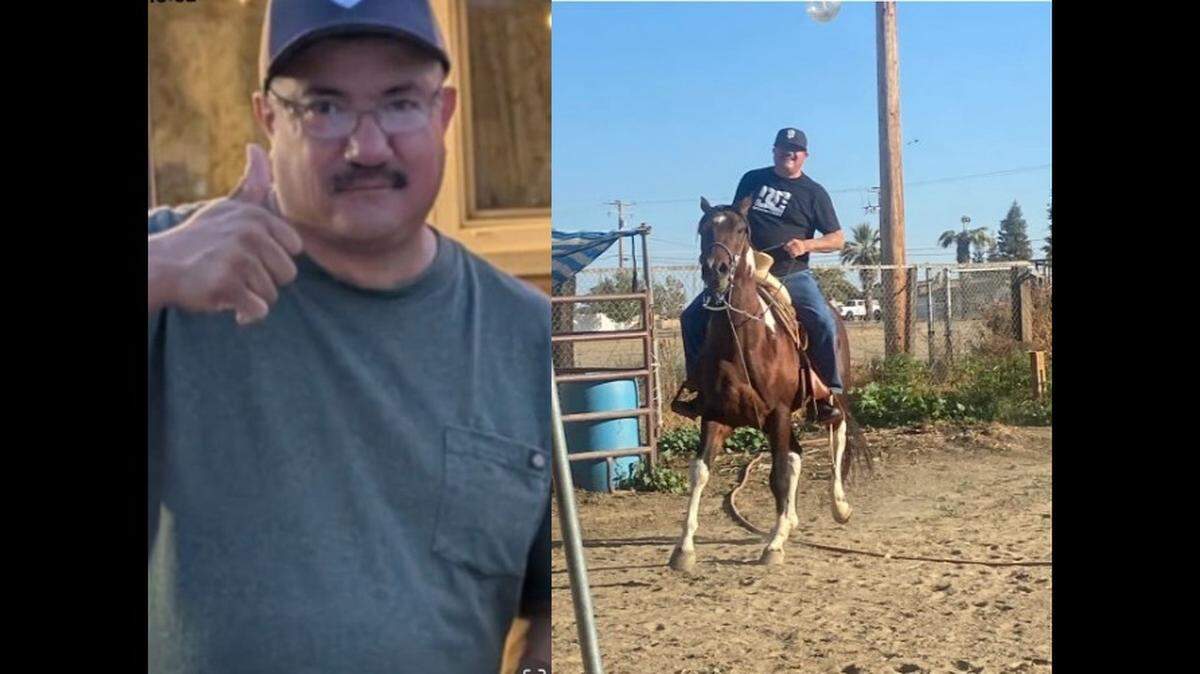
Soto worked on and off at Central Valley Meat for about 10 years, according to his friends and former colleagues.
He was a supervisor on the production line, they said.
Samantha Esquer, 29, worked at Central Valley Meat Co. about a decade ago when she was 19. She worked both as a human resources coordinator and on the production line, where she met Soto, she said.
“He was a really good lead, a good trimmer,” she said of Soto, referring to the task of meat cutting.
-imageonline.co-merge_fitted.jpeg "505774010_826711740301746_4657810008398591410_n (1)-imageonline.co-merge_fitted.jpeg")
But Esquer said she eventually quit because she didn’t agree with the hiring and management practices. She said sometimes line workers weren’t allowed to use the bathroom.
Soto was a well-loved social butterfly at the company. He was known to break out into song when working on the line, singing popular banda and corrido ballads such as “A Través Del Vaso,” a popular regional Mexican song by Banda Los Sebastianes about drinking to forget a former love.
“If he would start singing a song, the whole area would start singing a song,” said Rosie Gonzalez, a family friend and former coworker.
Soto’s friends and colleagues said he struggled with depression and other health conditions.
According to the Bureau of Labor Statistics, there were 267 workplace fatalities by suicide nationwide in 2022. Workers age 45 years or older accounted for 56.2 percent of these deaths, data shows.
A study by researchers at the University of Utah School of Medicine found that as anti-immigrant political rhetoric increased from 2015 to 2020 — coinciding with the first presidential term of Donald Trump — Hispanic suicide rates rose by 26.6% from 2015 to 2020, compared with an increase of 0.13% in non-Hispanic suicide rates over the same period.
Gonzalez said many employees, self-medicate with things like alcohol and cocaine given the intensity of the work.
“These men come home dead tired,” she said. “The carry metal aprons on their bodies for eight hours a day. They walk around with metal mesh on their arms. They come home and their hands are stiff.”
She believes Soto’s story is important to share because it starts a conversation about the intensity of meatpacking work and the pain workers experience in their arms, hands, and shoulders, as well as injuries and amputations as a result of working in a fast-paced environment with sharp knives.
“I believe the public should know what it takes to put food on the table,” she said.
Soto’s friends, family and colleagues are coming together to support his family with fundraisers for funeral expenses. Funeral services are scheduled for July 11.
What is Central Valley Meat Co?
The Central Valley Meat Holding Company employs more than 2,000 people at four different companies: Central Valley Meat, Harris Ranch Beef, Harris Ranch Feeding and CLW Foods. Last year, the company purchased the Cargill Meat Solutions beef plant in Fresno, positioning itself as one of the top California beef producers. Nearly 180 workers lost their jobs after the takeover.
The Hanford-based meat processor is known for its good pay and overtime, which is often seen as a better alternative than working in the fields.
But meat-packing is considered one of the most hazardous industries in the United States. According to federal workplace health and safety regulator OSHA, workers are exposed to high noise levels, dangerous equipment, slippery floors, musculoskeletal disorders and hazardous chemicals. Meat-packing workers are also at an increased risk for diseases due handling live animals and exposures to feces and blood.
According to the Center for Economic and Policy Research, immigrants make up one-half of the meat-packing workforce nationwide. Nearly one-half of the workforce is Hispanic, and 22.5% are Black. Anywhere between 30% to 50% of meatpacking workers are estimated to be undocumented, though estimates vary widely.
If you or someone you know needs support now, call or text 988 or chat at 988lifeline.org.
This story was originally published July 8, 2025 at 5:00 AM.