Food trucks shut down in Fresno during March health inspections; one for roaches
Several food trucks were temporarily closed in Fresno in March following routine inspections by the county health department — one was infested with cockroaches.
San Joaquin Catering was closed for two days, according to an official food protection inspection report. During a March 24 inspection, roaches were seen on food preparation tables. The truck was required to be sanitized and cleared by certified pest control with receipts provided upon reinspection.
The closure was reported in monthly data issued by the Fresno County Department of Public Health, which monitors restaurants, snack bars, grocery stores, commissaries, delicatessens and food vendors across the county.
Reports and records are available to the public online.
In all, there were seven closures in Fresno in March. They were:
- The food truck Cielo Y Tierra, operating out a commissary on Butler Avenue, was found to have a lack of hot water. The issue was revolved within the day. A lack of hot water is one of the most common violations and causes for closure. Water must be able to reach at least 120 degrees to safely wash pots, pans, dishes and glasses and 100 degrees for employees to safely wash their hands.
- At the same facility, Herrera’s Taqueria was inspected on March 27. The preparation refrigerator was operating at 60 degree, above the temperature required for safety, according to the inspection report. Additionally, the refrigerator did not have a working thermometer. The problems were resolved and the truck was allowed to reopen the following day.
- Other food trucks failed inspection at a commissary facility on Broadway Street. Tacos Los Gueros failed an March 18 inspection with nearly 11 violations, including adequate refrigeration, a lack of hot water and lack of sanitizer for utensil washing, according to the report. During a follow-up inspection April 8, both propane and carbon monoxide were detected on the truck. It remains closed, a heath department document says. Two mobile food units associated with Taqueria Arely’s were closed March 26 due to “lack of hot water, lack of adequate refrigeration and lack of proper hot holding temperatures.” It was allowed to reopen the next day.
- One restaurant, AJ’s Taqueria on Kern Street in Fresno’s Chinatown, was closed for one day due to a clogged floor drain.
The seven closures in March bring the number of restaurants, markets and other food businesses that failed health inspections so far in 2025 to 18. In February, there were three business closed following inspections, including a mini-market where there had been a fire.
There were 58 restaurants, markets and other food businesses that failed their health inspections at some point during all of 2024.
What inspectors look for
The Fresno County Department of Public Health has about two dozen environmental health specialists who monitor almost 5,000 restaurants, snack bars, grocery stores, commissaries, delicatessens and food vendors across the county and make unannounced visits several times a year.
Restaurants also are inspected following fires, or in response to complaints or other concerns from the public, including when people report what they believe are health or sanitation issues at restaurants.
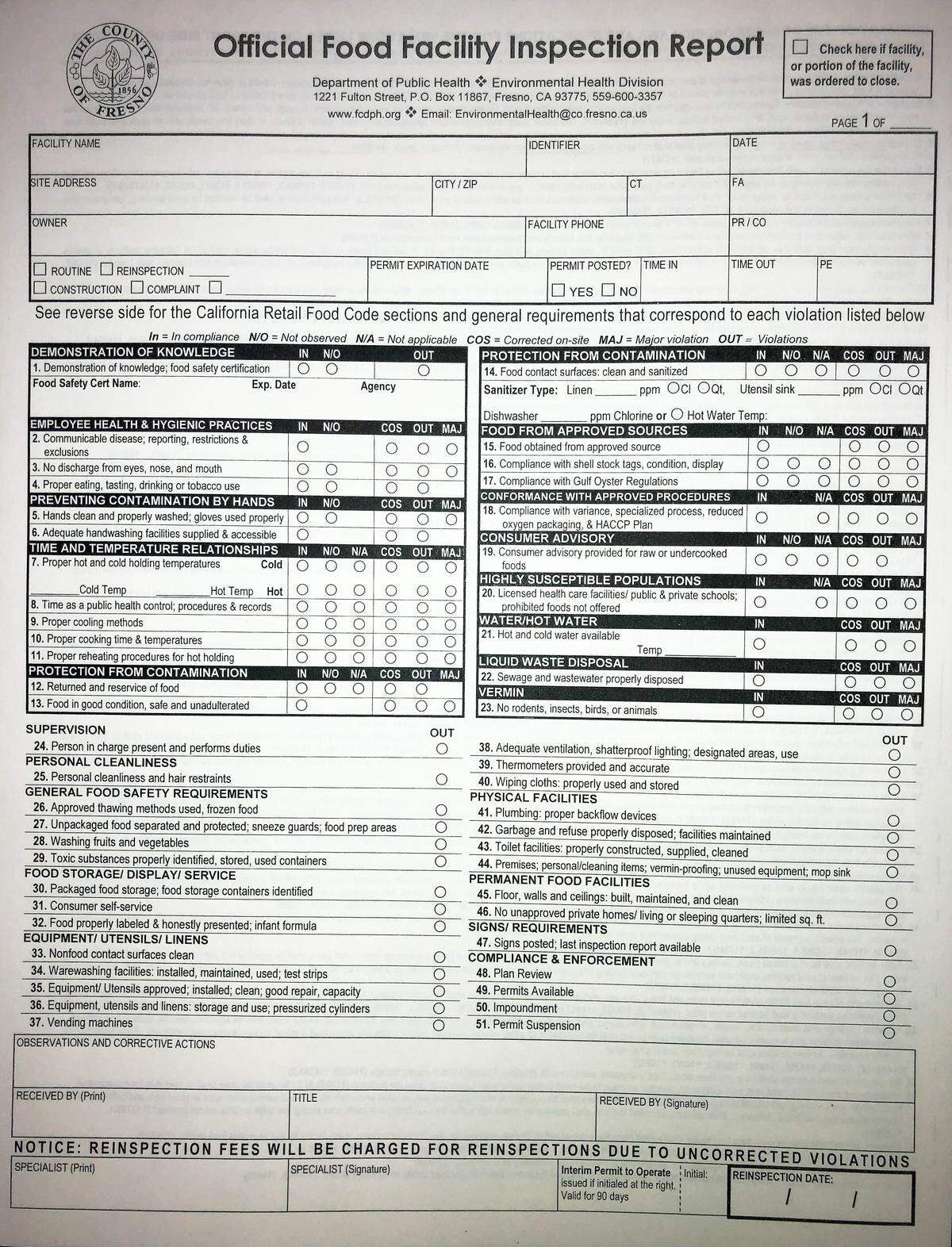
When inspectors visit a restaurant or other food service business, there is a lengthy and detailed list of more than 50 things that draw their scrutiny. They include:
- Whether the manager and all employees have the required food safety or food-handling certificates.
- Hygiene of individual employees.
- Ways to keep cold food at or below 41 degrees and hot food above 135 degrees.
- Use of proper sterilization for counters, tables, utensils and cookware.
- Overall cleanliness.
- Proper drainage of sinks and floor drains.
- Restrooms stocked with supplies.
- Whether the business has the proper license or permit.
Insect or vermin infestations are violations that can result in immediate closure of restaurants or food businesses when they are observed by health inspectors.
Among other serious concerns are refrigerators that don’t keep food cold enough or steam tables that don’t keep food hot enough to inhibit bacterial growth, or clogged sinks or drains that cause contaminated water to back up into kitchens.
In most instances, if an inspector finds a problem, it’s something that can be fixed on the spot. This can include having enough bleach or sanitizer in the water used to wipe down food-preparation areas, replenishing soap, paper towels and toilet paper in the restrooms, or reminding employees to wash their hands and wear gloves and hairnets.