
Unhoused moving back to Fresno canal. They have nowhere else to go, advocate says
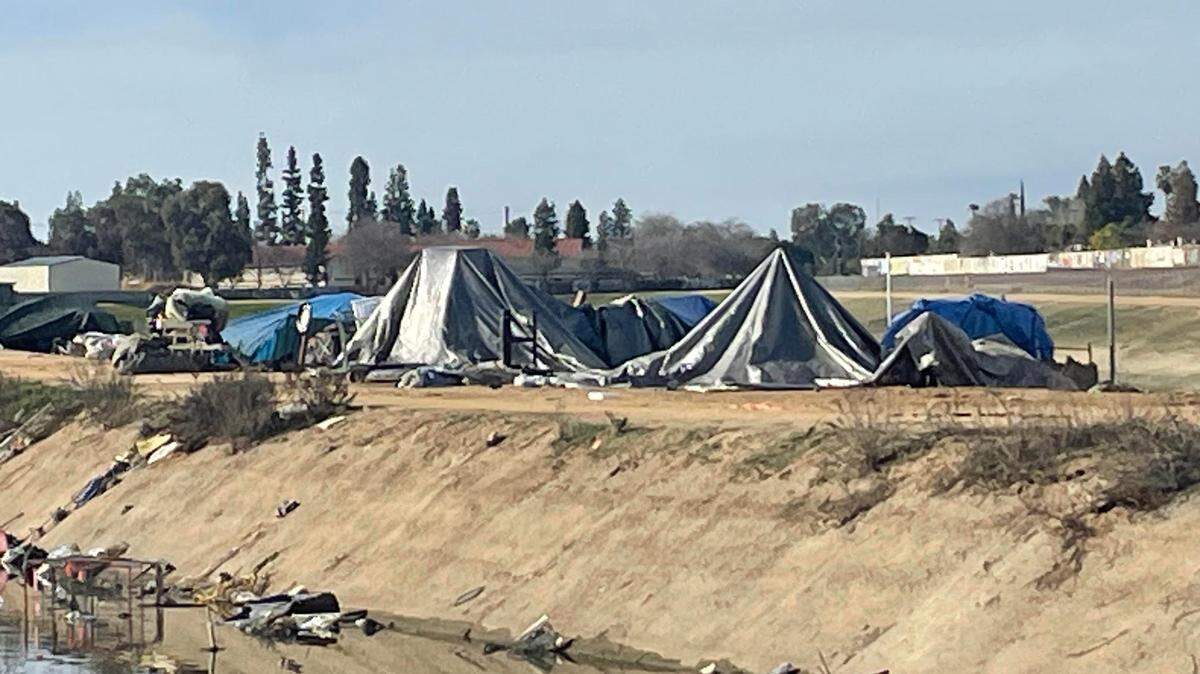
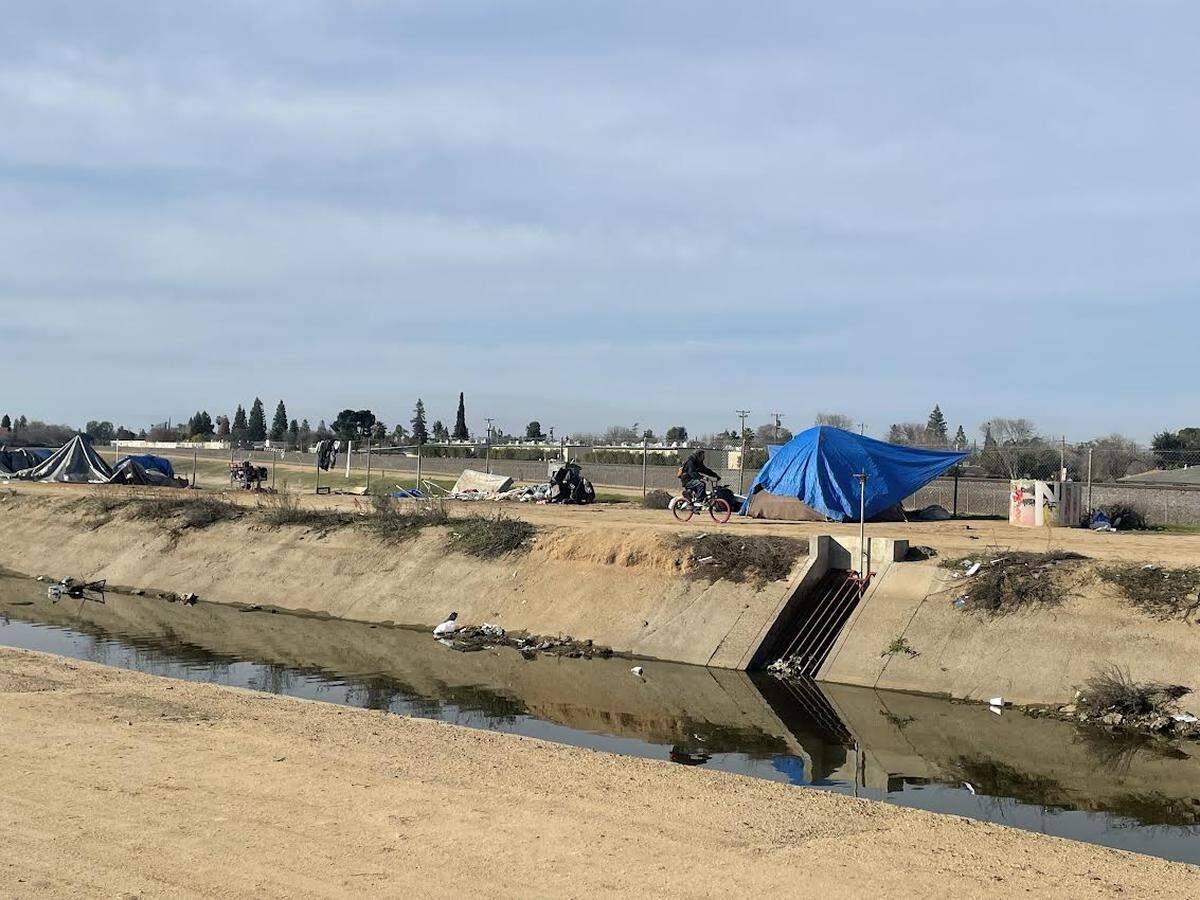
A canal bank in central Fresno close to Fig Garden is becoming home to an increasingly large unhoused population, and a longtime advocate for the city’s down-and-out says that is the inevitable result city policies.
It isn’t the first time that the Fresno Irrigation District canal that parallels Dakota Avenue between Palm and Fruit avenues has filled with the tents and tarps for those with nowhere else to go.
Dez Martinez, of We Are Not Invisible, said it’s just another example of they unhoused being shuffled from one location to another in the city. The only solution, she added, is for the city to find a way to find permanent housing for the 10,000 people living on the streets in the city.
Martinez predicted that as complaints increase about the canal camp, the city and irrigation district will move in to remove the camp, but that would provide no solution,
Instead, she called for the establishment of “safe camps” for the unhoused,
“They are forcing us onto the streets,” said Martinez.
Phil Skei, assistant director of planning a development for the city, Monday said the city was moving to address the situation. He also took issue with Martinez’ estimate of the number of unhoused in the city. He put the number at about 1,800, based on the 2023 Fresno Madera Continuium of Care. census.
But in the past, Fresno Irrigation District officials have said that unhoused camps along the canal creates a dangerous situation and contribute to pollution of canal water.
Fishing shopping carts, tires, batteries, oil cans, and other foul items from the waterways has been a chore for district workers for decades, said Adam Claes, assistant general manager of the district, in 2021.
Shopping carts are a special problem: They are bulky and heavy to move in any quantity, and stores don’t want them back for use by grocery shoppers.
In the past, the irrigation district has joined with the city to clear stretches of the canal before water begins flowing sometime in June.
That requires providing advance notice to those living along the banks, attempting to find storage for their property and working to find them alternate homes.
This story was originally published February 26, 2024 at 7:47 AM.