
93-year-old civil rights icon celebrates Chicano art with tequila shots in downtown Fresno
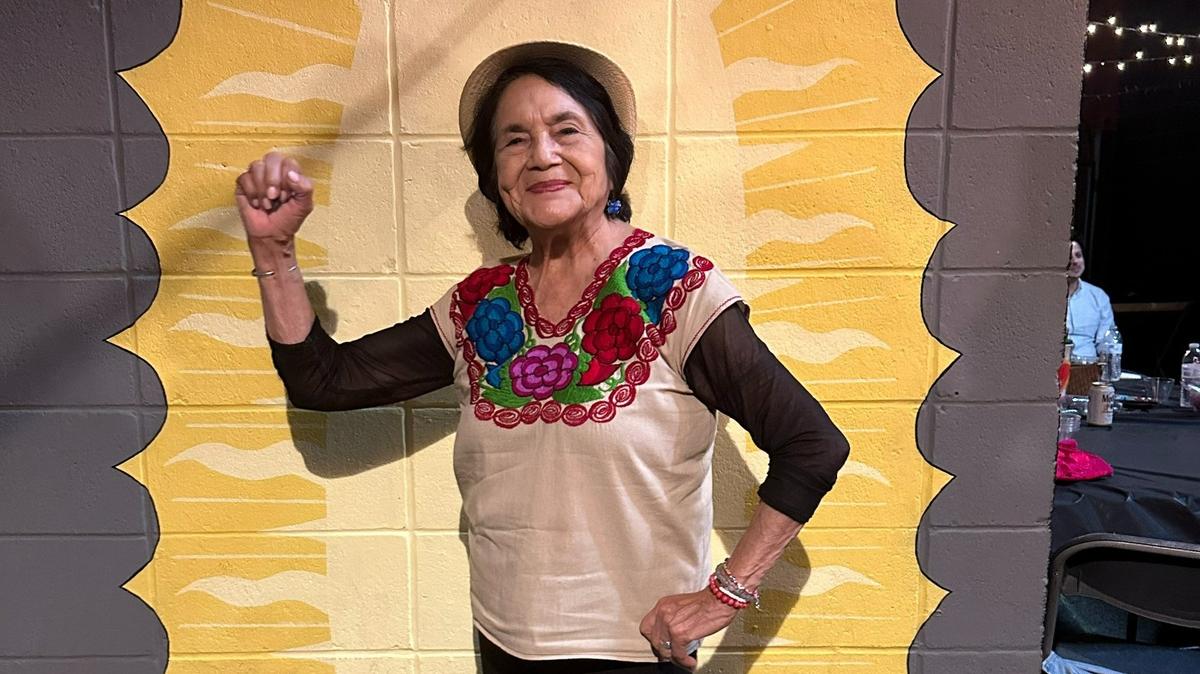
A downtown Fresno night that mixed poetry and history with shots of Tequila Herradura wouldn’t end early for a Chicana civil rights icon. It was all part of a reunion years in the making that the 93-year-old saw fit to last into the wee hours.
Dolores Huerta, a living civil rights movement icon who co-founded the United Farm Workers with César Chávez in 1962, came to Fresno last Thursday for the Con Safos Poetry Series set among the artwork of late Chicano artist José Montoya.
Fresno Poet Laureate Joseph Ríos heard Huerta was taken back to her hotel room after the crowded art and poetry show at Arte Américas.
“She was like, ‘Hey, but I heard there was an afterparty,’” Ríos said. “‘Why aren’t we going to the afterparty?’”
The local artist known as Roeski Doeski, who co-owns the studio, was pleasantly surprised to see Huerta at the afterparty. It was past 10 p.m. when, “out of the corner of my eye, I see a little, old lady walking through the door,” he said.
To Doeski, it was like royalty walking in – because of all that Huerta has accomplished. Still, she was as down to earth as anyone, he said, eating cheeseballs with her wine as oldies and the 1980s freestyle music of the city’s own Timmy T vibrated through Hella Fresno.
Huerta – surrounded by California Poet Laureate Lee Herrick, Malaquías Montoya and Ríos – requested more poetry. Huerta chided them for trying to stop early: “‘You know, the guys in New York go ’til 4 or 5 in the morning,’” she told the poets.
“When she says that, you better get up and have your poems ready,” Rios told The Bee.
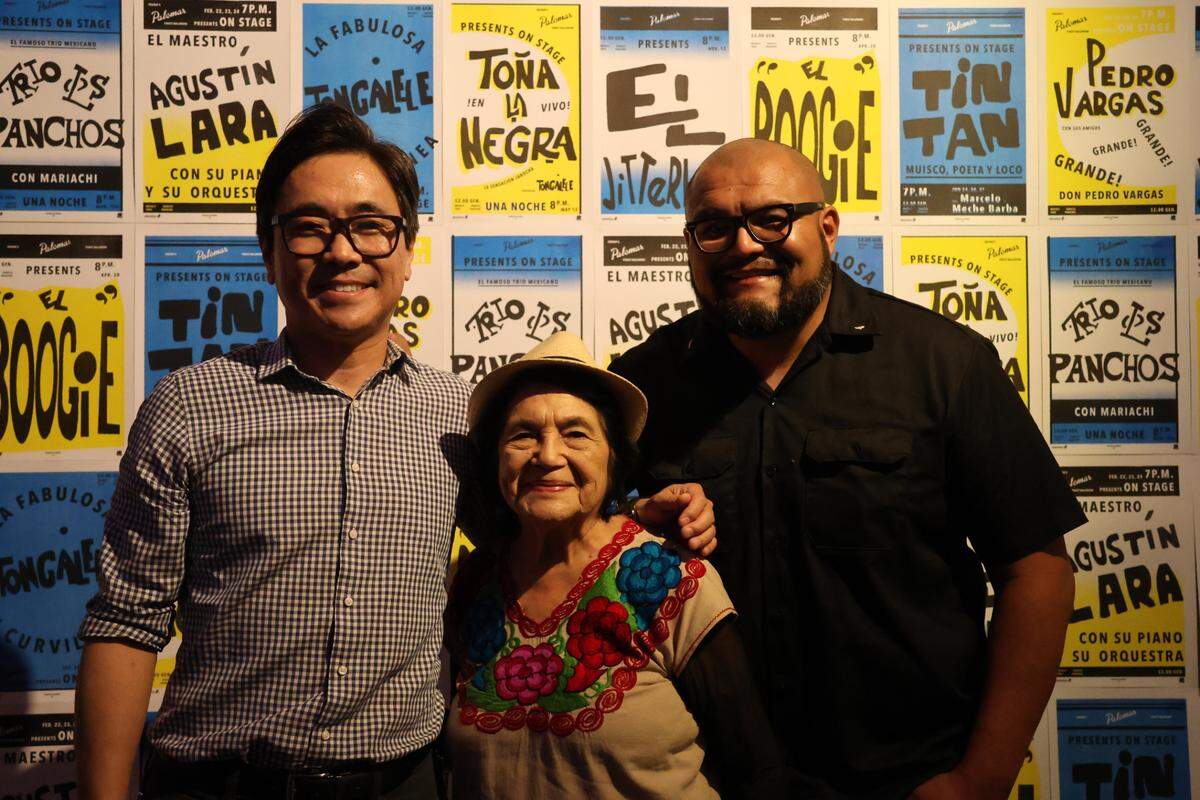
Ríos recited his poem “Dear Buffalo, Dear Zeta or to a Few of My Dead or Nearly Dead Tíos.”
Although he was back in Los Ángeles this week, Richard Montoya said the experience has him “still riding on Fresno fumes.”
Huerta is a hero to many, challenging gender norms to co-found a unionization movement in partnership with Chávez in the Central Valley that would ultimately result in the formation of the United Farm Workers union. Chávez died in 1993. Huerta served as UFW vice president until 1999.
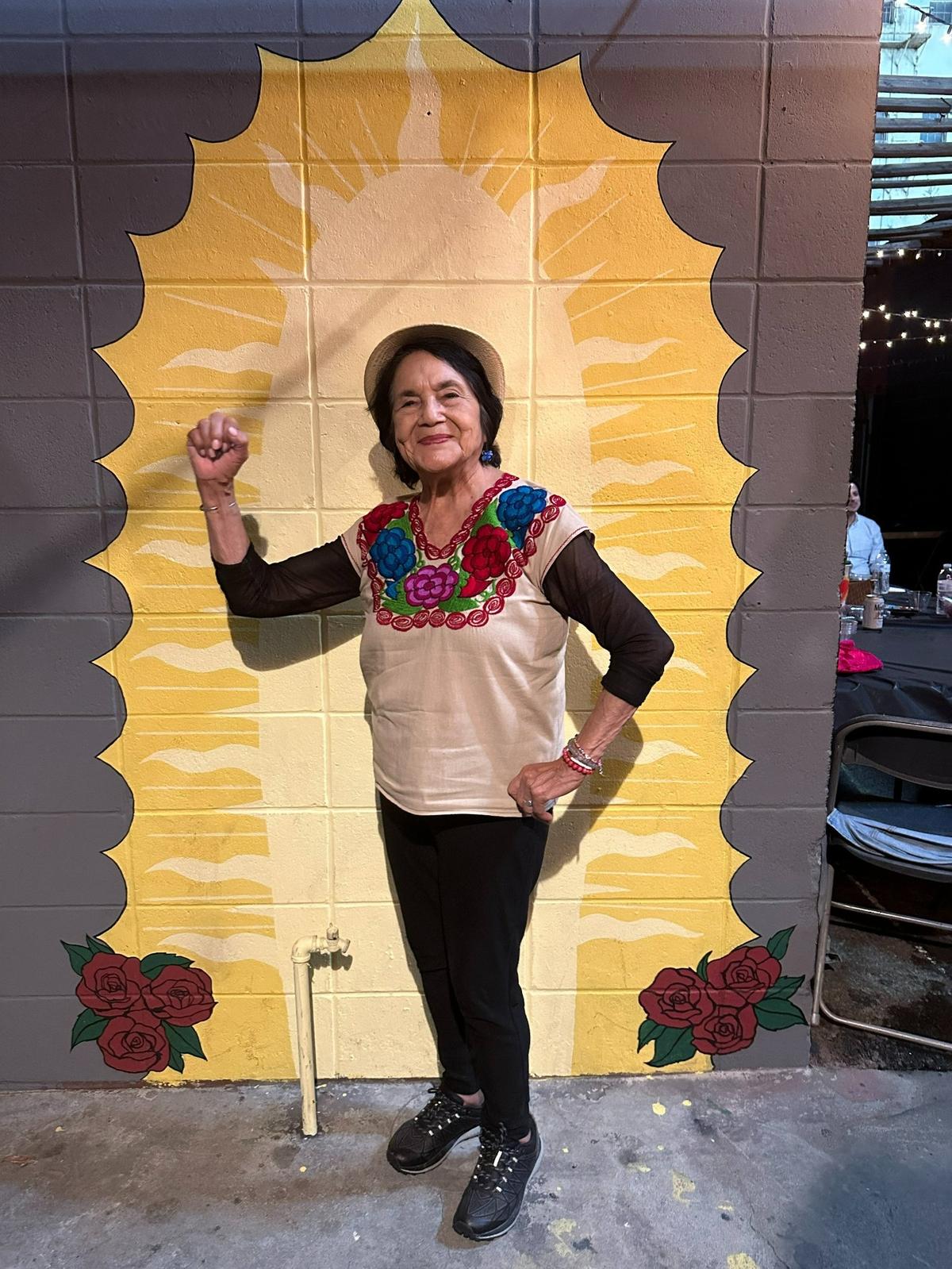
Efforts to contact Huerta, founder of the Dolores Huerta Foundation, for this story were unsuccessful. But Instagram posts by those who were there show Huerta posing joyfully for photos, and raising her cup before group shots of tequila at the downtown studio Hella Fresno.
Dolores Huerta, the Chicano Movement and Fresno
Richard Montoya is the son of José Montoya, a co-founder of the Royal Chicano Air Force art collective and a dear friend of Huerta. José Montoya died in 2013, but he and Huerta were there at the height of Chicanismo, the cultural consciousness of the Chicano Movement that pushed for social justice.
Huerta helped organize farmworkers, and José Montoya wrote poems about them. His poetic recollection of the farmworkers’ First Constitutional Convention, held in Fresno in 1973, screams: “Farmworkers! … Not lifeless executives. Not, stranger yet, pompous politicians!”
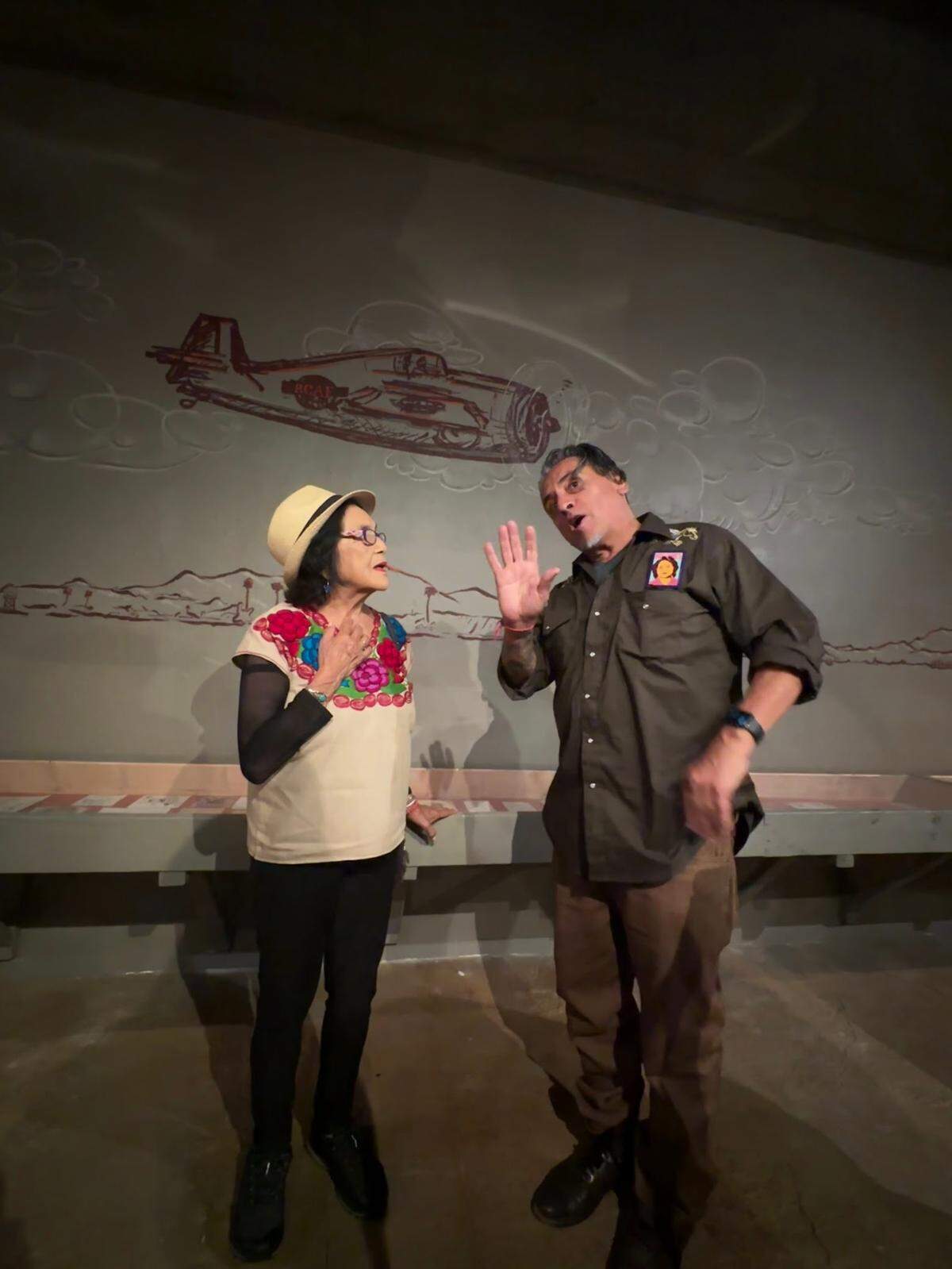
Bringing Huerta to José Montoya’s Resonant Valley exhibition at Arte Américas went beyond downtown’s ArtHop. It isn’t easy scheduling such a busy woman, but Richard Montoya said it was his plan to get her reunited with his father.
The last time Richard Montoya saw his father and Huerta together in the Fresno area might have been around 2010. They danced to corridos and rancheras played on a guitar in the living room of a ranch house somewhere between Parlier and the city.
Tequila shots with Dolores Huerta
Huerta, like César Chávez, was someone who would let her hair down around artists she really loved, Richard Montoya said.
“And when someone asks you if you want to take a shot with Dolores Huerta, you say, ‘Hell yeah I want to take a shot with Dolores Huerta,’” Doeski said with a laugh.
Richard Montoya said his dad and Huerta met during a time when poetry and art were more intertwined with social justice movements.
They connected at conferences often, and Huerta was present at José Montoya’s deathbed.
Arianna Paz Chávez, executive director of Arte Américas, said Huerta has a very giving energy. As the iconic activist’s host, Paz Chávez had no expectation that Huerta would be signing autographs and taking photos. The art center received 400 people Thursday evening, but she said Huerta still wished she could have interacted with more people by the end of the night.
“It can be very easy to get overwhelmed, especially with a large group of people,” Paz Chávez said, “but that is definitely just not who she is.”
’Chicanismo is not going anywhere’
Thursday night honored Richard Montoya’s cousin, the late poet Andrés Montoya. It also echoed a childhood moment: Seeing Luis Valdez and El Teatro Campesino perform his father’s poem, “El Louie,” the story of a zoot suiter and veteran from Fowler. But the night was more of a continuation than a reminiscence.
“Chicanismo is not going anywhere,” Richard Montoya said. “The movement never really ended for them. It slowed, it speeded and had a resurgence. But it’s kind of marching slowly, the way the farm workers used to march from Delano to Sacramento.”
The first iteration of José Montoya’s artwork – including thousands of pieces of napkin drawings depicting the experience of La Raza – took place in Los Ángeles in 2016.
With its return to the Central Valley, “it’s wonderful to see the vibrancy of Fresno,” Richard Montoya said. “It’s important to the life of art and to the life of the Valley.”
The next Con Safos Poetry Series will take place at Arte Américas on Oct. 5. It will feature José Olivares, whose debut poetry book won the 2018 Chicago Review of Books Poetry Prize. José Montoya’s Resonant Valley is on view at Arte Américas through Nov. 26.
This story was originally published September 14, 2023 at 5:30 AM.