Fresno County extends CEMEX sand, gravel mining along San Joaquin River to July 2026
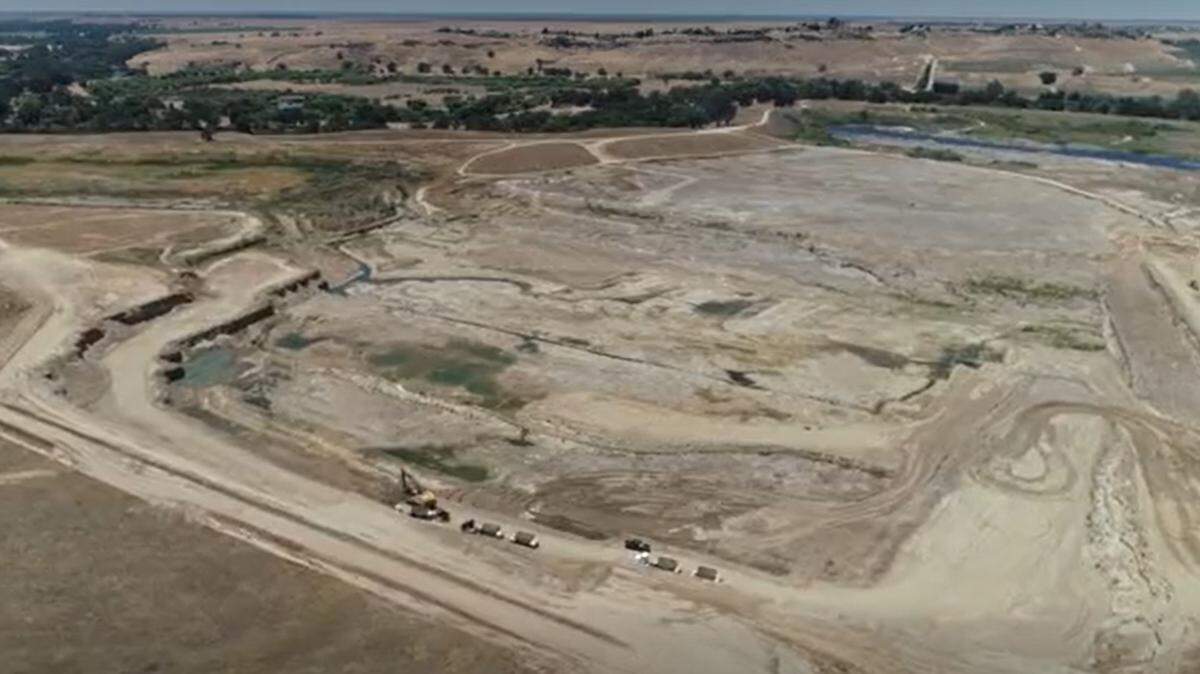
Fresno County supervisors granted sand- and gravel-mining operator CEMEX USA a three-year extension of their operating permits along the San Joaquin River north of Fresno.
By a unanimous 5-0 vote Tuesday afternoon, the Board of Supervisors denied an appeal by the city of Fresno contesting the extension. But instead of the four-year extension that CEMEX had sought for continuing to harvest aggregate materials from the riverbed, supervisors approved three years, through July 2026.
The current county permits for CEMEX’s Rockfield quarry and processing plant were due to expire late next week. The Fresno County Planning Commission approved the four-year extension in June, prompting the city’s appeal.
Mining of sand and gravel at the site for the construction industry has been going on for more than 100 years. The additional three years approved by supervisors Tuesday is intended to provide more time for CEMEX, its environmental consultant and Fresno County’s planning staff to complete the preparation of a comprehensive environmental impact report for a proposed expansion of the mining operations to include deep-rock mining – and not just alluvial mining of loose sand and aggregate from the riverbed – for another 100 years.
Jennifer Clark, planning director for the city of Fresno, urged the board to allow the current permits to expire. The city’s objections were rooted in the county’s approval based on a decades-old environmental analysis of the mining operations. Critics including Clark contended that the previous analyses from the mid-1980s are outdated because conditions – including traffic on Friant Road to and past the quarry – have changed significantly.
Supervisor Nathan Magsig, whose district includes the CEMEX operations, suggested that the changes in traffic volumes are a result of increased development in the northern areas of the city of Fresno and added that the extension would not result in any changes to the way the quarry currently operates.
Supervisor Brian Pacheco sought to find middle ground, putting a more constrained timeline on the extension to spur CEMEX and county staff to accelerate the environmental work. “CEMEX should have started sooner,” Pacheco said. “On a company of this magnitude and this importance, I believe that.”
“I think if you really want to hold them to the fire, we’d better give them a two-year extension.,” Pacheco said. “They’re hiring the people to get this done, so they need to put a little heat on these people.”
Ultimately, the board settled on three years after CEMEX attorney Patrick Mitchell said two years was simply not enough time to complete the lengthy environmental review, including preparing a draft EIR, receiving and responding to public comments, and then incorporating those comments as well as responses and measures to make up for possible environmental impacts into a final EIR for certification and approval. Mitchell said that typically takes as long as four years.
“We’re very pleased that (the board) supported the extension to continue to operate,” said Debbie Haldeman, a spokesperson for CEMEX USA. But, she added, “we’re going to be a little bit challenged” to complete the EIR process for hard-rock mining in the three-year frame.
CEMEX initially submitted an application to the county in December 2019 for its proposal to blast and dig to mine as deep as 600 feet below the surface. Haldeman said the company believed that would be enough time to complete the environmental work before the July 28 expiration of its current permits.
But that was before the COVID-19 pandemic slowed down the entire process, which is dependent not only on CEMEX and its chosen environmental consultant but also the county’s planning staff to complete the EIR.
Fresno city officials who had appealed the planning commission approval of the mining extension said they were disappointed in the supervisors’ decision. City Attorney Andrew Janz said “all options are on the table” up to and including filing a lawsuit against the county.
“Now that the city has exhausted all administrative remedies, we will need to decide whether to initiate litigation in this matter,” Janz said. “The county’s reliance on the outdated EIR is improper and does not accurately reflect the true environmental impact CEMEX’s operation has on Fresno neighborhoods, open spaces and streets.”
Janz added that the city council will ultimately decide whether to take the county to court.
Sharon Weaver, executive director of the San Joaquin River Parkway and Conservation Trust, had asked supervisors to uphold the city’s appeal and allow the CEMEX permits to expire. While the board didn’t concur, she said she was “pleasantly surprised” that the board cut the time extension to three years instead of four.
Weaver said that CEMEX is the last remaining sand- and gravel-mining operation along the San Joaquin River upstream from Fresno. But when others were operating, she added, the county was much more forceful about requiring concessions from companies when they sought extensions.
“Part of the reason we’ve been commenting on this is (because of other companies’ extension requests) that the county extracted some sort of mitigation measures that was beneficial to the environment, to the river,” Weaver said. One such project in neighboring Madera County, she added, was required to do additional planting of trees that were not in the original reclamation plan.
“In my mind, when a project like this is coming forward, that’s an opportunity for the county to do something good, to say, ‘Look, CEMEX, you’ve extracted a lot of material out of the riverbottom. Let’s give something back to the riverbottom,” Weaver said. “In this case, they did not do that.”
This story was originally published July 18, 2023 at 3:35 PM.