
California farmworkers seek aid after losing work, possessions in floods. ‘We need more’
This story is part of the Central Valley News Collaborative — a bilingual, community journalism project funded by the Central Valley Community Foundation and with technology and training support from Microsoft Corp. The collaboration includes The Fresno Bee, Valley Public Radio, Vida en el Valle, Radio Bilingüe and the Institute for Media & Public Trust at Fresno State.
Filberto Hernández Ramírez, a farmworker from the Mexican state of Jalisco, typically picks citrus and grapes in the San Joaquin Valley. But he’s had less work this winter, due to a series of powerful storms that have saturated the region’s agricultural fields.
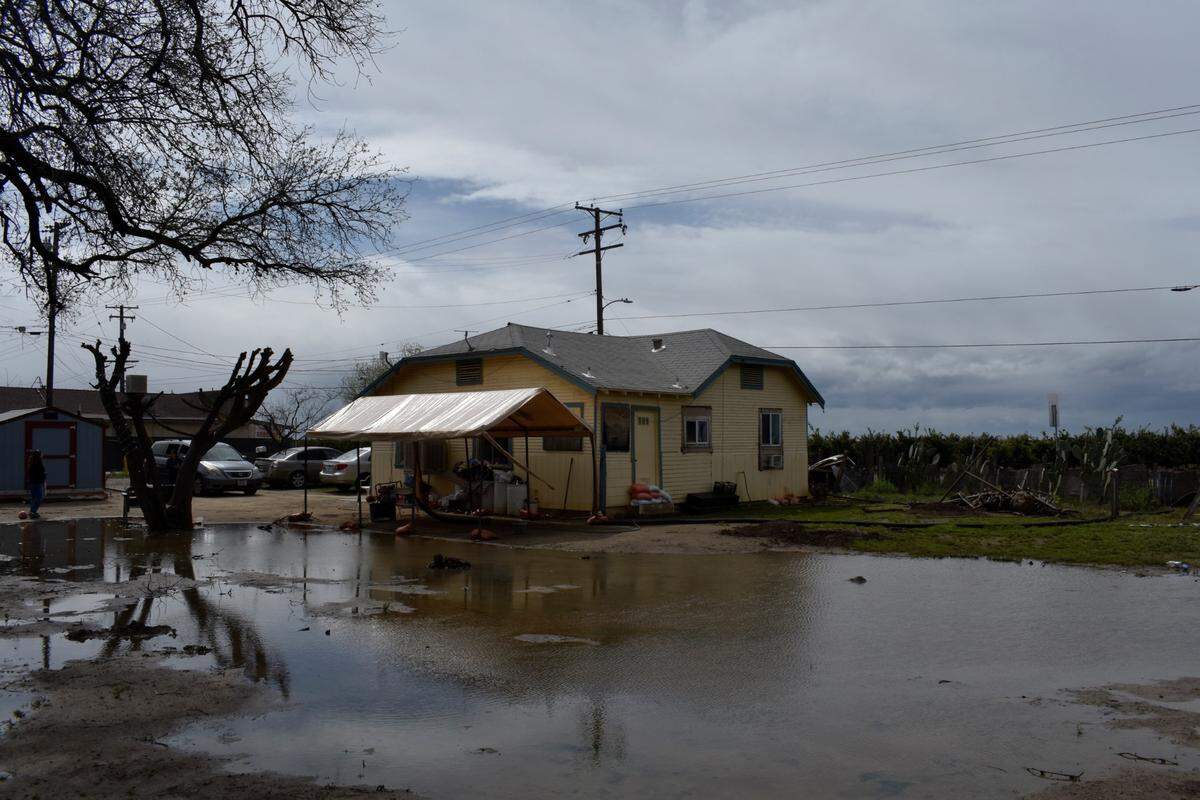
He and his family were already struggling to get by on his reduced income when a storm slammed into Tulare County on March 10. A nearby creek breached and water flooded their apartment in Lindsay.
“We lost belongings,” Hernández Ramírez said through tears in Spanish. “We lost things that cost time and effort to buy.”
Hernández Ramírez and his family are among the thousands of people across the state navigating flood losses. In Tulare County, as well as Planada, in Merced County, and Pajaro, in Monterey County, undocumented workers have proven especially vulnerable this winter: Unable to work due to the rains and unable to claim unemployment benefits, many are finding themselves struggling to make rent and feed their families.
That has spurred workers and advocates to call for unemployment benefits and disaster relief for undocumented workers.
Sarait Martinez, executive director of the Centro Binacional para el Desarollo Indígena Oaxaqueño, or the Binational Center for the Development of Oaxacan Indigenous Communities, said farmworkers worked through COVID-19, wildfires and drought, and now are seeking work amid the ongoing floods. She said they should have access to aid, regardless of their immigration status.
“Though we contribute,” she said in Spanish, “we do not have access to a safety net.”
Tulare County farmworker seeks relief after flood
The Hernández family used to live in a three-bedroom apartment at the Linnell Farm Labor Center, a county-managed housing complex in Visalia.
Both Filberto and Araceli Hernández, his wife, worked in fields surrounding the city. However, Araceli had to stop working in the fields several months ago when she was diagnosed with schizophrenia.
With the loss of his wife’s income and his undocumented status, Hernández Ramírez said his family became ineligible for farmworker housing. They moved to their current two-bedroom apartment in Lindsay, about 30 minutes away from Visalia, in November.
“Here in Lindsay, we’re charged $1,000 for rent,” Hernández Ramírez said. “There, in Linnell, we paid about $380 in rent and still had money to pay other bills.”
And as their rent increased, Hernández Ramírez said his work has petered out. With the rains spanning across the winter, five-day work weeks have become rare.
“Now I’m earning about $300-$350 a week because we’re working two or three days,” he said.
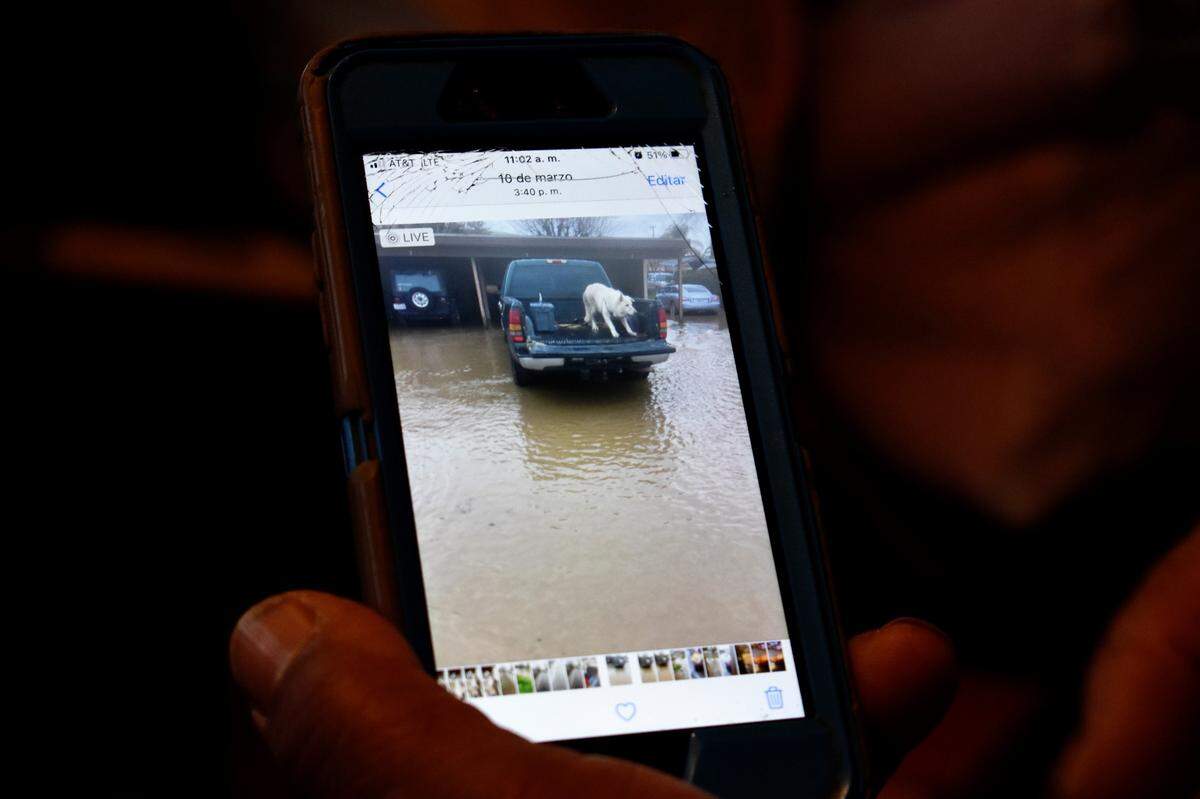
The family was aware that the region is prone to flooding, and their concerns grew as Lewis Creek’s water levels rose. Their apartment is about a block away from the creek.
On March 10, “everything here flooded,” said 25-year-old Aide Hernández, Hernández Ramírez’s daughter. “The water flowed into the rooms, the kitchen was like a pool.”
Hernández Ramírez’s wooden chest of drawers, the family’s velvet red couch and his wife’s wedding dress were waterlogged. The list of lost possessions continued to grow as mold kept spreading through the family’s belongings.
Upon entering the apartment more than a week later, the pungent smell of mold choked visitors. The carpet — still covering all floors except the bathroom — squeaked under the pressure of boots stepping into the living room. Though the water had drained, it was undeniable that the Hernández family’s home had significantly flooded and needed drastic restoration.
Undocumented workers need safety net access, advocates say
In Fresno County, other farmworkers have reported a loss of pay, too. Natividad Ortiz, Simitria Rendon and Yurivia Rendón are Mixteca working mothers from Oaxaca whose household incomes have been reduced because of the prolonged rains. Workers said they can’t work until the saturated ground dries out and it’s safe for them to walk through the fields.
“We’re having trouble paying rent and bills,” Rendón said in Spanish. “When it rains, we lose working hours, we’re not working now and need money to pay living expenses.”
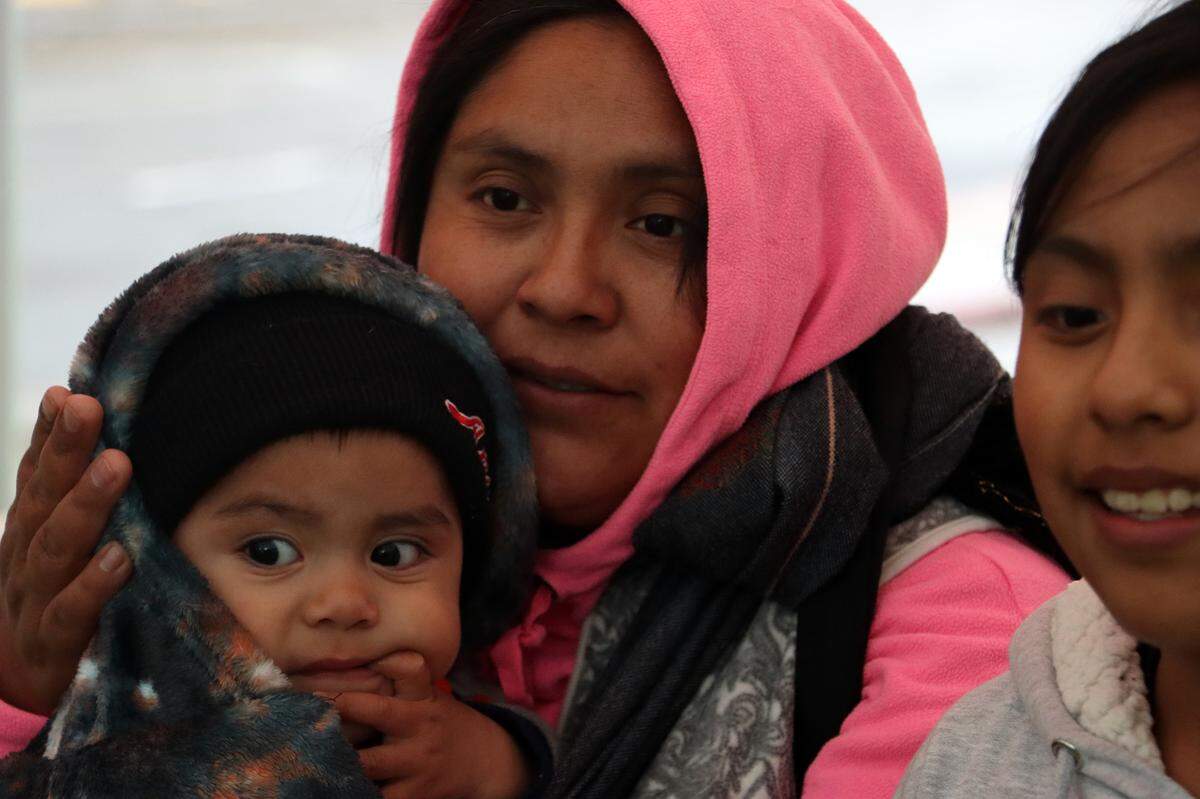
The three women also said in Mixtec they are having trouble paying for their children’s school supplies and clothes, Rene Martinez translated to English. He’s a youth coordinator with Frente Indígena de Organizaciones Binacionales, or the Indigenous Front of Binational Organizations, and works closely with Mixtec families.
“Right now, unemployment benefits would be a big help, especially since whenever we stop working, we need support to make those payments,” Martinez said, translating for the group. “Any help would be a big help.”
A bill introduced in the state legislature in February 2022 would have provided unemployment benefits to undocumented workers through the proposed Excluded Workers Pilot Program. Though the proposal grew out of the COVID-19 pandemic, it also aimed to support workers amid climate emergencies.
Of the 17.1 million workers across California, 1.1 million — approximately 1 in 16 — is undocumented, reported UC Merced’s Community and Labor Center. Undocumented workers collectively contribute $3.7 billion in state and local tax revenues.
Gov. Gavin Newsom vetoed the bill in September, but some advocates are calling again for unemployment and disaster relief benefits for undocumented workers.
“We need a system, infrastructure, that supports (undocumented and farmworkers) in times like these,” Sarait Martinez of CBDIO said in Spanish. “We saw the impact COVID-19 has had in these communities, and we need to prioritize these benefits and relief infrastructure.”
She said the proposal — known as Safety Net for All — would support people amid the statewide storms and flooding.
“We know a lot of crops and harvesting times have been impacted,” she said. “And people are still trying to recover from the impacts of COVID-19, last year’s drought harvest and now this. People won’t have work for months while fields recover.”
Hernández Ramírez called for state leaders to look out for farmworkers in rural communities.
“We are the ones who produce for politicians, for people with more resources, to have their fruits and vegetables,” he said in Spanish. “For produce to reach their homes healthy and safe, and they don’t look out for us.”
Through tears, Hernández Ramírez said farmworkers haven’t received the treatment they deserve.
“For farmworkers, there are very few resources. There isn’t much help,” Hernández Ramírez said. “We need more.”
Join the conversation
Reporters from The Fresno Bee, Sacramento Bee and Vida en el Valle will meet with advocates and policymakers to talk about how farmworkers are being affected by climate change and recent floods. We’re inviting the community to submit questions via the RSVP page and join the live broadcast session on Tuesday, March 28 at 6 p.m..
You can find more information at https://bit.ly/3FVGG1K.
This story was originally published March 28, 2023 at 5:30 AM.