
‘Wrong and misleading.’ Former CSU chancellor Castro blasts Fresno State academic senate
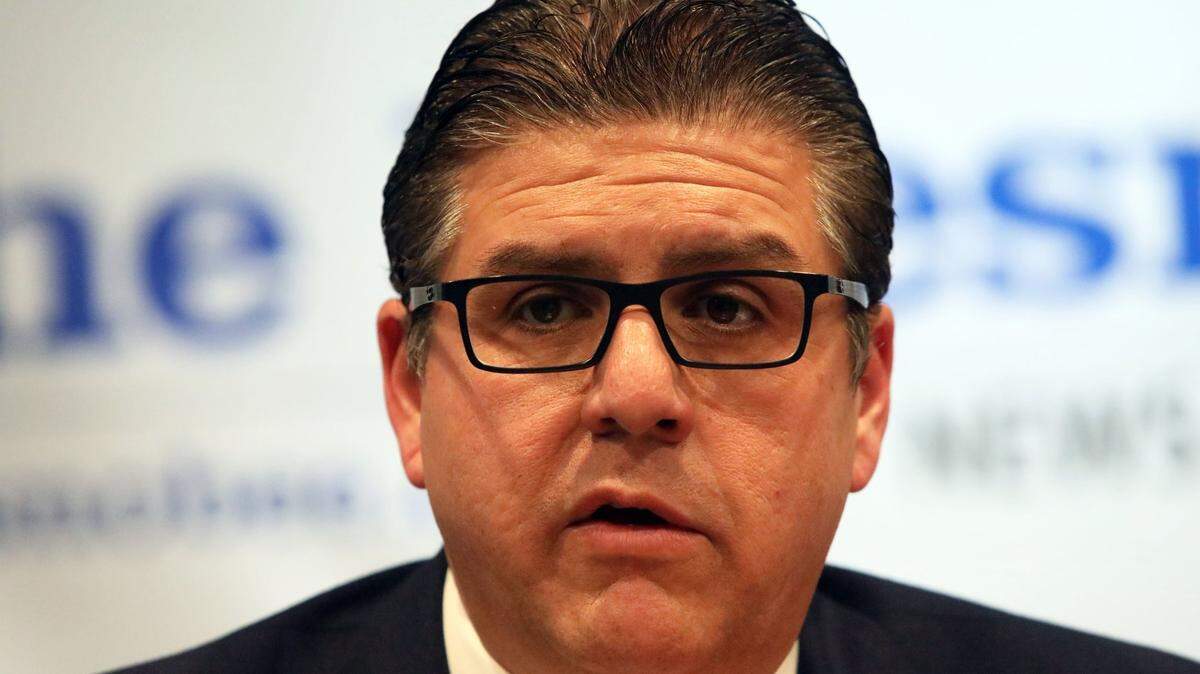
Former California State University chancellor and Fresno State president Joseph I. Castro admonished the university’s academic senate for its adoption in April of a no-confidence resolution in his ability to teach in the largest four-year public university system in the country, and called out what he called a lack of consistency and principle.
Castro, who resigned as chancellor in February while under fire for his handling of sexual harassment allegations at the university, retained retreat right to the Orfalea College of Business at Cal Poly San Luis Obispo. He is scheduled to begin teaching classes there in the spring.
“Your resolution’s statement that I am unqualified to be a professor at Cal Poly is wrong and misleading,” Castro wrote in a letter to academic senate chairman Raymond Hall that was obtained by The Bee. “I have earned the right to be a tenured Professor of Leadership and Public Policy at Cal Poly. My faculty appointment was unanimously approved by Cal Poly Orfalea College of Business faculty in September 2020 as part of my contract with the CSU.”
Castro in the letter said that he had consistently supported and followed Title IX policies and found fault with terminology adopted by the academic senate in its no-confidence resolution.
He also claimed the report into the handling of sexual harassment allegations against former Fresno State vice president of student affairs Frank Lamas did not include documentation supporting a finding that he had followed CSU policies and the advice of legal and Title IX experts.
“(The report) concluded that the settlement with Dr. Lamas was handled according to CSU policy and practices,” Castro wrote. “Unfortunately, however, the investigation report was not comprehensive and did not account for most of the documentation I provided to (investigator Mary Lee Wegner) in its findings. The report went to great lengths to place responsibility solely upon me even though numerous staff and administrators at Fresno State and in the Office of the Chancellor were part of the decision-making process as it relates to the Lamas matter.
“As scholars, we are trained to look at all issues with a critical eye and to base our conclusions on available evidence. The Academic Senate resolution is trusting that media reports are true without benefit of the documented evidence of what occurred. It is even more problematic that the Senate acted in advance of the investigation which was completed in Fall 2022. The Academic Senate chose not to speak with me, a former campus President and faculty member, before adopting this resolution.”
A draft of that no-confidence resolution, which was introduced by Michael Jenkins, a professor in the Lyles College of Engineering, stated: “The Academic Senate of California State University, Fresno notes that through former Chancellor Castro’s words and actions in this matter, he has violated the trust of not only the students, staff and faculty of the CSU but also the people of the state of California. Therefore, Academic Senate of California State University, Fresno affirms that Dr. Castro has demonstrated that he not only does not deserve to hold the rank of tenured professor but that he is unqualified to teach and/or conduct research in leadership and public policy …”
CASTRO OUTLINES INCONSISTENCY IN SENATE ACTION
The resolution was passed with 74% approval in a vote by academic senators.
“As a CSU faculty member, I urge the Fresno State Academic Senate to be consistent and principled in how it approaches issues like the complex personnel matter I handled as an administrator,” Castro wrote. “The Academic Senate adopted this resolution presumably because it disagrees with how I adjudicated a complex Title IX matter involving a CSU administrator. Has the Fresno State Academic Senate ever taken a similar position with any other former CSU administrators who adjudicated a Title IX or other complex matter you disagree with and who are faculty members at Fresno State? Has the Fresno State Academic Senate ever taken a similar position with any other faculty member at Fresno State who themselves violated a Title IX or other Human Resources policy? I believe the answers are no, which is problematic because it suggests inconsistency in the Senate’s actions.
“As a native of the Central Valley, I was deeply honored to serve as Fresno State’s eighth President from 2013-20. During that time, the campus’ academic profile rose significantly as evidenced by its rising student enrollment and graduation rates, increased student, faculty, and staff diversity, as well as national rankings and numerous awards. I believe that history will show that it was a uniquely productive period in the campus’ evolution from an already great university to an even greater university. The campus’ rise during that period occurred because of the teamwork that was so evident. I expressed my appreciation to the Senate each time I attended your meetings, and I will do my best to remember the positive aspects of my service with all of you.
“Finally, as a man of color, I am keenly aware of the historical conscious and unconscious bias in university policies and practices as it relates to women and people of color. I have spent my career working to make universities like Fresno State more diverse, equitable and inclusive. I ask you and other members of the Academic Senate to reflect on the resolution you adopted regarding my handling of a complex Title IX matter and why it is biased in concerning ways because of who I am. You and your colleagues have the power to face up to bias within the Academic Senate and rectify it when it is evident.”
Castro, in a message to The Bee, said his notes to Hall “reflect my views on their actions this year.”
THE CSU INVESTIGATIVE REPORT
The CSU report produced by Wegner, a Los Angeles-based attorney, said Fresno State took some action to explore and address allegations levied against Lamas and while some responses substantially complied with executive order 1096, the CSU policy prohibiting discrimination and sexual harassment, others did not.
There were notice, record keeping and other deficiencies in its responses and best practices were not always followed. Castro also failed to document allegations against Lamas, and continued to provide support even after an investigation confirmed alleged inappropriate behavior.
That included at least eight letters of recommendation including two for presidencies within the CSU. Castro, according to the report, also allowed an environment where even high-ranking administrators felt a fear of coming forward given a close personal relationship between the two.
“Lamas’ intimidating demeanor and comments about what happens to people when they complain about their bosses, along with the narrative he created about being good friends with the president, created a culture of fear that silenced employees,” Wegner wrote in the summary report. “Although people had information about when, how and where to report, and that policies prohibit retaliation for doing so, they lacked faith in the administration’s ability or willingness to protect them and take meaningful action against Lamas.”
This story was originally published November 21, 2022 at 7:09 PM.