
New PlayStation game animated by Fresno native. ‘We try to make stories relatable’

Bruno Velazquez’s first job in animation was an unpaid, foot-in-the-door kind of gig.
“There was a post on the bulletin board,” says Velazquez, animation director at Sony Santa Monica, the company behind PlayStation’s just-released “God of War Ragnarok.”
“It said: ‘Video game internship. No pay. Call this number.’”
It was a small company called Paradox Entertainment and the Fresno State graduate was tasked with creating background scenery for an X-Men fighting game: a Roman chariot going in a circle around a stadium.
It didn’t matter, Velazquez says, “I had finally found something I wanted to do.”
Velazquez had always liked video games. He remembers going to the arcade with his dad as a child in Mexico in the 1980s.
Later, when his family moved to Fresno, he spent hours with his friends at the Nickle Arcade on Blackstone Avenue.
He had always been interested in art and drawing as a student at Kings Canyon Middle School and San Joaquin Memorial High School, where he was a classmate and friends with Fresno’s first poet laureate, James Tyner.
At one point, Velazquez thought he’d maybe end up in comic books. He even created his own and took it to the San Diego ComicCon. They told him to stay in school.
His love for animation came after seeing Disney’s “Beauty and the Beast,” which led him to apply at CalArts.
CalArts was the place to be if you wanted to get into the animation industry. It was known at the time for churning out an amazing number of animators who went on to create films for Disney and others.
Velazquez applied, but didn’t get in.
Even though he already had an art degree from Fresno State, “they had requirements,” for which he wasn’t prepared. It would take another full semester at Fresno City College, in which he enrolled in every figure drawing class he could, to build his portfolio.
When he was finally accepted, he started learning the 2-D traditional animation style made famous by Disney.
But he struggled.
“It was very difficult,” Velazquez says, keeping the characters “in model.” Each character has to be precise and consistent, or else the end result will appear to warp. Velazquez found himself drawn instead to 3-D animation, which was just emerging at the time and allowed animators to embellish characters that had already been created.
“You’re animating puppets, essentially,” Velazquez says.
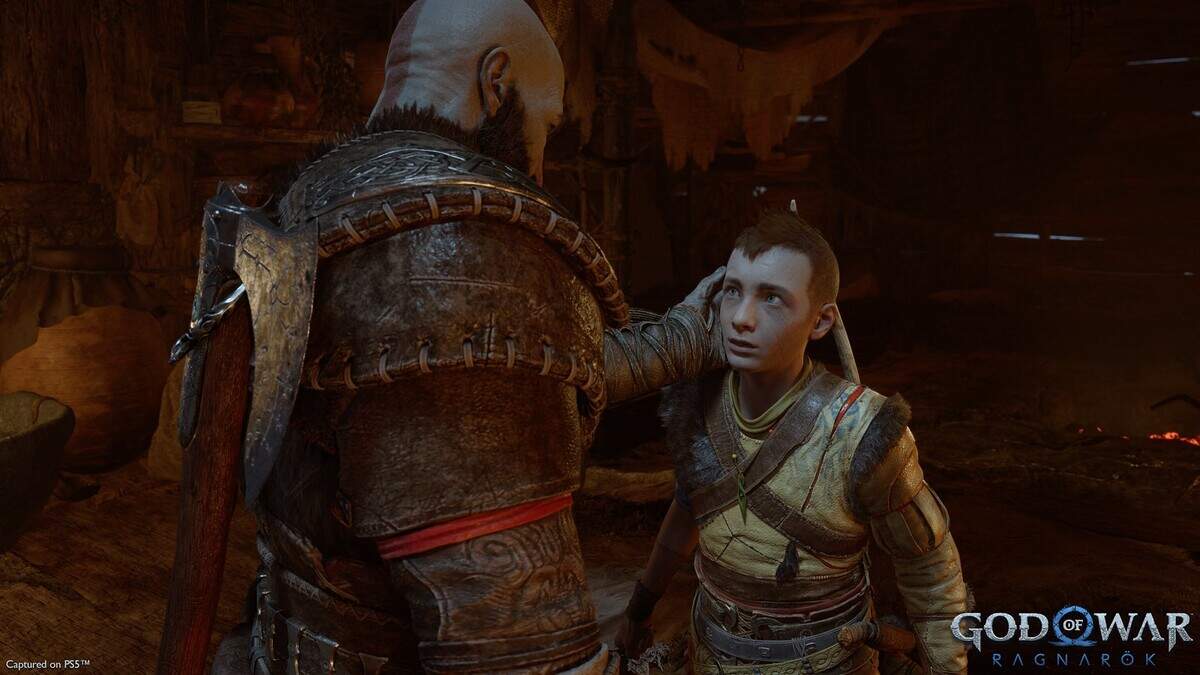
Video games have become an extension of that.
“God of War Ragnarok” was created using motion capture technology, in which live actors are filmed to create a baseline for face and body movements. This allows for greater fidelity in the animation, as animators push or tweak the look and motions to meet the feel of the game, Velazquez says.
“We treat it like a movie set or a TV show,” he says.
“We are essentially making a game and a TV show and a movie.”
At that first job in 2002, Velazquez worked on a team of 50 people.
“Now it takes 400 people,” he says.
That includes a full writing staff. For “God of War Ragnarok” the team created five hours, or two feature films worth of, cinematics outside of the game play. This kind of attention to story form has expanded the medium beyond simply being entertainment for kids, Velazquez says.
“We’ve been able to tell different types of stories,” he says.
“That is what we’ve been focusing on.”
That’s been especially true in the last two installments of the “God of War” franchise, which switched its inspiration from Greek mythology and also gave its protagonist Kratos a son. “God of War Ragnarok” sees that son maturing as the two characters explore — and fight — their way through the nine realms of Norse mythology.
“This is something that the character is struggling with. As a father you sometimes have to understand when to let go,” Velazquez says.
“To me, that is a very human story.”