
Vendors sold food on Fresno County roadside for years. Why are officials cracking down now?
This story is part of the Central Valley News Collaborative — a bilingual, community journalism project funded by the Central Valley Community Foundation and with technology and training support from Microsoft Corp. The collaboration includes The Fresno Bee, Valley Public Radio, Vida en el Valle, Radio Bilingüe and the Institute for Media & Public Trust at Fresno State.
CORRECTION: A photograph originally published with this story as the main photograph did not match the main topic of the story. The photo has been moved.
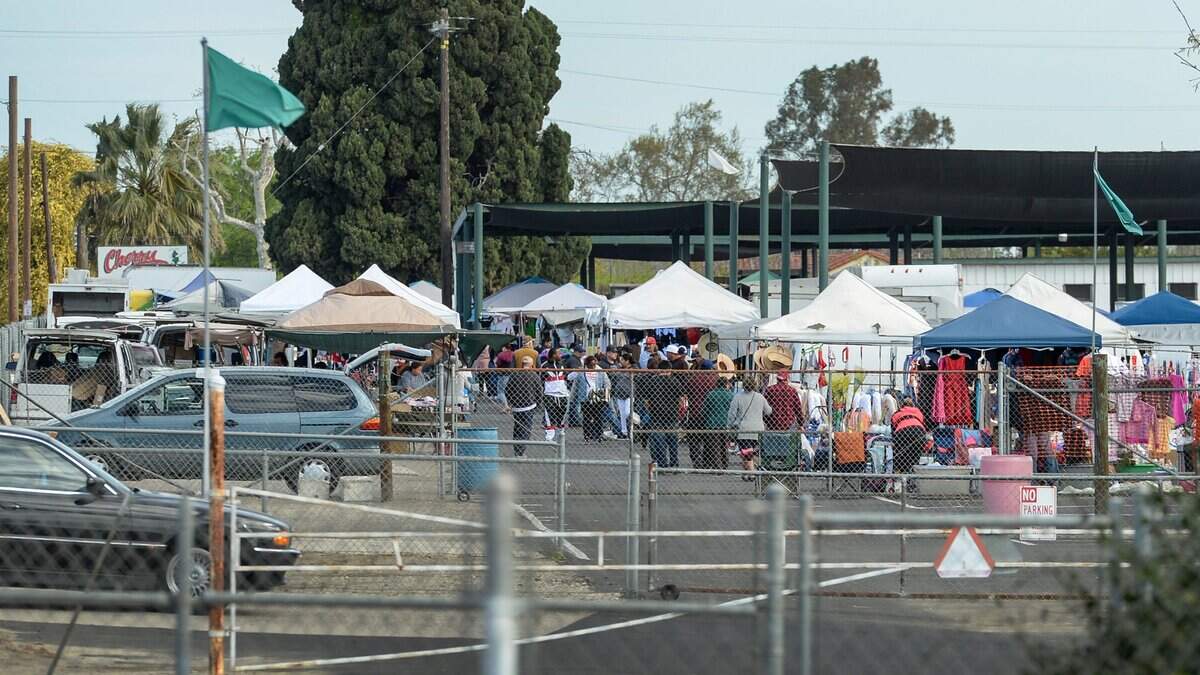
Salvador Munguia has sold tejuino, a sweet fermented corn drink served cold across Mexico’s Pacific coastal states, and antojitos, traditional Mexican comfort dishes, from a small food truck parked near the Cherry Auction for seven years.
But one day last month, Fresno County officials showed up at the edge of a field around Cherry and Central avenues, where he and other vendors were stationed. They requested vendors’ permits and licenses, he said, and asked non-compliant sellers to leave.
“For seven years, I’ve been selling from that spot and the county never said anything about it,” Munguia said in Spanish.
The enforcement effort, launched last month, is designed to reduce congestion around the intersection, decrease the number of unregulated businesses in county District 3 and ensure the safety of street vendors, neighbors and customers.
As part of the initiative, county officials are informing non-compliant vendors of how to obtain the necessary license and permits. But some people, including Munguia, are concerned that the crackdown will make it harder for the area’s majority Latino vendors to maintain their small businesses.
Munguia said he’s invested money into his business, called El Colimote, and tried to keep up with the required inspections, permits and business license renewals. Through the county initiative, he’s just learned he’ll also need a five-year parking permit that costs at least $1,800.
“On one hand, I think it was good that the county was doing their job to check who has their business license,” Munguia said. “But most of us did not have location permits, and many more did not have business licenses.”
Cherry Auction administrators declined to comment about vendors outside of the swap meet’s designated property.
Outreach targets Fresno food vendors
Fresno County Supervisor Sal Quintero called for the enforcement effort after driving by the Cherry Auction during a District 3 neighborhood clean-up on a recent Saturday morning.
He was traveling along Cherry Avenue when the man driving in front of him stopped in the middle of the street, got out of his car and crossed the street to buy a burrito before driving off.
Quintero recalled the incident during the June 21 Board of Supervisors meeting. He described the safety challenges posed by unregulated vendors outside of the Cherry Auction, as well as clients who cross the streets to reach them.
Quintero’s office has also received complaints from neighbors, who say they can’t enter or exit their homes because vendors are causing traffic that blocks the streets around the swap meet, according to Ari Martinez, Quintero’s chief of staff. In recent years, traffic has increased on Central with the opening of the Amazon and Ulta warehouses.
“It has just been a concern that has escalated as far as folks selling out there,” Quintero said during the meeting.
So in June, Quintero’s office partnered with the county’s agriculture, code enforcement and environmental health departments, as well as the county Sheriff’s Office and the California Highway Patrol, to do educational sweeps near the Cherry Auction.
Twice in June, they sent 22 county staffers from all agencies to the intersection of Cherry and Central avenues to talk to vendors both in English and Spanish.
On the first day, June 14, Martinez said there were about 15 to 17 vendors selling produce, tacos and other cooked foods with salsa and all the goods. County staff informed them of best practices, what licenses they needed and how to get them.
The county staff also talked to vendors about food safety requirements, Martinez said.
They explained that food that’s left outside of trucks without refrigeration or in uncovered containers can become contaminated, causing people to contract food poisoning, Martinez said. He said vendors were understanding and, “put things away and started handing things out individually as customers came up.”
There were about half as many vendors on Central Avenue when county staff returned on June 25, despite it being Saturday, which is typically the busiest day at the swap meet.
“Most of the vendors had gotten word that we had been around,” Martinez said.
Martinez said he drove by June 28, a Tuesday, and there were no vendors at all on the street. He added that, according to the Sheriff’s Office and CHP, there aren’t as many vendors on the streets during this time of year because of the heat.
Beyond the district’s health concerns, these outreach efforts level the playing field among vendors, Martinez said.
“We do have vendors who are compliant, operating the way they are supposed to and then have the others who aren’t,” Martinez said.
Vendors have also told him that the current state of the economy discourages them from paying fees to join swap meets or flea markets.
A vendor spot inside the Cherry Auction costs $20 on Tuesdays and $30 on Saturdays. Vendors who require electricity pay an additional $5, subject to outlet availability.
“That’s why we decided to go with the education first, before we do any serious enforcement, because we don’t want to punish them more than this economy is punishing them,” Martinez said. “We just want to make sure the community is safe.”
Officials plan to enforce street vending policies
County officials are planning to return to the area around the Cherry Auction on Aug. 6 to enforce its vending policies. If vendors are out of compliance, staff will take actions such as confiscating and destroying food products, Martinez said.
“And if they need to, they will issue fines,” Martinez said. “There is only so much we can do to be lenient.”
Fresno City Councilmember Luis Chavez helped start the Fresno Food Vendor Association, a group based in the city of Fresno that’s designed to help vendors share their experiences, learn about permit requirements and talk to city officials about their concerns.
He said street vendors do want to comply with local policies.
“They absolutely do and honestly, a lot of them are already going above and beyond,” he said.
The issue, he said, is that the process is unclear and unfriendly, especially for those who face language barriers.
“If you see a local vendor, support them,” Chavez said. “Every dollar that they (community) spend in supporting our local food vendors, it’s going right back into our economy.”
This story was originally published July 22, 2022 at 5:00 AM.