
4 children of Triqui immigrants co-directed a film. See it this week at Fresno City College
In late 2015, four cousins — all United States-born children of Indigenous Triqui immigrants — traveled more than 2,000 miles from Madera to visit an ailing grandfather in their family’s village in the Mexican state of Oaxaca. The youth had heard about their parents’ village of San Martín Itunyoso, but this was their first time experiencing its beauty as well as its challenges.
The youth shot candid video footage on iPads during their journey and the two weeks they spent with their relatives in Oaxaca. At first, the footage was just for themselves and their families, but they quickly realized their story could resonate with a wider audience.
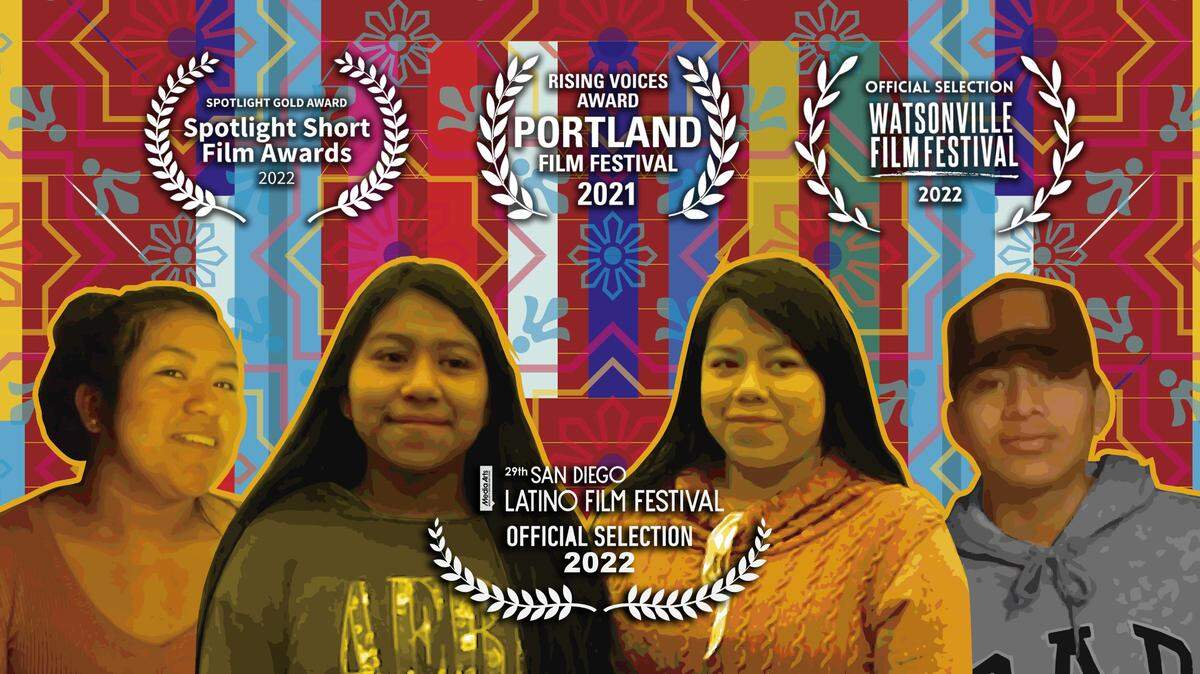
Now, more than six years after that trip, the cousins have co-directed and released a 30-minute film called “First Time Home.” The film, in English, Spanish and Triqui with subtitles, has debuted at film festivals and garnered several awards, including the 2021 Portland Film Festival’s Rising Voices Award.
Fresno City College will host a screening of the film at 7 p.m. on Wednesday, followed by a discussion with two of the filmmakers and the film’s producer. The event, which will be held in Forum Hall, is free and open to the public.
Film follows cousins’ journey to Oaxaca, Mexico
The film opens in Madera, where the youths’ parents work in the agricultural fields, and at least three families share a four-bedroom home. The youth travel to Oaxaca by truck, its trunk filled with items like chainsaws, used clothing, and hairbrushes for their relatives in Mexico. In San Martín Itunyoso, they meet their grandparents, bond with cousins, assist their relatives with the corn harvest and celebrate Christmas.
For many immigrants, cross-border travel is complicated by costs and immigration status. So during the trip, the youth represent their families in the U.S., bringing well-wishes to their grandfather.
“It was an honor to take their place, to go see their parents, because they didn’t have a chance to do that,” said Central Valley resident and co-director Heriberto Ventura, now 21. “For them to offer that to us and give us a chance to show all the emotions that they felt… was pretty honoring.”
The youth also become the links between relatives in the U.S. and those who remain in San Martín Itunyoso. They bring video messages on iPads, recorded in Triqui, from their family members in the U.S. They later return home with recorded messages from Mexico. Watching the video messages was emotional for the relatives in both countries and the youth themselves.
Co-director Noemi Librado-Sánchez said she feels “beyond blessed” to be able to visit family on both sides of the border and bring messages back and forth. Still, she said, it’s “heartbreaking” that other relatives, like her parents and grandparents, haven’t seen each other in more than 15 years.
“You know they wish to just be able to hug the screen and feel like it’s them,” said 17-year-old Librado-Sánchez, who now lives in Washington state.
As the cousins prepare to leave Oaxaca, they tearfully bid goodbye to their grandfather and other family members. The relatives in Mexico send the youth home with beans and other gifts for their families in the U.S.
Seth Holmes, an anthropologist, physician and longtime friend of the co-directors’ families, traveled to Mexico with the youth and helped acquire grant funding for the film. He was moved, he said, by how the families in both countries have continued supporting each other, despite the years and miles separating them.
“Even though their families are across borders and they don’t get to be together, they’re clearly, actively doing a lot of things to care for each other,” said Holmes, who also acted as the film’s producer
Filmmakers gain pride in their Indigenous roots
“First Time Home” premiered at the Portland Film Festival last fall. The film has also screened at film festivals this year, including the Smithsonian Museum’s Mother Tongue Film Festival, the Watsonville Film Festival, and the San Diego Latino Film Festival, where it won the award for Best Youth Film.
Holmes said the film’s initial success has had a significant impact on the young co-directors.
“I think seeking diverse audiences... paying attention to their film, seeing that people are moved by the film and then wanting to ask them questions about it and hear from them and learn from them afterwards, I think has shifted their sense of what might be possible for themselves in the future,” he said.
More than six years after traveling to Oaxaca, the cousins agreed they’ve been changed by the trip and the film. Co-director Esmirna Librado said the journey to Oaxaca helped her gain a better understanding of her identity and made her proud of her family’s Indigenous roots.
“To be honest, no one should be embarrassed of where they come from,” said 22-year-old Librado, who now lives in Washington. “They should actually embrace it.”
“I learned to be proud of myself, proud of my culture, and proud of my parents,” said Heriberto Ventura.
Noemi Librado-Sánchez said understanding her parents’ past has also made her more determined to provide her parents with a better life in the future. She’s graduating from high school this summer and is still deciding where to attend college. She’s interested in pursuing a career in journalism.
“Going to college and getting a degree and then being able to buy my parents a house or a car, that’s what I owe them pretty much,” she said. “Just like they wanted a better life for me, as I’m getting older… I feel like I can push really hard, and I can get somewhere, and I can give my parents a better life as well.”
Elsa Mejía, the daughter of Oaxacan immigrants who’s believed to be the city of Madera’s first Indigenous councilmember, said her eyes teared up just watching the film’s trailer. She related to the filmmakers’ families, who have worked hard to support their families in the U.S., she said, as well as the youths’ efforts to connect with their roots.
She expected the film would resonate with first-generation Mexican Americans and build empathy within the wider community.
“I am very proud of the filmmakers,” Mejía said, “that they’re young, that they had the courage to put their story out there, that they were willing to learn how to make a film and use the resources that they had available to them to put this out there.”
This story was originally published May 10, 2022 at 8:00 AM.