
‘Frank is babysitting my son.’ Castro’s close ties to former Fresno State VP kept victims quiet
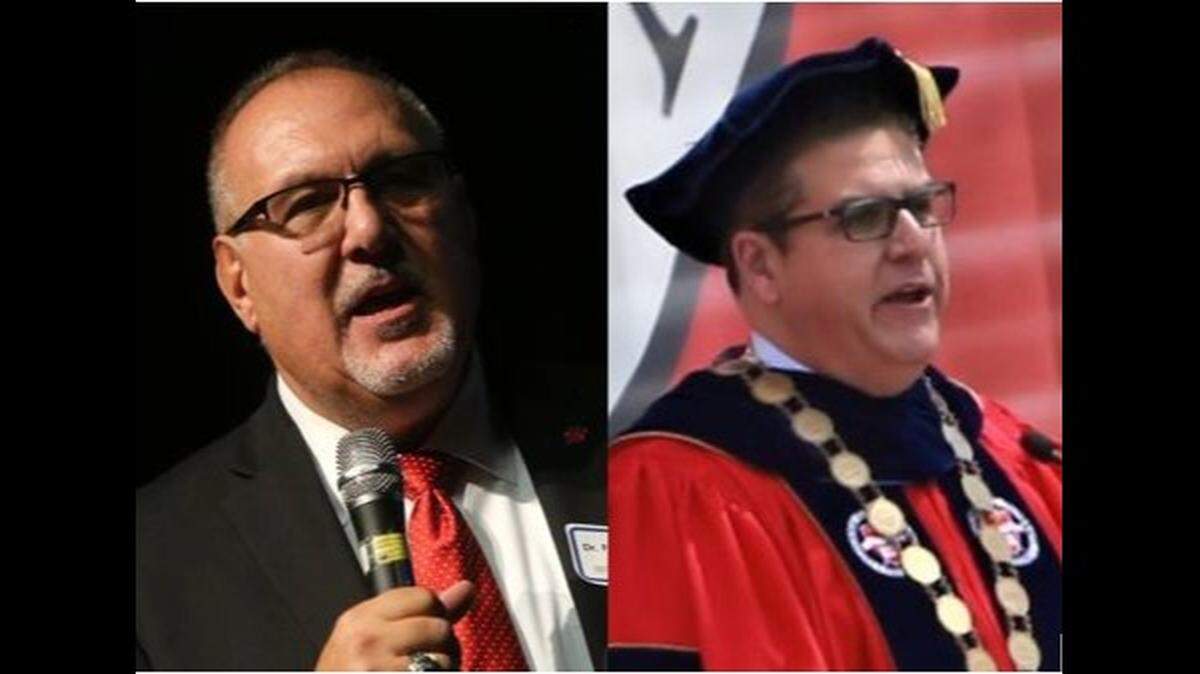
There will be a deep dive into what happened and why at Fresno State with former president Joseph I. Castro and former vice president of student affairs Frank Lamas.
But as the California State University initiates an independent investigation into Fresno State and the way Castro handled sexual harassment allegations levied at Lamas, two top university administrators and staff interviewed by The Bee, backed by a trove of documents from investigative and assessment reports, detailed an environment poisoned by close personal and direct reporting relationships.
That relationship between Castro and Lamas left victims and employees in the department of student affairs hesitant to come forward to file formal complaints, and for years created a fear of retaliation or a sense that the administrator would face no consequences for his alleged actions given the backing of the university president.
While university officials received anonymous tips and heard second- and third-hand accounts of sexual harassment, bullying and a hostile work environment in student affairs, they had difficulty getting victims or witnesses to go on the record or file formal complaints.
“If they came forward they would have been protected because of being a whistleblower or just our anti-retaliation policies for someone who comes forward and files a complaint,” said Debbie Adishian-Astone, the university’s vice president for administration and CFO, who oversees the human resources and Title IX departments.
“I think if this situation occurred in any other area of our university, folks would have come forward and felt comfortable coming forward. I’m not saying everywhere, but I think the prevalence would have been, ‘Well, this is not a good situation. I need to report this. I know where to report it. I have different areas where I can report, confidentially or otherwise.’
“I think the close personal relationship, the friendship that Dr. Castro and Dr. Lamas had, we couldn’t overcome that. We couldn’t overcome that relationship being so public, and that it was a constant reminder within student affairs, from what I’ve been told from people who won’t come forward, and I respect their anonymity.”
Those concerns date at least to October 2015 when a representative of the California State University Employees Union shared with Castro via email second-hand allegations and the name of a student who had concerns about Lamas’ conduct. That email was forwarded to Adishian-Astone and then former Title IX coordinator Jan Parten, as required by CSU and university policy. But when contacted the student indicated she did not want to pursue a formal complaint, as well as a concern about retaliation.
The October 2015 case was not uncommon, and Lamas’ alleged conduct apparently was not a secret on campus.
A fear of retaliation
Buried among pages of exhibits to the 2019 Title IX investigation that led to Lamas’ separation from the university is an email. The names of the sender and the recipient have been redacted, but they appear to be discussing a photograph of a female Fresno State employee.
The email, sent in September 2015 between Fresno State addresses ending with csufresno.edu: “Where did you find that picture? Man, if she would have still worked in ISSP when the new VP (Frank) got here, he would have for sure moved her in his office. Lol.”
Lamas had been at the university for about 16 months at that point.
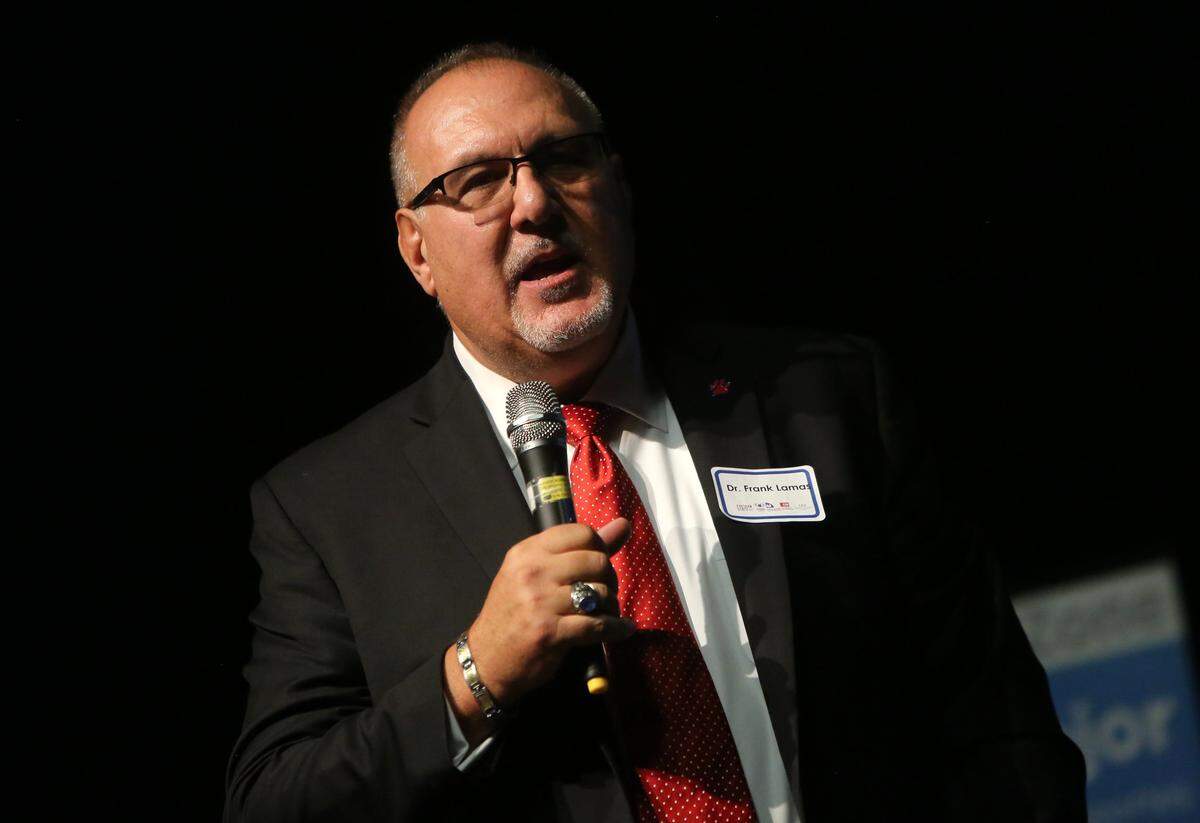
A university Title IX coordinator or DHR administrator is to investigate, regardless whether a complaint has been made, according to CSU policy.
And, if a potential complainant requests no investigation to be conducted, the Title IX coordinator/DHR administrator must balance the request against the campus’ duty to provide a safe and non-discriminatory environment for all members of the campus community.
Relevant factors include whether there are multiple or prior reports of misconduct. But, also, whether the Title IX coordinator/DHR administrator anticipates it will be possible to conduct a thorough investigation and obtain relevant evidence without the complainant’s cooperation.
In June 2016, Fresno State did engage an external consultant to conduct a micro climate assessment of student affairs, focusing on leadership of the division after a group of managers in the department of student affairs, all required mandatory reporters of Title IX violations, brought concerns about Lamas to the university’s Title IX coordinator.
The individuals who were the subject of those reports chose to remain anonymous and elected not to file formal complaints.
But the assessment suggested there were issues.
Only 18 employees or roughly 5% of the student affairs staff participated in the assessment, but while respondents expressed, “great pride about the high energy focused on student success,” it also was noted that “VP makes inappropriate comments (sexist comments to and about women, humor and at time insensitive to the circumstances of his audience).”
According to a quick survey accompanying the report:
61% disagreed or strongly disagreed with the statement, “I feel my communication with my VP is open and transparent.”
55% disagreed or strongly disagreed that “I have never experienced any sense of harassment or a hostile work environment in DOSAEM (Department of Student Affairs and Enrollment management).”
50% of the respondents to the survey stated “I feel comfortable expressing my opinions and perspectives to my VP,” though the highest percentage of respondents, 33%, strongly disagreed.
72% did agree or strongly agreed that, “I feel respected by my VP.”
One month following the climate assessment, Castro had Lamas complete a six-hour one-on-one sensitivity training program.
Warnings, from a climate assessment
There was another anonymous letter addressing concerns stemming from the climate assessment to Marylou Mendoza-Miller, associate vice president for human resources.
There also were training sessions for the departments of student affairs as well as administration and finance that included communication, team building, harassment issues and bystander training.
Those sessions were an effort to empower employees.
“Information, resources, whistleblower, anti-retaliation, all of those topics were covered as part of the training,” Adishian-Astone said. “We brought in an outside facilitator to do that. But we couldn’t pierce that fear.”
That fear was fueled, also, by the reporting relationship.
As vice president of student affairs, Lamas reported directly to Castro.
Not all of the complaints pertained to sexual harassment, or were made by subordinates in the department of student affairs. But one provides some depth or context to the relationship.
Diana Ralls, who was Castro’s chief of staff at Fresno State, confirmed to The Bee that she had sent an email to human resources after a third instance of harassing, bullying interactions with Lamas.
‘Frank is babysitting my son this weekend’
Ralls consulted with Adishian-Astone, who advised her to document the incident for her personnel file. Ralls sent the email to Castro, with a copy to human resources. It was a first step, she said, to put the interaction on record in case there was an escalation down the line.
“We’re colleagues that have to discuss very difficult issues so not all of our interactions were positive, but this one was different,” Ralls said. “I don’t even remember the subject matter, I just remember that I was completely shocked by the way that he was talking to me and the way that I was treated.
“I was so taken aback by it that I went immediately to Dr. Castro and I told him that, ‘Wow, those red flags that we’ve seen, I’m worried that there’s more to it, because I just experienced it.”
She didn’t ask Castro to do anything at that time, didn’t feel it was at a level that anything needed to be done, but wanted him to be aware of her experience.
A few months later, it happened again.
Then, a third time.
“(Castro) wasn’t in the office at the time so I texted him and said, ‘Frank just laid into me again. I need to talk to you,’” Ralls said. “I actually sat down and I wrote out what happened in that interaction, what the conversation was. I was trying to process, what did I say, what did I do that caused this?
“(Castro) came back and he said, ‘What happened?’ and I told him. He said, ‘Well, I’m in a really tough spot because Frank is babysitting my son this weekend.’ That wasn’t the reaction that I expected.”
Ralls has known Castro for 24 years, worked for him at UC Merced and had been offered a job to work with him at UC San Francisco. Did she feel betrayed?
“Disappointment, for me,” Ralls said. “I think that he made some poor judgment calls and I guess sadness that he would have put this friendship, this relationship with Frank above what I was telling him, and mine was minor. Mine was minor compared …”
A formal Title IX complaint
In October 2019, a formal Title IX complaint was filed by a former employee in student affairs who had worked closely with Lamas.
It was alleged that over a period of more than two years Lamas made comments about her body and appearance, touched her repeatedly after being asked not to do so, stared at her and other women and also made comments and engaged in other behavior with possible sexual overtones.
Included in the investigative report were incidents where Lamas gave the complainant condoms, touched her inappropriately including once adjusting her bra strap after it had slipped down her shoulder, and Oct. 23, 2019 grabbed the complainant’s left forearm and massaged her upper bicep with his other hand, commenting, “Look at those muscles. She’s so toned.”
The complainant said the touching lasted 10 to 15 seconds and felt she couldn’t get away without making a scene.
It also was witnessed by another employee in student affairs. According to the investigative report, the witness later told the complainant that it was as though time had frozen, and that she looked “freaked out.”
Two days later, the complainant met with an associate vice president in student affairs who reported to Lamas and was the first witness interviewed by the investigator, Los Angeles-based attorney Mary Lee Wegner.
The complainant told the AVP that the incident was the most recent in a year of harassment — she had been keeping notes since August 2018.
What the complainant had not told anyone to that point was that in early October, when talking about a promotion they had discussed, Lamas allegedly said that while it may be hard for her to hear, he thought she was not qualified for a new director position they had been discussing.
He then reached over, put his hand on her knee and started moving it up her thigh (she was wearing pants). The complainant, according to the investigative report, said, “Don’t touch me,” and pulled her legs away.
She resigned the following Monday. Her last day was scheduled to be Nov. 8, 2019, but she was put on paid leave Nov. 4, 2019.
A formal Title IX complaint was filed on Oct. 29, and on Nov. 4 the university’s Title IX coordinator sent Lamas a notice of investigation for violations of CSU executive order 1096, its system-wide policy prohibiting discrimination, harassment, retaliation, sexual misconduct, dating and domestic violence, and stalking against employees and third parties.
Lamas that day also took a leave, through Jan. 2.
According to the report on the Title IX investigation, a number of witnesses interviewed also had expressed concern about how Lamas would react if they provided negative information about him.
CSU executive order 1096
Those fears were based on a number of factors including that Lamas often touted his close relationship with Castro and employees were aware that his conduct had previously been investigated, and from their standpoint had not been disciplined or suffered adverse consequences.
Six of the 26 witnesses interviewed in the report said they had heard Lamas mention or discuss his close relationship with Castro, and some felt that he did so as a control mechanism to possibly deter them from challenging him or lodging complaints.
Three other witnesses were members of Castro’s cabinet; one was the human resources director.
Lamas has denied that he acted inappropriately, volunteered to take a polygraph test, but lost an appeal on the findings of the investigation.
The former administrator, who had arrived at Fresno State with a strong reputation, supported his case with endorsement letters from colleagues at the university as well as other stops in a long career.
- “I was shocked to hear the allegations of improprieties by Frank because I never saw him exhibit any inappropriate behaviors …“
- “Never once in all the times I have been around Frank have I witnessed a behavior that I would consider harassing, or even uncomfortable …”
- “In the thirteen professional years that I have known Dr. Lamas, he never treated me with anything less than absolute professionalism. I have attended numerous meetings, conferences, committees and other engagements and I have never felt intimidated, harassed (sexually or otherwise), uncomfortable or mistreated in any way …”
Ultimately, the investigator found the complainant and witnesses credible. Though Lamas repeatedly denied touching, staring at or engaging in unprofessional conduct, several people had witnessed, heard about or experienced the same types of behavior. Also, while the endorsement letters, from men and from women, were considered, they were deemed insufficient to outweigh the other information received.
Lamas received $260,000 in a secretive settlement agreement as well as a letter of recommendation from Castro toward future employment.
A nomination for president at CSU San Marcos
It was handled by a retired federal judge, Castro and CSU counsel. Cabinet members including Fresno State President Saúl Jiménez-Sandoval, who was provost at the university at the time, were unaware of the negotiations.
He also was not informed by Castro of the investigation.
“Whenever there are issues of personnel matters, the provost does not get involved if these issues are outside of academic affairs or these issues deal with a fellow cabinet member,” Jiménez-Sandoval told the Fresno State academic senate, at a meeting on Monday.
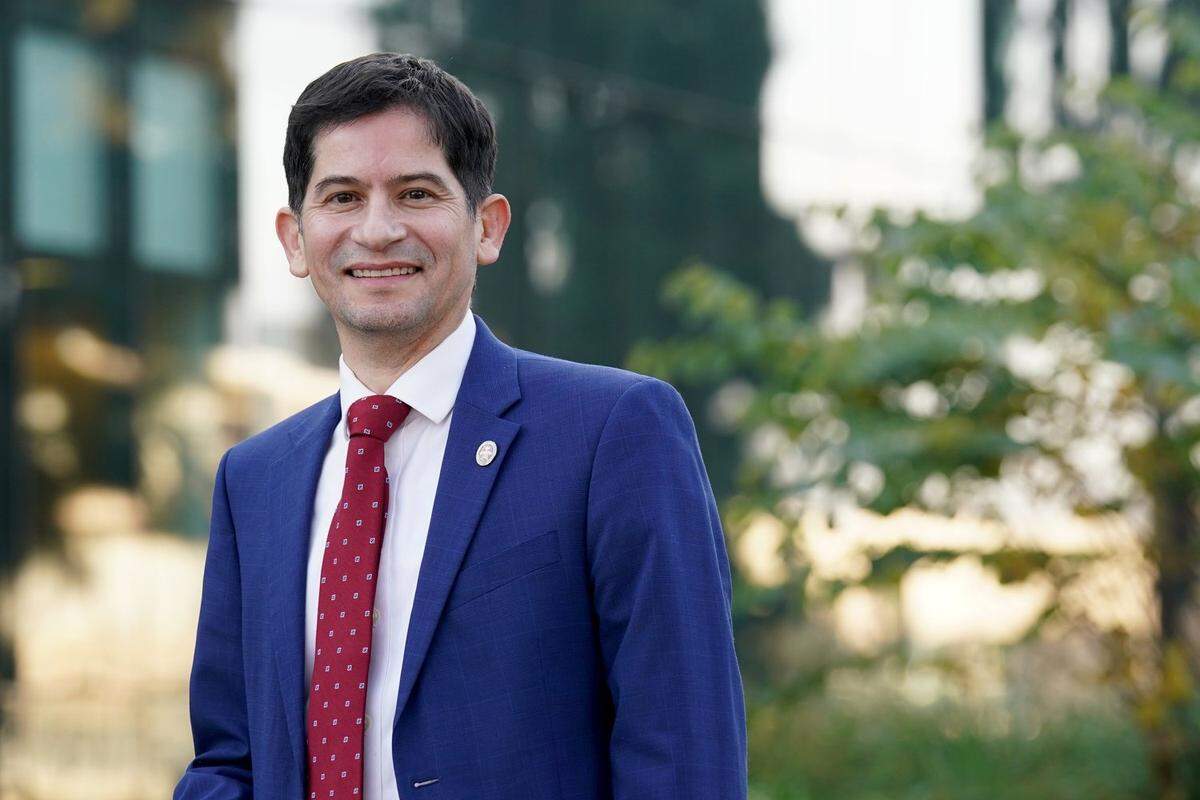
“In this case, I was not privy to what was happening with the investigation. I received the same message that everyone received, which said that Dr. Lamas had informed our previous president that he was going to take a leave of absence and at that point I sincerely believed that it had to do with health issues. This was back in November, I was provost at that time between July and November, so a very few months.
“After that, I did hear some rumors from people. They were informal rumors about what was happening. I did ask our previous president about them and in January he told me there was an investigation that was going to happen. He said to me, there will be an investigation and there will be a report that will be produced. This report when it comes out I will share with you. It came out. It was not shared with me. I did not know what the contents of the report were. I asked about the report. I was told by our previous president the report does not look good.”
Castro, who left Fresno State in September 2020 to become chancellor of the 23-campus CSU system, resigned that post under fire on Feb. 17. Under terms of a settlement with the CSU he has entered an executive transition program and reassigned into the CSU Management Personnel Plan. Castro has been classified as an advisor to the board with an annual salary of $401,364, monthly payments of $33,447. That salary will be paid by the chancellor’s office on behalf of the CSU board of trustees, and ends Feb. 17, 2023.
He also retains retreat rights as a tenured professor of leadership and public policy at the Orfaela College of Business at Cal Poly San Luis Obispo.
The day the sexual harassment allegations were detailed in a USA Today report, he sidestepped questions about his relationship with Lamas.
The former vice president of student affairs at Fresno State said in an interview with The Bee that he had considered Castro a friend, and did not think he received preferential treatment.
But through Lamas’ tenure, Castro had continued to give positive performance evaluations and annual pay increases. Castro emailed then-CSU chancellor Timothy White in 2018 to “enthusiastically nominate” Lamas to be the next president at Cal State San Marcos when that position came open.
“He has been an exemplary colleague and campus leader at Fresno State since 2014,” Castro wrote in the email, which The Bee obtained through a public records request.
“Frank has led a complete revamping of the Student Affairs and Enrollment Management area to make it more student service focused and in complete alignment with our Graduation Initiative 2025 vision and goals. He has also implemented one of the most robust student basic needs initiatives in the nation.”
Castro also nominated Lamas for the NASPA Fred Turner Award for outstanding service, the organization’s lifetime achievement award.
Did Lamas receive preferential treatment?
All this, after allegations rolled in. The first came in September 2014, shortly after Lamas was appointed, when an employee emailed Parten, the Title IX coordinator. Lamas, he said, had made inappropriate remarks inquiring about his sexual orientation while giving him a campus tour.
“I expect a Vice President to be more professional, careful of his words and polished than this, we are not in Texas we are in California. What does it matter to you if I am heterosexual or homosexual?” he wrote in the email, which is included in exhibits to the Title IX investigation report.
“How this whole situation has played out is very disappointing,” Adishian-Astone said. “A lot of emotions — some disappointment, distrust, anger. But more importantly, I just feel so much for my colleagues in student affairs. They didn’t deserve to have that work environment.”
Fresno State, she said, handled reports of misconduct correctly.
There was assessment and outreach to potential complainants. The CSU prescribes steps there, too, including a request for the complainant to meet with the Title IX coordinator or DHR administrator to discuss options and next steps, information regarding supportive measures and an explanation of how the university responds to reports of policy violations and a description of potential disciplinary consequences.
Also, that retaliation for making a complaint or participating in the process is prohibited by CSU policies.
“I know there have been some questions about the time period from 2016 to ‘19 and what we knew and who knew what,” Adisihan-Astone said.
“It was very well known that Dr. Lamas’ behavior during that time, while maybe not of a formal Title IX nature, was inappropriate. There was bullying and forms of harassment that were not OK. There was the issue of folks in student affairs not feeling comfortable coming forward for fear of retribution or retaliation. I did everything I could in reaching out to my colleagues in student affairs to say that I would support them, that I would come forward with them, whatever I could do. It wasn’t just me, it was my associate vice president for human resources, our Title IX coordinator. It was our responsibility to do that informal outreach frequently, not just once.
“But that relationship was so close, nothing was going to come between it.”
This story was originally published March 8, 2022 at 4:49 PM.