
People facing deportation get ‘legal due process,’ ICE says. Agency has new priorities
There are about 1,800 Cambodians nationwide who face the threat of being separated from their families by deportation. They live in limbo not knowing, if and when, they could be deported.
A civil rights attorney told The Bee last week that federal immigration officials could soon resume arrests of Cambodians who hold a deportation order, and that Fresno could be among the cities targeted. Advocates echoed the concern about the potential resumption of deportations to Cambodia after a pause during the COVID-19 pandemic.
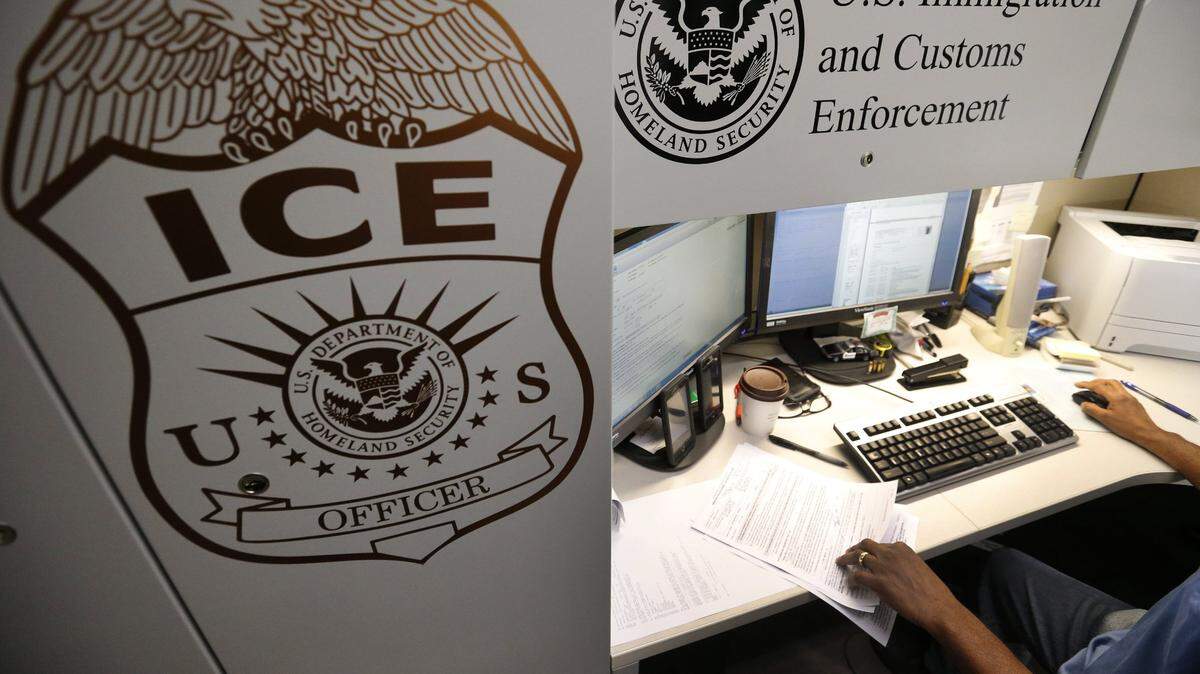
A U.S. Immigration and Customs Enforcement spokesperson this week said deportation cases are thoroughly reviewed before officers carry out any enforcement action, and the individuals involved receive “legal due process,” in addition to new rules that prioritize deportations.
As of Feb. 12, about 1,800 Cambodians nationwide had a final deportation order. Many of them came to the U.S. as refugees during the U.S. secret bombing on Cambodia during the Vietnam War. More came during the Khmer Rouge genocide a few years later, during which at least 1.7 million Cambodians were murdered by the regime.
There is currently one Cambodian individual in ICE’s custody who has pending deportation proceedings, according to the ICE spokesperson.
“Noncitizens placed into removal proceedings receive legal due process,” the ICE spokesperson said in a statement this week.
Deportations to Cambodia increased dramatically under the Trump administration, and led to family separations in Fresno. But those deportations came to almost a complete halt during the pandemic.
One Cambodian individual was deported in fiscal year 2022 and another one in fiscal year 2021. In comparison, 80 Cambodians were deported from Oct. 1, 2017 to Aug. 11, 2018, alone.
The federal agency in November implemented new civil immigration enforcement priorities to focus on the arrests and deportations of noncitizens who pose a threat to national security, public safety and border security, according to the spokesperson.
Deportation proceedings go through the Executive Office for Immigration Review (EOIR), an agency under the U.S. Department of Justice (DOJ), and separate from ICE, the spokesperson said. EOIR has long been criticized for not being independent and “free from law enforcement priorities and decisions that directly impact” the way cases are handled, given that it’s overseen by the DOJ. There have also been multiple efforts to strip federal immigration judges from their rights to unionize.
The ICE spokesperson said EOIR immigration judges make decisions “based on the merits of each individual case,” and then “ICE officers carry out the removal decisions made by the federal immigration judges.”
“Once a noncitizen has been issued a final order of removal by an immigration judge, ICE evaluates the totality of an individual’s case before moving forward on any enforcement action,” the ICE spokesperson said. “The procedures instituted in support of agency priorities ensure officers, to the fullest extent possible, obtain and review the entire criminal record, administrative record, and any other investigative information available, to include both aggravating and mitigating factors, in making their enforcement decisions.”
Those steps, the spokesperson said, “ensure a thorough case-by-case assessment of whether enforcement action is warranted and appropriate.”
Fresno is home to an estimated 6,718 residents who identify as Cambodian alone or in any combination, according to estimates from the 2015 U.S. Census American Community Survey. The 2015 estimates are the most recent available figures.
Many people who hold a deportation order to Cambodia weren’t previously deported because the Southeast Asian country wasn’t accepting deportees for several reasons. The U.S. didn’t have a repatriation agreement with Cambodia for a long time and many people facing deportation didn’t have documents showing they were from Cambodia.
Then deportations slowly began after a repatriation agreement was reached in 2002. The Cambodian government wasn’t cooperative and in 2016 it temporarily stopped accepting deportees. But in 2017, the Trump administration issued visa sanctions on Cambodia to pressure the country to take back deportees, and mass raids occurred in cities with large Cambodian populations.
Similar sanctions followed in other countries, such as Laos. The U.S. partially lifted visa sanctions on Laos earlier this month, but full sanctions remain in place for Cambodia, which is run by an authoritarian government that’s riddled with deep corruption, and it’s one of the poorest countries in the world.
This story was originally published February 27, 2022 at 5:00 AM.
.jpg)