
Fresno-area kids have low vaccination rates amid COVID spike. ‘Some kids get really sick’
This story is part of the Central Valley News Collaborative — a bilingual, community journalism project funded by the Central Valley Community Foundation and with technology and training support from Microsoft Corp. The collaboration includes The Fresno Bee, Valley Public Radio, Vida en el Valle, Radio Bilingüe and the Institute for Media & Public Trust at Fresno State.
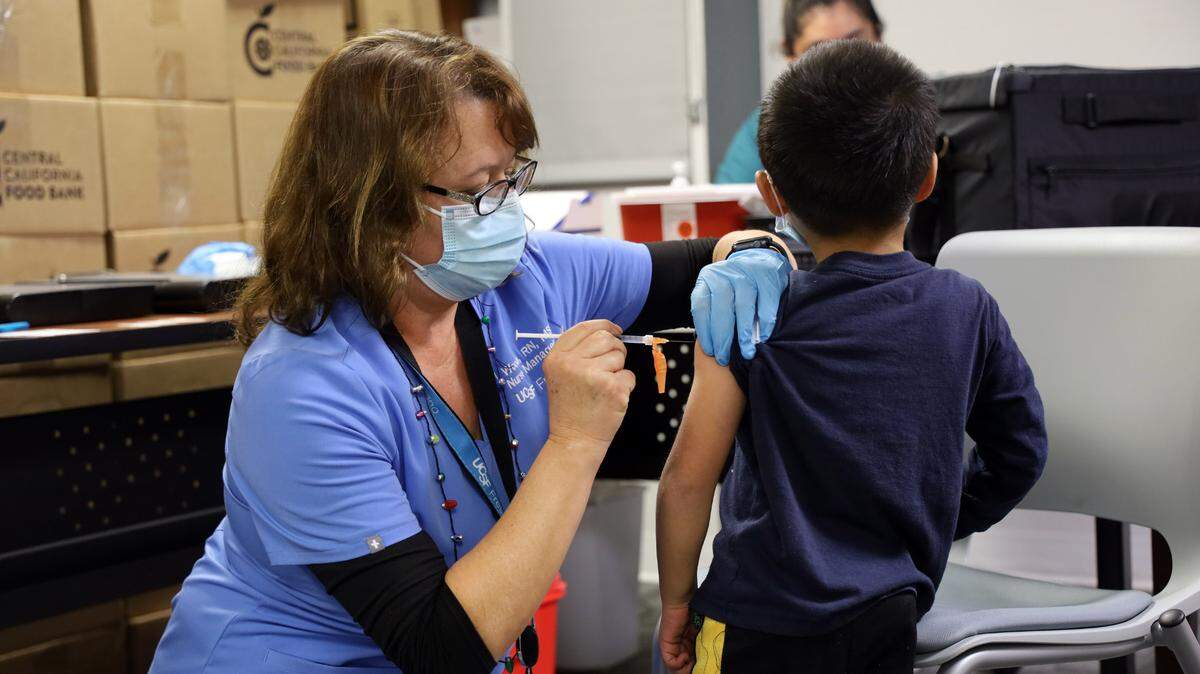
Vaccination rates among children in the Central Valley are trailing the statewide average, remaining low even as the highly infectious omicron variant surges in California.
About 6.3% of the 111,734 children between the ages of 5 to 11 in Fresno County have received at least one dose of vaccine, while just 8.9% are fully vaccinated with two doses of the Pfizer vaccine, according to a Fresno Bee analysis of Fresno County Health Department data.
The rate is significantly lower in Merced, Kings and Tulare counties, where less than 5% of youth are partially vaccinated youth and less than 5% of youth are fully vaccinated youth, according to the California Department of Public Health.
Statewide, about 9% of kids have received just one shot and about 15% are fully vaccinated, according to the state health department.
And while the COVID-19 vaccine became available for kids between ages 5 and 11 in November, the identification of omicron in the United States this month doesn’t appear to have spurred increasing numbers of Valley parents to vaccinate their kids.
In fact, vaccine uptake among youth between the ages of 5 and 11 has decreased since Dec. 6, with 5,685 doses being administered that week. That compared to 4,070 the week of Dec. 13, 3,551 doses as of Dec. 20 and just 2,358 doses administered as of Dec. 27, the week that included the Christmas holiday, according to The Bee’s analysis.
It’s a trend that community advocates and local public health officials attribute to vaccine hesitancy and the shot’s accessibility — challenges that have yet to let up since the start of the pandemic. Now, experts are concerned that these low vaccination rates could have dire implications for a region that has been a continual hot spot for the virus.
“Kids do get infected with SARS-CoV-2 and so they do transmit it and some kids get really sick and some kids die,” said Dr. Jennifer Kates, who is senior vice president at the Kaiser Family Foundation and co-author of a Dec. 8 analysis of pediatric vaccinations. “The implications are that it’s just going to be that much harder to return to a new normal. Part of the reason rates go up is because of low vaccination – so it’s a cycle.”
Fresno County had reported two pediatric COVID-19 deaths as of Dec. 10, according to a recent mortality report.
COVID vaccine access remains a challenge in rural areas
Dr. Tania Pacheco-Werner, who is co-director at the Central Valley Health Policy Institute at Fresno State, attributed the Valley’s low pediatric vaccination rates, in part, to the limited number of providers offering the shots to kids in rural communities.
“Before the pandemic started, we already had such a severe provider shortage in the Central Valley,” she said. “And so now, when we think about maybe urban communities that are heavily populated with lots of providers, if one provider doesn’t isn’t doing vaccinations, chances are you can find one a mile or two miles down the road that will provide that vaccination for your child. That is not the case in (rural) communities that don’t even have a grocery store or pharmacy.”
Pacheco-Werner said those who are “vulnerable and already living in poverty” or “under-resourced” are at the highest risk for contracting the virus. That’s why a “coordinated” response is needed from health care providers, public health officials, schools and community advocates to provide mobile health clinics offering pediatric vaccines and information.
School-based vaccination sites at schools could also be a good solution to getting more children inoculated, Kates of the Kaiser Family Foundation said. Schools often serve as trusted community partners that can distribute accurate COVID-19 information about the virus and where to get vaccinated, she added.
“Schools have been used as vaccine clinics for kids, and sometimes the whole family, and that provides an important place because many families get a lot of services from schools,” Kates said.
That was the case for 56-year-old Fresno resident Sandra Salmeron and her four grandchildren. She recently took them to a vaccination clinic near their school, King Elementary, after receiving an informational flyer about where to get the shot. At the Dec. 17 event, her four grandchildren – Ezekiel, 9, Daniela, 7, Alejandro, 6, and Miguel, 5 – got their first dose of the COVID-19 vaccine.
Salmeron and her 31-year-old daughter, Blanca Estela Perez, were not hesitant to get themselves or the children vaccinated. Salmeron said her daughter, who works as a custodian at a hospital, saw firsthand the toll the virus had taken on the community. Salmeron also saw how the virus affected her sister, who nearly died after contracting COVID-19 earlier this year.
She said it’s important for the Latino community to vaccinate their children to prevent COVID-19 outbreaks at schools.
“There are lots of doctors who say the vaccine does not have negative side effects,” Salmeron said. “People need to get educated and learn to separate misinformation from the truth.”
Amid omicron, vaccination prevents severe illness in kids
Fresno State’s Pacheco-Werner said health officials must reduce barriers to vaccination in order to protect the health of the Valley’s youth, including those who are too young to be vaccinated.
Though not much is yet known about the omicron variant, emerging evidence shows children are getting infected and being hospitalized at higher rates compared to former variants. Children who are not yet eligible for the vaccine, such as those younger than 5 years old, are making up large portions of pediatric COVID-19 outbreaks across the globe.
Following a four-fold increase in hospitalizations this month among children in New York, California state epidemiologist Dr. Erica Pan last weekend advised parents to get their kids between the ages of 5 and 11 vaccinated to prevent severe illness.
The rate of pediatric hospitalizations in California has increased by more than 35% from last week, according to the most recent data from The Centers for Disease Control.
Still, hospitalization rates among children in Fresno and the surrounding region remain low. As of Dec. 29, Valley Children’s Hospital reported only three pediatric COVID-19 hospitalizations. It is unclear if those children were unvaccinated, according to Zara Arboleda, the hospital’s communications director.
“We are not seeing a spike in admissions and I do not have vaccine status for those patients,” she said in an email.
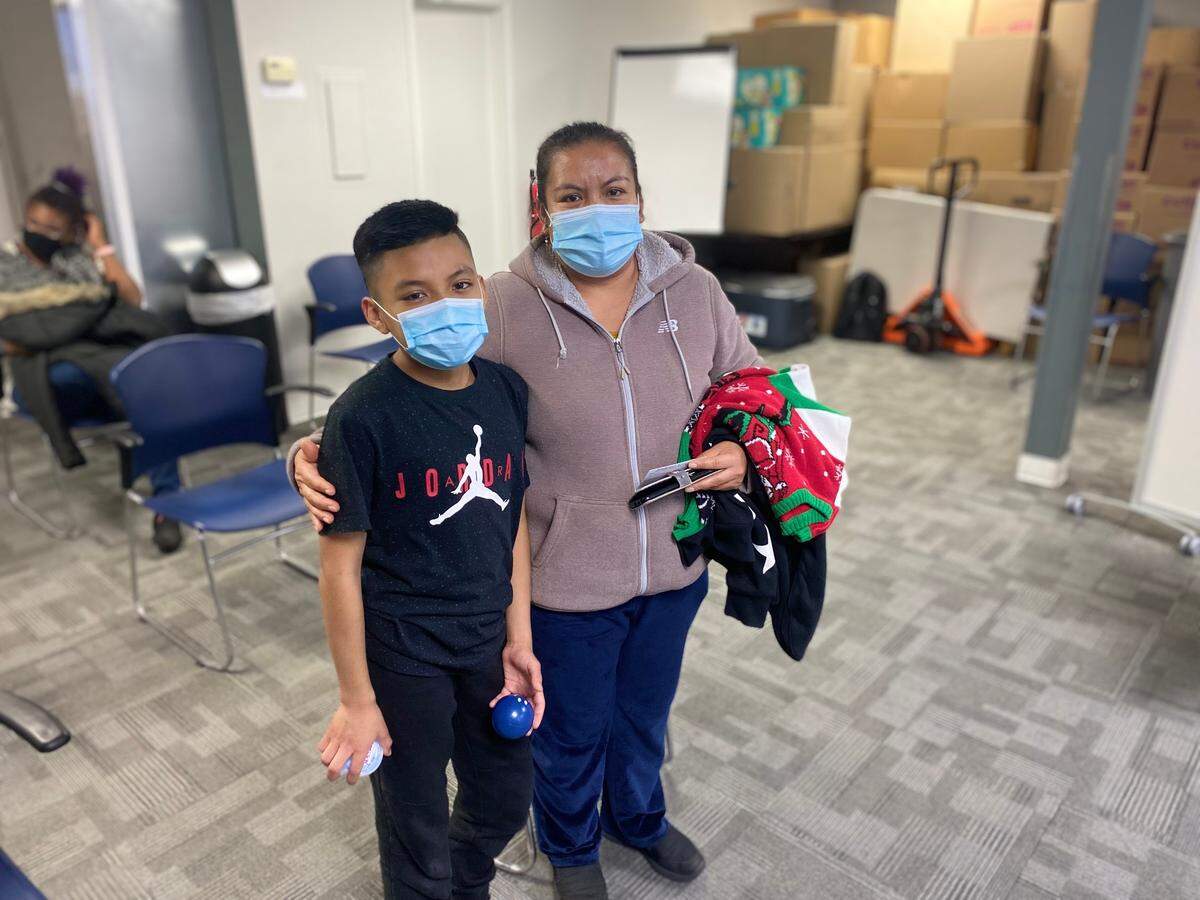
Fresno resident Ofelia Pablo Sanchez, 42, is taking experts’ recommendations seriously. She waited to vaccinate her son, Angel Garcia Pablo, until he turned 12 years old so he could get a stronger dose of the vaccine. He got the shot at the free vaccination event on Dec. 17 at the West Fresno Health & Community Services Building.
She said vaccinating her son makes her feel a little more secure, especially since he is attending in-person classes at West Fresno Middle School.
“Thank God my son hasn’t gotten sick but we know some of his classmates who have gotten sick at his school and the variant worries me,” she said in Spanish. “We trust the efficacy of the vaccine. Now we feel a little more protected.”
The Fresno Bee’s Tim Sheehan contributed to this report.
This story was originally published January 2, 2022 at 5:00 AM.