Farm labor laws are ignored, Fresno advocates say. Will California attorney general fix it?
The COVID-19 pandemic not only struck farm workers at a higher rate than many other segments of the population in California, it also illuminated longstanding concerns about the health and safety of agricultural laborers and a lack of enforcement of existing laws intended to ensure their rights.
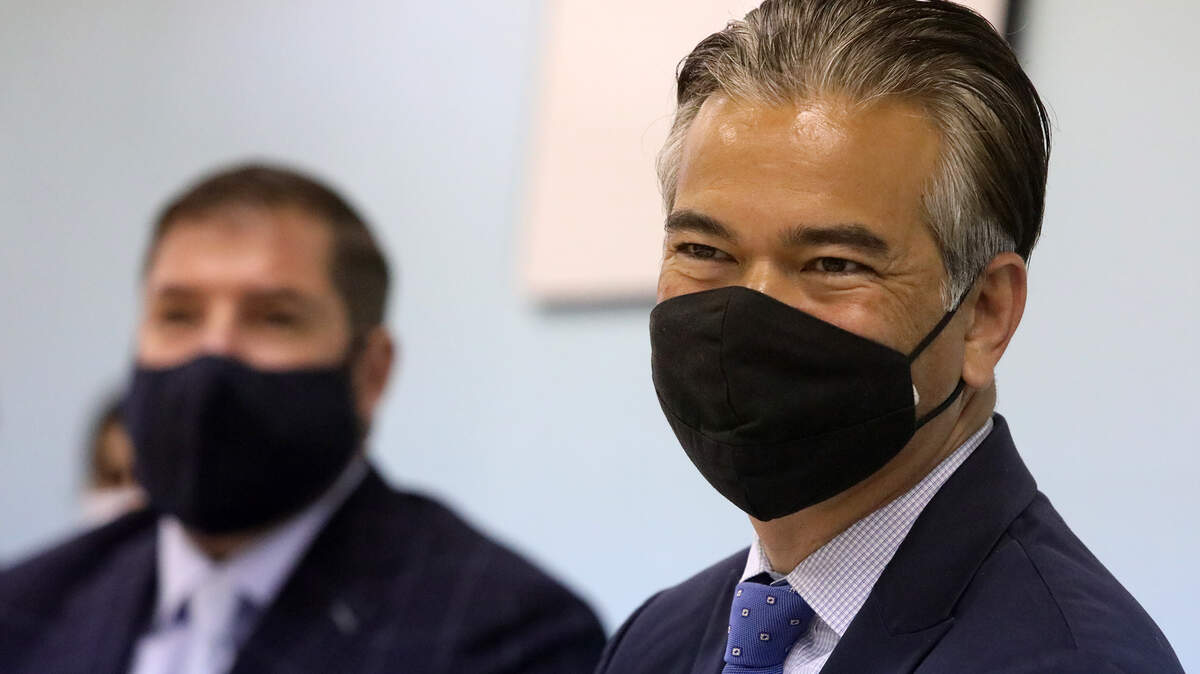
That was the message that an array of farm labor advocates offered to California Attorney General Rob Bonta in a roundtable discussion Wednesday afternoon in northwest Fresno.
Bonta, a former state legislator who was sworn in six months ago as attorney general, was in Fresno for a day of meetings with different groups. Earlier in the day, Bonta said he met with law enforcement representatives. Later on Wednesday, he was to hear from farmers and agricultural leaders.
The issues that workers often aren’t aware of include myriad state laws that are already on the books regarding health, safety and fair pay, said Eriberto Fernandez, representing the United Farm Workers Foundation. “Most growers or farm labor contractors don’t have systems to train people adequately” or have a process for people to report problems, or to encourage workers to exercise their rights under the law.
“It’s still the Wild West out there,” Fernandez said of the lack of enforcement.
Many workers, he added, “don’t feel like they have equal access to the laws that protect them,” and are fearful about complaining or reporting violations – if they even know where to make a complaint or report – “without fear of retaliation or being blacklisted.”
Sarait Martinez, executive director of Centro Binacional para el Desarrollo Indígena Oaxaqueño (Binational Center for the Development of Oaxacan Indigenous Communities), added that when representatives of her organization have reached out to farm workers during the pandemic about conditions in fields, “the more we hear that they don’t trust” the legal system “or believe that it will be fixed.”
“How do we ensure the enforcement of the laws we have now?” she asked Bonta.
Other concerns
The Jakara Movement, a Sikh organization that advocates for workers and members of that faith, hosted the meeting with Bonta at its Paaras Youth Center in northwest Fresno. Naindeep Singh, Jakara’s executive director, said the COVID-19 pandemic disproportionately burdened agricultural and food-processing workers.
“We are coming through a pandemic where often we have been told about the importance of essential workers,” Singh told Bonta, “but as a worker told me, ‘More often than not, we’ve been treated as expendable.’”
Frustration was also expressed over the lack of willingness of local elected leaders or health officials to collaborate with advocates in providing information to workers. Irene de Barraicua, operations director of Lideres Campesina said she was told by a county health department official earlier this year “that I could not go to an on-site vaccination clinic” to distribute health information to workers.
“This was material from the state,” she said. “It’s not like it was a communist manifesto.”
After the discussion, Bonta said the comments hit close to home for him because his parents were farm labor advocates and organizers for the United Farm Workers when he was a child. “It was helpful to hear directly from folks on the ground regarding different struggles and challenges that our essential workers who we rely on so heavily are facing and have faced during the height of this pandemic,” he said.
He added that he was moved by the stories about lack of enforcement of existing laws over workers’ rights and safety and discouragement of workers who feel powerless or unable to navigate difficult government processes.
“While the farm labor movement was my parents’ fight, it would be wrong to think that it’s a fight of the past,” he said. “It’s a fight that is necessary to continue to wage and commit to today. … The fight for workplace safety, improved working conditions and fair wages – that’s a fight for today.”
Bonta acknowledged that while the pandemic magnified some of the problems faced by workers, many of the issues predated the arrival of COVID-19 – and so do an array of laws.
Wednesday’s meeting was an early step in developing a plan of action, Bonta said. “What I seek to do is turn identification of a problem into action,” he said. “I am full of authority with a broad reach … to assist with the challenges that were raised today, with the violations of the law, with the lack of enforcement.”
“We’re there to make the laws stick and have them help the people they were meant to help,” he added.
Bonta declined to address a question about why predecessors who possessed the same authority that he wields did not engage in the vigorous enforcement he pledged.
“I don’t want to speak about the past. I want to speak about the future and the opportunity I have in this role as attorney general to do what I know is the right thing to do,” he said, adding that his desire is “to ensure our laws that are on the books are implemented, and that the people who are to be protected by those laws indeed are.”
This story was originally published October 27, 2021 at 4:44 PM.