
‘Inhumane’ conditions: Children under Fresno County custody living in office space
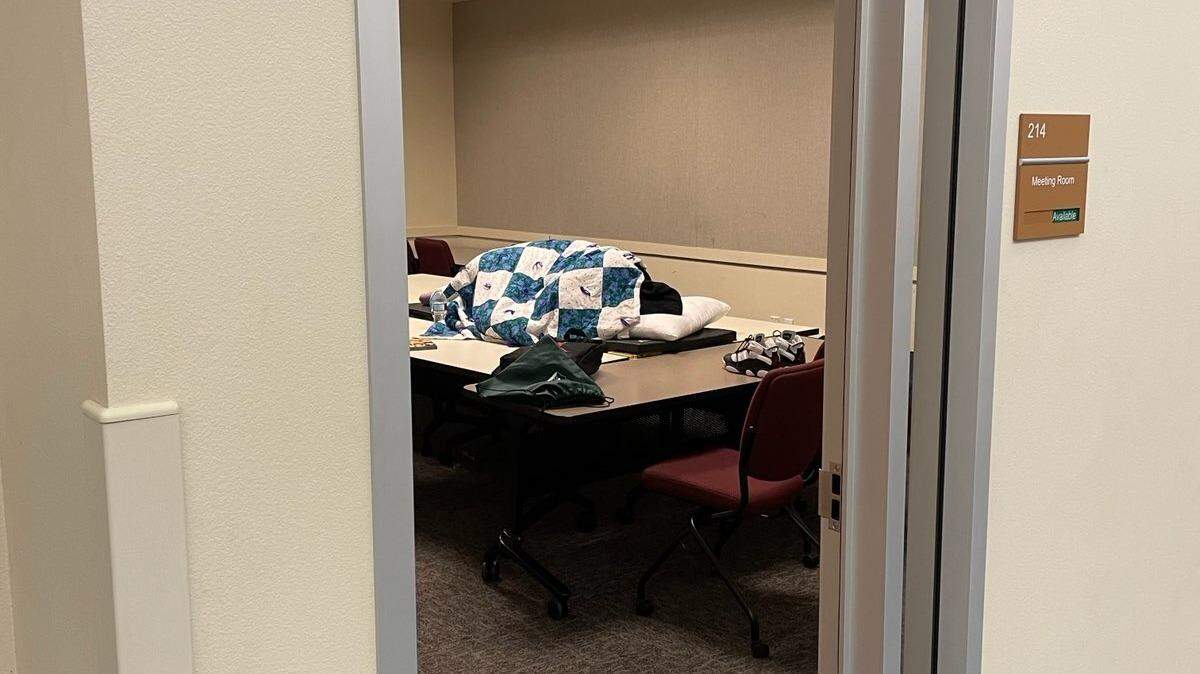
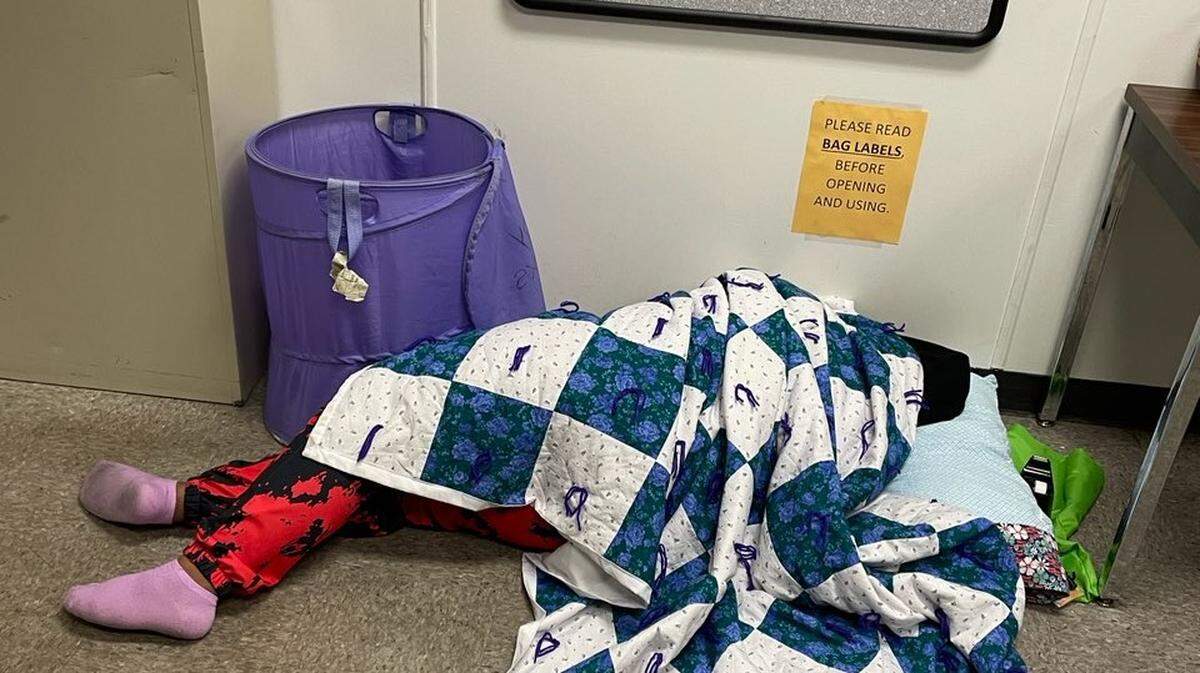
A child sleeps on top of a conference room table. Another child sleeps on a mat on the floor. Two water bottles are filled with urine from a teenager staying in the office building.
Broken frames lay on the floor with shattered glass, along with several other items tossed on the ground, and what appear to be two police officers are seen in the back of the room.
Those are photos of scenes inside the office building known to social workers as the CWS Office on L Street in Fresno. The building is the main hub for Fresno County’s Child Protective Services.
Social workers spoke to The Bee about issues related to the living conditions for children awaiting a permanent home after being removed from their parents’ custody, and for youth already under the care of Fresno County who have “blown” their placements.
Social workers, members of the SEIU 521 labor union, also expressed concerns over the safety of the children and employees, working conditions, retention and training of staff. They say Fresno County’s child welfare system is understaffed, leaving social workers overwhelmed with work and not feeling appreciated. It’s so bad, they say, that non-crisis referrals have begun to pile up on social workers’ shelves.
“Our job as social workers is to ensure the safety of a child when they are removed from their family, and how the department is handling it is not right,” Lorraine Ramirez, a veteran social worker with Fresno County Department of Social Services’ child welfare agency, told The Bee on Monday. “Social workers are tired of seeing that neglect happen. We take neglect by the department, but we are adults, these are children.”
Some of these problems, social workers say, have been ongoing. A top concern social workers share, Ramirez said, is the lack of adequate housing for children and the office-living situation for many of them.
Children are brought to the CWS Office, where social workers report for work, and they are housed there until social workers are able to find a family that will take them in. While at the office, children get fed fast food, share one restroom, and sometimes may not get any showers, Ramirez said.
“Our department is not a good parent...We have children staying in the office,” Ramirez said. “They can be there for a couple of hours to a couple of weeks.”
On Sunday, no children were staying at the office, but about 12 were in the office last Thursday, she said. Children of different ages and different behavioral and medical needs get mixed. They sleep on mats in rooms where the lights are always on. Some sleep on tables or desks pulled together, photos show.
“The conditions that the kids are staying in is not tolerable, it’s inhumane,” Ramirez said. “If that was my grandchild or my child in there, I would be totally upset.”
The Bee requested interviews with Delfino Neira, director of the Department of Social Services, and Tricia Gonzalez, director of child welfare at the Department of Social Services.
On Tuesday, Gonzalez said they were both busy and would be out of the office for the rest of the week. Gonzalez did say via email that Fresno County doesn’t have an emergency shelter, and only 10 counties in California have such facilities. After the passage of a law in 2017, the state will not authorize new ones.
Gonzalez said officials are aware of the concerns and have informed the Fresno County Board of Supervisors of the issues contributing to the problems in a briefing report, which she shared with The Bee.
State, federal changes
The Aug. 10 report informs supervisors of a shortage of placement options for foster youth with high needs who require short-term residential therapeutic programs (STRTP), or other high-level type placements.
“Due to limited STRTP capacity and/or difficulty in identifying other appropriate placement options, some of these youth may spend extended periods of time at the CWS office while staff search for and facilitate placement,” the briefing report reads. “The number of youth waiting in the CWS office under these circumstances has increased over the past year and would be further impacted if youth cannot be maintained in STRTPs.”
As of Oct. 2, 111 youth were placed in STRTP housing by Fresno County child welfare, according to county data.
“The County of Fresno is concerned about the amount of time some of our youth with high-level needs spend in offices prior to their placement in a home or other facility,” Fresno County leaders said in a statement to The Bee on Tuesday.
New laws in 2018 “significantly” reduced the placement options for the “most challenged youth.” Furthermore, in December 2020, California decertified all out-of-state facilities for high needs youth, impacting child welfare and probation departments, the county said.
“The State then limited the number of youths that qualify to stay in Juvenile Justice programs, leaving Child Welfare without placement for some youth who experience mental health issues, suicidal or violent tendencies,” according to the statement. “California counties have yet to receive additional funding for these new challenges.”
But Fresno County is “proactively responding to this situation” through legislative advocacy and facilities.
“The County’s Child Welfare division will be moving to a new facility that is near completion and by next spring, will offer more amenities for both staff and youth clients,” according to the county’s statement.
The situation, however, could become more grim with changes being considered at the federal level.
The Centers for Medicare and Medicaid Services is assessing these types of placements to determine if they would be considered Institutions of Mental Disease, the August briefing to supervisors says.
Effective Jan. 1, 2022, placements in Institutions of Mental Disease would no longer be eligible for federal funding, and it’s possible that county funds will be needed to maintain those placements.
Fresno police calls to office housing children
“Some of these youth exhibit disruptive, destructive and/or violent behaviors while at the CWS office and thus require additional supervision beyond what is currently provided,” the August briefing report reads.
Ramirez, the veteran social worker, said the county is not currently meeting the mental and medical needs of some of the children who go through the CWS Office. Staff members don’t have the necessary training.
That puts staff and other children staying in the CWS Office at risk, she said. They’ll see teenagers coming in under the influence of methamphetamine or with behavioral issues.
.JPG "IMG_4792 (1).JPG")
Ramirez said the CWS Office also has become a revolving door for youth who get placed on a “5150,” the police code for when a person who is considered to be a danger to himself or others gets placed on a hold for up to 72 hours to undergo a mental health evaluation.
“They’re constantly being 5150, taken to the hospital, discharged, back into the office,” she said. “5150 because they are blowing up, breaking things, threatening workers, stealing county car keys, I mean I can go on and on about the things that have happened in that building.”
This year, the Fresno Police Department has responded to the CWS Office for 134 calls for service, according to Assistant Public Information Officer Felipe Uribe.
“Only three of those calls were for out-of-control juveniles or physical disturbances, the rest were for runaways or missing juveniles,” he said.
Overwhelmed workers
Issues in the department are deeper, social workers say. They say the department is understaffed due to a high turnover rate.
Social workers don’t stick around because of issues with pay and burnout, they say. Social workers feel overwhelmed.
“When I come home, I’m tired. When I’m on the job, I’m tired. I’m exhausted,” Hector Cerda, a social work practitioner with the Department of Social Services’ child welfare agency, told The Bee on Monday. “I can handle things physically, it’s just the mental stress, if you get tired, you get frustrated.”
Cerda said he has about 30 cases. The Child Welfare League of America recommends caseloads of between 12 and 15 children per worker.
“I cannot manage 30 children and I’m supposed to see them every month,” he said. “Once a month, it’s impossible. There’s going to be holes and cracks that are going to open up in things that I cannot get to in a timely manner.”
In fact, last month he wasn’t able to see all of the children assigned to him.
“I will be honest, like for example, last month, there’s a few children on my caseload I didn’t get to see,” he said. “That’s because my workload last month was quite heavy.”
That happens to many workers, he said, and social workers are quitting their jobs.
“Just this past month, about three people have left,” he said.
Estevan Gutierrez, a communication specialist with the SEIU 521 labor union, said the bargaining team in August requested information from Fresno County on worker retention.
“Our bargaining unit is skewed towards newer members with 19.1% of the bargaining unit working for the county for less than two years, and 41% of the unit having worked for the county for less than five years,” he said in an email to The Bee.
The data also showed 146 workers in social work areas left their employment with the county in the last four years. The majority resigned voluntarily.
“Over four years the turnover rate for Social Workers is 107%,” he said.
Funding was included for 136 social work-related positions in Fresno County’s 2021 budget, according to Gutierrez.
The department is so understaffed, Ramirez said, that it blended two different groups of workers into one in mid-August. One of those groups only responded to “crisis allegations,” those that require an immediate response. The other group was assigned to investigate non-crisis cases, where social workers have 10 days to respond.
“The county decided to blend them,” she said. “They didn’t have enough crisis workers because people are leaving.”
Social workers can now get a mix of referrals, requiring immediate responses or one within 10 days. There’s much work required if a child is removed during a crisis call, so social workers will make those cases a priority, Ramirez said.
“So all of those non-crises referrals are sitting on social workers’ shelves. I have four of them and they’re all in August,” Ramirez, who was recently moved to answer calls of abuse and neglect due to a staff shortage in that area, said. “Other workers have 30 to 50 non-crises referrals sitting in their shelves because if they get a crisis, that’s your priority.”
Cerda said in order to fix the numerous issues in child welfare, the whole leadership needs to be replaced, starting from the top with Neira, or there needs to be pressure from Fresno County supervisors.
Based on what Cerda hears, he says it seems there are two different child welfare systems.
“There’s one I’ve been hearing about by our leadership, and there’s the one I know and hear about by talking to my colleagues, and we’re doing the work, and we are out on the front lines,” he said.
This story was originally published October 13, 2021 at 11:15 AM.
.jpg)