Wildfire smoke continues to affect Fresno air quality. How bad will it get?
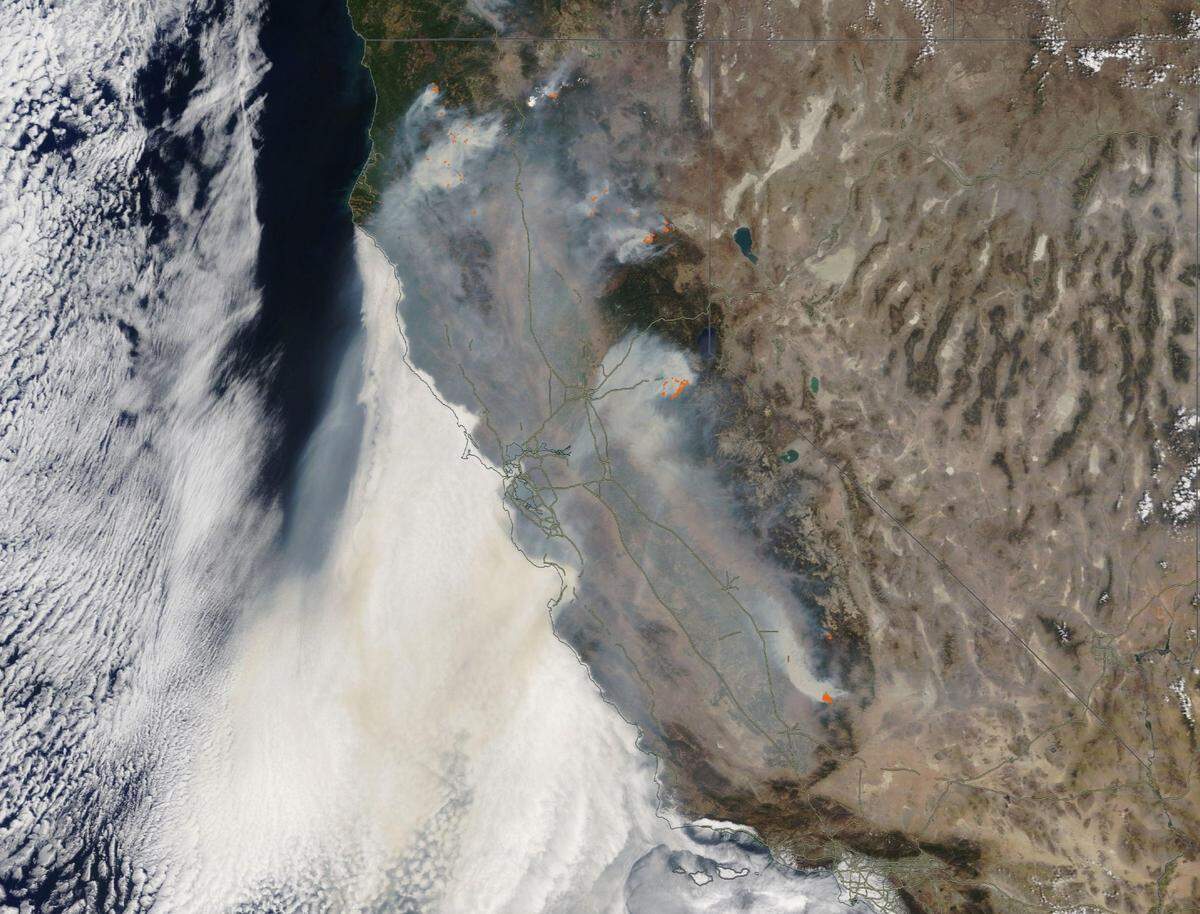
The air quality in Fresno, Kings and Tulare counties was expected to be unhealthy on Saturday and Sunday, thanks to plumes of smoke being pumped into the region by wildfires across California.
The San Joaquin Valley Air Pollution Control District issued a health caution on Friday warning that microscopic particles of soot were expected to crate “ongoing unhealthy air quality across the region.” That caution notice will remain in place until fires are extinguished or smoke is no longer affecting the Valley.
“It’s very smoky outside the past few days and you can feel it in your lungs,” Jon Klassen, director of strategies and incentives for the Valley air district, told reporters Friday. “The air quality has been unhealthy for sensitive groups (and) unhealthy for much of the San Joaquin Valley.”
On top of the smoke warning, district officials said strong winds could create localized areas of blowing dust, further adding to the amount of crud that residents are breathing into their lungs.
“We really worry about our vulnerable populations, those that have preexisting pulmonary or cardiovascular disease, pregnant women, asthmatics, and young children,” Dr. Rais Vohra, Fresno County’s interim health officer, said Friday.
Up and down the Valley, from San Joaquin County in the north to Kern County in the south, the air quality index was expected Saturday to climb above 101, a level that is considered unhealthy for sensitive people who may have chronic breathing problems such as asthma. In Fresno, Kings and Tulare counties, the forecast was for the AQI to exceed 150 – a level that is deemed unhealthy for anyone, regardless of their health condition.
Klassen mentioned the massive Dixie Fire that continues to grow in Northern California, as well as the Caldor Fire near Lake Tahoe, the French Fire in Kern County and the Walkers Fire in Tulare County, as contributors to the problems.
“We’re really surrounded by a lot of things going on,” he said.
For much of this summer, prevailing winds blowing from west to east have pushed smoke from the major fires in the north toward Nevada, Utah and Idaho, Klassen said. But in recent days, “wind directions have been shifting and a lot of that smoke has been drawn into the San Joaquin Valley, impacting a lot of the communities around here, and the air quality has suffered as a result.”
Similar conditions were expected for the next couple of days. “There may be some improvements next week, but for the weekend at least we’re expecting some similar smoke impacts,” Klassen added.
Vohra said employers with workers whose jobs call for them to work outside are, under state occupational safety laws, required to provide those workers with N95 face masks – high-quality filtering respirators also used by medical professionals in high-risk conditions – when air quality is poor.
Vohra added that the Fresno County Department of Public Health can work with employers to connect with resources to provide field workers and other outdoor employees with N95s.
For others, however, the recommendation is to stay indoors and use their home air conditioners, changing the filters as often as possible, said Jamie Holt, a spokesperson for the Valley air district.
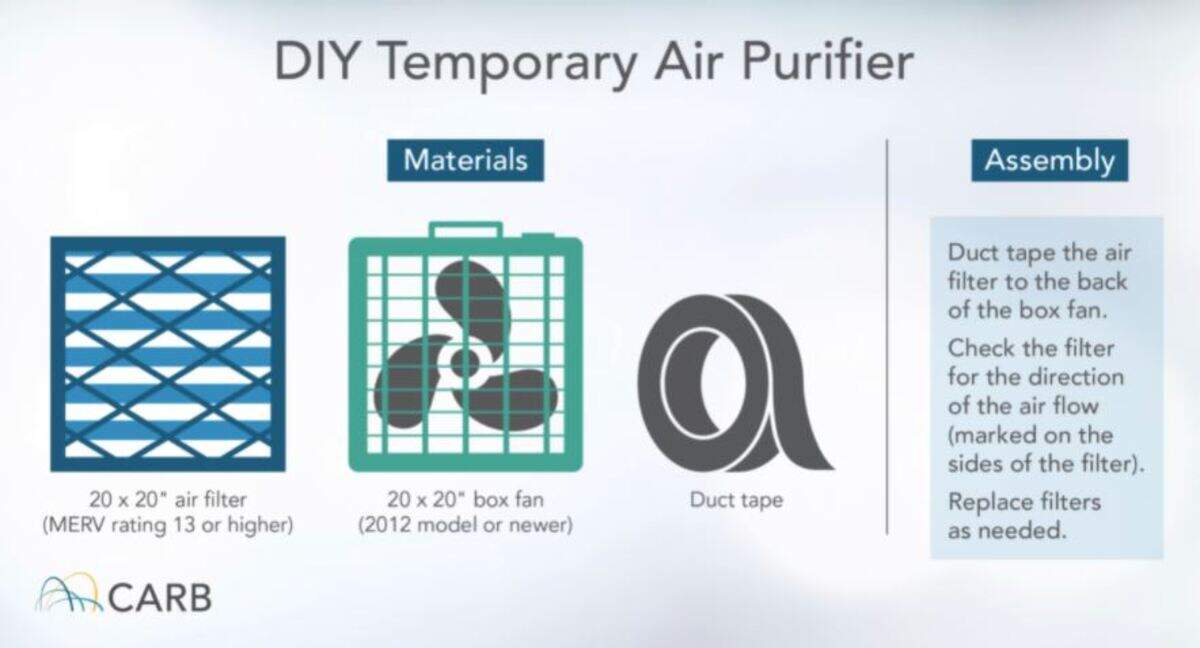
People who lack air conditioning at home can seek temporary relief at large indoor public spaces such as movie theaters or shopping centers, Holt said. She added that residents can also improvise a relatively inexpensive air filtering system using a box fan and store-bought, high-efficiency air conditioner filters using directions from the district’s website.
Holt warned that while many people may be wearing cloth masks to protect against the spread of COVID-19 when they leave their homes, those loose-fitting coverings aren’t sufficient to prevent smoke from being inhaled through gaps around the face. “They really need to be wearing an N95 mask, and we know those are in short supply right now.”
But if going outside is necessary, Holt said people can use more readily available KN95 masks, or multiple layers of lesser masks, to protect themselves as best as they can.
Residents can check air quality in their area using the Valley air district’s RAAN, or Real-time Air Advisory Network, at www.valleyair.org/myraan/.
This story was originally published August 21, 2021 at 11:54 AM.