
He got deportation relief. Why was this man still detained by ICE in California for 77 days?
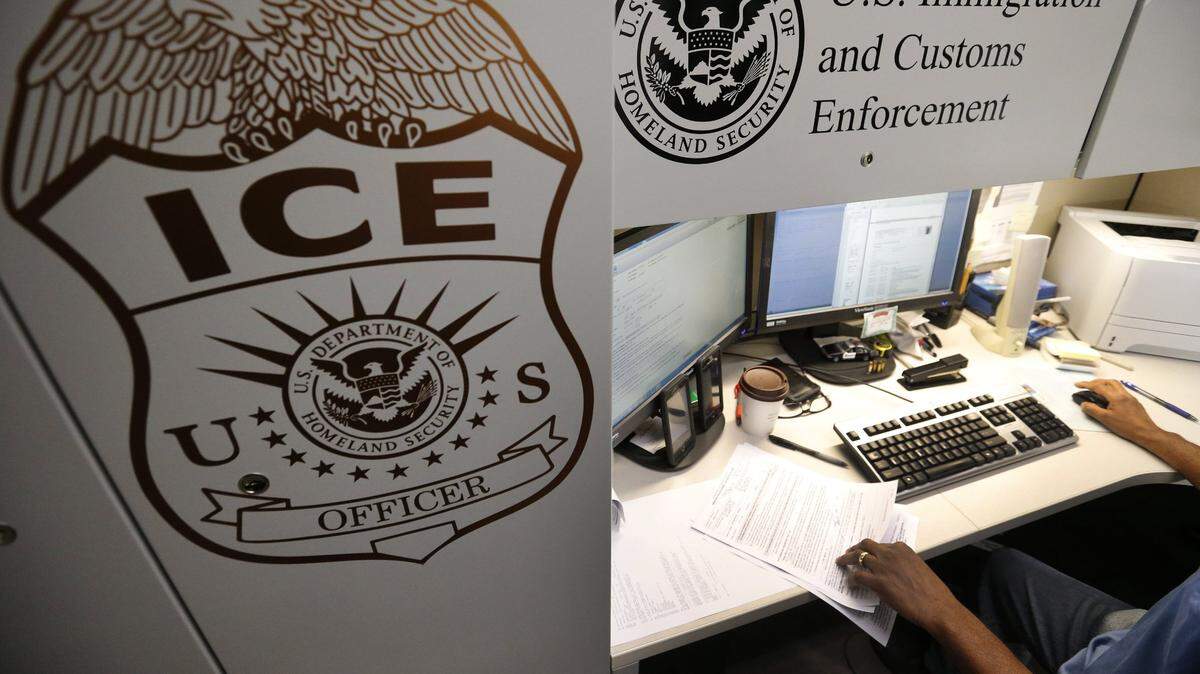
Attorneys are criticizing immigration officials for holding a man at a federal detention center in Kern County for two and a half months after he was granted deportation protection.
An immigration judge granted Giovannie Morrison, 40, deferral of removal under the Convention Against Torture on April 30. This form of deportation relief is generally for people who have been convicted of a crime that is classified as an aggravated felony under the Immigration and Nationality Act.
Morrison was convicted of assault with a firearm in 2020 and spent a total of about 18 months in the Nevada County jail. By granting him deferral of removal, the judge both determined Morrison should be deported due to his criminal record and that he couldn’t return to his native Jamaica because he could face torture there. The U.S. Department of Homeland Security didn’t appeal the judge’s decision, rendering it final.
Those granted deferral of removal are most often released into the U.S., where they can lawfully live and qualify for a work permit but not a path to citizenship. Yet U.S. Immigration and Customs Enforcement continued detaining Morrison at The GEO Group’s Golden State Annex detention facility in McFarland, located about 25 miles north of Bakersfield. He was released Friday and placed on an order of supervision.
Morrison’s prolonged detention could be, technically, legal. The federal statute says immigration officials should detain people who’ve been ordered removed from the country for up to 90 days. In Morrison’s case, officials said they were holding him while they attempted to deport him to Canada or England, since he couldn’t be returned to Jamaica, according to Lisa Knox, Morrison’s attorney and legal director for the California Collaborative for Immigrant Justice.
But Knox calls ICE’s decision to continue detaining Morrison, even after he was granted relief under the Convention Against Torture, “cruel and unnecessary.”
“His release, 77 days after that decision, shows that ICE had the power to release all along, but chose not to,” Knox said in an email to The Bee on Friday.
Other immigration law experts briefed on the case said Morrison’s continued detention threatened his right, under the due process clause of the Constitution, to be free of unjustified imprisonment.
“When an immigration judge concludes that a migrant has a legal basis for remaining in the United States and the federal government decides not to appeal that decision, it should not take ICE two and a half months to release someone,” said César Cuauhtémoc García Hernández, a law professor at The Ohio State University who has written extensively about the criminalization of immigration under U.S. law.
“I encourage ICE to review its operations to ensure that others are not denied their liberty like this in the future,” he said.
The prolonged detention was especially concerning, experts said, since immigration officials said they were holding Morrison while seeking to deport him to a third country, even though the U.S. rarely succeeds in doing so. Asked how common it is for ICE to deport someone to a third country, Ilana Etkin Greenstein, senior attorney for the American Immigration Council’s Immigration Justice Campaign, who has practiced immigration law for more than 20 years, said: “I’ve never seen it happen. That’s not to say it would never happen.”
Vasudha Talla, who directs the ACLU Foundation of Northern California’s Immigrants’ Rights Program, said it is “kind of shocking” that ICE officials under the Biden administration were holding Morrison while they sought to deport him to a third country, “because it is so unlikely to find another country that’s likely to take someone in.”
“There is a real due process concern in holding someone in mandatory detention who has won relief and is not likely to be removed to another country,” Talla said.
Morrison’s continued detention also came at a cost to taxpayers: The average daily cost of detaining an immigrant is $125, according to the U.S. Department of Homeland Security’s fiscal year 2021 budget for ICE operations. According to that estimate, Morrison’s nearly nine month detention cost about $32,000, with the final 77 days costing about $9,625.
An ICE spokesperson did not respond to The Bee’s questions regarding why Morrison was being detained at Golden State after he won deportation relief.
Detention at McFarland ICE facility follows criminal sentence
Morrison emigrated from Jamaica to the United States on a fiance visa in 2009. He married a U.S. citizen that year and became a U.S. resident in 2010. He lived in Roseville, about 20 miles northeast of Sacramento, and did music promotion for Jamaican artists, he said.
But Morrison’s status in the country was jeopardized after he was arrested in 2018 in connection with a home invasion robbery in Grass Valley. He was among four men charged with robbery, burglary and assault with a semiautomatic weapon, according to The Union newspaper in Nevada County.
A Nevada County deputy district attorney dismissed the charges after a Superior Court judge ruled some of the evidence against Morrison and another man should be suppressed due to an illegal detention, The Union reported. The issue with their arrest was that they were in a vehicle whose description didn’t match the be-on-the-lookout advisory issued by the Grass Valley Police Department, according to The Union.
The deputy district attorney then re-filed the charges and Morrison eventually pleaded no contest — meaning, he did not dispute the charges but didn’t admit guilt. He maintains he is innocent, saying during an interview with The Bee that he believes he was racially profiled, illegally detained and coerced into taking the plea deal to shorten his sentence amid the coronavirus pandemic.
He was released in May 2020 and went to work for a temporary employment agency, doing construction and laboring in a lumber yard. He complied “totally” with the terms of his parole, he said.
“It was wonderful to be out, to see the sunlight, to be able to drive and go to work and come back,” Morrison said from inside the McFarland detention center.

All of that ended in October, when ICE agents showed up at his home. They arrested him as part of an operation targeting at-large criminal non-citizens, according to documents included in his immigration case file, which his lawyer shared with The Bee. ICE then transferred him to Golden State.
Morrison, who has severe allergies to corn, peanuts and wheat, sought medical care for allergic reactions to food during his detention at Golden State, according to medical records provided to The Bee by his lawyer.
Facility medical providers also did X-rays and concluded he has mild osteoarthritis of the lumbar spine, according to the records. He says he requested a cane, because his legs sometimes give out on him while he’s walking through the facility’s hallways, but never received one.
He got by, in part, by writing “a few lines,” as he called them. Asked more about his writing, he recited a poem he’d been working on while at Golden State. It began with the phrase, “they say I’m a wicked individual.”
Deportation to a third country ‘extremely unlikely’
For months, Morrison’s lawyer had questioned why ICE officials continued to detain him at the McFarland facility, especially since they were unlikely to succeed in deporting him to another country.
“He can’t be deported to Jamaica and he has no legal right to reside in any third country,” Knox, Morrison’s lawyer, said days before ICE announced his release. “It is extremely, extremely, extremely unlikely — or close to impossible — that they are going to be able to remove him to a third country.”
His criminal record shouldn’t have been justification for prolonged detention, Knox said. Along with his single conviction, another charge, for rape of an unconscious person, was dismissed last May, according to Placer County Superior Court records. He again maintains his innocence and says the case was dismissed due to lack of evidence, Knox said.
He was not a threat to public safety, she argued. She pointed to the fact that he did not re-offend during the five months between his release from jail and his arrest by ICE, and that a U.S. citizen was ready and waiting to take him into her home and provide for his basic needs.
Additionally, she said, his health problems in detention should outweigh any other concerns.
Valerie Zukin, who specializes in removal defense work as a special projects attorney for the Immigrant Legal Resource Center, said Morrison’s case could be representative of a larger issue within the immigration system. In her experience, she said, ICE is more likely to continue holding people with criminal records after they’ve been granted deportation protections, rather than releasing them and allowing them to start working and become members of society.
“It’s a tremendous waste of resources to hold someone for this thin reason of claiming to try to deport them to a third country,” she said. “Nobody should be held in civil immigration custody because of their criminal history, because the criminal justice system has already appropriately punished them.”
This story was originally published July 19, 2021 at 5:00 AM.