
This Fresno artist uses tattoo event to raise money, awareness for sexual assault victims
Still Not Asking For It (SNAFI, for short) is advocacy through tattooing.
The globally organized, community-driven event raises awareness (and money) for sexual assault survivors each year, while simultaneously encouraging a safer standard of practice within the tattoo industry.
“It’s one of those forever messages,” says Tatstat co-founder and tattoo artist Channelle Charest, who took part in this year’s event.
“Every female friend I have … we all have stories,” she says.
For the event, Charest created two sets of flash pieces — pre-drawn tattoo art — that clients could get done during pre-scheduled time slots over two days last month.
The art was purposely hyper-feminist.
“That’s what was meaningful to me at this moment,” Charest says.
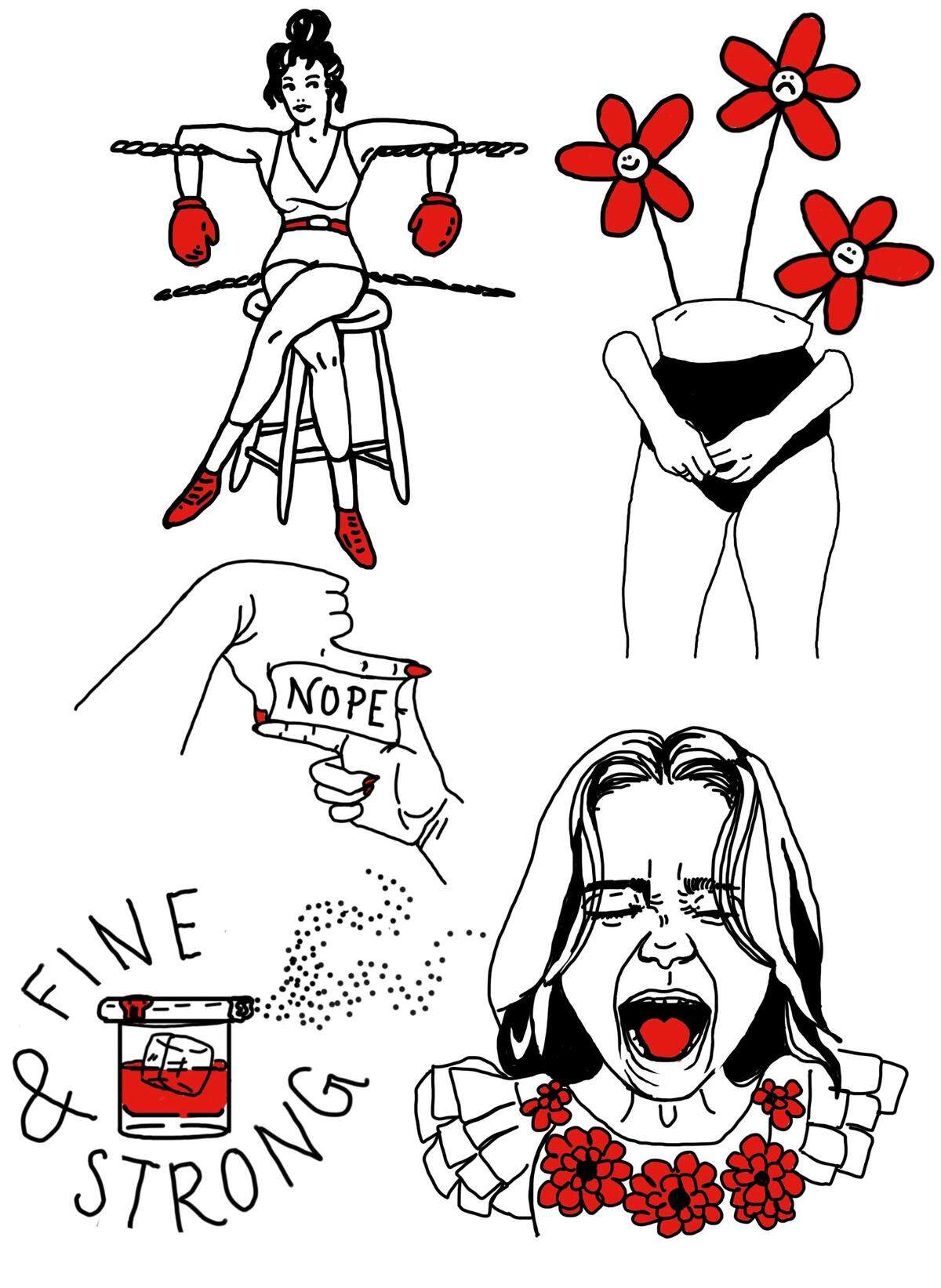
One set is done in stark black, white and red. The other in black and white with baby blue accents. There is a boxer resting on a stool between rounds, red shoes and gloves and belt. Several of the images are line drawings of women’s faces in profile. In one, the woman is smoking from a cigarette holder, the smoke forming the word “no.”
That word figures prominently.
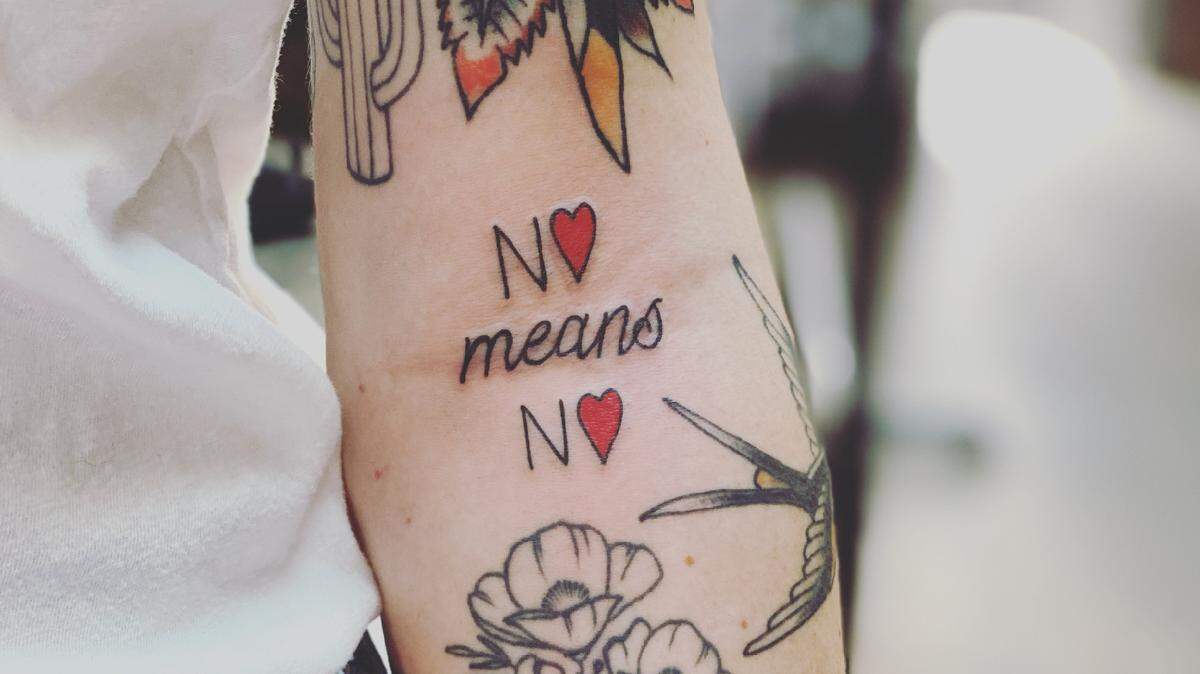
The official flash piece created for the event has the words “no means no” in script, with hearts for the O’s.
The tattoos cost anywhere from $180-$250 and all the money was donated to the Rape Crisis Center of Fresno.
Additionally, Charest partnered with the company Sideye Tie Dye to create a special T-shirt for the event. The limited-run shirts, which featured a piece of Charest’s flash, sold out.
SNAFI was started in 2015 by tattoo artist Ashley Love. She had been sexually assaulted by a coworker and afterward saw an apathetic response from those in the tattoo community. SNAFI was a way for her change that by gathering “the tattooers who cared” to “raise money to help support the battle against sexual violence,” Love told the website Brit + Co in 2018.
Over the years, the event expanded from a single shop in Brooklyn to nearly 100 shops in the United States and Canada, the United Kingdom, Singapore and Australia.
Of course, not just any shop can sign up and participate.
Charest was one of just six in California and the only one in the Central Valley, which means she had clients traveling in from out of town to get work done.
“That made it feel like you were part of something bigger,” she says.
Which she was. Along with creating the flash, Charest had to attend a seminar with the organizers. She also spent time familiarizing herself with the organizations in town that support sexual violence survivors.
All proceeds from SNAFI are distributed locally, directly from the shops and artists.
.jpg "Copy of faithfulandtrue-64 (1).jpg")
Charest says she chose Rape Crisis Center of Fresno because it had a good reputation in the community and it is equitable, in that it responds to all level of sexual violence.
The center operates a 24-hour Rape Crisis Line and offers referrals, support services and crisis counseling for sexual assault survivors. It also provides advocates for victims during sexual assault forensic examinations (“rape kits”) to offer advocacy, support, information, and help at police interviews, court hearings and the like.
As part of SNAFI, Charest adopted a client bill of rights, which is now posted at her workstation in the shop.
Charest has been tattooing for 10 years and at least half of that time she spent presenting herself in certain ways as a female artist. She can recognizes now the inappropriateness of certain things that she’d always taken as normal in the industry, but says those things are changing.
In the last few years, especially since the start of the #metoomovement, there’s been a move by LGBTQ folks and others to actively change the unhealthy dynamics that can exist in the industry.
“I want more opportunities to use tattooing to be inclusive,” she says. “How do we start reframing the industry to be positive.”
This story was originally published July 7, 2021 at 5:00 AM.