
‘My body was slowly shutting down.’ Fresno siblings recover from 3-way kidney swap operation
Before the operation, Adrian Pizano had resigned himself to death.
“I truly believed this was going to be the thing that was going to take me out,” says the Fresno father of two, who had survived lymphoma at 18 only to be diagnosed with kidney disease. He’d been on weekly dialysis for the past two and a half years.
“I had already given up. I just wasn’t telling anybody because nobody wants to hear that,” says Pizano, who along with his sister Clara Salinas are now recovering from a three-way kidney transplant swap (three donors and three recipients) that took place last month at California Pacific Medical Center, a Sutter hospital in San Francisco.
Not that Pizano’s condition wasn’t obvious.
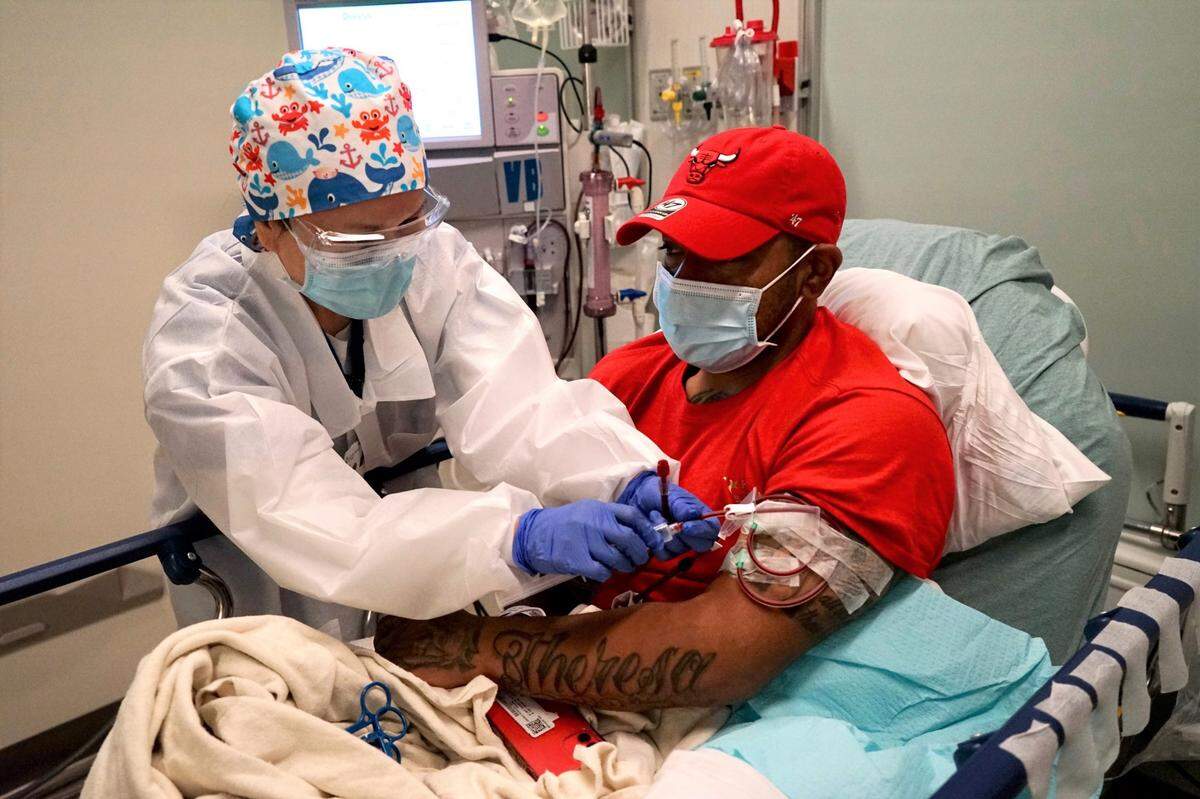
He should have started dialysis when he was 21, but put it off until he couldn’t any longer. Now, at 28 the treatments — three-and-a-half hours, three days a week, on top of his job working in construction — left him physically and emotionally drained. Often, he couldn’t make it into the house after work without stopping in the driveway to collect his energy. His sister kept a couch in her spare room so he would have a place to rest during family gatherings.
Something as simple as eating a burger could take an hour, he would get so tired from just chewing.
“My body was slowly shutting down,” Pizano says.
Pizano has the rare O negative blood type, which makes him a universal donor but also meant none of his siblings were a viable match for a direct transplant.
Through the hospital’s Living Donor Paired Exchange Program, however, Pizano was matched with Raja Rajeswari Senthil Kumar from Sacramento, who wasn’t a match for her husband. So he was matched with Allison Mita from Oakland, whose boyfriend was matched with Salinas.
Doctors performed all six surgeries over the span of one day.
Three weeks after the surgeries, the hospital facilitated a meeting between the three families. Normally, this would happen in person, but because of the pandemic, they met over a video call.
Sitting in front of a pink laptop in the kitchen of Salinas’ home in Sanger, the siblings fought back tears at the meeting as they learned about the people who changed their lives.
“It’s emotional, right?” Salinas says.
Quality of life returns
In the United States, these kinds of transplant swaps are still fairly rare, says Dr. Steven Katznelson, medical director for the kidney transplant program at California Pacific Medical Center. Though his hospital has been doing such surgeries for 15 years, only 30% of organ transplants come from living donors, and the majority of those are direct donations from family members.
The majority of transplants come from the deceased donors list.
There are currently some 100,000 people on that list waiting for kidneys, Katznelson says. There are 1,800 people on the list at his hospital alone.
Typically, a patient like Pizano could spend seven or eight years on the wait list, worsening the outcomes for both survival and recovery from the transplant surgery, Katznelson says.
Finding a match through the swap program saved Pizano four or five years of being on dialysis. That certainly extended Pizano’s life, Katznelson says.
But more importantly, it improved the quality of that life.
“The quality is what most people is after,” Katznelson says.
The change was visible and immediate.
In pictures at the hospital before the operation, Pizano looks jaundice and tired. Following the transplant his color returned. As did his energy. Within a day of the surgery we was up and walking around the hospital ward. As of his last test, his kidney function was at 40%. Within two months, he should be able to return to work.
He’s already able to return to being a dad. Before the surgery, Pizano would leave for dialysis most days before his kids got up in the morning. The first time he was able to be at home when they got up was a big moment, he says.
As was having stamina to go watch his son play at the park.
“Just to feel normal again,” Pizano says, with more than a hint of awe at the fact.
“I actually have the energy to get up in the morning.”
The doubling effect of living donations
And there is double benefit from these kinds of living donor and exchange programs, Katznelson says.
Recipients in the exchange program are removed from the deceased donor list, essentially freeing up space for others in need. So, this three-way transplant will ultimately help six people get the kidneys they need.
Not that it’s an easy process. If one of the donors backs out, all three donors are affected and have to start the process again. It’s one of the reasons, doctors schedule all of the surgeries on the same day, to mitigate the changes of someone changing their mind.
And not every donor gets accepted.
The hospital is conservative in who it chooses. Donors have to be healthy, but also make a commitment to remain healthy. The donors go through a series of tests throughout the process and even the slightest hint of a problem — high blood pressure, for example — can eliminate you from the program.
Salinas, who has always exercised and kept healthy, doubled her efforts. She started eating better. There was a lot of lean chicken for dinner, which her family wasn’t always fond of.
“You have to be the perfect model,” she says.
And the recovery hasn’t be easy, either. Three weeks on and there is still some pain, which Salinas likens to recovering from a C-section surgery. She’s moving a bit slower than normal and needs to sit down after standing for a while. Every so often, her hand drifts to touch the spot.
“It’s not like you know the kidney is gone, but you know there’s pain from that site,” she says.
She’s been prescribed pain medication but tries not to take it.
At first Salinas wasn’t even sure the program would work, given her age. She’s nearly 20 years older than Pizano. She had also recovered from a broken neck from a car accident three years ago.
“Who’s going to want my kidney? I’m half way through my life?”
But she also knew she would do anything humanly possible to help her brother.
“I would do it all over again,” she says.
“There’s nothing that would make me not want to do this.”
More information about becoming a living donor can be found through the National Kidney Foundation.
This story was originally published March 18, 2021 at 11:37 AM.