
Fresno deputies don’t wear body cameras. That was news to pastor who was handcuffed
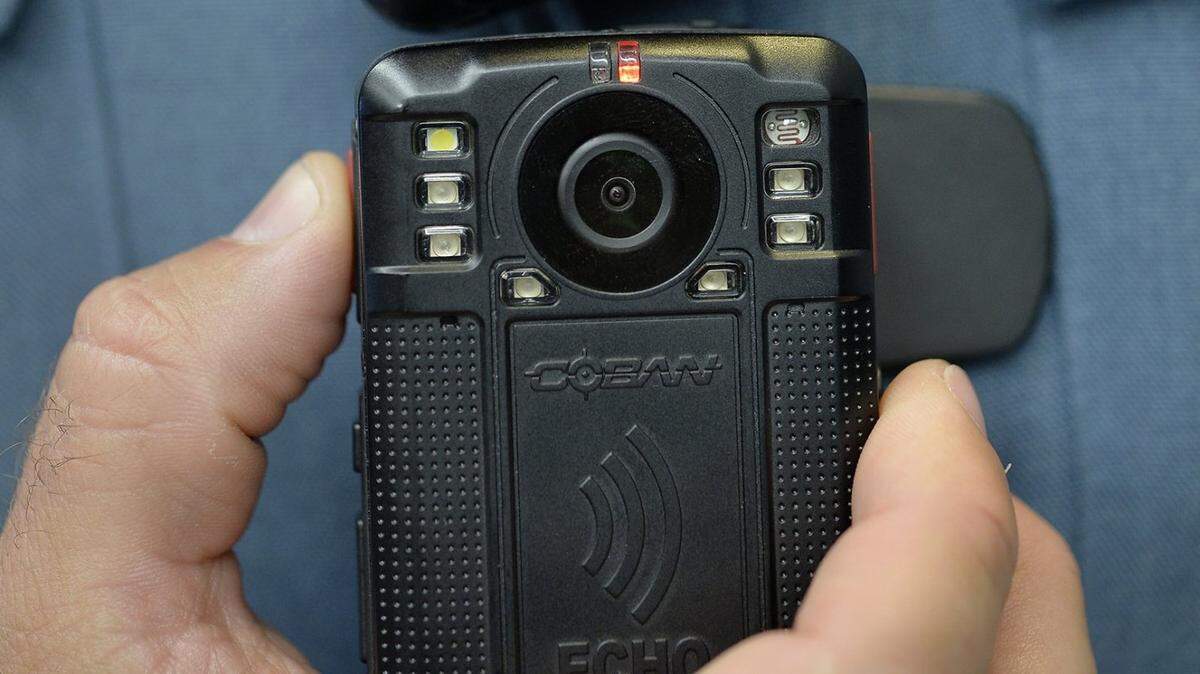
After a Fresno pastor alleged racial profiling was a reason he was handcuffed by a Fresno County Sheriff’s deputy, he met with sheriff’s officials and said he was disturbed to learn deputies are not equipped with body-worn cameras.
The weekend of Martin Luther King Jr. Day, local pastor and nonprofit director Joseph Perry was stopped by a sheriff’s deputy and handcuffed in his driveway. The deputy told him he was stopped because his license plate light was out.
Since then, officials with the sheriff’s office reviewed the incident and found no wrongdoing by the deputy, Public Information Officer Tony Botti said.
Perry and other Black community leaders had two separate meetings with sheriff’s office supervisors and Sheriff Margaret Mims.
Perry said he expected body camera footage to substantiate his account of the traffic stop, but in the first meeting he was “dismayed” to learn the deputy’s account was different than his. Plus, no such video footage existed because sheriff’s deputies are not equipped with body cameras, he learned.
“Honesty, openness and transparency is hampered and hindered due to the highly disturbing discovery that the Sheriff’s Department has been operating without body cameras or dash cameras despite legislative mandates,” Perry wrote in a letter to Mims after the first meeting.
No body cams
In the last decade, body-worn cameras or vehicle dash cameras have become standard equipment for law enforcement agencies throughout the country. Video footage is used for evidence and fosters trust and transparency for the public. But only two states require body cameras for law enforcement officers – Nevada and South Carolina.
In an interview with The Bee, Sheriff Mims explained deputies aren’t equipped with body cameras because of budget constraints. The sheriff’s office budget barely is recovering from the Great Recession, she said, and only in the last budget year was the vehicle fleet fully upgraded.
“We’re not anti-body cameras. We’ve got nothing to hide,” Mims said. “It is a cost issue.”
Buying the cameras isn’t the main problem, she said. It’s about maintaining storage of video footage and staffing for that. Mims compared the cost to that of a Polaroid camera and the film to go with it. The camera itself wasn’t very expensive. The film was, she said.
This was explained in the first and second meetings with Perry, who was accompanied by Faith in the Valley community organizer Marcel Woodruff, Saint Rest Baptist Church Pastor D.J. Criner, Westside Church of God Pastor Paul Binion and James Hall, a local banking executive.
“I let them know it may not be this budget year, it may be the next budget year,” Mims said.
She hopes to use a phased approach when body cameras are introduced. Equipping about 200 patrol deputies would be the No. 1 priority, she said.
Perry said that if other law enforcement agencies have figured out ways to pay for body cameras and properly store the footage, the sheriff’s office should be able to figure it out, too.
For example, Fresno Police Department has outfitted most of its officers with body-worn cameras. That effort began in 2014.
“I just think we could do better,” Perry said.
Educational meetings
Perry and the community leaders first met with a lieutenant and two sergeants from the sheriff’s office over Zoom.
The sheriff’s officials invited Perry and the others to attend the sheriff’s office 12-week citizens academy to learn more about the department and how deputies operate, Botti said. The lieutenant and sergeants also explained to Perry what information deputies find when they run a driver’s license plate.
“The information that populates only shows the registered owner of the vehicle, so the deputy didn’t go into the encounter knowing any more about Mr. Perry,” Botti said.
After that first Zoom meeting, Perry requested an in-person meeting with Mims at the Westside Church of God.
Mims apologized for the embarrassment Perry endured for being handcuffed and placed in a patrol car in front of his family and neighbors. She also noted the deputy didn’t choose for the vehicle stop to end in Perry’s driveway.
“Moving forward I believe that we can work together to make sure the community can be more aware of what to do immediately when there is a complaint or an issue with the actions of a Sheriff’s Office employee,” Mims wrote in a follow-up email to Perry.
Perry said from the two meetings, he learned that members of the public can request to speak to the watch commander on duty if there is a complaint. If Perry would’ve known this was an option the night he was stopped, he would’ve done it, he said.
“That’s a game-changer,” he said. “To be able to have a response that night, that’s huge.”
That option is something that the sheriff’s office should publicize more because the public likely doesn’t know about it, Perry said.
Mims also explained that car thieves often disable license plate lights, and that’s why deputies take action when those lights are out.
Ongoing dialogue
Both parties said they hope to continue working together to build trust between the sheriff’s office and the Black community.
“Systemically, there needs to be a conversation and some sort of system that exists between the community and the sheriff’s department that has been absent since I’ve been doing my work,” said Woodruff, who is heavily involved locally with law enforcement issues.
Perry said he would be happy to talk to deputies and share his story and perspective.
Woodruff said he and others currently are hypersensitive to incidents such as Perry’s.
“We have to engage in those conversations now,” he said.
Mims told the group the sheriff’s office does do de-escalation and implicit bias trainings and will continue to do so. Those trainings can take many forms, she said.
“Open dialogue is key to any relationship,” Perry said.
For others — especially Black people — who find themselves in a similar situation as his, Perry said he handled the situation the way he told his son to handle it.
“Your first order of business when you get pulled over by an officer is to leave there alive,” he said. “Then you can deal with it later.”