
Fresno woman survived Nigerian civil war. She never expected a mob to attack U.S. Capitol
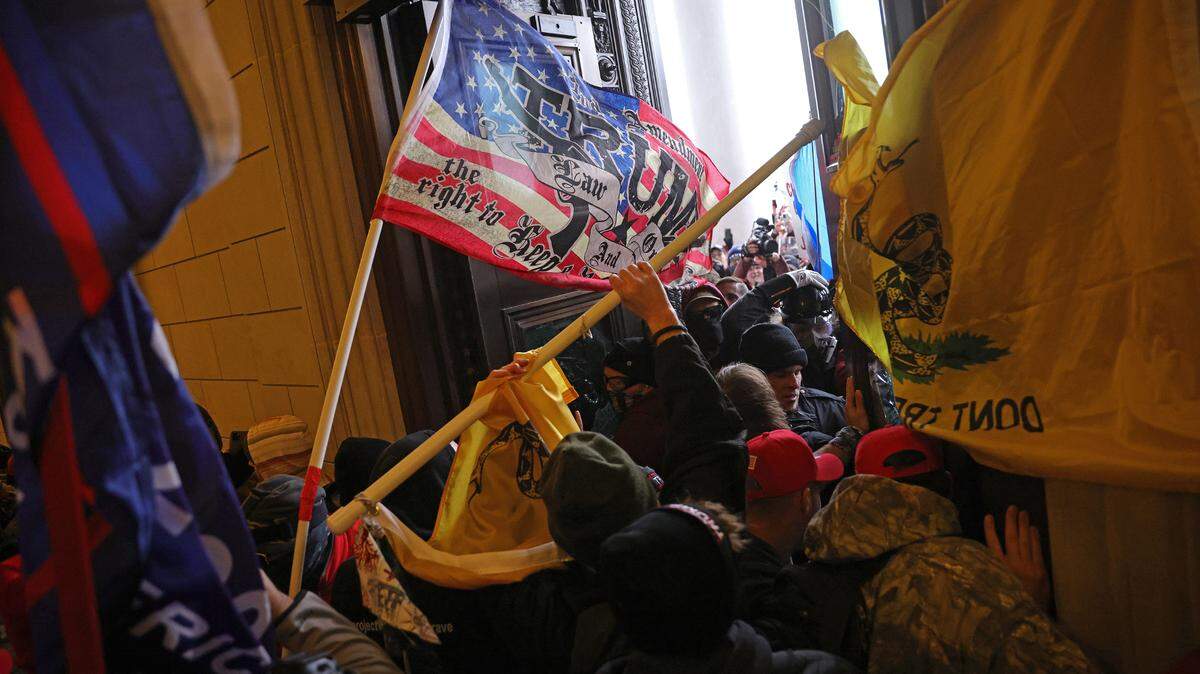
I never thought I’d see this day in America. It seemed inconceivable that an angry mob of largely white invaders would storm the Capitol — some of them armed and parading the hallowed halls of our government — because they want the results of a peaceful election overturned and for their candidate to stay in power.
For several hours, thugs, toting MAGA and Confederate insignia, controlled the building, and rumors had it they were heavily armed with weapons and explosives. No one knew what would come next.
This should not happen in America.
I am an immigrant, born in Nigeria, a country which is classified as a Third World nation. I lived through the country’s civil war. I know fear, horror and hopelessness that result from a group of thugs overthrowing an officially elected government and throwing the country into chaos and civil war.
I am shocked at how easily this country — supposedly the last bastion of hope for those of us who come here seeking stability and peace and the right to raise families without fear of government upheaval or takeover, or coup d’etat — could disintegrate.
Being black
I am Black. As a Black woman, mother and grandmother, what I find most striking is this monumental contradiction — that a white mob, with insurrection on their mind — can storm the Capitol ... break into the chamber, vandalize it and disrupt a peaceful certification of an election, yet walk away with little to no consequence.
Remember last summer? When Black marchers, protesting police killings of unarmed Black men and women, were brutalized and tear-gassed, arrested, and shot with rubber bullets and sometimes real bullets? They had no plans of overthrowing the government, they were literally saying, “Our lives should matter,” “Stop killing us.”
These contradictions reveal the real values of this country. Black lives don’t matter. We value whiteness — above law and order, more than our Constitution and even beyond our democracy itself.
America unraveling
As an immigrant, what I feel is a sense of loss, that the America I came to many decades ago is unraveling right in front of us, and I’m not sure I can recognize it. I came to attend college but fell in love with this country — its people, beauty, magnanimity, diversity, but most of all, the stability that it offers and represents.
Long before I became an American citizen, I marveled at American elections and the uneventful transfer of power to political opponents.
I was 17 when I came to the U.S., but had never witnessed an election. However, I lived through three forceful takeover of government.
Even though I could have gone anywhere, I made the choice to stay in America for the same reason that most immigrants move here. We are driven by the need to survive, and to safeguard our loved ones. We come to flee from persecution that is motivated by racial, religious and political bigotry, for continuity and a chance to live without fear.
War in childhood
I was a little girl when the Nigeria-Biafran War started. One day, we were going about our business, and the next, we were fleeing from our home in the middle of the night, our lives descending into an abyss, our survival by the grace of God.
For the 30 months that the war lasted, we lived like nomads, ate whatever we found and slept wherever we ended up each night, while at the same time, dodging bullets fired at us by the enemy and hiding from bombs that rained from the sky. More than 1 million Nigerians died from starvation alone.
I never knew hunger or fear until the war came. But when it ended, my family had lost more than half its members, our home had been razed to the ground -- livelihood lost and uncertainty about the future. This was at the heart of my choice to raise my children in America.
I talk about my life in two parts — “before the war” and “after the war,” even though the war happened when I was too young to fully grasp its magnitude.
But there are things that will haunt me for the rest of my life — dead bodies everywhere, being hungry enough to eat dust — things that happen in an unstable and disorderly country, where whoever can muster the larger mob stays in power. It was a nightmare that I thought was left behind when I called this country home.
These things are not supposed to happen here.
When I chose America over my homeland, I suspected I’d live with some ambivalence for the rest of my life — a permanent tug of war between my immigrant’s yearning to be fully American and my Blackness in a country with its unresolved racial issues.
Today, more than any before, I feel stranded in no man’s land.
This story was originally published January 7, 2021 at 5:00 AM.