Korean ‘national treasure’ found at Fresno estate sale. Now it’s back at museum in Korea
Pat Patterson didn’t know the significance of what he’d found at a Fresno estate sale when he first looked at an old Asian painting of men sitting beneath large umbrellas, lanterns and mountains.
Estate sale workers told him they found the artwork between two pieces of cardboard behind a dresser. A letter accompanied it, reportedly signed by the National Museum of Korea in 1952. The document said it was painted by renowned 18th century Korean artist Kim Hong-do, with calligraphy by Kang Se-hwang.
It perked the interest of Patterson, a retired Clovis police captain who now investigates stories behind interesting objects that capture his attention.
Patterson purchased it in 2002. Years of sleuthing followed to authenticate it. That labor of love finally led to its recent return to the painter’s hometown of Ansan, where it’s now on display at the Danwon Art Museum in South Korea.
He was invited to its unveiling at the museum but was unable to attend because of terminal brain cancer – the catalyst for Patterson’s decision to return the painting to Korea this year. The 76-year-old is now in hospice care at his Clovis home.
Of the painting’s return, Patterson said, “It’s very rewarding. If I was Korean, that’s what I would hope to get.”
Painting returns to Korea from California
Patterson said records indicate the painting was previously purchased in Busan in 1953 by the late Eugene Kuhn when he was serving in the Korean War. The decorated Navy veteran also served in World War II and Vietnam, and worked as a Fresno Bee reporter.
The rare painting by royal court painter Hong-do depicts a state exam during the Joseon dynasty. Patterson contacted numerous art scholars about it. He said his research documents would “fill up at least two shoe boxes.”
“There were nights where I woke up and it was like he was talking to me,” Patterson said of Hong-do. “It was unbelievable, and both my wife and I sort of bonded with Kim Hong-do. It was like we were part of it. It’s hard to explain, but we connected.”
One of the scholars he contacted, Byungmo Chung, flew to California to see the painting for himself in 2007. The visiting professor at Gyeongju University in South Korea was amazed by what he found. Chung was insistent it needed to go back to Korea – what Patterson said he also wanted.
Chung helped make that happen by drumming up interest for it in Korea and helping facilitate its transfer to the Seoul Auction in the country, where it was purchased by the city of Ansan and moved to its Danwon Art Museum. Patterson and Chung declined to share the price the painting was sold for.
Important Korean artist, painter Kim Hong-do
Patterson said art by Hong-do and Se-hwang were declared “national treasures” by Korea for their great artistic and historical value.
The return of the painting that depicts the Joseon dynasty state exam was also covered by the Korean Broadcasting System, “a major and trustworthy broadcasting company in South Korea,” said Ahran Koo, an assistant professor of art at Fresno State whose native language is Korean.
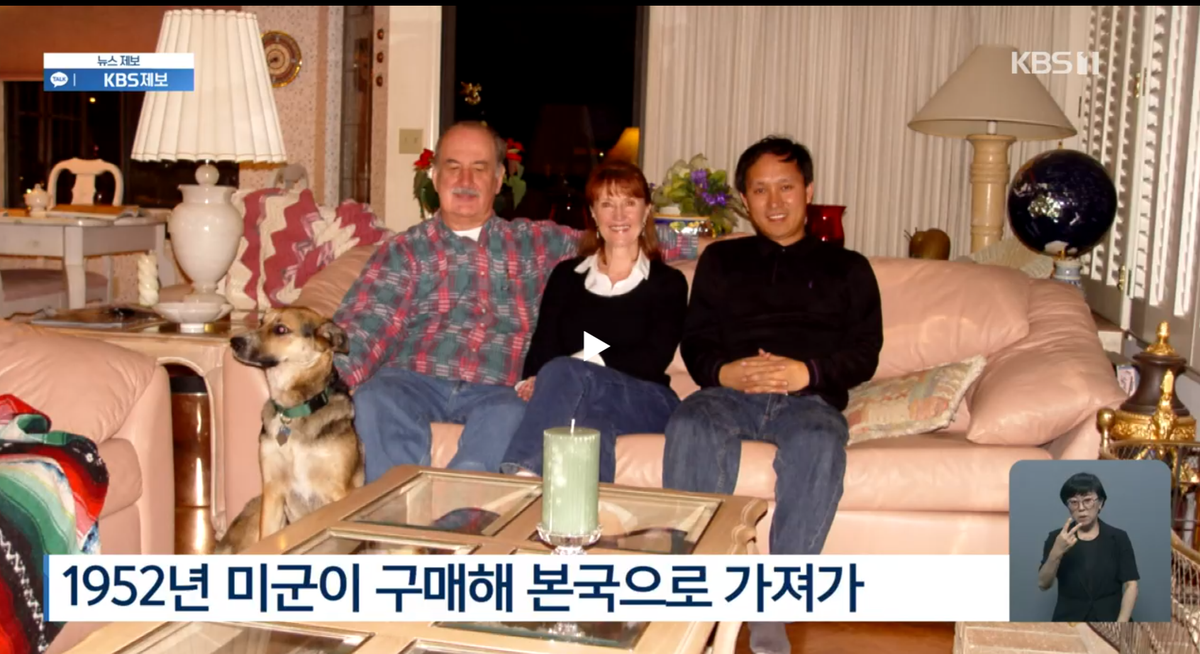
“Many people thought that the atmosphere of those exams must have been very serious and strict,” said Koo, describing the Korean news story, “however, Kim revealed that it was not true. He realistically depicted the scene with a somewhat ironic, more casual atmosphere.”
Chung told The Bee that this state test, “an important means of success,” had become a “big social problem” in the 18th century because of some cheating.
“If they had a lot of money or luck, even the ignorant and low-ranking person could pass the exams,” Chung said.
Chung said Hong-do painted it around 1778 at the age of 30.
The Asian Art Museum in San Francisco described Hong-do as a favorite court painter of King Jeongjo (1752-1800) and that the painting Patterson found might be from a screen of eight panels – with several panels from the same screen in three other Korean museums.
Sooa McCormick, curator of Korean art at the Cleveland Museum of Art, said Hong-do is “known for depicting the livelihood of people from top to low.”
McCormick said some people incorrectly refer to Hong-do’s work as folk art. But the accomplished royal court painter had been middle-class, McCormick added, and was mentored from youth by Se-hwang.
Pat Patterson, police captain and collector
Patterson was stationed in Japan with the U.S. Army during the Vietnam War but said he got more interested in Asian art later while visiting estate sales back in California.
Besides serving as a Clovis police captain, he had several other jobs over the years, including working for an agency that worked on the Apollo space program; serving as a board member for the State Center Community College District for 33 years; and owning a Clovis gift shop, which contributed to his love of collecting interesting objects from around the world.
“I always like to look for the rare and the unusual and the different,” Patterson said.
His wife Kris Patterson said it’s been “amazing to watch his level of research and how much he appreciates art of any kind, and how knowledgeable he really is.”
She called his Hong-do painting investigation a “really wonderful journey.” The couple made a copy of the painting so they can continue to enjoy it in Clovis.
As for the original, they are “extremely happy” it made its way back home.