
Tensions high between Fresno hospital, medical group hours before trauma status deadline
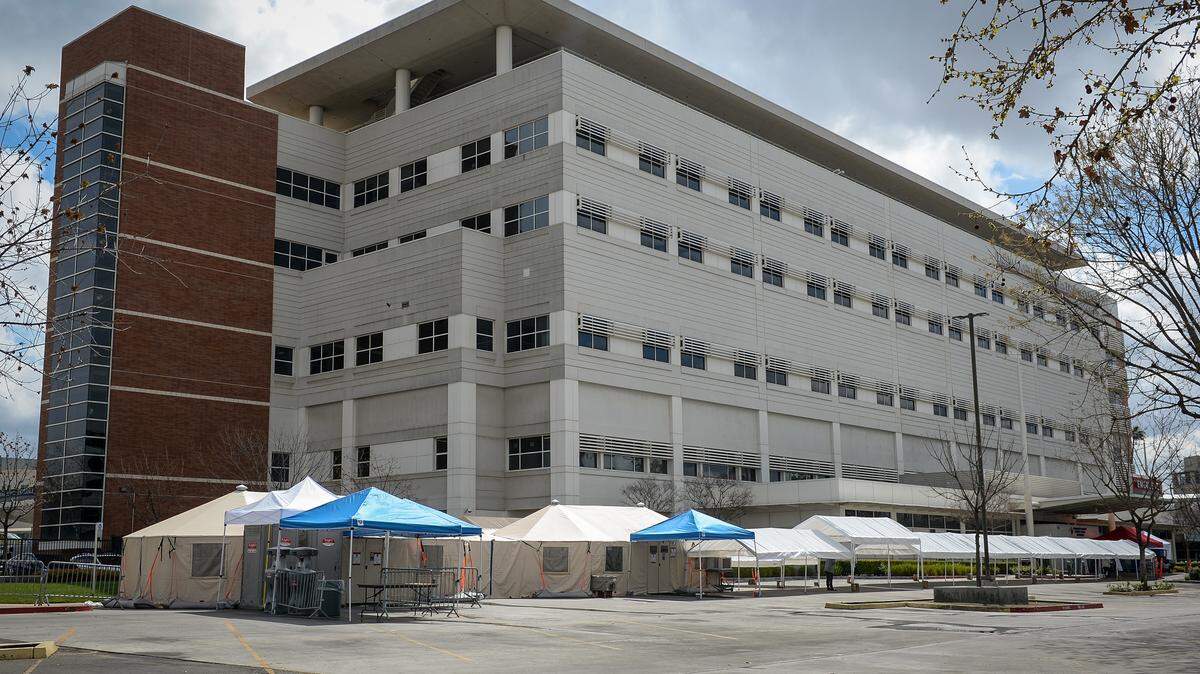
As the deadline approaches for Community Regional Medical Center to restore neurosurgical trauma services or lose its elite trauma status, hospital officials have accused the other side of misleading the public about their dispute.
A hospital official also maintains CRMC’s Level I Trauma Center coverage is not at risk, despite having been warned by Fresno County Emergency Services that their status will be “removed” if neurosurgical services are not restored by 5 p.m. Friday.
The Central California Faculty Medical Group fired back at the hospital’s allegations.
Dan Lynch, director of Fresno County Emergency Medical Services, on Wednesday confirmed the hospital has been given until 5 p.m. Friday to restore neurosurgical trauma services or his agency will yank CRMC’s designation as a Level I Trauma Center — the only one between Los Angeles, Sacramento and the Bay Area.
CRMC’s Michelle Von Tersch, senior vice president for communications and legislative affairs, on Thursday said the Level I Trauma Center coverage “is not in jeopardy.”
“Two new neurosurgeons are on site today (Thursday) and will begin seeing patients Friday,” Von Tersch said in a bullet-point statement to The Bee. “Fresno County’s emergency director, Dan Lynch, has been notified that all trauma services are continuing, despite some alarming quotes reported in the news.”
Lynch couldn’t be immediately reached Thursday.
As of Tuesday, a total of 21 patients had been transferred out of Fresno to hospitals elsewhere for services that on Thursday continued to be unavailable at CRMC. Neurosurgical trauma services are needed in order for CRMC to maintain its Level I Trauma Center status. The facility must also be a teaching hospital.
CRMC spokeswoman Mary Lisa Russell on Thursday said having only two neurosurgeons would be enough for CRMC to meet the county EMS Level I Trauma Center requirements.
Negotiations timeline
The tense dispute and finger-pointing has been broiling since last week when neurosurgical trauma services were interrupted at midnight on Wednesday night.
CCFMG has said funding for 28 physicians, including six neurosurgeons who also teach at UCSF, expired last week, and a new contract has yet to be signed. However, late on Wednesday, CRMC for the first time in the ongoing dispute, said that’s not true.
“The current agreement between CCFMG for neurosurgical call coverage for trauma services remains in place and has not been terminated. It is valid through September 2021,” Von Tersch said in an email. “CCFMG informed CMC on September 1 through media reports that it would cease to provide neurosurgical call coverage on September 2 at midnight despite being fully funded through an existing agreement.”
Von Tersch further said the “contract has been erroneously linked to agreements between CCFMG and CMC for outpatient clinic services, which are still being negotiated.
“CCFMG decided to not provide neurosurgical call coverage because CMC and CCFMG have not been successful in coming to terms on agreements unrelated to neurosurgical call coverage for trauma.”
CCFMG in a statement to The Bee on Thursday said the medical group provided “proper notice of call contract termination for neurosurgical trauma coverage, prior to stopping” services on Sept. 2.
“The termination of the call contract is intrinsically linked to CMC funding our 6 neurosurgeons who provide that call coverage to CRMC and the Level 1 Trauma Center,” Lauren Nickerson, CCFMG director of marketing and communications, said in a statement. “The grant funding for those neurosurgeons allowed our providers to take calls, and then provide the necessary comprehensive continuity of care for our patients after life-saving surgery.”
CRMC’s senior hospital administration “ may not realize that a physician’s commitment to their patients is ongoing, and not limited to the day of surgery,” Nickerson said in the statement.
“To imply that outpatient and inpatient coverage of neurosurgical care is not interdependent speaks to a lack of understanding of comprehensive patient care,” according to the statement. “As physicians, we have implored the hospital to provide bridge funding to allow for continuity of patient care during negotiations. “
The medical group has said it has twice put forward a proposal for bridge funding in order to continue services as negotiations are ongoing, but the offers have been declined by CRMC.
“This would allow CCFMG and CMC to negotiate a comprehensive funding agreement, which would deliver the high-quality neurosurgical care our doctors have been providing to this community for the last 8 years under the expired funding model,” according to the statement.
Von Tersch on Thursday maintained the medical group had given CRMC a “38-hours’ notice last week that its faculty medical group would cease neurosurgical coverage for the Trauma Center, despite an existing funding agreement for that coverage.”
What happens next?
Lynch, with Fresno County’s EMS, said Wednesday if CRMC fails to restore neurosurgical services by its deadline, and its Level I Trauma Center status is withdrawn, the hospital would then have to be resurveyed by Fresno County Emergency Medical Services, and the American College of Surgeons, to regain its status.
The process would be lengthy, taking anywhere between three to six months, he said. For the hospital to be resurveyed, it would have to have the “neurosurgical services back in place,” he said Wednesday.
Even if the hospital decided to go for a lower level of designation, Lynch said, it would be required to have access to “neurosurgical on-call services, and if they don’t, then they can’t be a trauma center.”
The American College of Surgeons is not doing any reverification visits during the pandemic, CCFMG physician James Davis, chief of trauma and surgery at CRMC, said. And even after visits resume, he said, it could be a long wait.
“There are a number of trauma centers that are waiting to be surveyed and verified or reverified, we are not at the front of the line,” he said Wednesday.
When Lynch was asked if there was any indication that the hospital intended to meet it’s deadline, he said he didn’t know.
“I don’t know because they have intended on bringing it (the services) back in place over the last week and they’ve been unable to do it,” he said. “ There’s no indication to tell me either way.”
Davis said Craig Castro, CRMC’s president and chief executive officer, and the hospital’s board of trustees have the ability to fix the problem.
“They broke it, they can fix it,” Davis said.
But, he said, the hospital has stated a number of things, that have “turned out not to be the case.”
“For example, last week, Mr. Castro, who is the CEO, said that there was going to be no change in trauma services and that the doctors shouldn’t be alarming the people of Fresno,” Davis said. “And then an hour later, administration had called the EMS and said, ‘No, we don’t have neurosurgical services,’ so yes, there is change.”
The hospital later said it would restore services by last Friday, but it didn’t happen, Davis said.
“It’s just a travesty and a tragedy that we have trauma services to the central San Joaquin Valley being held up by this,” he said.
Hospitals officials declined to specifically address comments by Davis.
Lynch said Wednesdayy the lack of services at CRMC is hurting other medical centers and doctors.
“The other hospitals in the local area really depend on the services being available at CRMC, and it’s not available so it’s impacting the other facilities, and doctors, as well because now they don’t have local access to these services so they end up having to send these patients elsewhere,” Lynch told The Bee. “CRMC has always been the place to go for services so this has really left a gap in the system that can’t easily be filed.”
During a COVID-19 media briefing Wednesday afternoon, Lynch told reporters that CRMC can’t “procure enough people.”
“What I’ve been told by their administration is they can’t seem to secure any of them to come in and do coverage,” he told reporters.
He said the ongoing issue has been “a little frustrating” because officials like to keep patients locally.
.jpg)