Hangtree and Spook lanes in Madera County may be renamed. But not everyone agrees
An eerie, familiar feeling came back to Brandie Campbell recently while taking her children to see her old school in Oakhurst.
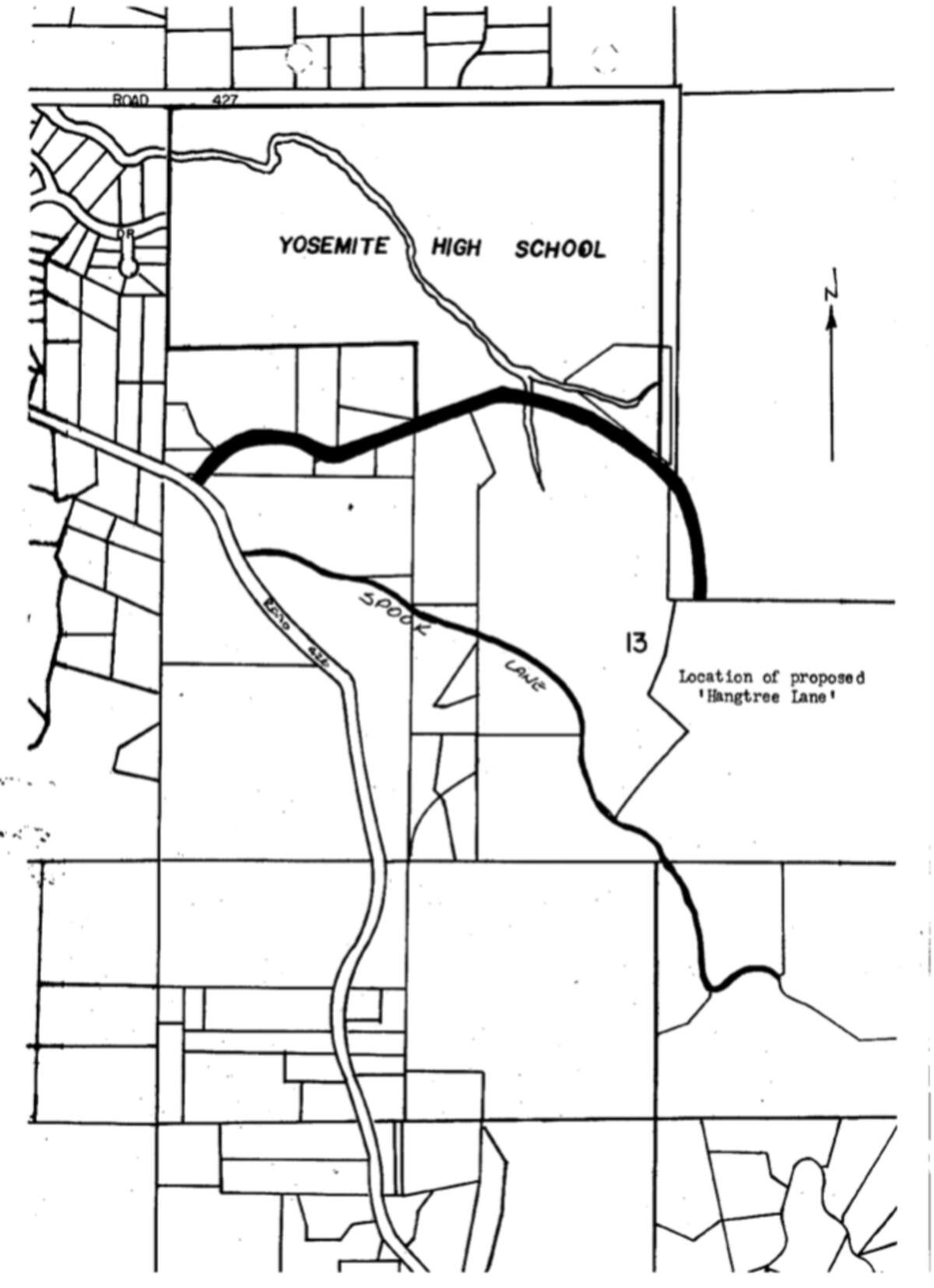
Everyone in the car got quiet as they drove down a main road behind Yosemite High School intersected by Hangtree Lane, Spook Lane, and Black Road – which appear in that order, one after the other, when coming from the rural mountain town.
Campbell, who is Black, turned the car around and lost focus of why she had returned to eastern Madera County. Seeing the street signs brought her back to how she felt as a teenager when she ran by them daily for cross-country and track.
“It was very traumatic,” Campbell said of seeing the signs regularly growing up. “It has a profound psychological impact on me and my family.”
Stephanie Bebee, from the neighboring town of Coarsegold, made a change.org petition to change the names of Hangtree and Spook lanes in hopes of sparing others from similar feelings.
“Whatever ‘historical origins’ the names Spook Lane and Hangtree Lane have are irrelevant,” the petition reads. “The images and feelings that they evoke have no place in any present day town.”
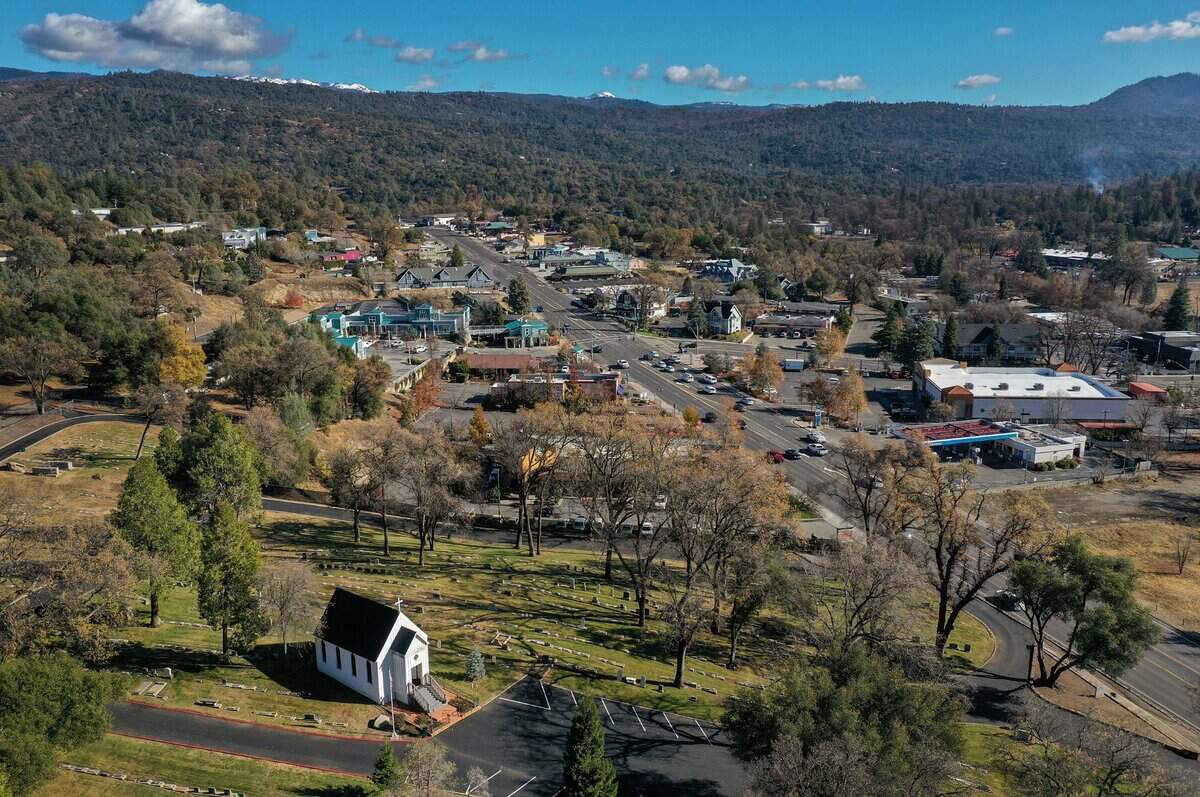
More than 1,800 people have signed the petition since late last month. Madera County sent out letters last week to residents who live on Hangtree and Spook lanes and Hangtree Court, or who own property there, asking if they want them to be changed and offering new name suggestions. The county also took down the signs, at least temporarily, out of concern they could be vandalized.
A counter petition, by a Michaela Pemelton, says the street names aren’t racist and has received more than 2,200 signatures to “uphold our history.”
Origin of Hangtree and Spook lanes
Before Hangtree and Spook lanes came the naming of nearby Black Road in 1978 by a Newman Black, said Matt Treber, chief of development services for Madera County – who oversees its planning department, building division, fire marshal, and environmental health, public works and water divisions.
County planning documents show Spook Lane was requested the following year. Hangtree Lane was requested two years later, in 1981. Hangtree Court was in 1990.
The lanes already existed then but had not been named officially, Treber said.
Spook can mean scary, but is also a racial slur for Black people. It gained hold after World War II, and saw a resurgence in the 1970s after a movie titled “The Spook Who Sat By The Door” was released, NPR reported.
The people who named Spook Lane, Earl and Ethel Forbes, cited a different motivation to the planning department in 1979. They wrote the road had been informally called Spook Lane since 1962 “when we decorated it for Halloween.”
One of the Forbes’ nieces offered more information in a Facebook group, saying it was also because the road looked spooky, especially at night and during storms.
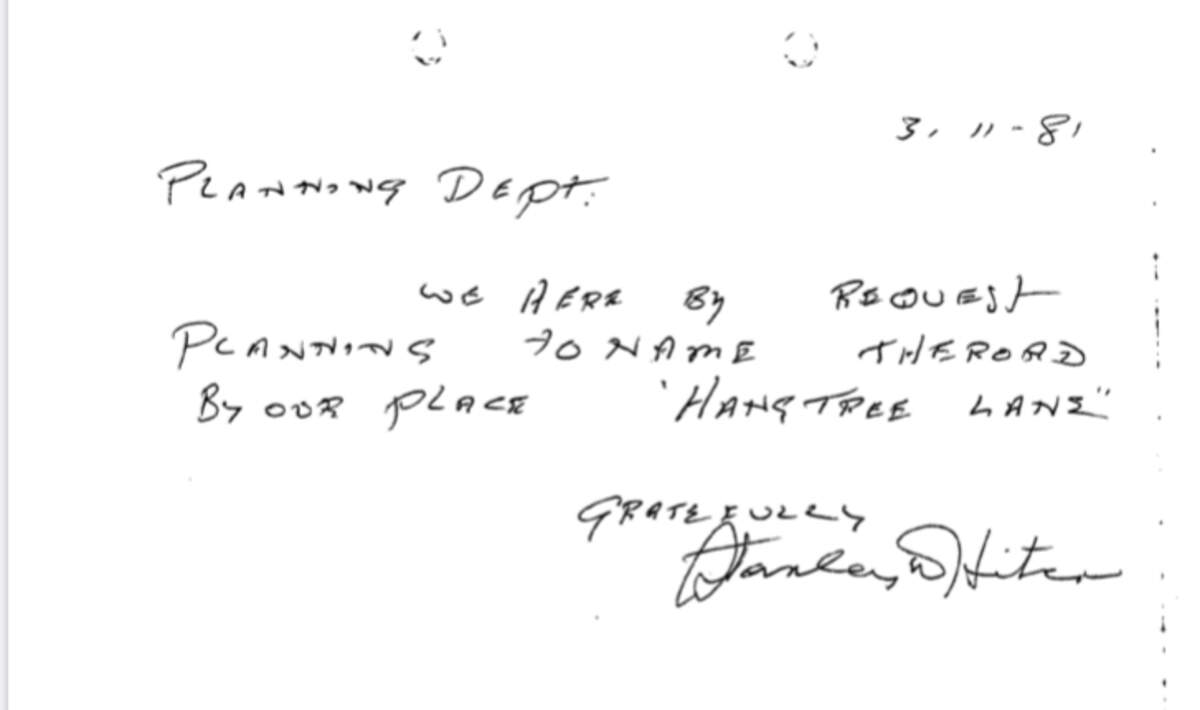
County records show a Stanley Hiten requested Hangtree Lane.
Two of his daughters, who asked not to be named because of contentiousness surrounding dueling petitions regarding the road names, said their dad chose the name in reference to a large oak tree that “hangs over” Road 426. They think Madera County asked for his input – and because he personally owned one of the largest parcels of land in that area.
There’s no record of the large oak tree at Hangtree Lane ever being used to hang people, said Brenda Negley, a board member and museum curator for Sierra Historic Sites Association, which oversees Fresno Flats Historic Village and Park in Oakhurst that includes a small research library.
Hiten’s daughters described their father as a compassionate and loved Seventh-Day Adventist teacher and pastor in Oakhurst and throughout California and Washington. “There was not a racist bone in his body.”
Hiten, who died in 2000, was born in South Africa of British and Dutch descent. His daughters said he never defended apartheid, a system of racial segregation there, and that when he left South Africa at age 19 he “never looked back.”
One said Hangtree Lane was named during “totally different times and circumstances” and that her father wouldn’t have named it that if he knew what 2020 looked like. He’d be devastated and heartbroken “to be associated with something as despicable as hate.”
The daughters said they are neutral about the proposed renaming of Hangtree Lane and that they don’t have a sentimental attachment to the name. One added, “If it’s offensive, even accidentally offensive, I’m OK with whatever the county thinks will be best for the town. I don’t like the notoriety at all.”
Yosemite helps inspire the petition
Bebee said she made her petition to change the road names shortly after reading a social media post from Yosemite National Park about systemic racism. It came amid nationwide protests after the killing of George Floyd.
“It made me think harder about how our mountain community could be more welcoming and feel safer for Black people and people of color,” Bebee said, “and changing the names seemed like a place to start.”
She said while it won’t solve racism, “it’s a small puzzle piece to a more inclusive Oakhurst” – a community that “purports hospitality” and is visited by thousands of Yosemite visitors each year.
Bebee also addressed the signs’ impact on future generations.
“Hypothetical future children will not suffer if these two street names are changed, but actual children, especially children of color, right now in this very moment will see us making some small effort to make Oakhurst more inclusive.”
Madera County letters to Oakhurst residents
Bebee’s petition, and the counter petition, are both addressed to the Madera County Board of Supervisors and Supervisor Tom Wheeler, whose district includes Oakhurst. The town is not incorporated and doesn’t have a city council.
Wheeler, a longtime resident of North Fork, said he’s neutral about the issue and “the majority wins.” He’s waiting for more feedback from residents who live on the streets in question, which will be followed by a public hearing. A date for that hasn’t been set. Wheeler said he asked county staff to send letters to residents on those streets asking for their input.
Treber said 64 letters (dated July 1) were sent to owners and renters along Hangtree Lane, Hangtree Court and Spook Lane, stating the county had received “a number of requests and significant public interest” to change the names. The letters offer alternative names and an option to write in other ideas.
Alternatives for Hangtree Lane include “Picnic Tree Lane” (likely stemming from stories from old residents about picnicking under the tree, recorded in a local anthology book) and “Badger Country Lane” (after the mascot of nearby Yosemite High).
Picnic Tree Lane is not a good alternative to Beau Campbell, Brandie Campbell’s father. Beau, who is also Black, said many older African Americans associate the word “picnic” with lynchings, and changing Hangtree Lane to that would be seen as “just another way to continue the hatred with a snicker.”
Alternatives for Spook Lane include “Forest Park Drive” and “Spirit Lane.”
Ahwahnee High School, a continuation school through Yosemite Unified School District, and the faith-based Youth With A Mission Yosemite are both on Hangtree Lane. Landmark Missionary Baptist Church of Oakhurst is on Spook Lane. Its pastor said he was planning to speak with church leaders about the issue. Yosemite Unified and YWAM did not comment for this story.
The county letters also say that if the names are changed, residents will need to change the names on various personal documents, including insurance, bills, and identification and DMV records.
Treber said the county would at least pay for new road signs. Bebee said several people in support of her petition have offered to help raise funds if there are any costs to residents associated with name changes.
When asked if other Madera County residents could offer input about the road names, Treber said people can call the planning department at 559-675-7821.
Racism in the mountains
Wheeler, like many in eastern Madera County, described the mountain area as a friendly, inclusive place.
“I hate racism,” Wheeler said. “I hate people that even think they’re better than people, and I’ve told people that. I hate that.”
But like many places across the U.S., it’s not devoid of a history of racist incidents.
Just behind Hangtree Lane, Yosemite High made national headlines in 1993 for allowing two students dressed in Ku Klux Klan robes pretending to lynch a third wearing blackface into a school Halloween party, where they won prizes for their costumes.
Brandie Campbell, one of few African American students then in the predominately white area, attended Yosemite High at that time. Her father said this of moving into their Yosemite Lakes Park home in Coarsegold in 1986: “We were welcomed to the neighborhood by a neighbor threatening me with harm from the infamous KKK.”
More than 40 years ago, some members of the KKK held a news conference and “rally” in the Oakhurst area. In recent history, Negley said Fresno Flats doesn’t have record of any lynchings, or trees used for hangings, in Oakhurst.
In 2006, a white supremacist “Aryan Unity Fest” was held in Coarsegold, about a 15-minute drive from Oakhurst.
Last month, the president of Madera County Board of Education resigned after posting a photo of the Confederate flag on social media that many perceived to be racist, with a couple lines that began, “I’m proud to be white.”
Different views about road names
Beau Campbell and his wife, who is white, raised their eight children in the mountains but now live in Fresno. He said overall they share “warm memories” about living in the mountains, but that Hangtree and Spook lanes need to be renamed.
“I read the history on the reasons for naming the road. It all seems harmless to most,” he said. “I try to avoid driving down the road or even telling anyone that in 2020 that unfortunately we have not grown the level of civility where all of us can be empathetic enough to know that street signs like these are racist and divisive.”
The counter petition, calling for the signs to be preserved, presents a different perspective: “We will uphold our history and we will always encourage people to know the facts of our historical landmarks, road signs, museums ect (sic). Changing street signs such as those on road 426 would only give people groundwork to continue to destroy and bury our great towns history.”
The writer of that petition could not be reached for comment. Bebee had this to say about the preserving-history argument in regard to the signs: “It’s not like General John Q. Hangtree was some great man who founded and saved the entire town of Oakhurst. There’s lots of non-racist tree names out there.”
Placerville in Northern California is in the midst of a similar debate over its nickname “Old Hangtown.” A dummy hanging from a noose in front of a saloon there, historically named “George,” was temporarily taken down then put back up last month.
Denise Eldon of Coarsegold owns property on Spook Lane and is planning to build a home there. She thinks Spook Lane is fine for her future address but added, “It should have been called Spooky Lane instead of Spook Lane, and maybe that’s the solution.”
She’s an English teacher at Fresno City College and said words shouldn’t be censored unless they are removed completely from the vocabulary. She referenced the “N-word” being in a book she taught about racism, “To Kill a Mockingbird,” and also talked about her confusion about some Black people still using this word while white people are not allowed to.
When asked about Brandie Campbell’s anxiety regarding Hangtree and Spook lanes as a teen, Eldon said she understood how she could have felt that way, but if she had asked someone about the origin of the names, she might have felt better.
Tracking down the true origin of the names, however, isn’t easy. Some locals thought Hangtree Lane was named after a tree used to hang people historically. Others thought it was just a place where people liked to “hang out.”
Amid a flood of Facebook comments about the lanes in question, one man said this: “By now we all know that the signs were never meant to be racist, nor do they have any racist meaning behind them. But that doesn’t seem to be the perception that some people have.
“Regardless of our intent, do we want to be PERCEIVED as a racist area? Is our history worth more than our reputation? One is held only as a memory. The other exists right now.”
This story was originally published July 11, 2020 at 7:00 AM.