Long-planned Fresno road project gets last of its needed money. When will it open?
Fresno-area leaders praised an announcement Wednesday that an extension meant to reduce area congestion will be completely funded — a north Fresno route that will provide easier access between the west and east sides of Highway 99.
The final $10.5 million needed to pay for the $138 million Veterans Boulevard project was awarded through the federal Better Utilizing Investments to Leverage Development grant, according to an announcement from Rep. Devin Nunes, R-Tulare.
“The grant will reduce congestion at the Veterans Boulevard interchange and better connect the Valley’s rural communities with Fresno,” Nunes said in the Wednesday announcement.
Fresno city leaders marked the first completed phase in September. The 2.5-mile six-lane roadway from Herndon and Polk avenues, east of Highway 99, will run to Shaw and Grantland avenues on the west side of the corridor.
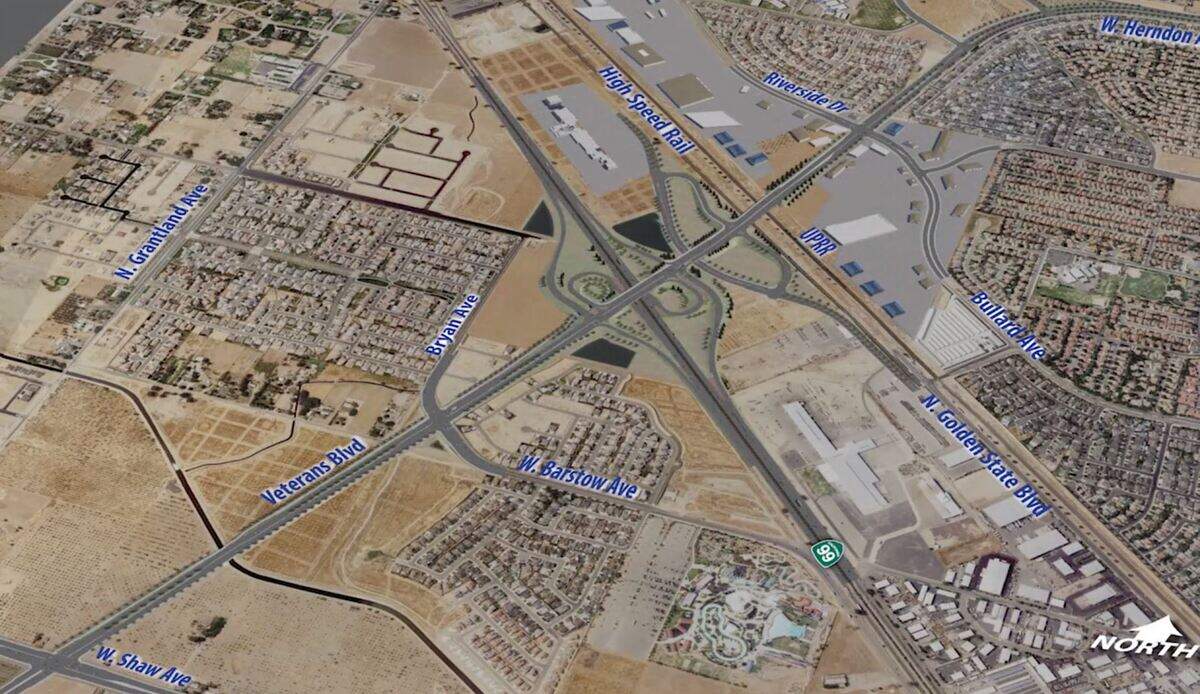
A planned overpass will take traffic up and over the Union Pacific Railroad tracks and future high-speed rail tracks, according to plans. It also calls for a new interchange on Highway 99 about a mile south of the Herndon Avenue interchange.
Mayor Lee Brand lauded the announcement. “This is wonderful news for Fresno, as this is the final funding piece of a ($138) million project to connect western and eastern segments of the city,” Brand said in a statement.
Nearly 40 years after the road was planned, city staffers say it’s expected to be complete by the end of 2023.
Area leaders were awaiting word on the application for the final $10.5 million needed after the first phase wrapped up. Two earlier applications for Veterans Boulevard had been passed over by the U.S. Department of Transportation – once in 2014 and then in 2018.
The new roadway was also praised by Fresno District 2 Councilmember Mike Karbassi, whose district covers the northwest part of the city.
“We are extremely excited about today’s announcement that the Veteran’s Boulevard project is fully funded,” he said in a statement. “This much-needed infrastructure is a key piece in connecting the communities both east and west of the 99.”
The project got an assist of about $28 million from the California High-Speed Rail Authority. Other sources of money for the overall project were about $47 million from Measure C, Fresno County’s half-cent transportation sales tax; and about $40 million in transportation impact fees collected from developers.