
‘Help Us, Help Fresno’ signs are city council’s second attempt to curb panhandling
After the community voiced strong opposition to Steve Brandau’s STOP ordinance and the Fresno City Council ultimately voted it down, three council members are returning with a new approach regarding panhandling.
Council member Garry Bredefeld, who represents northeast Fresno, has proposed a new resolution called Help Us, Help Fresno that will go to a vote at Thursday’s council meeting.
The resolution, cosponsored by council members Miguel Arias and Paul Caprioglio, is more of an education campaign encouraging residents to give to charities rather than panhandlers. STOP, on the other hand, was an ordinance that would cite both panhandlers and people donating to them.
The new proposal would cost about $20,000 for signs to be placed in medians or businesses where panhandlers frequent.
“We decided to see what we could do to come up with something that’s positive, educates the public … that when you donate and give in a charitable way to people who are panhandling … the bottom line is it doesn’t help them. Giving them money keeps them where they’re at,” Bredefeld said.
The signs would also include a donation number for people to text and a number to call for those in need who may turn to panhandling. Those phone numbers aren’t active yet.
Both Mayor Lee Brand and Police Chief Jerry Dyer support the new proposal.
“I don’t think this is the solution, but I do think it’s part of the solution,” Dyer said.
Council members will choose where in their districts to post the signs.
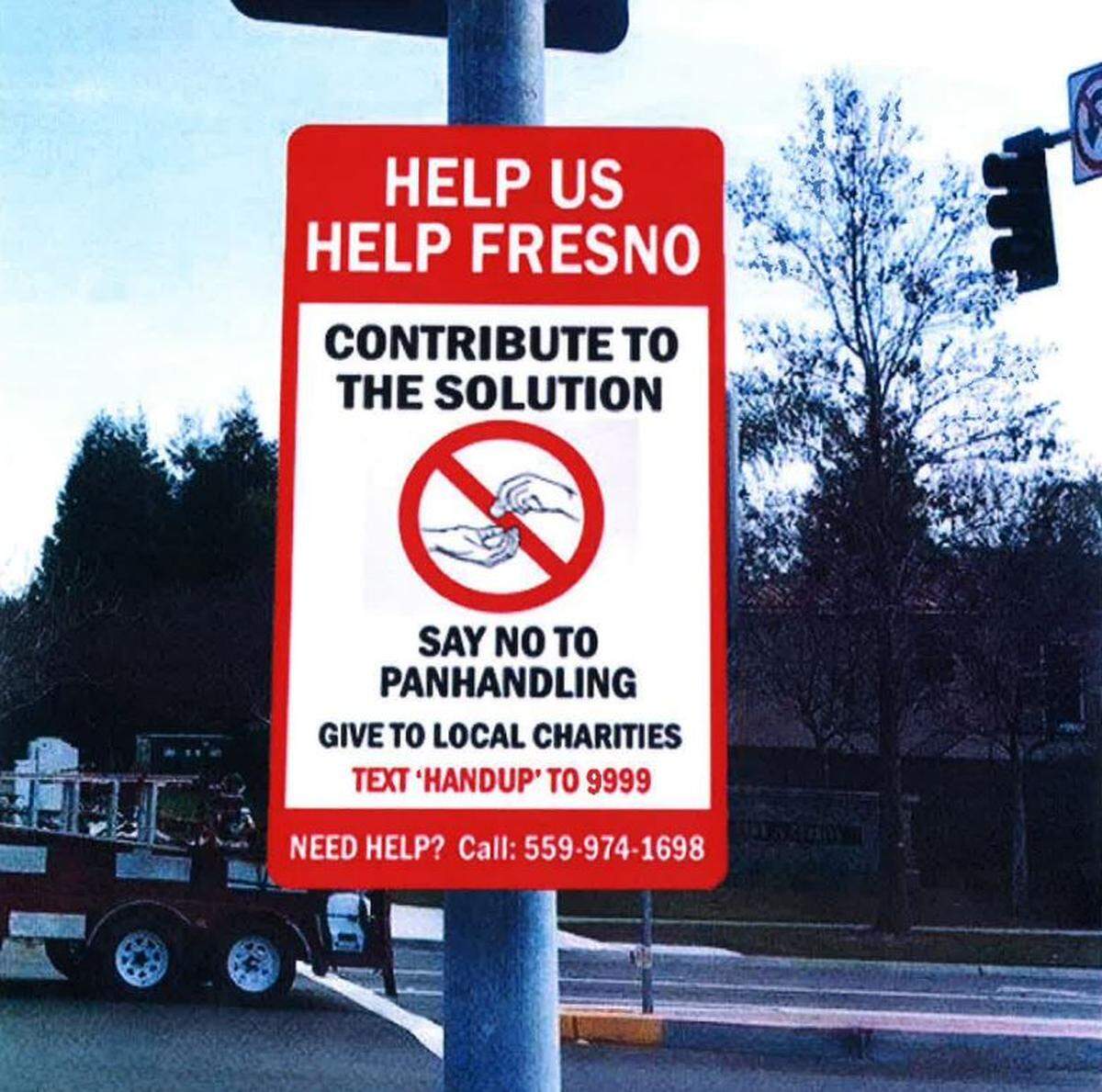
Locations that attract panhandlers tend to be busier intersections, such as Shaw Avenue near Highway 41; Blackstone Avenue near Herndon and Nees avenues; Fresno Street near Highway 99 and along the Ventura corridor.
Dyer estimated there’s about 300 people panhandling throughout the city at any given time.
Matthew Dildine, the CEO of Fresno Rescue Mission, said there are three reasons people turn to panhandling: They truly are homeless and need the money; they need the money to feed an addiction or substance abuse problem; they turn to panhandling for income.
The majority of panhandlers struggle with substance abuse, Dildine said. They all need help, but they all need different types of help, he said.
Arias said the city’s poverty is a result of a series of bad decisions, and it will take a series of good decisions to move forward.
This story was originally published April 8, 2019 at 2:44 PM.