
Falling on hard times, decades-old Fresno golf club calls it quits
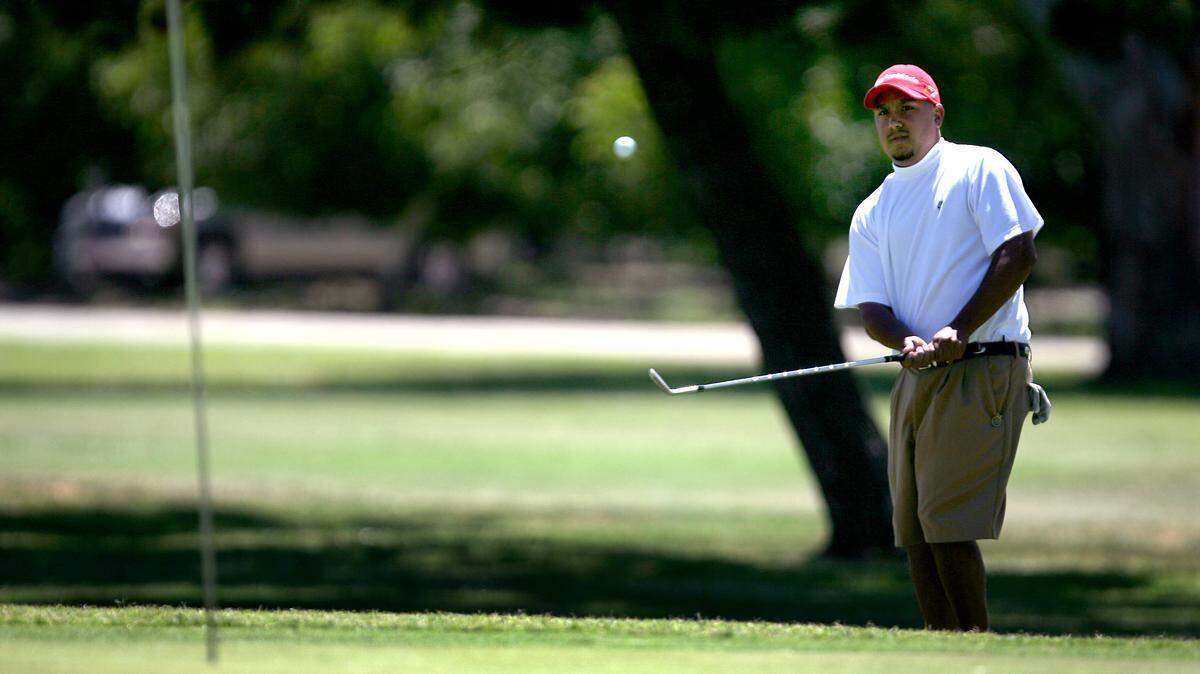
Fig Garden Golf Club, a semi-private course perched on the south bank of the San Joaquin River for 60 years, will close at the end of this year, its owner has told members.
David T. Knott, son of the club’s founder Gordon Knott, said in a letter to patrons that declining profits have hampered his ability to maintain or improve the 132-acre course to the standards he wants.
“My decision to close has been very sad and difficult,” Knott’s letter stated. “But due to the decline of interest in the game over the last few years, increase in facilities in the area and ever-increasing operational costs I have not been able to keep up with facility and equipment upgrades. …”
Fig Garden Golf Club is one of four golf courses along the river in northwest Fresno between Blackstone Avenue and Highway 99.
Its demise will take a bite out of the available clubs that are open to the public in the area. The nearby San Joaquin Country Club is a private, members-only course. That leaves the venerable city-owned Riverside Golf Course and the nine-hole Bluff Pointe Golf Course as public courses in that part of the city.
Knott is hardly alone in his decision to close his course. Nationwide, the number of golf courses declined by 1.5 percent in 2017, according to the National Golf Foundation. The equivalent of 15.5 full 18-hole courses were opened last year, but more than 205 shut down in what the foundation described as “a continuation of a correction in supply and demand.”
The number of total rounds of golf played has also been on the decline. Through September, the foundation reported that golfers played 3.3 percent fewer rounds than through the first nine months of 2018. In California, however, there was a 4.1 percent increase in rounds played so far in 2018.
“It’s not unusual for a decades-old golf course to close, considering the number of new golf courses that opened in most U.S. markets during the 20-year building boom from 1986-2006,” said Greg Nathan, chief business officer for the National Golf Foundation. “Those new courses created competition for Fig Garden.”
In the Fresno market area, the golf foundation reported that the equivalent of five new 18-hole courses opened during the course-building boom – an increase of about 33 percent, to 15 courses. By the end of 2017, however, the number of facilities had dropped to the equivalent of 11 18-hole courses.
Nathan compared the golf market to the coming and going of new restaurants in a community. “Just because restaurants closed, does that alone indicate that eating out is down? Of course not,” he said. “It’s the same for golf. Golf is all local. In other words, how is the balance of supply and demand for golf in Fresno, and does the open and operating golf course inventory match well with the types of courses and greens fee price points that are in demand from the golfers in the area?”
Bill Finn, a golf columnist for The Bee, said he believes that most of the players who will be displaced by Fig Garden’s closure will make their way to nearby Riverside Golf Course and another city-owned municipal course, Airways Golf Course near Fresno Yosemite International Airport.
“This is going to be a tough deal for the two muni courses,” he said of the additional demand for tee times. “Fig Garden was one of the first courses built here after (World War II),” he added. “It’s going to be like losing an old friend.”
Finn reflected on the number of courses that were open to the public in the Valley that have closed since shortly before the economic recession that hit the region in the late 2000s. “I’ve counted at least six,” Finn said, including Stevinson Ranch in Merced County, Fresno West near Kerman, Sierra Meadows in the Madera County foothills and Woodlake Ranch in Tulare County.
“With this one closing, that’s seven courses that were reachable or attainable for the public to get to play on them,” he added. “There’s very little golf that’s open or available to the blue-collar player; it’s shrinking each time something like this happens.”
In his letter to Fig Garden’s golfers, Knott said that before his father died in 2007, they had often talked about the changes in the golf industry “and the challenges that could face us as more opportunities for recreational interests have influenced lifestyles of the younger generation.”
“As profits continue to drop I am unable to compensate our team as they deserve, and not being able to upgrade clubhouse amenities, maintenance equipment and irrigation system is not fair to all concerned,” Knott added. “Those of you who knew my father and his great insight would understand how I came to this decision that is one of those most difficult I have had to make.”
This story was originally published November 6, 2018 at 1:53 PM.