Money is running out for Fresno-area residents helping at-risk neighbors amid COVID-19
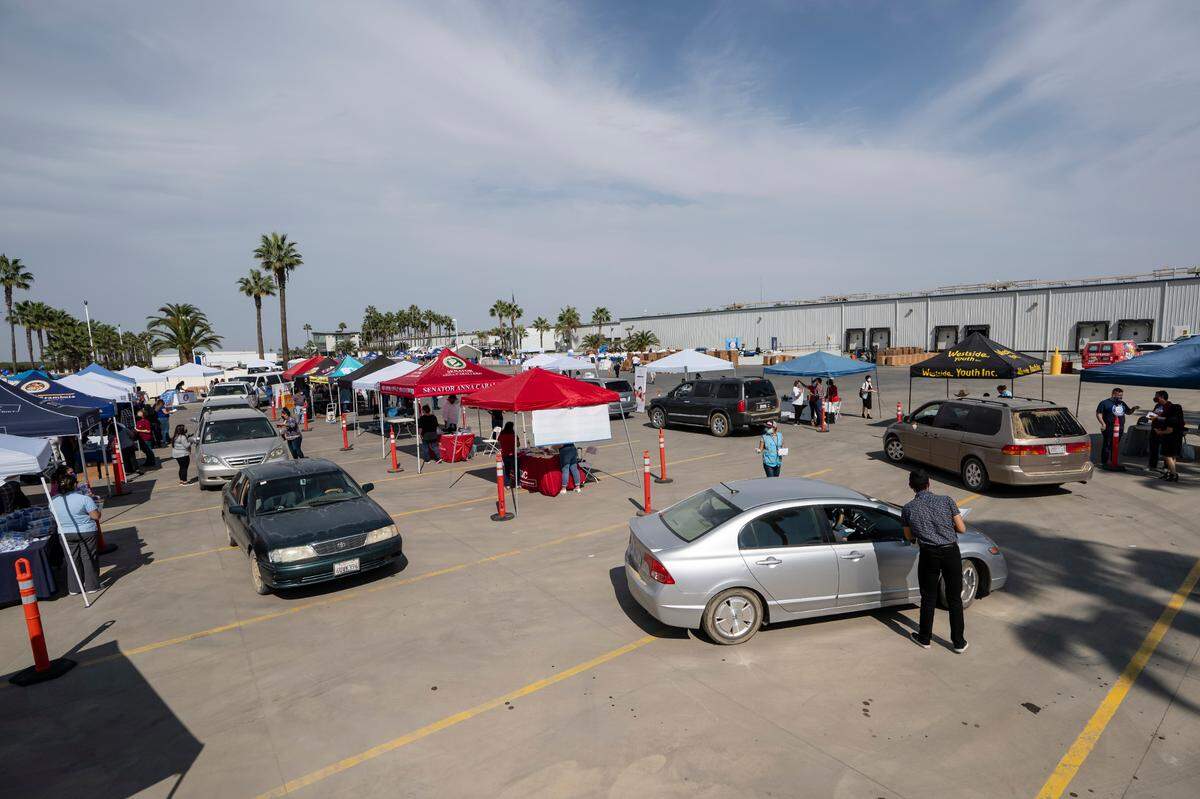
In one of southeast Fresno’s busy plazas, white tents peaked in the distance on a recent Tuesday. Cars arrived with trunks wide open. Young and elderly masked residents drew in with empty carts.
Workers wearing face shields and green vests took down their names. They were the nearby residents who depend on weekly food distributions hosted outside The Fresno Center on Kings Canyon Road.
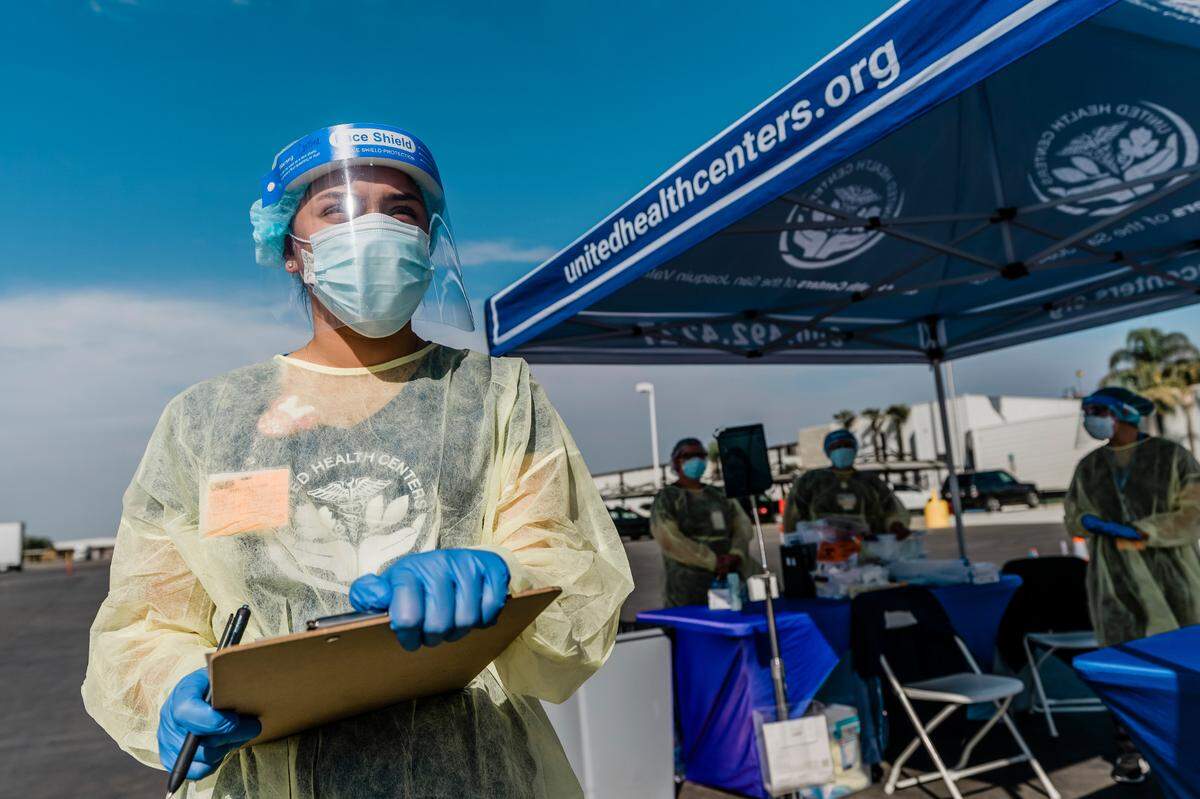
In this southeast Asian and Latino-concentrated area of Fresno, community health workers have been busy helping residents who’ve struggled to keep food in their household and get access to testing and information during the coronavirus pandemic. So they have begun to bring the services directly to the residents.
Since August, a network of more than 20 nonprofits like The Fresno Center has aided residents throughout Fresno County through the COVID-19 Equity Project, a project aimed at helping the most vulnerable residents.
Fresno County leads the central San Joaquin Valley in coronavirus cases and deaths, which have hit the elderly and the Hispanic population the hardest. More than half of the 453 residents who have died from COVID-19 in Fresno County have been Hispanic.
Fresno County health leaders say they have learned a lot since recording their first case of COVID-19 back in March. Since then, testing has increased, and cases have come under better control, although new spikes in cases suggest the pandemic is far from over.
In a region of California plagued by poverty and poor health, medical officials and advocates have tried to rethink how to reach residents with potentially life-saving information. With the help of numerous nonprofits, they think they’ve found one way to do it: putting residents in charge.
Funding community health workers
In recent months, Fresno public health officials have been aided by just over 100 residents who have been trained in contact tracing, isolation support, and educational outreach.
Once trained, the residents are sent out into their communities to talk to their neighbors about coronavirus as “community health workers.”
The undertaking is part of the COVID-19 Equity Project, and the result of $10 million set aside from the federal CARES Act grants given to Fresno and Fresno County to respond to the pandemic. Through the health worker outreach, residents infected with COVID-19 or exposed to the virus are eligible for cash assistance of $1,200 for needs like housing, food or child care.
Community health workers are not a new idea, even in Fresno County. But local officials say the workers are needed now more than ever before.
The Centers for Disease Control and Prevention had supported the model, namely, in response to the Zika Virus epidemic, when it was used in a campaign to inform and motivate pregnant women to take early action on their own to protect their health.
A crucial aspect of community health workers is they often belong to the very communities they help inform. Health advocates say this is important, especially when residents may be distrustful of government.
With COVID-19 in the Valley, the barriers in the way of residents, like language or personal fears, can become deadly if residents cannot communicate with doctors about the virus properly.
“People didn’t understand what it meant to have the virus (and) to get tested for the virus,” said Tania Pacheco-Werner, a research scientist with the Central Valley Health Policy Institute, one of the nonprofits involved in the COVID-19 Equity Project.
Pacheco-Werner, who crafted the project early on along with other nonprofits like Building Healthy Communities, said systemic constraints of hospitals and local governments often contribute to the lack of outreach to vulnerable residents.
But governments partnering with community-based nonprofits are helping link residents with everything from critical information and health access to food. In return, doctors and researchers gain valuable data from communities.
“We’ve shown that people of all walks of life because they have the passion and the interest and the dedication, they can be taught to do this work too,” Pacheco-Werner said. “To be responsive to a pandemic where we’re learning more every day, while they have the intelligence on the ground and they know how to do that, now we’re helping them have the intelligence of science.”
Community health workers vary from 19 to 60 years old. Their education ranges from high school to master’s degrees. Nonprofit leaders say the workers were previously volunteers with the nonprofits, but the CARES Act support for the project has led them to become paid health workers, earning as much as $17 an hour.
‘We have to try this now’
Nouvong Lynaolu, a lead community health worker with the Equity Project who works with The Fresno Center, said about 1,500 boxes of food were distributed in their latest outreach in southeast Fresno. That is just one of the many sites in Fresno County.
The events draw residents from all backgrounds. But the COVID-19 Equity Project was crafted to bridget the needs from communities that are marginalized in health outreach. Together, some nonprofits form an immigrant and refugee-serving coalition, while others serve Black residents. A similar coalition of nonprofits has also been established to help those with disabilities.
“By educating the community, we are finally really feeling how it affected everybody — how much everybody needs the support right now,” Lynaolu said.
In the months since the project began, the community health workers have been “getting into places we can’t get into as a county employee,” said Joe Prado, Fresno County Department of Health’s Community Health Division Manager. “We are learning so much.”
Prado said the reshaping of the county’s public health infrastructure using community organizations has allowed the department to rethink its outreach and understanding of local public health.
“COVID gave us the courage to say ‘we have to try this now,” he said.
Prado said the program also has allowed residents to share other pressing health issues like STDs and tuberculosis or environmental issues in their communities which may worsen a COVID-19 diagnosis.
“The way information has come out, the way we have a vaccine coming up, we need to be very flexible and agile,” Prado said. “If we’re responding to COVID today the way we were doing in March, we would fail.”
Financing challenges of community health workers
The project faces looming challenges when CARES funding runs out in December. It has led project leaders to begin to think how the community health workers can continue their work beyond December and as the virus develops.
“We know that we’re going to need this type of workforce to get people out to schedule appointments and get a vaccine” when a vaccine becomes available, Pacheco-Werner said. “I think that philanthropy at the state level and the national level has played a role in aiding (the) pandemic effort.”
Fresno County Interim Health Officer Dr. Rais Vohra said he’s confident about the financial capacity on the health department’s end.
“We’re leaning into this new normal,” Vohra said. “We know that we’re going to be dealing with the coronavirus for the next few months and possibly even longer.”
Prado, however, said losing the nonprofits’ community health workers could hurt the consistency of the public health response so far.
“This model, it is sustainable. We’re just going to have to find the funding resources to keep it in place,” he said.
State eyed Fresno before pandemic
With funding from the state-led Listos California effort, a campaign focused on addressing disaster preparedness among vulnerable communities, some nonprofits were able to respond to the outbreak much earlier.
Wildfires and earthquakes, not a global pandemic, were the focus of the Listos California campaign when prioritizing counties to work with late last year, campaign directors said.
But like many, the campaign shifted to helping counties address the pandemic by using millions of dollars that had already been allocated for disaster-prone counties like Fresno and Tulare to support informational material and public service announcements about the virus. The campaign’s focus has been to promote residents as their own first responders and encourage people to follow CDC guidelines to protect from COVID-19.
“This moment just underscores the urgency of our work,” said Justin Knighten, co-chair of state’s Listos California campaign. “We’ve got to prepare all of California for all disasters. That’s our new reality.”
The nonprofit work has reached rural areas where residents haven’t been used to outreach. But community organizers who partnered with the state-led effort said residents are beginning to understand what it means to prepare for disasters and protect themselves from illnesses like COVID-19. Listos California operates in over 20 counties statewide.
Ricardo Caterena, a community outreach organizer and radio personality in Fresno County, has distributed personal protective equipment and disaster preparation information to more than 13,700 farmworkers between Merced and Selma as part of local efforts with the Listos campaign.
Catarena said he often shares information about COVID-19 and the effects of recent wildfires and smoke especially on farmworkers.
He said he’s been surprised that farmworkers often ask for assistance with household needs rather than COVID-19. Although, they are attentive to information about the virus, he said.
“They’re in complete survival mode. I don’t mean survival mode from the pandemic, but from everything,” Catarena said.
Challenges for some persist
The community-based organizations have had blind spots during the pandemic.
Armando Valdez, director of Community Center for the Arts and Technology in Fresno, said he has assisted farmworker families who have faced persistent house payment and internet access challenges while recovering from the pandemic alone.
Farmworker and low-income families he’s helped include those forced out of work to care for kids who stayed home from school, he said. The children used to attend his center for arts education, but no longer do.
Valdez said that early on, he heard from rural families who received no help from local governments or nonprofits. Valdez said there are serious issues in some small, hidden communities where residents live in unsafe housing and with fears they could lose work if they report illnesses.
Those challenges have been highlighted by health officials attempting to reach potentially-sick patients, but Valdez said he isn’t sure what is the best remedy for families who often remain out of reach by local groups. His organization has gotten by with donations and recently got a donation of over $20,000 from friends who donated their stimulus payments.
Valdez said he used the money to help families with rent and food.
“I hope that everybody has learned from the beginning of this pandemic on how to fix it, how to move forward, how to help those folks who never got anything,” Valdez said. “What happens if there is another wave, that is my concern. We’ve already left them behind.”