Coronavirus cases top 500 in central San Joaquin Valley, Tulare County deaths highest
The number of people confirmed to have tested positive for COVID-19, and deaths related to complications from the novel coronavirus, both continued to rise in the central San Joaquin Valley, with significant increases in cases reported Friday by counties across the region.
Forty-four additional cases were reported Friday: 18 in Fresno County, 16 in Tulare County, two in Madera County, seven in Merced County and one in Kings County.
With another 24 announced Saturday by Tulare County in its regular midday update, the region’s total number of patients with COVID-19 is 518 since the first confirmed coronavirus disease cases appeared in the region on March 6.
Dr. Rais Vohra, Fresno County’s interim health officer, also reported that two more people – both elderly men – have died from complications related to the virus. The disease has now claimed five lives in Fresno County, and 21 lives across Fresno, Kings, Madera, Merced and Tulare counties.
To date, Tulare County has seen the greatest death toll from the virus in the Valley. The 11 lives lost there are more than the rest of the region’s counties combined, and represents a mortality rate of 2.3 deaths per 100,000 population. That’s the sixth-highest rate among California’s 58 counties.
The increase in cases – the third largest daily surge since the pandemic hit the Valley – comes as health officials hope residents will continue to heed shelter-in-place and stay-at-home orders on the Easter holiday weekend when people typically gather for worship services and traditional extended-family meals.
Church services, drive-by parades are a concern
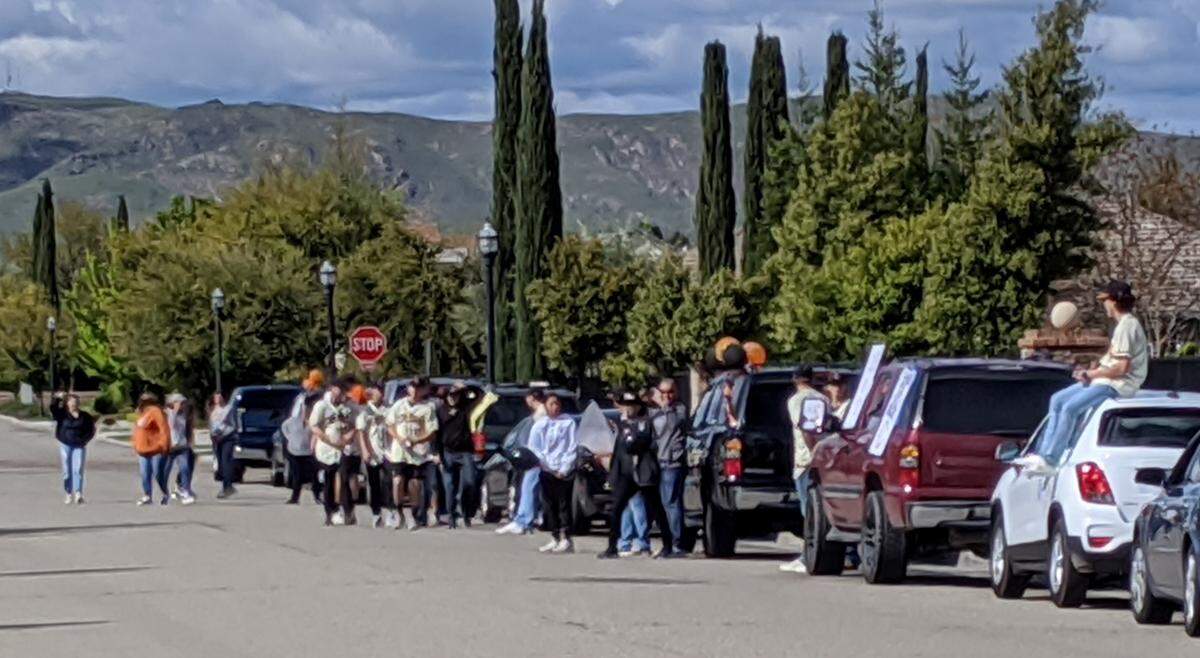
Vohra and his Madera County counterpart, immunologist Dr. Simon Paul, expressed concern over the potential for drive-in church services or drive-by birthday and holiday “parades” that have become popular in some communities during the community shutdowns. Both types of circumstances can increase the risk of spreading the disease “and defeat the entire purpose of this shelter-in-place” process, Vohra said..
“Everyone knows now that social gatherings have been prohibited to prevent the spread of the virus,” Simon added. “Initially, going in cars seemed like a way to solve that problem.”
“Our biggest concern with drive-in events is when you get multiple households coming together in one car” to attend a worship or other service, Paul said, “so people who may or may not be at risk are all together in one car.”
He and Vohra also said that if extended family members are coming from out of town for a major holiday, people can arrive from other parts of the state where there is a much higher prevalence of the coronavirus. Every time those travelers stop along the way for food or restroom breaks, their risk increases for exposure to the virus or potentially spreading it unwittingly.
“We’ve also seen that with drive-by food pickups at schools, where there are kids from all different families piled into one car,” Paul said. “What that means for anybody at risk (is) if there’s anyone who is asymptomatic in any of those households, now all of those households are at risk” for exposure to the virus.
Vohra said his office has worked with area churches to make the case for discouraging drive-in Easter services. “We haven’t made an order, but we’ve made guidance,” he said. “I think there’s a lot of reasons that (drive-in services) may lead to a lot more outbreaks, and we’re seeing it already” from other social gatherings.
“To their credit … they’ve agreed to abide by this guidance,” Vohra said of local churches. “They’re not going to have any drive-in events because they understand the risks involved” of spreading the virus..
Drive-by parades, such as recent instances of school teachers driving through their students’ neighborhoods to provide a connection while in-person classes are on hold, also represent a concern, Paul said.
“Obviously if one or two relatives drive by for a birthday and drop off a present while maintaining social distance, that’s not putting anybody at risk,” Paul said. “But once it becomes an ‘event’ or ‘parade’ with a large number of cars coming by, you see lots of kids coming from multiple households collecting on the street to see all the cars go by.”
“It increases the risk for people who are getting together in the street or start to lose the physical distancing from people in other households,” he added. “That’s the reason behind the guidance” against such impromptu parades.
‘This germ just finds the next person it’s going to infect’
Vohra said Fresno County is seeing a growing number of COVID-19 clusters in rural communities, including families with multiple generations all living in the same home. “Sometimes it’s large families, and sometimes it’s large family gatherings,” he said. “There’s still a little perception that you have to be a health care worker or a first responder, or live in a big city to be vulnerable to infection.”
“All of these cases that we report, they really thought they wouldn’t get it,” Vohra added. “They really thought what they were doing was low-risk, and unfortunately unless you’re really minding all these social-distancing measures all the time, this germ just finds the next person it’s going to infect.”
And in the Valley, where this germ has so far found the most people it’s going to infect has been in Tulare County.
New patients reported Friday and Saturday by Tulare County health officials sent the total confirmed cases of coronavirus disease to 227, including a number of patients and staff from the Redwood Springs Healthcare Center, a nursing home in Visalia. Of the 11 deaths reported to date by the county, at least eight have been residents age 65 or older, including three people associated with the nursing home.
Tulare County has about 1% of California’s confirmed COVID-19 patients, but it also has about 3.8% of coronavirus-related deaths in the state.
While California’s statewide mortaility rate from COVID-19 is about 1.4 deaths per 100,000 residents, Tulare’s rate of 2.3 deaths per 100,000 is considerably higher than other Valley counties. In Madera County, where two people have died, the rate works out to 1.3 per 100,000. To the north, Merced County’s three deaths amount to 1.1 per 100,000.
Fresno’s death rate from the coronavirus is 0.5 per 100,000, while Kings County’s rate is 0.0 because no deaths have yet been reported there.
This story was originally published April 10, 2020 at 5:18 PM with the headline "Coronavirus cases top 500 in central San Joaquin Valley, Tulare County deaths highest."