CA wine, ag industries face growing pest problem after years of funding decline
Three hundred acres of destroyed grapevines in the Southern California city of Temecula.
That’s how the glassy-winged sharpshooter, which carries Pierce’s disease, made its first notable appearance in California in 1999. It cost the Temecula winegrape growers $3.5 million in gross agricultural income that year, a 36% decline.
After the destruction, the state worked with the agriculture industry and the federal government to invest in control programs for the invasive pest, which kills grapevines and makes its home in numerous other fruits. Hundreds of millions of combined public and private dollars have been spent on the pest control programs since their inception.
Yet, since 1999, state funding has trended downward, state figures show. Only a few annual state budgets saw the same or more dollars allocated than were initially invested in 1999 — around $8 million. While those dollars declined or failed to see any increase, the state agriculture industry’s worth grew and pest control and prevention costs went up. Concurrently, industry and federal investment in the programs increased.
Now, California finds itself in the midst of a significant glassy-winged sharpshooter threat — on top of rising pest threats as a whole. In a roughly two-month period, two shipments to Costco, one with grapevines from Fresno and one with ornamental plants from Texas, contained glassy-winged sharpshooters. Around 10,000 plants were sold between both incidents, with thousands still unaccounted for.
“California has deprioritized its investment in this system” Casey Creamer, president of the Fresno-based Fresh Fruit Association, said, whose members include table grape growers and other growers whose commodities can be hosts to the pest.
“...The industry is invested in this and wants to make sure that we have oversight and wants to be able to contribute to these things, but the ultimate responsibility should not fall 100% on the industry or … USDA,” he said.
The half-inch-long pests pose significant risks for both California’s wine and table grapes. The pest does not pose a threat to humans or animals. The wine and grape industries are billion-dollar enterprises in California. The state produces 99% of all table grapes and around 80% of all wine in the U.S., according to industry groups. If unaddressed, members of Congress said recently that the glassy-winged sharpshooter could cost the state $104 million annually.
A spokesperson for Gov. Gavin Newsom deferred to the California Department of Food and Agriculture for comment. The department said “pest and disease control prevention activities are constrained by the funding appropriated annually.”
With wine consumption at historic lows, the wine industry is already facing significant challenges. Some grape growers and winemakers are shutting their doors because they can’t afford to be in the business anymore. The leaf-hopping insect destroyed more than 1,000 acres of grapevines in Northern California from 1994 to 2008, causing $30 million in damage, according to the California Department of Food and Agriculture.
Dozens of counties, including Sacramento County, are involved in glassy-winged sharpshooter response efforts, either because plants were sold in those or neighboring counties. The majority of the pest detections have been of immature life stages of the insect such as egg masses.
In one case, a broad-headed sharpshooter was also discovered, another carrier of Pierce’s disease, Michelle Pham, a manager in the state agriculture department’s Pierce’s Disease Control Program, said at the Tuesday California State Board of Food and Agriculture meeting.
So far, there is no evidence the glassy-winged sharpshooter has taken hold in the state, Pham said.
Historical challenges
Between 1999 and 2023, the state’s share of Pierce’s disease program funding was 7.8%, according to a comprehensive study on the cost of the disease in California, funded by California’s Department of Food and Agriculture. The federal government’s portion was 57.6%, with industry dollars making up 7.9%. Compliance costs and other contributions made up the rest of the annual budgets.
For the 2022-2023 fiscal year, the state’s funding share was 2.7%, or $1.2 million, the data show. The federal government’s portion was 59.6%, or $26.8 million, and the industry’s portion was 10.2%, or $4.6 million. In more recent years, the state agriculture department has also contended with budget cuts that have led to fewer dollars going into pest prevention programs, the state has publicly said.
Pierce’s disease, in a year when it infects grapevines, costs California’s grape growing industry tens of millions of dollars, the study estimates.
Don Cameron, president of the California State Board of Food and Agriculture, said the agricultural community, including the government, needs to “remain vigilant” and “be proactive” to protect the industry from pests. More pests mean more money spent and more pesticides used, he said — neither of which the state wants.
“I definitely support additional funding, and long-term funding, to protect the California ag industry,” said Cameron, who has served on the board since 2014 and runs Terranova Ranch near Fresno where he grows over 20 types of crops, including winegrapes.
A 2026 report from the California Agricultural Commissioners and Sealers Association and the state agriculture department warned the state pest prevention system is “under increasing strain” and, as a result, “falling behind growing threats.”
Many elements of the state’s system are “highly effective,” the report found. The state’s border protection stations, dog teams and high risk pest exclusion programs show long-term success, preventing invasive insects from entering and establishing in California, while saving the state hundreds of millions of dollars. The report gave examples of when the dollars saved have been more than the dollars invested in the programs.
But, the report found that the underfunded programs are being “outpaced by a sharp rise in invasive pests threats driven by global trade and travel.”
E-commerce is now a primary pathway for the introduction of pests and disease into California. On top of e-commerce, the state has been hosting and will host more international events such as the World Cup and the 2028 Summer Olympics — other potential ways non-native pests could wind up here.
The presence of invasive insects is rising overall as season lengths and temperatures are shifting due to climate change.
For Lindsey Carter, executive director of the California Agricultural Commissioners and Sealers Association, the argument for more state funding has been and continues to be straightforward: “an ounce of prevention, a pound of cure.”
The state spends 10 to 15 times more on emergency funding than if it systematically invested in pest control programs, Carter said, whose group is a voluntary organization for county agricultural commissioners.
“This is protecting our food supply within the entire state, and that is something we all benefit from,” Carter said.
In a recent interview with The Sacramento Bee, California Department of Food and Agriculture Sec. Karen Ross said the state needs to ensure that it keeps up with “the inflationary costs of doing the business of funding all the trapping and detection.”
“Prevention is the number one strategy for sustainable pest management,” she said.
Recent incidents
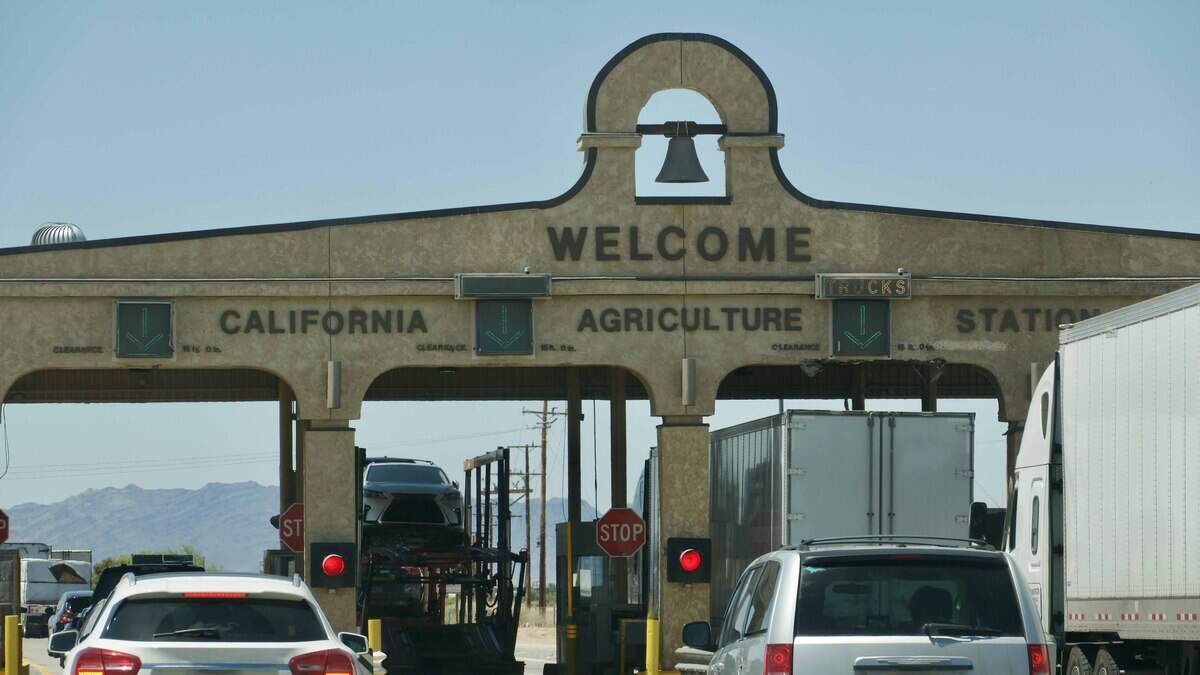
The latest incidents at Costco highlight potential cracks in the state’s first line of defense: the border protection stations.
When vehicles cross the border into California, they are supposed to be stopped by the state border protection stations for inspection of agricultural products such as plants and fresh produce.
Upon inspection, commercial vehicles receive a certificate that states the shipment must be held for further inspection at the delivery site by county agricultural offices.
For the June Costco shipments with ornamental plants, vehicles arrived at the retailer without certificates. Some county agricultural inspectors were able to still inspect the plants before any were sold. Others were not. The state agriculture department said it is still investigating the recent Costco incidents to better understand how the pests were able to enter California.
For many years, including recently, the border stations have faced significant staffing shortages and reduced hours of operation, records obtained by The Sacramento Bee show and sources said.
California Department of Food and Agriculture records obtained by The Bee show that the Truckee border station near Tahoe — one of the busiest locations of the 16 facilities in the state — was staffed with 18 employees in May when it should have 40.
It is challenging to recruit employees due to the remote locations of the stations, high costs of living in areas such as Truckee and logistics of the job such as commutes, hours and weather temperatures, records show and sources said.
Many commercial vehicles are still being stopped, but passenger vehicle stops have dropped off, county agricultural commissioners said.
Over time, Ross said she is hopeful that X-ray technology can assist at the border stations.
Uncertain pest future
Similar to past years’ pest responses, the state and industry groups are requesting emergency funds to help manage the glassy-winged sharpshooter infestation.
The state is requesting $8.2 million in one-time funding from USDA for the Costco incidents, the state agriculture department said. In a June 16 letter, U.S. Sens. Alex Padilla and Adam Schiff, D-Calif., and 12 House members urged USDA Secretary Brooke Rollins to provide $32.2 million in emergency funding to the state to combat the threat of the glassy-winged sharpshooter.
Wine and agriculture industry associations are sending a letter to legislative leaders and the Newsom administration requesting $19.7 million for the state agriculture department in the 2026-2027 fiscal year budget, Michael Miiller, director of government relations for the California Association of Winegrape Growers, said.
That emergency funding would help address the fallout from the Costco incidents, Miiller said, and ongoing glassy-winged sharpshooter eradication efforts in five counties that had infestations prior to the latest outbreaks. Many dollars would filter down to the county agricultural commissioners and their staff who are the boots on the ground for pest containment efforts. The legislature returns in August and will pass trailer bills to add to the state budget that was approved last week.
On top of the emergency funding requests, the state will add two new additional and county-funded dog teams this year in Southern California. The teams focus on unmarked packages that may contain produce coming through facilities such as the U.S. Postal Service.
For next year’s budget cycle, Carter said the California Agricultural Commissioners and Sealers Association will advocate for more funding and for the state’s adoption of a pest prevention plan, similar to its fire and water plans.
Her team’s report identified more than $90 million in “immediate one-time funding needs” and $25 million in annual investments to strengthen the pest control programs. These dollars do not account for the long-term investment required to maintain the system’s effectiveness, the report said.
Creamer of the Fresh Fruit Association said the state food and agriculture department’s lagging pest and disease prevention funding makes the state more susceptible to the kinds of incidents that happened recently.
A common line Creamer hears, he said, is that state employees are “only able to do XYZ because of staff time challenges and budget cuts.”
Creamer said he and his members’ main fear is that the pests from the Costco shipments will spread to their fruit, leading to ruin in orchards.
“I’m hopeful this is contained and systems can be put in place, so this doesn’t happen again,” Creamer said.
This story was originally published July 9, 2026 at 11:05 AM with the headline "CA wine, ag industries face growing pest problem after years of funding decline."