Termites are swarming in California. Watch for these warning signs in homes
It’s termite season in California, pest control experts say.
While termites are active year-round, their activity becomes much more noticeable from March through November, according to pest control company Orkin.
Recent rainstorms across California are also contributing to a surge in termite sightings.
Stephen Tahija, owner of Next Generation Pest Control in Manteca, said termite activity “is always associated (with) rain.”
“When it rains, it sends a signal to subterranean termites that it’s a good time to come out and start a new colony,” Tahija said.
After several storms moved through California in recent weeks, Tahija said, the wet ground has triggered more termite swarms — and more calls from homeowners.
“Swarmers are most common in the spring,” he said. “These are the reproductive termites.”
According to Tahija, termites can live inside a home for years before homeowners notice them.
“People will have termites in their home for years before they even see signs,” he said. “But once a colony gets to a certain size, they’ll send out swarmers — which are termites with wings — and that’s usually when people start noticing them.”
Here are signs of termite activity to watch for in your California home:
How can I tell if I have ants or termites in my home?
One of the most common warning signs is winged termites, also known as swarmers.
Tahija said these insects are often mistaken for flying ants.
Termites and ants can look similar because they are both small insects that live in large colonies.
Winged termites that appear during the spring are especially easy to confuse with flying ants, according to Orkin.
To treat a pest problem effectively, it’s important to first identify which insect is causing the infestation, according to Home Depot.
Ants:
- Body: Thorax and abdomen are clearly separated, with a narrow waist.
- Wings: Front pair slightly larger than rear pair and only a little bigger than the body.
- Antennae: Elbow-shaped with a long first segment.
Termites:
- Body: Abdomen is thick and ribbed, with no visible waist.
- Wings: Two pairs of wings are equal in length and about twice as long as the body.
- Antennae: Straight, short and without eyes.
Both insects can appear in large groups and send out winged members to start new colonies — but termites can also quietly tunnel through wood, sometimes causing damage before homeowners even realize they’re there, Orkin said.
The most common termite in California is the subterranean termite, which lives underground beneath homes, Tahija said.
Another species is the drywood termite, which nests inside the walls of houses.
What are signs of termites to look for?
Frass — or droppings — is often the first sign of a drywood termite infestation.
These tiny, oval, six-sided pellets — often mistaken for sand or sawdust — pile up beneath “kick-out holes” where termites push waste out of infested wood, Tahija said.
They can appear anywhere in the home, but are most common near doors and windows.
Seeing frass usually means the colony has been there for at least two years.
“People often ignore it, thinking it’s dirt from pets or lint from blinds,” he said.
Other warning signs of termites include hollow-sounding wood that taps like paper; discarded wings from swarmers near windows or doors and mud tubes, which are small, dirt-colored tubes along foundations.
What’s the best way to get rid of termites?
When it comes to termites, professional help is essential, according to pest experts.
“Unfortunately, with termites, there’s no home remedy,” Tahija said.
According to the U.S. Environmental Protection Agency, termite treatment plans can include liquid soil barriers, bait stations or whole-house fumigation, depending on the species.
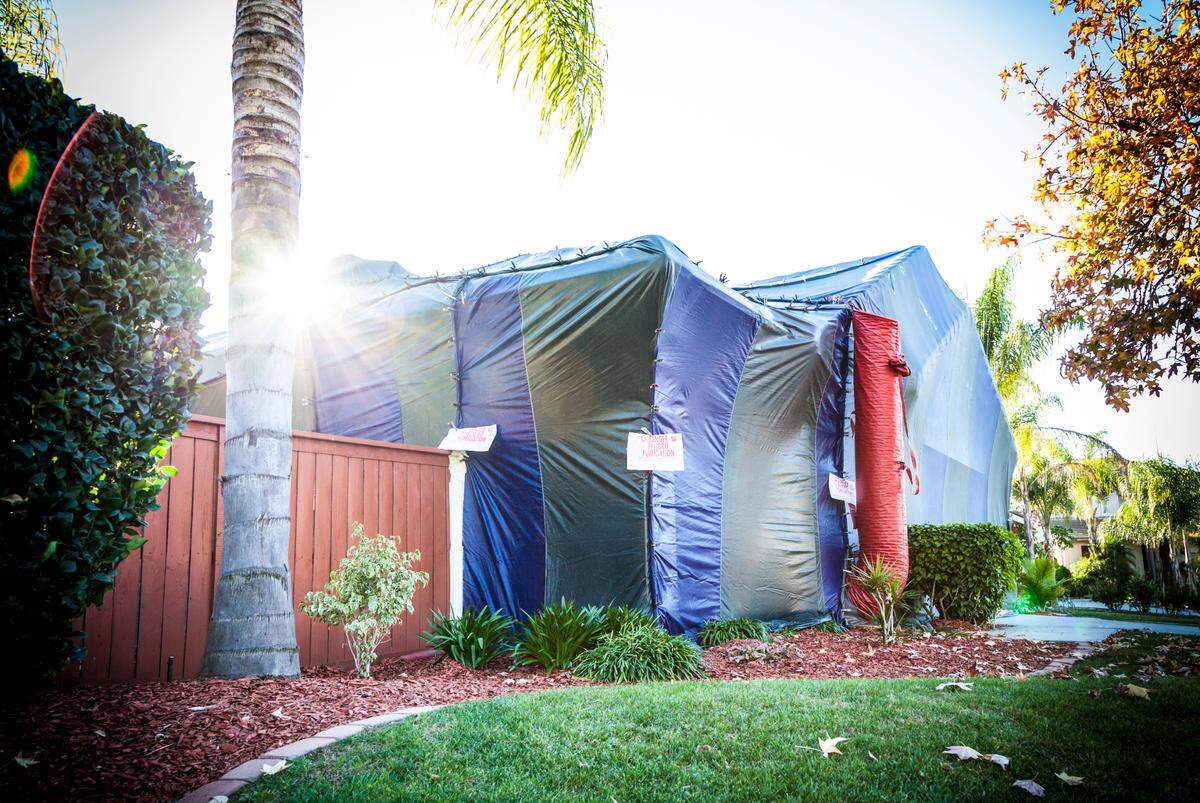
Effective termite control usually requires professional, long-term and preventative measures, according to pest experts.
“The best thing you can do is be proactive around your home,” Tahija said.
How can I prevent termites from getting into my home?
To prevent termites from entering your home during construction, use a concrete foundation and leave a ventilation gap between the soil and wooden parts of the structure, according to the Environmental Protection Agency.
“Make sure you prevent moisture from building up around your windows and doors,” Tahija said. “Drywood termites are almost always found around windows and doors, wherever there is going to be light.”
Moisture in your home “makes you much more prone to getting termites,” he said.
Homeowners should also seal any openings that could allow termites to enter, such as cracks in cement foundations or gaps around utility lines, using cement, grout or caulk.
Fix leaks immediately and make sure water doesn’t puddle up near your home.
Common entry points include small cracks in stucco and openings near the base of exterior walls.
Tahija also advises keeping trees and shrubs planted away from the house, so insects can’t use them as a bridge to enter.
Never store firewood or wood debris next to your home, he said.
“Regular inspections on your home, prevention and knowing signs to look for” are essential for handling termites, Tahija said.
This story was originally published March 10, 2026 at 7:00 AM with the headline "Termites are swarming in California. Watch for these warning signs in homes."