
Unsafe levels of bacteria fester in Pismo Lagoon, group says. Who will clean it up?
While surfers stretched and squeezed on their wetsuits one October morning, a biologist dipped a test jar into the Pismo Lagoon.
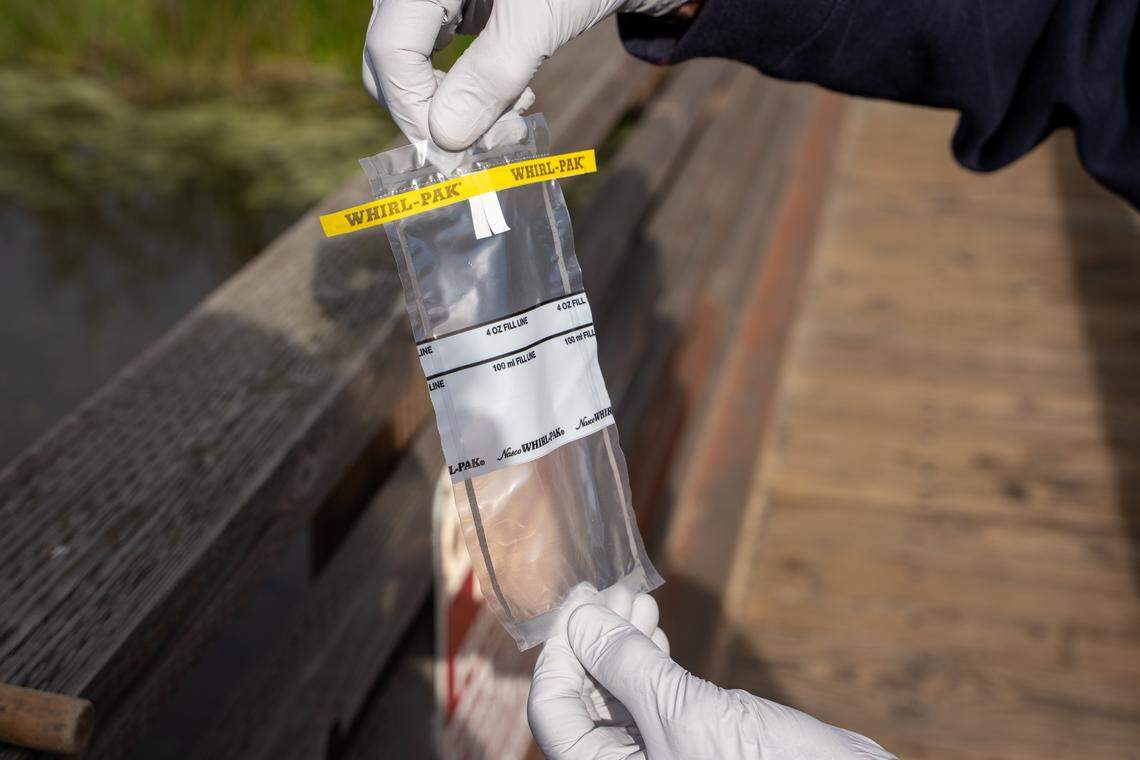
For seven years, retired biologist Dr. Stanley Rice has taken regular water samples at Pismo Creek for the Surfrider Foundation’s Blue Water Task Force. Every year, he finds unsafe levels of bacteria in the water.
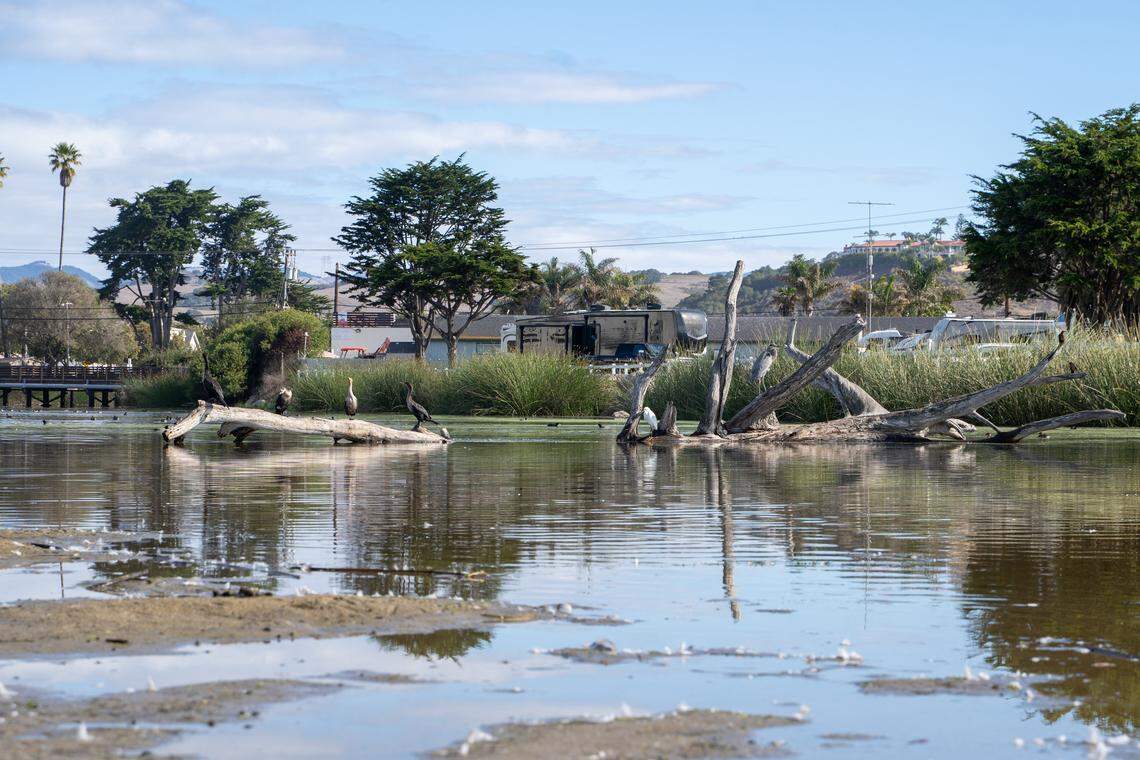
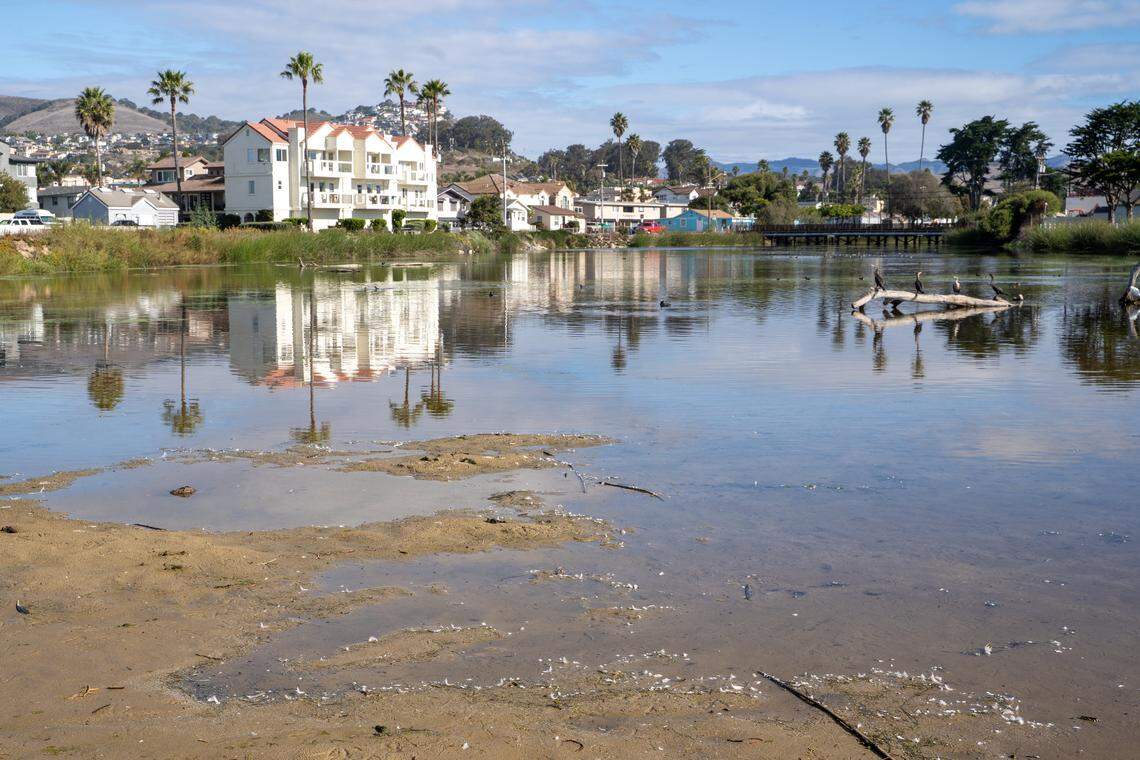
That day, Pismo Creek flowed under Cypress Street Bridge into a warm, shallow pool known as the Pismo Lagoon. Long, green strands of duckweed grew on the surface of the water, while ducks squawked and paddled around. A berm of sand trapped the water in the lagoon — preventing the bacteria from escaping.
“It’s really nasty water,” Rice said.
During the winter, high surf or heavy rain often breaks the berm, allowing a stream of water to trickle into the ocean and release some of the built-up bacteria.
Every other week, Surfrider tests for three contaminants festering in the creek and lagoon: Enterococcus bacteria, E. coli bacteria and human DNA. The presence of these bacteria indicate human sewage contamination in the water, Rice said.
It’s common for bacteria levels to spike along the coast after a storm, as the rain washes contaminants into the ocean. The Pismo Lagoon, however, has high levels of bacteria year-round.
“The creek is pretty much all bad, all the time,” Rice said. “It has been for the last 12 months, it has been for the last 10 years.”
Surfrider has collected water quality data at the creek for many years, but the city still hasn’t located the source of the pollution or taken action to clean up the water, Rice said.
“Right now, with the lagoon the way it is, people are being exposed to potentially pathogenic bacteria when they slog through that water, and it’s just not good,” Rice said. “You see kids playing in the water splashing, you know, they’re getting it in their eyes and their nose, and they probably go home and get sick.”
The city, however, was not aware of the high levels of Enterococcus bacteria in the creek, city manager Jorge Garcia told The Tribune.
The city shares responsibility for the creek with county and state agencies — but none of them have taken recent steps to clean up the creek.

Bacteria levels in lagoon highest in SLO County
Surfrider volunteers collect water quality data at 21 sites in San Luis Obispo County every other week.
On a recent Tuesday, Rice strolled past some typical Pismo Beach sights on his way to take a water sample at the Cypress Street Bridge. A gaggle of people walked their pugs to the beach entrance, saying hello to surfers waxing their boards. Meanwhile, a mustached surfer relaxed in the front seat of his car with his feet hanging out the window, while a couple did yoga in their front yard nearby.
Compared to the other test sites, bacteria levels are consistently highest at the Pismo Lagoon, Rice said.
Only 10% of samples collected at Cypress Street Bridge in the Pismo Lagoon met water quality standards set by the California State Water Resources Control Board during the past year, according to Surfrider’s website.
Surfrider published the results of its Enterococcus tests at the bridge on its website. Enterococcus is a bacterium that often lives in the intestines of mammals. San Luis Obispo County tests for Enterococcus levels to identify sewage contamination, Rice said.
The level of Enterococcus bacteria present in the water was either “high” or “medium” by state water quality standards for all but one test during the past year, according to Surfrider’s data. That means the water is not safe for human contact, he said.
E. coli and human DNA levels were also high during the past year in the lagoon, Rice said.

Meanwhile, Surfrider also takes water samples at Bello Bridge, about a half-mile up Pismo Creek.
The contamination levels at Bello Bridge are typically lower than Cypress Street Bridge.
During the past year, 61% of samples collected at Bello Bridge met water quality standards for Enterococcus set by the California State Water Resources Control Board, according to Surfrider’s data.
Because of this, Rice hypothesized that the source of pollution exists in the half-mile stretch between the two bridges.
“There’s something in that area that’s dumping something in the creek,” he said.
Identifying the source of pollution, however, is beyond Surfrider’s capabilities. Rice urged the city to look into it.
“Our agenda here is to make the public aware that there’s significant pollution here,” Rice said. “We would like that to be cleaned up so human contact is safer.”
Is anything being done about the contamination?
The city appears to have been aware of pollution in the waterway since at least 2010, when it commissioned a report from Cal Poly professor Christopher Kitts on the issue.
The report identified high levels of fecal indicator bacteria, like E. coli, in Pismo Creek and along the beach.
After reviewing the study, the city removed some habitat for nesting pigeons on the Pismo Pier — which greatly reduced bacteria levels near the pier, Surfrider SLO Vice Chair Brad Snook told The Tribune. But the city never addressed contamination in the lagoon, he said.
Snook encouraged the city to pursue a source identification study to find out where the pollution is coming from.
Between the Pismo Beach sewage plant, the nearby mobile home park and potential septic systems on private properties, there could be multiple sources of contamination, he said.
“It’s hard to pinpoint where the bacteria is coming from,” he said.
City manager Garcia, however, said the city has not received reports of human DNA or Enterococcus bacteria in the lagoon water.
“We checked with our Public Works staff, and to our knowledge, no one has contacted the city from the Surfrider Foundation to let us know about any type of issues,” Garcia wrote in an email to The Tribune.
The creek is under the jurisdiction of the city of Pismo Beach, the Central Coast Regional Water Quality Control Board and the California Department of Fish and Wildlife, so it’s not fully the city’s responsibility to test the water of the creek or lagoon outflow, Garcia said.
The county Public Health Agency tests for contamination at several locations along the coastline and notifies the public if those levels are unsafe for human contact, agency spokesperson Tom Cuddy said.
While county public health departments are required to test for water quality at certain beaches, they aren’t usually required to monitor creeks and estuaries, Regional Water Quality Control Board spokesperson Nick Cahill said.
The Central Coast Regional Water Quality Control Board can order a city or county to monitor a certain body of water, but this hasn’t been done in Pismo Creek because there are no regulated wastewater treatment facilities discharging into the creek, he said.
The board does set stormwater requirements for Pismo Creek, though, and the city and county collaborate to implement those requirements, he said.
The California State Water Resources Control Board added Pismo Creek to its list of impaired waters. This means the regional board is required by state law to conduct a daily load study for the creek, which is a report that identifies the sources of pollution and proposes a restoration plan.
But the regional board prioritized these plans for watersheds struggling with “toxicity, pesticide and nutrient impairments,” so it is not currently developing a report for Pismo Creek, Cahill said.
Because no one agency is independently responsible for water quality in the creek, the four agencies seem locked in a game of hot potato — and without a resolution, it’s unclear if a potential source of the pollution might ever be found and the waterway cleaned up.
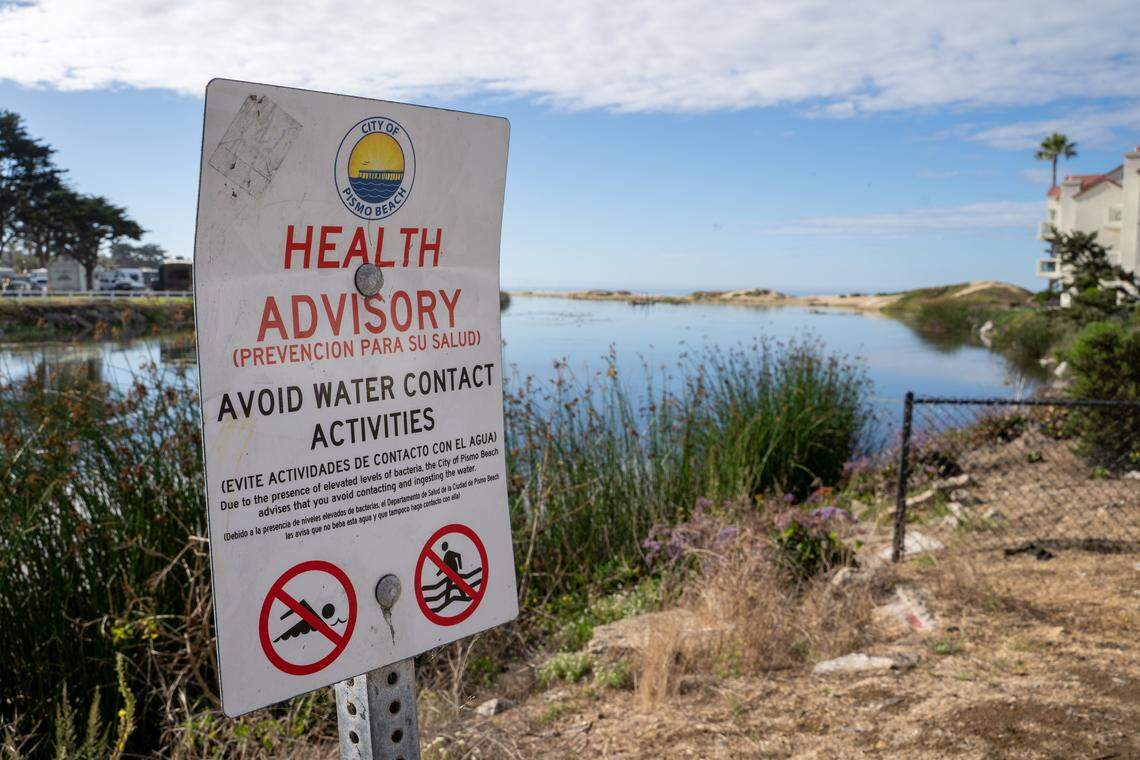
Currently, the city has one permanent sign posted near the Cypress Street Bridge warning people not to swim in the water, but Rice said the city should also post signs on the beach — in areas where people typically access the lagoon.
Rice watches people fish, swim and wade across the lagoon when he takes his water samples. None of that activity is advisable, as the current levels of Enterococcus bacteria in the water can infect open wounds or cause a stomach ache if consumed, Rice said.
“That water is not suitable for human contact,” he said. “They’re putting themselves in danger.”
The results of the Enterococcus tests are publicly available on Surfrider’s website at bwtf.surfrider.org/explore/34/404.

This story was originally published October 29, 2025 at 10:00 AM with the headline "Unsafe levels of bacteria fester in Pismo Lagoon, group says. Who will clean it up?."

