
Democratic, independent opposition comes out against Newsom’s redistricting plan
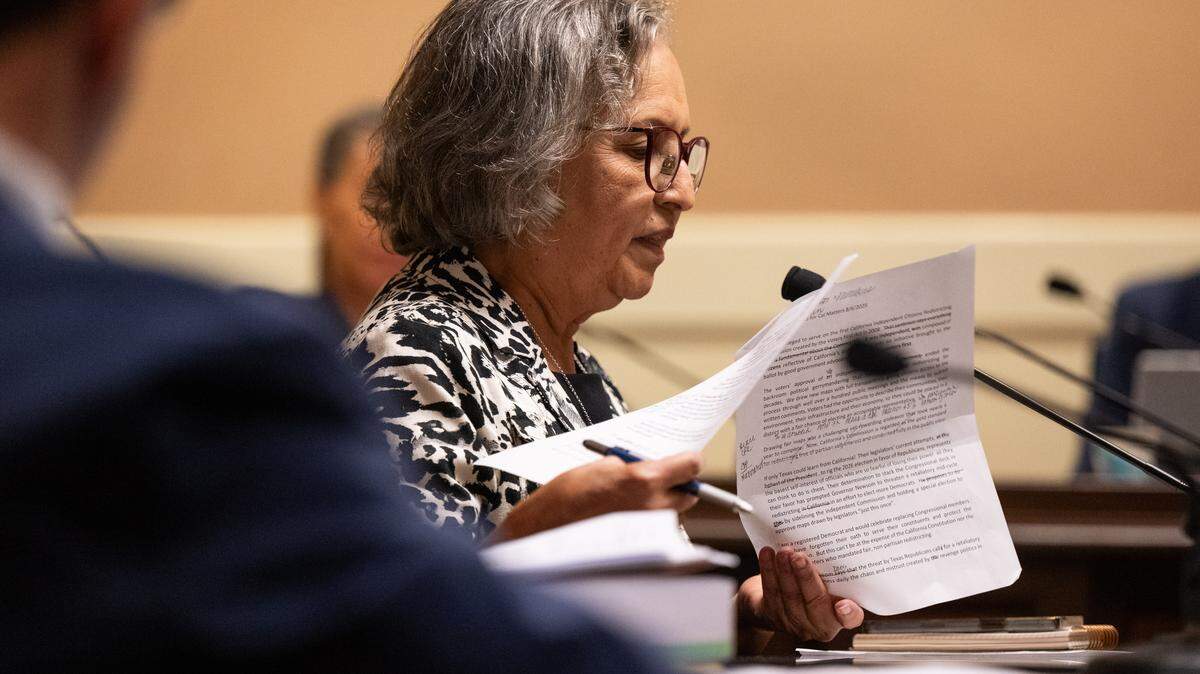
On Tuesday morning, California lawmakers convened for their first public, scheduled discussion of the redistricting plan that has electrified lawmakers and voters on both sides of the aisle in Sacramento.
The plan, a tit-for-tat response to the Texas Legislature redrawing its congressional map to give Republicans an edge in the U.S. House, evolved this week from a hypothetical threat to three pieces of legislation in front of California lawmakers. The new maps would net California five more Democratic seats in the House, and after some initial hesitation, most state Democrats at the behest of Gov. Gavin Newsom have gotten on board with putting the maps before voters this November.
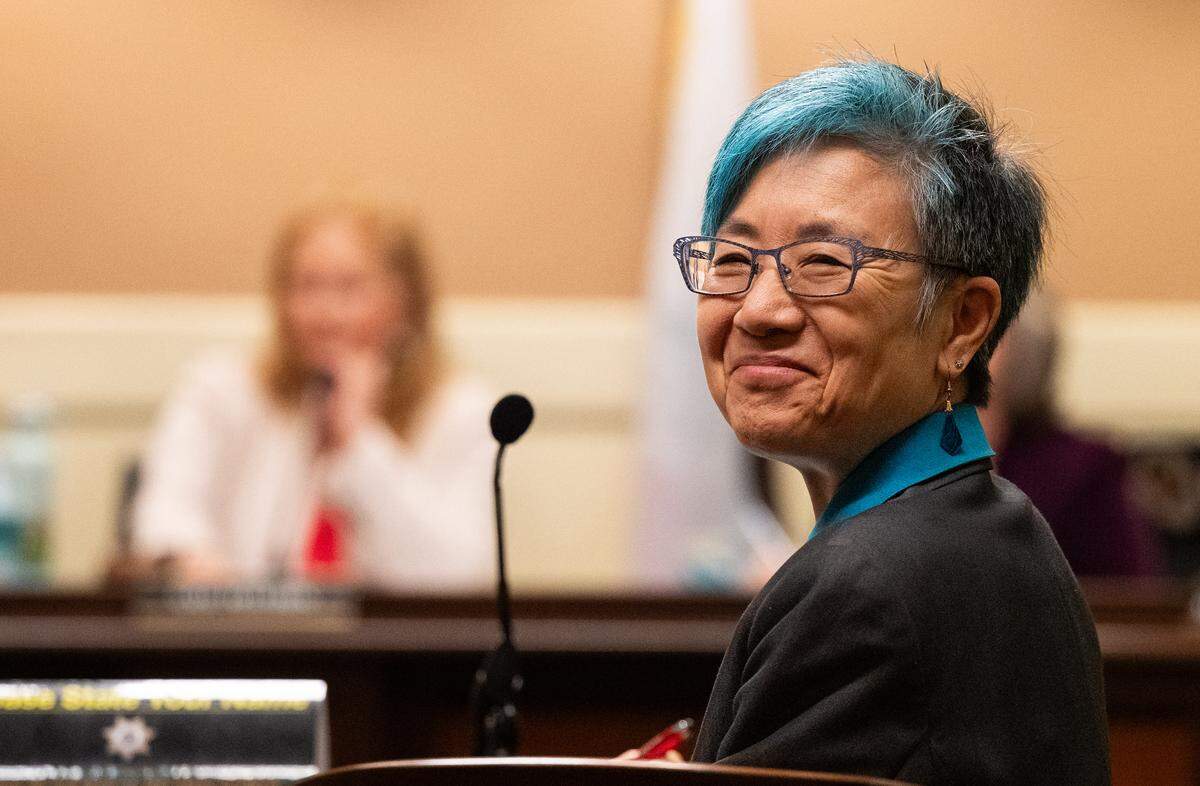
Enter Jeanne Raya, Connie Archbold Robinson and Cynthia Dai: former members of the first California Citizens Redistricting Commission, convened by voter mandate in 2010. The three women testified Tuesday morning in opposition to the bills during elections committee meetings in the Assembly and Senate.
Their testimony proved them to be a proxy for the type of Democratic and independent voter who Gov. Gavin Newsom and state Democrats will have to convince to participate in the type of retaliatory politics liberal voters have largely avoided.
‘End of democracy’?
In 2010, the three commissioners were chosen alongside eleven others across the political spectrum to serve on the redistricting commission. For months, they held dozens of public meetings and sorted through tens of thousands of written perspectives. Commissioner Raya, a registered Democrat from San Gabriel, said in her testimony that the commissioners took into account citizens’ perspectives on their communities, environment, infrastructure and economy to allow them “a fair chance of electing an accountable representative.”
The result?
“The percentage of women in the Legislature doubled. Asian American and Pacific Islander representation tripled. Black representation nearly doubled. Latinos advantaged by eight percent,” Raya said.
The commission has become even more popular than when voters first approved it in 2008 by just 50.8%. A recent Politico-Citrin Center-Possibility Lab poll conducted in early August showed voters supported keeping the independent redistricting commission on a two-to-one margin.
During the Senate elections committee hearing, Raya, Robinson and Dai were the focus of lawmakers’ attention.
State Sen. Thomas Umberg, D-Santa Ana, cross examined both Raya and Robinson, asking if they agreed that the Trump administration — particularly with regard to air regulations, withholding science grants and unilateral control of Congress — is endangering California’s way of life.
“Do you think we should do in California what we can within the balance of the law to dissuade Texas from engaging in their gerrymandering?” he asked.
“What is happening in Texas is reprehensible, and I admire the Texas Democrats who have resisted,” answered Raya. “But I think those people, those elected representatives in Texas, are capable of resolving this issue for Texas, we’re concerned about resolving a similar issue in California.”
Later, incoming Senate President pro Tempore Monique Limon asked the women when they personally would act to stop the “decline of democracy.”
The women held firm that the independent commission can not be sidelined — and that regardless of their personal opinions on President Trump, sidelining the commission would erode California’s credibility as a model for independent districts and undermine the public’s trust in the political process.
“I knew this was not going to be an easy conversation,” Robinson, an independent voter, said in an interview after the Senate committee hearing. “I think it went beyond what I was expecting, and showed the level of divisiveness in our national politics and how that’s even coming home to roost here in California.”
This story was originally published August 19, 2025 at 3:00 PM with the headline "Democratic, independent opposition comes out against Newsom’s redistricting plan."