
Lake Tahoe storm surge explained: What caused it and why it was so dangerous
A sudden storm over Lake Tahoe Saturday afternoon churned up towering waves and fierce winds that capsized a boat, killing eight people and injuring two others.
What happened in less than an hour is one of the deadliest weather-related boating accidents in recent Tahoe history — and a powerful reminder of how quickly and violently weather in the Sierra can change.
This tragic event raises urgent questions: What caused such extreme weather? Could anyone have predicted it? And is it something that could happen again?
Here’s what experts, first responders and official reports reveal about the sudden storm and what it means for staying safe on Lake Tahoe in the future.
Timeline: What happened and when
Saturday, June 21, 2025
2:20 to 2:45 p.m.: Dark clouds form over the Sierra, with light rain near Emerald Bay.
3 p.m.: A thunderstorm downdraft strikes the lake; winds surge to 35 to 45 mph, waves reach 6 to 10 feet.
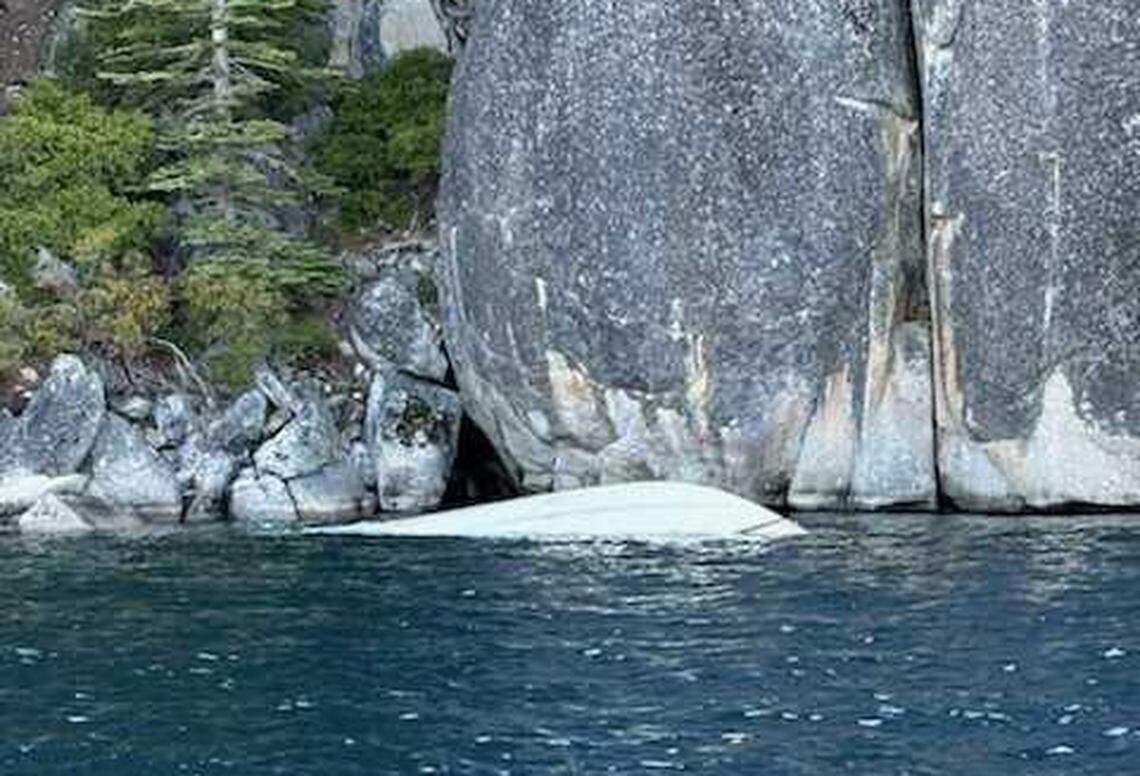
3:10 to 3:15 p.m.: A 27-foot gold Chris‑Craft boat capsizes near D.L. Bliss State Park with 10 aboard.
3:30 to 5 p.m.: Lifeguards, U.S. Coast Guard, California State Parks rangers, county dive teams and civilians rescue two survivors and begin recovery efforts.
Saturday evening: Six fatalities confirmed; two people rescued.
Sunday, June 22: Seventh and eighth bodies recovered.
What caused the deadly storm surge?
Meteorologists said that thunderstorms coincided with a cold front to produce Saturday’s suddenly harsh conditions on the water — not extreme by Tahoe’s standards, but unusual for late June.
“Like a lot of disasters, this was sort of a confluence of events,” Jan Null, a former National Weather Service meteorologist who runs Golden Gate Weather Services in Half Moon Bay, said in an earlier interview with The Sacramento Bee.
“You have wintertime storms where you’re going to have gusts to 60 plus, but people aren’t out boating then.”
Around 2:30 P.M. Saturday, as temperatures dropped and winds accelerated over Lake Tahoe, the weather service released a routine recreation forecast that included standard warnings for boaters about the risks of thunderstorms.
The storm moved north to south across the lake, likely stirring up winds and increasing wave activity along its full stretch, said Daniel Swain, a climate scientist with the University of California’s Agriculture and Natural Resources office.
“Thunderstorms inherently mean that you can receive winds that are locally, at least on a very localized basis, significantly stronger and gustier than the general prevailing winds on that day,” Swain said. “That message clearly did not reach the right people,” he added, calling the capsized boat “a tragic example of how unusual weather that people perceive to be out of nowhere, even though it was actually in the forecast for the day, can nonetheless kill people.”
NOAA data from buoy 210 near Tahoe City shows wind speeds increasing from around 7 mph to over 29 mph in about 90 minutes, with gusts reaching as high as 45 mph during the height of the storm.
How did it capsize the boat so quickly?
The 27-foot Chris-Craft was hit by sudden, powerful waves generated by the storm’s downdraft winds.
These waves, reported by the El Dorado County Sheriff’s Office to be between 6 and 10 feet high, struck the vessel’s side and rocked it violently. The rapid surge of wind and water created conditions that overwhelmed the boat’s ability to stay upright.
According to the Sheriff’s Office, the vessel overturned near Rubicon Point and D.L. Bliss State Park around 3:15 p.m.
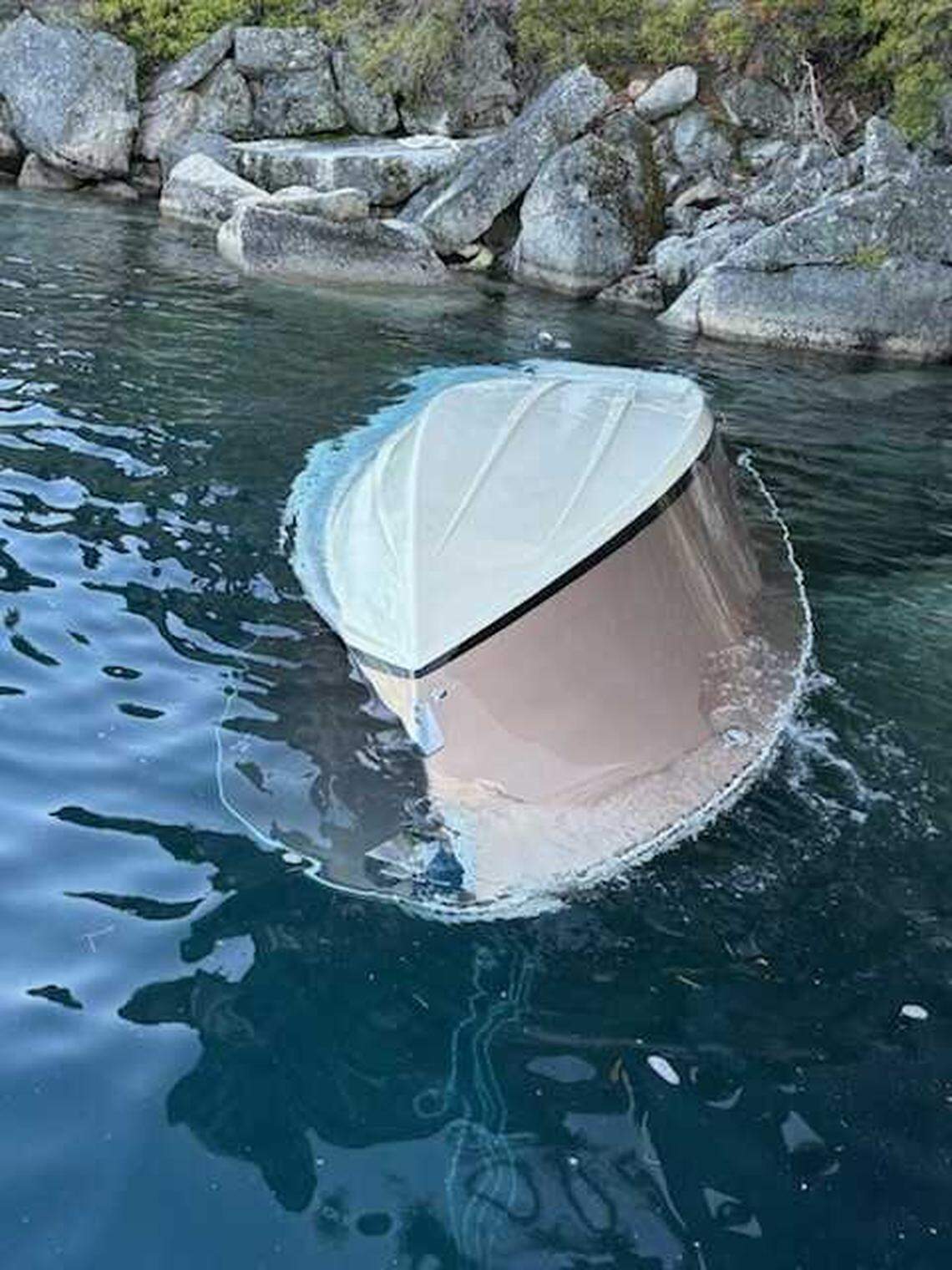
Eight people died, while one who was wearing a life jacket was able to swim to shore; the other survivor was tended to by a lifeguard before both were pulled out of the water by the Coast Guard.
Was there any warning?
Yes — but many boaters likely didn’t get it.
The U.S. Coast Guard confirmed it broadcasts marine safety alerts over VHF radio channels 16 and 22 prior to the storm, advising boaters of changing weather.
However, not all vessels carry VHF radios, and some recreational users may not monitor those channels closely.
The weather service office in Reno had also warned of gusty winds and storm activity in the area, though no formal Special Weather Statement is publicly archived.
Has this happened before at Lake Tahoe?
Not like this, and not in summer or with this many deaths.
There is geological evidence that prehistoric earthquakes triggered massive “seiche” waves — long lake tsunamis — at Tahoe thousands of years ago, as reported by the U.S. Geological Survey.
But in modern recorded history, large waves of this kind have typically occurred during winter storms, when few people are on the lake.
For example, in January 2008, a powerful winter storm brought wind gusts exceeding 100 mph to the Lake Tahoe region, according to the National Weather Service.
Because the storm occurred in deep winter, when boating activity is minimal, no boating-related injuries were reported.
Most deaths that occur on the lake are due to hypothermia, when lake-goers dip into the waters from boats.
“The waters of Lake Tahoe are always cold,” a South Lake Tahoe police officer told The Bee in 2015 amid a search for a swimmer who went missing near Timber Cove Marina. “Hypothermia is always a very high risk for anyone in the water longer than 10 minutes.”
According to the weather service, the water temperature of the lake was in the low 60s the day of the storm.
Could climate change bring more deadly Tahoe storms?
Yes, but the details are still emerging. While detailed regional modeling of Lake Tahoe’s summer thunderstorms is limited, major climate assessments point to broader trends that could impact storm behavior in the Sierra Nevada:
The National Climate Assessment 2023 reports that more types of extreme weather — including heavy precipitation bursts — are becoming more common due to global warming.
A U.S. Forest Service report on Sierra Nevada climate trends indicates that precipitation extremes are expected to increase under future warming, even if total rainfall remains steady.
Similarly, the California Energy Commission’s regional report highlights that weather whiplash — quick swings between extremes — is growing more frequent in the Sierra-Cascade, with hotter summers followed by intense storms.
These findings suggest a shift toward stronger, more abrupt convective storms. That has implications for Lake Tahoe, where an afternoon downdraft hitting warm lake air could generate sudden wind spikes and dangerous waves similar to those seen on June 21.
What boaters should do to stay safe
The National Weather Service, Coast Guard and California State Parks shared these recommendations for anyone planning to boat on Lake Tahoe or other Sierra lakes this summer:
Check the marine forecast before launching, not just air temperature or wind on your phone. Use weather.gov or the weather service Reno office’s lake forecast.
Carry a VHF radio and monitor channel 16 for real-time safety broadcasts.
Watch for signs of storms building: increasing winds, darkening skies, sudden temperature drops.
Head in early, especially if storms are expected after noon.
Wear a life jacket, even if you’re on a large boat or just floating near to shore.
This story was originally published June 24, 2025 at 12:45 PM with the headline "Lake Tahoe storm surge explained: What caused it and why it was so dangerous."
CORRECTION: This story has been updated to correct speaker attributions and include new additional information. An earlier version misidentified the sources of several quotes.
%20Cropped.jpg)