Many workers didn’t know California agencies were there to help during COVID, report finds
Low-wage workers who struggle to identify state labor agencies established to protect employees are largely unwilling to file official complaints against employers who violate labor laws, according to a new report that studied a pandemic-era program to educate vulnerable Californians.
The study evaluated the impact of California’s COVID-19 Workplace Outreach Project, which the Labor and Workforce Development Agency launched in 2021 to educate workers about potential health and safety violations in their workplaces during the COVID-19 pandemic.
The majority of workers couldn’t recognize California’s state agencies established to help them, according to the recent report from the public-policy focused University of California, Berkeley, Possibility Lab.
While 65% of those surveyed had heard of Cal-OSHA, under 40% of workers were familiar with the Labor Commissioner’s Office, which combats wage theft, and the Division of Workers’ Compensation, which handles workers’ compensation claims.
Even when people know about the various state agencies tasked with protecting and supporting workers, nearly 80% said they wouldn’t pursue an official complaint against an employer. Nearly half said they didn’t know how to file a complaint with Cal-OSHA. Others cited fears of retaliation and doubts that an official complaint would change anything, as reasons they are unlikely to pursue assistance from the state.
When it comes to getting help to resolve workplace issues, workers trust family and friends the most, the survey found. Comparatively, workers ranked all levels of government as the least trustworthy place for assistance.
Individuals who worked with community-based organizations as part of CWOP were more trusting of these groups to assist with issues than the government, the survey found.
The survey concluded that those workers who were familiar with CWOP-affiliated community organizations were more likely to file an official complaint or contact a local group to address wage theft concerns or safety violations.
By partnering with community-based organizations across California, that state was able to provide more information to and build trust with workers during the pandemic when front line workers were facing higher safety risks, said Meredith Sadin, one of the report’s authors.
“The state, due to capacity and budget, is constrained,” Sadin said . “And it has been innovative in partnering and investing in community-based organizations that can do things that the state cannot.”
Sadin, an assistant research professor at the University of California, Berkeley, Goldman School of Public Policy, pointed to community organizations’ language assistance as one example of the uniquely helpful services these groups can provide people working in low-wage industries.
Additionally, community organizations connect with workers at churches, public parks, food banks and individuals’ homes — on weekends and at night — to ensure people get access to information.
“The trusted messenger model really enables community-based organizations to be system navigators and serve as a bridge between community and government,” said Sadin.
As COVID-19 swept across the world, California needed to quickly educate workers on the front lines who faced the greatest risk of exposure, said LWDA Secretary Stewart Knox in a statement.
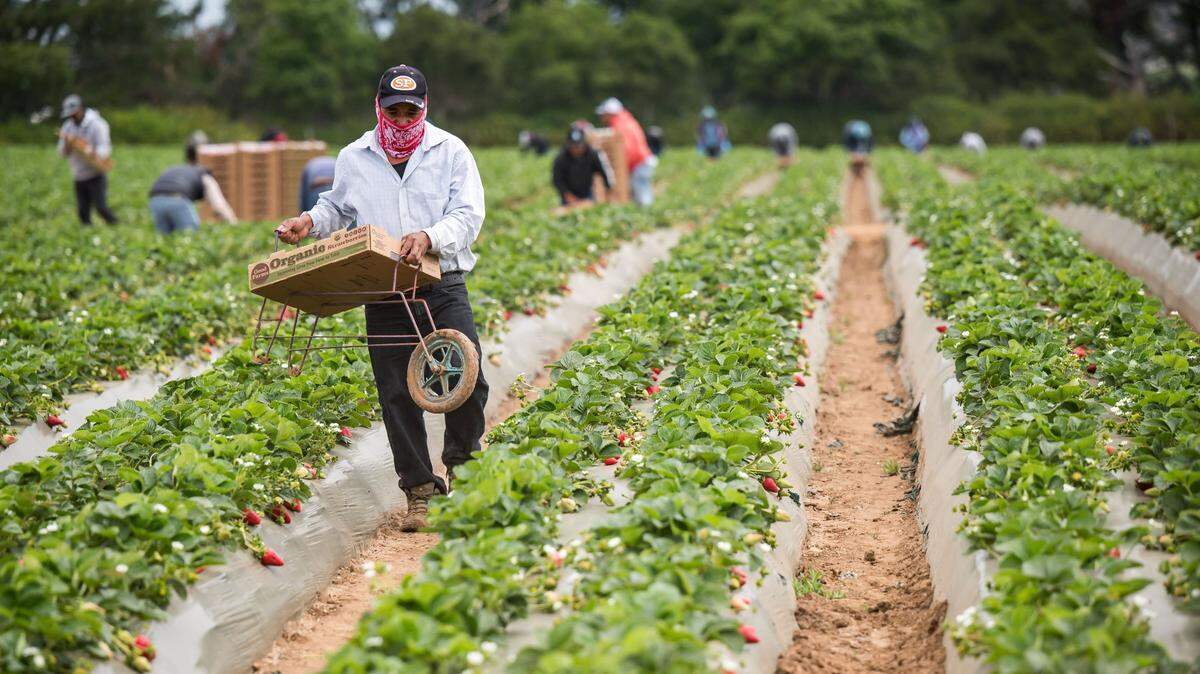
The CWOP program targeted workers in agriculture, food processing, food service, janitorial services, manufacturing and warehousing. These industries employ nearly 2.5 million workers in California, many of whom are at a heightened risk for health and safety violations due to the nature of the work.
Those workers were also the least likely to report health and safety violations to the government, Knox said.
The survey found that the majority of workers didn’t recognize workplace violations when they saw them. Those exposed to CWOP programming were more aware of health and safety violations and workers’ right to paid sick leave.
“Workers who participated in CWOP have a better understanding of their rights and can more easily find support in reporting violations,” Knox said.
Sadin noted that the survey’s findings had current and future relevance separate from the pandemic.
Under the new federal administration, there are heightened fears around workers’ documentation status, she said, which highlights the importance of community organizations’ role as a trusted messenger to inform workers of their protections and rights.
This story was originally published February 27, 2025 at 9:01 AM with the headline "Many workers didn’t know California agencies were there to help during COVID, report finds."