
What to watch for on Election Night in California: Turnout, exit polls and key results
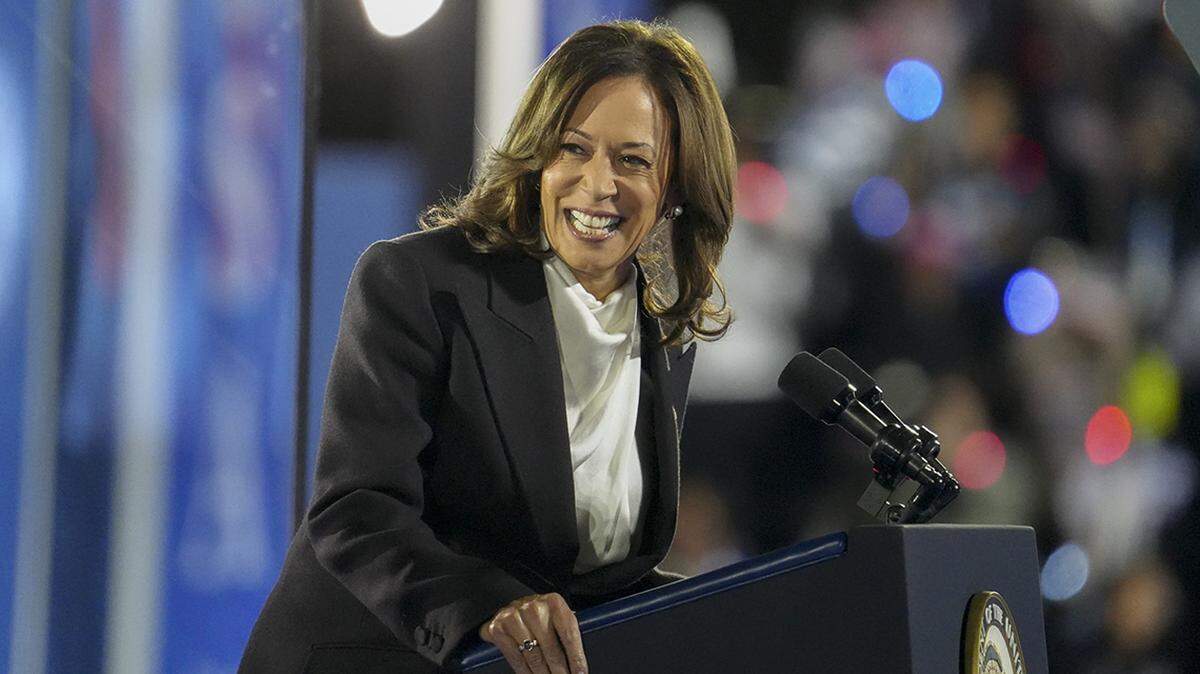
Want hints about who’s winning between Donald Trump and Kamala Harris? Or who might be winning those tight California congressional races? There will be clues as soon as late Tuesday afternoon as results start to pour in.
The first polls close at 3 p.m. Pacific time, when parts of Indiana and Kentucky shut down. But the real election teasers won’t start to show up until half an hour later, when polls start to close on the East Coast and exit polls become available.
If there are big surprises — say, a swing state such as Georgia tilts heavily toward Trump or Harris — that could signal a bigger trend poised to sweep toward California. An early wave could mean that tossup congressional races go to one party, suddenly California’s five too-close-to-call House seats won’t seem as crucial to who controls the House.
But if it’s a night of close, hard-to-call White House and particularly House races, “the conversation could be that it’s all coming down to California,” said Jacob Rubashkin, deputy editor of Inside Elections, a nonpartisan research firm.
What to watch Tuesday
▪ President. Polls consistently show that seven states matter most to the presidential race, amounting to 93 of the 270 electoral votes needed to win. (California has 54, and they’re seen as highly likely to go to Harris.)
The first to close polls is Georgia at 4 p.m., followed by North Carolina 30 minutes later. Michigan and Pennsylvania follow at 5 p.m. Arizona, Nevada and Wisconsin close later. Also worth watching: Iowa, where polls close at 6 p.m. It was thought to be a safe Trump state, but a poll released recently showed Harris up by 3.
If all or most of those states start trending in one direction, that suggests a wave developing.
One key to handicapping what’s happening is watching exit polls and turnout.
Look at whether women are turning out in bigger than usual numbers, said Lee Miringoff, director of the Marist Institute for Public Opinion.
“Wherever abortion has been on the ballot it’s had an impact,” he said. Democrats, who tend to be staunchly pro-abortion rights, usually benefit. Of the swing states, Nevada and Arizona’s ballots include a question of whether to establish a constitutional right to an abortion until viability, with some exceptions.
To spot other trends, look also at the racial makeup of the electorate, Miringoff said. Is Harris getting a bigger share of the white vote than President Joe Biden got in 2020? Is Trump doing better with Black and Latino voters, particularly men, than he has in his past campaigns?
▪ House. Democrats need a net gain of four seats to win a House majority. Five of the nation’s tightest races are in California.
Four have Republican incumbents–Reps. David Valadao of Hanford, John Duarte of Modesto, Mike Garcia of Santa Clarita and Ken Calvert of Corona. The other tossup is the Orange County seat now held by Democrat Katie Porter, who lost her Senate bid in the March primary.
It’s not unusual for House races to go the way the presidential race goes, a phenomenon called the coattail effect.
Early indications a red or blue wave could be developing could first come in Virginia, which has two races that could benefit from that sort of surge. They include its Virginia Beach-area 2nd District, now held by a Republican, and the 7th, now Democratic. That district includes part of the Washington, D.C., suburbs.
“I don’t anticipate they’ll be called quickly, because close races take awhile to call. But quick calls in either of those would be a pretty good indicator something is happening” said Rubashkin.
That thinking is especially true in Republican-held districts where Democrats are exceedingly popular. Duarte and Valadao barely won their 2022 races. In 2020 Biden would have won both districts by more than 10 percentage points.
Rubashkin also lists other early races to watch, such as Michigan’s 7th District, where Rep. Elissa Slotkin, a Democrat, is leaving to run for the Senate, Ohio’s Akron-based 13th district, now held by a Democrat, and two New York seats currently held by Republicans.
If neither party appears to be gaining an advantage, “there are enough highly competitive seats in California that it absolutely comes down to the results in California,” Rubashkin said.
Polls in the Golden State close at 8 p.m.
▪ California ballot questions. Californians will vote on 10 statewide ballot initiatives.
Among the most closely watched: Prop. 36 would toughen penalties for some theft and drug-related crimes. Prop. 32 would raise the minimum wage, now $15 an hour, to $18 an hour. Prop. 6 would prevent people in prison from involuntary servitude.
Turnout could matter if the vote is close.
“Historically, more progressive ballot measures like raising the minimum wage, bond measures, rent control, etc, do better in presidential general elections since there is higher turnout. And despite some changes at the national level, in California the less frequent voters – those who only show up in presidential elections – are more progressive,” said Paul Mitchell, vice president of Political Data, Inc., which studies voting trends.
There’s a reason initiatives favored by liberals are on the general election ballot, said Mitchell. “The more conservative measures, like Prop 36 or abortion restrictions or anti-labor measures would do better in low turnout elections, like primaries,” he said, though there are exceptions. Polls suggest Prop. 36 will win easily.
▪ Senate. Republicans need a net gain of one or two seats, depending on who wins the White House.
Democrats now control 51 seats. Sen. Joe Manchin, D-West Virginia, is retiring, and Gov. Jim Justice, a Republican, is heavily favored to succeed him. That means the GOP needs to pick up only one seat if Trump wins, since the vice president is Senate president and breaks ties in a 50-50 Senate.
The big race to watch early is Ohio, where Sen. Sherrod Brown, a Democrat, is fighting for another term in a state where the other senator, Republican JD Vance, is on the ballot as his party’s vice presidential candidate.
“Sherrod Brown has to win for Democrats to have any shot at a Senate majority, and we should have a decent handle on that state on the earlier side,” said Kyle Kondik, managing director of Sabato’s Crystal Ball, a nonpartisan analyst.
Also in play is Michigan, where Sen. Debbie Stabenow, a Democrat, is retiring. It’s one of the big presidential swing states, likely to see heavy, unpredictable turnout.
California’s Senate race appears settled, polls strongly suggest. Democratic Rep. Adam Schiff has a big lead over Republican Steve Garvey, the former baseball all-star.
This story was originally published November 4, 2024 at 2:14 PM with the headline "What to watch for on Election Night in California: Turnout, exit polls and key results."
.jpg)