
‘Fearless for Justice March’ stops in Ceres to commemorate 1984 Sikh genocide
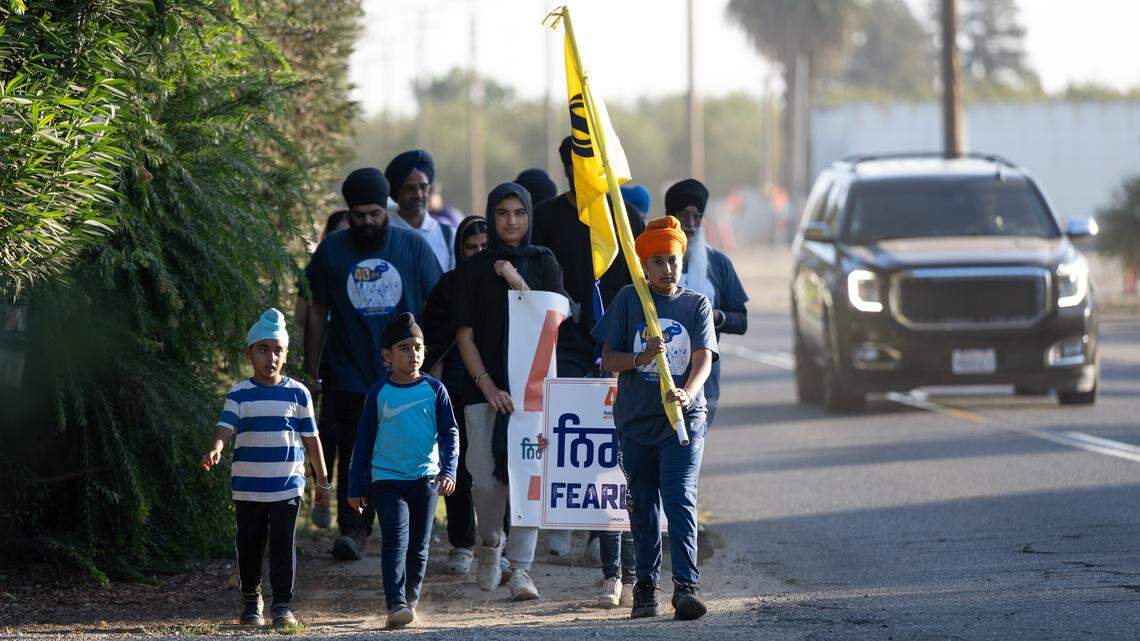
The Fearless for Justice March, a 350-mile journey organized by the Jakara Movement, arrived in Ceres on Thursday to advocate for recognition of the 40th anniversary of the 1984 Sikh Genocide.
Following the historic path of farmworkers led by Cesar Chavez in 1966, Sikh organizers chose the same Highway 99 route from Delano to Sacramento.
The march began on Oct. 9 in Bakersfield, where community members gathered for a launch event featuring Camila Chavez, daughter of labor leader Dolores Huerta and niece of civil rights icon Cesar Chavez. The marchers were bound for the State Capitol in Sacramento, where they will call for meaningful change.
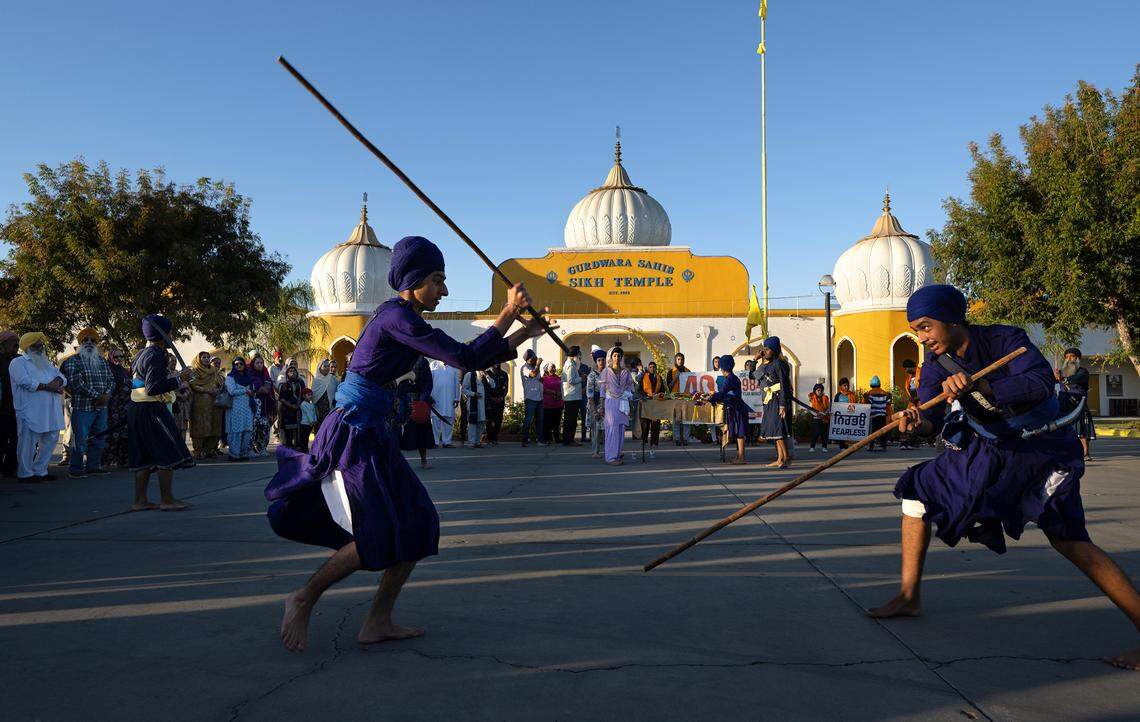
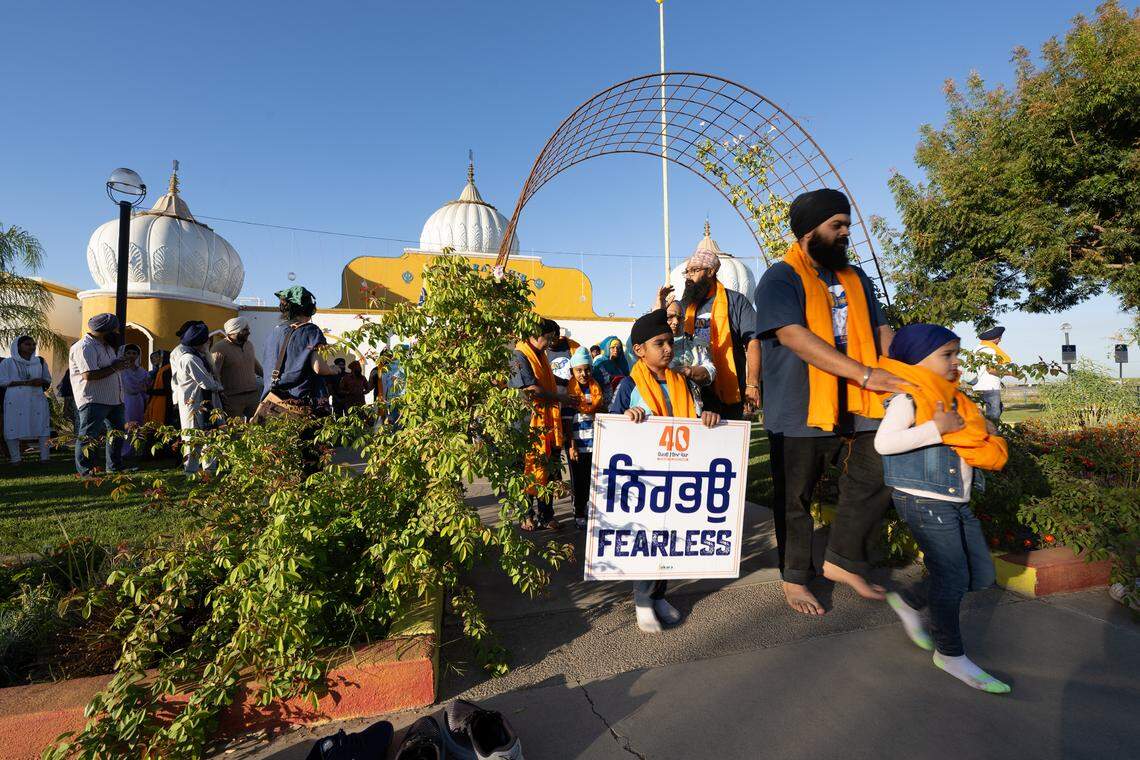
Community members welcomed the marchers outside the Sikh Gurdwara in Modesto, where a group of young participants held a poster commemorating the anniversary of the genocide.
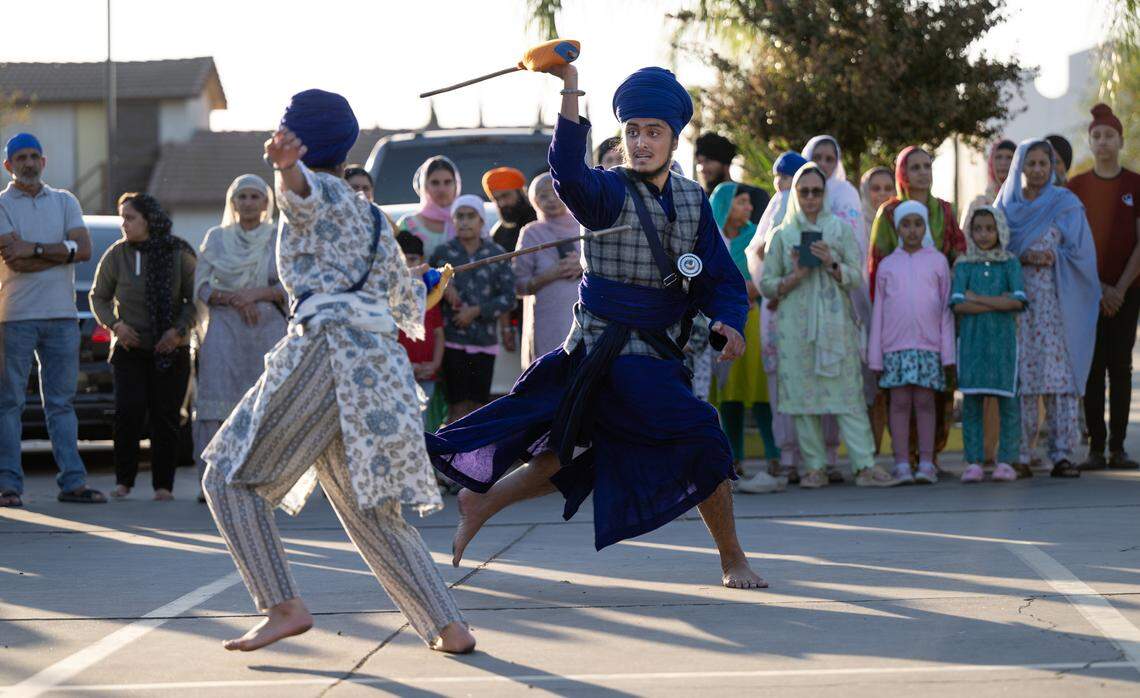
Several marchers performed Gatka, a martial art involving stick-fighting with wooden sticks that mimic swords, while others drummed and chanted.
Inside the temple, the evening continued with prayers, speeches from elected officials and a program of hymns.
Deep Singh, executive director of the Jakara Movement, emphasized that the march is in solidarity with other marginalized groups to show the strength of coalition-building across diverse cultural and social movements.
“That was one of our goals, to connect our own community, but also connect with the communities around us,” he said. Singh mentioned a farmer in Merced who brought them vegetarian sandwiches and an older woman in March who served them horchata.
Stanislaus County Board of Supervisors Chairman Mani Grewal presented a proclamation inside the temple, first in Punjabi and then in English. Grewal is one of the first Sikh Americans elected to a county board of supervisors in California.
“On behalf of the Board of Supervisors, we commend your dedication and resilience during the 350 mile march from Bakersfield to Sacramento. Your continued efforts to bring communities together to stand against all types of injustices is truly inspiring,” Grewal said.
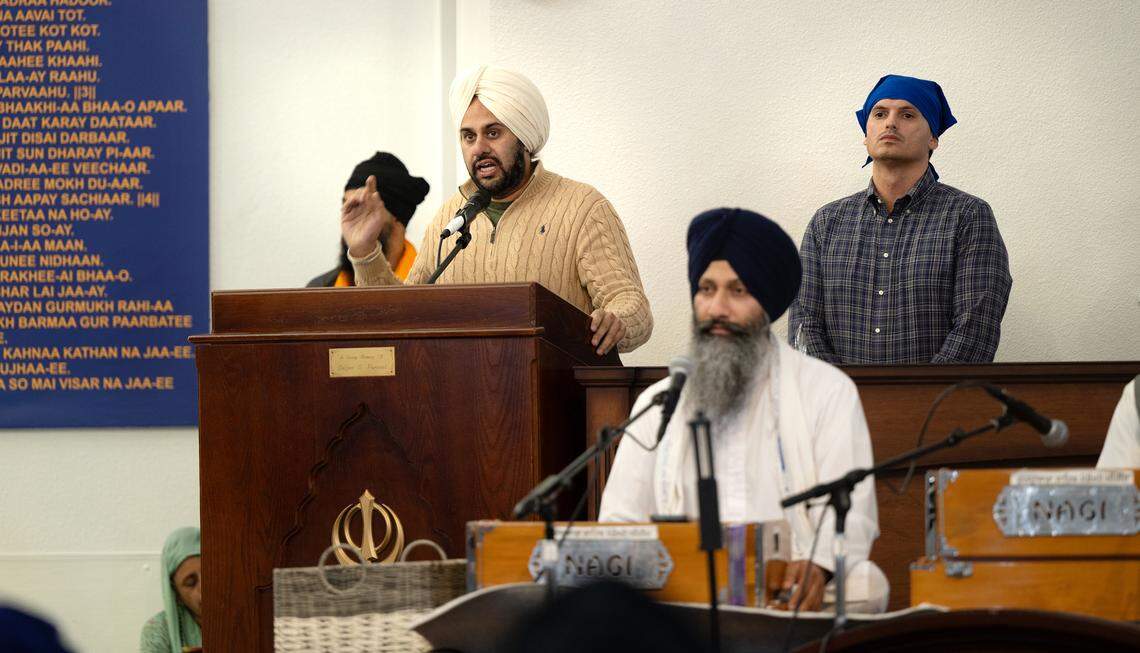
Ceres Councilmember Rosalind Vierra also spoke and extended her support to the Sikh Community.
“I am here to support you and everything that you need to make sure you feel welcome and make sure that we can work together in unity and diversity here in the community, both here at the temple as well as in the city,” she said.
“The Sikh community has a long history here in Stanislaus County, and my family knows all about that, so it’s important that we remember our history and remember this by service and participation,” said Ceres Planning Commissioner Gary Condit.
Stanislaus County Supervisor Channce Condit also spoke, affirming that the lives lost in 1984 will never be forgotten.
The main goal of the Fearless for Justice March is to secure federal recognition of the 1984 Sikh Genocide by the U.S. Congress. This effort builds on a major milestone reached in 2023 with the passage of Assembly Joint Resolution 2, when California became the first state to officially recognize the 1984 anti-Sikh violence as genocide.
Introduced by Assemblymember Jasmeet Bains, D-Delano, the bill marked a historic acknowledgment of these events by a U.S. state.
The march also aims to address ongoing threats of transnational repression, where foreign governments, including India, have targeted Sikh activists abroad. Activists are advocating for a Transnational Repression Protections Bill at both federal and state levels.
A key legislative effort is the Stop Transnational Repression Act (H.R. 5907), introduced by Rep. Adam Schiff, D-Los Angeles, which aims to protect U.S. residents from foreign interference and repression—a growing concern for the Sikh community amid recent assassination plots and threats in the U.S. and Canada.
In August, Satinder Pal Singh Raju, a Woodland resident and leader in the Khalistan movement for a Sikh homeland, along with two other Sikh activists, was involved in a shooting and alleged assassination attempt near Sacramento.
“Our community is being threatened,” Singh said, expressing gratitude to local county officials who collaborate with law enforcement to counter any foreign interference.
Remembering 1984
In October 1984, Indian Prime Minister Indira Gandhi was assassinated by her Sikh bodyguards in retaliation for Operation Blue Star, a military offensive aimed at removing Sikh militants from the Golden Temple, the holiest site in Sikhism located in Amritsar, Punjab. The operation caused significant damage to the temple and resulted in the deaths of more than 3,000 Sikhs.
Following her assassination, anti-Sikh violence broke out in New Delhi and other cities, with coordinated attacks allegedly incited by political leaders from the ruling Congress Party. Thousands of Sikhs were killed, homes and businesses destroyed and women assaulted.
The 2023 assassination of Hardeep Singh Nijjar, a prominent Sikh leader in Canada, has heightened concerns about transnational repression associated with the Indian government. This incident has alarmed Sikh communities, especially in California’s Central Valley, which is home to some of the oldest Gurdwaras in the U.S., including the first one built in Stockton—and the largest concentration of Sikhs in the country.
The march will conclude at Capitol Mall in Sacramento on Nov. 1, featuring a final rally from 10 a.m. to 2 p.m. intended to unite marchers, community members and elected officials to discuss the future of justice for Sikh Americans and other marginalized groups.
This story was originally published October 28, 2024 at 11:02 AM with the headline "‘Fearless for Justice March’ stops in Ceres to commemorate 1984 Sikh genocide."
