
Newsom proposes cuts to clean transportation, buildings as California faces $38 billion deficit
As California faces a $38 billion deficit, Gov. Gavin Newsom proposed cuts to clean transportation and building decarbonization programs designed to help the state confront the worsening effects of climate change.
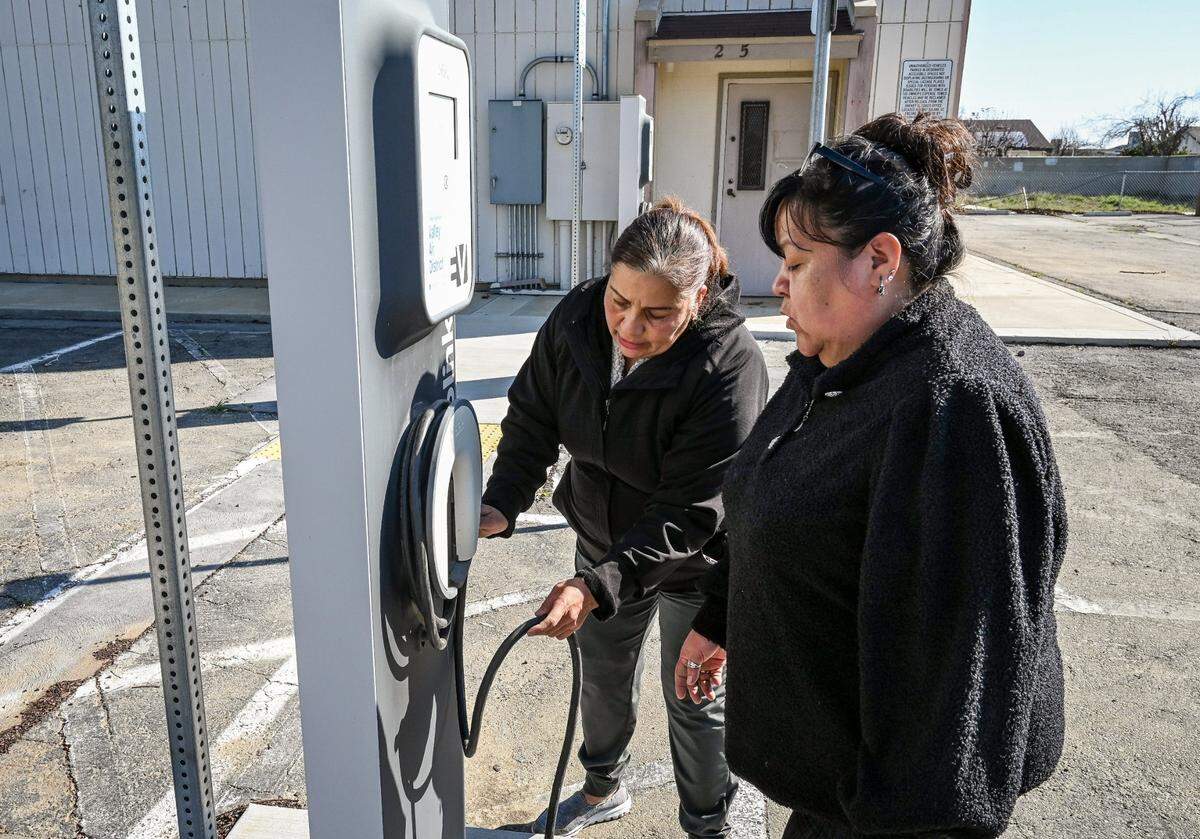
Newsom’s proposed budget released Wednesday would cut and delay a net $4.8 billion from efforts to combat climate change. Most notably, he plans to cut subsidies for electric vehicles and trucks, building decarbonization assistance and watershed resilience.
The move prompted dismay from environmental advocates, particularly as 2023 marked the hottest year on record and atmospheric carbon dioxide reached record levels. They say California cannot afford to cut back on plans to defend against climate extremes.
“The governor and legislature’s commitments to fund the transition to zero emission transportation are essential for protecting our health from air pollution and climate change,” said Bill Magavern, policy director for the Coalition for Clean Air.
He said major cuts to the zero-emission transportation budget will “make it harder for lower income Californians to afford EVs and slow down the transition to zero-emission trucks, which will mean more lung-searing diesel pollution in our neighborhoods.”
To avoid deeper general fund cuts, Newsom is proposing more than $1 billion in backfill spending by shifting costs to a fund that receives revenue from the state’s cap-and-trade program. The program fluctuates in revenue but generally amounts to $4 billion a year for climate initiatives.
The governor committed $54 billion over five years during previous surplus budget years. After reducing that figure by a net $3.6 billion during last year’s deficit, his proposal for this year further lowers the total by $2.9 billion in reductions and $1.9 billion in spending delays.
During a press conference in Sacramento, the governor highlighted international climate diplomacy and commitments to water infrastructure streamlining, as well as dam removal on the Klamath River. He also projected additional federal climate spending.
“Spending on climate actually will grow,” Newsom said in response to questions about whether he overpromised. “I may have understated our capacity, because I never could have imagined what kind of support we would get from the federal government.”
In this year’s proposal, largest cuts included $283 million from the state’s equitable building decarbonization effort and $200 million from clean transportation and mobility programs. That means less incentives for heat pumps, electric vehicles or carsharing in disadvantaged communities.
The governor proposed reducing funding for watershed resilience programs within DWR and the Wildlife Conservation Board by $350 million over two years. He is also seeking to trim and delay incentives for clean trucks that transport goods to and from ports by a total $136 million.
Newsom also left out funding for the state’s biggest new climate law, SB 253, which requires big companies to disclose their greenhouse gas footprints. He also did not include funding for SB 261, which requires them to report on climate-related financial risk.
Climate activists and some lawmakers said they were wary of the governor’s decisions to cut climate programs in a moment where extreme weather caused by climate change continues to increase in severity.
“We had hoped for a more courageous proposal in this moment that addresses things like ending corporate handouts and ending subsidies for oil companies,” said Melissa Romero, deputy legislative director with California Environmental Voters. and a climate bond to address these critical needs.
While Sen. Josh Becker, D-San Mateo, expressed concern about the governor’s proposed cuts and use of funds designated for other spending, he said he was grateful to see much of California’s climate investments remain in tact.
“We cut into some of it last year and a little more this year but by and large the governor is protecting the majority of that significant investment” he said. “I just want to be clear that our GGRF funds coming from cap-and-trade are not a piggy bank to be used for general budget items.”
Among the other proposed cuts to climate programs and projects in Newsom’s budget:
$475 million to support clean energy and climate technology development
$100.7 million for wildfire and home hardening programs
$50 million for the Regional Climate Resilience Program at the Office of Planning and Research
$40.1 million for the Extreme Heat and Community Resilience Program
$15 million from the Low Carbon Economy grant program in the CA Workforce Development Board
- $7.3 million in ZEV manufacturing grants
$6.75 million for Forecast Informed Reservoir Operations for snowpack runoff predictions
This story was originally published January 10, 2024 at 11:13 AM with the headline "Newsom proposes cuts to clean transportation, buildings as California faces $38 billion deficit."