ACE will pioneer hydrogen-powered trains between Merced, Sacramento. What’s the timetable?
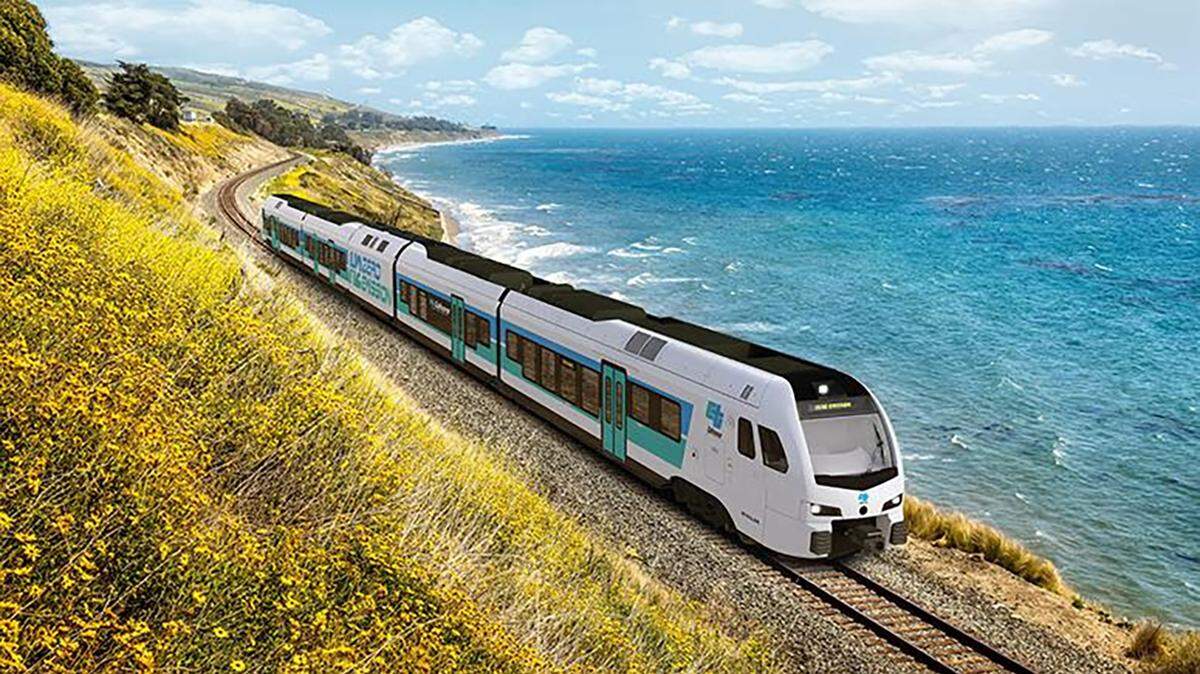
Four trains running on hydrogen will carry passengers between Sacramento and Merced under an $80 million deal announced Thursday.
The zero-emission trains will serve an expansion of the Altamont Corridor Express as soon as early 2027, the California Department of Transportation said. The service will continue to mostly use diesel locomotives.
The state placed the order with the Salt Lake City branch of Stadler Rail, based in Switzerland.
“California is once again leading the country in delivering innovative clean transportation options that benefit people and the planet,” state Transportation Secretary Toks Omishakin said in a news release.
ACE has four weekday round trips between Stockton and San Jose, geared at commuters to Bay Area jobs. It is funded to expand to Stanislaus, Merced and Sacramento counties in phases between 2026 and 2030.
The hydrogen trains will run not on the original Stockton-San Jose route, but on the north and south branches. Riders can transfer to or from a Bay Area train at a planned station in north Lathrop.
The current expansion schedule has new stations by 2026 in Natomas, Midtown Sacramento, northwest Elk Grove and the downtowns of Manteca, Modesto and Ceres. Infill stations will follow in 2027 west of Lodi, in downtown Ripon and in north Lathrop. The trains will stop by 2029 at Sacramento City College, Old North Sacramento and Turlock. Livingston and Merced will get service by 2030.
Amtrak is also expanding
The $1.8 billion expansion, known as Valley Rail, also will increase service on Amtrak’s San Joaquins service. It now has five daily round trips between Bakersfield and Oakland, by way of Modesto and other stops. A sixth train branches north to Sacramento.
Amtrak will reach four daily Sacramento trips by 2029, sharing stations with the northern ACE extension. Amtrak will not use any of the hydrogen trains.
It runs this line under a contract with the San Joaquin Joint Powers Authority. Caltrans helps cover operating costs.
The Valley Rail project is designed to have ACE and Amtrak both connect in Merced with California’s first segment of high-speed rail, to Bakersfield. Construction to date is between Madera and Shafter in Kern County. The planners need several billion dollars more to complete the job, now eyed for 2030 to 2033.
Hydrogen can be climate-safe, or not
ACE and Amtrak have long run on diesel made from petroleum. They recently switched to biodiesel from used cooking oil and other sources. This is easier on the lungs of Central Valley residents, but it still emits climate-changing carbon.
Hydrogen fuel is produced by separating this atom from water molecules with electricity. The process can be dirty, too, if powered by fossil fuels. Zero-emission hydrogen is made with solar, wind and other safe sources.
The news release said ACE will be the first intercity rail line in North America to be fueled by hydrogen. Stadler engines are already in use on a local service in San Bernardino County.
The current ACE trains have diesel locomotives pulling several passenger cars. With the new technology, individual hydrogen-powered coaches will be coupled together, with no need for an engine up front.
This approach is cheaper and more efficient than conventional locomotives, said an email from Edward Barrera, deputy division chief for public affairs at Caltrans. He noted that separately powered cars are already in use on light rail systems, such as Sacramento’s, and on BART in the Bay Area.
Hydrogen is the fuel of choice for the proposed Valley Link, between the Dublin BART station and several San Joaquin County stops. The planners are still working on the funding.
CEO welcomes ‘eco-friendly travel’
The $80 million allotted Thursday is part of the state’s multi-year, $10 billion effort to clean up rail, cars, ships and other transportation modes.
The state plans to use the four hydrogen trains mostly in the Valley, but they could run in other regions as a demonstration. The contract includes an option to purchase up to 25 more for use around California.
Martin Ritter, CEO of Stadler US, was on hand in Sacramento for the announcement.
“It is great to be part of California’s move toward eco-friendly travel with another zero-emission project in the state,” he said, “and we look forward to continuing our work with the California State Transportation Agency and Caltrans to make this a reality.”
This story was originally published October 13, 2023 at 7:28 AM with the headline "ACE will pioneer hydrogen-powered trains between Merced, Sacramento. What’s the timetable?."