
Is tipping out of hand? You need a ‘moral compass’ to figure it out, California expert says
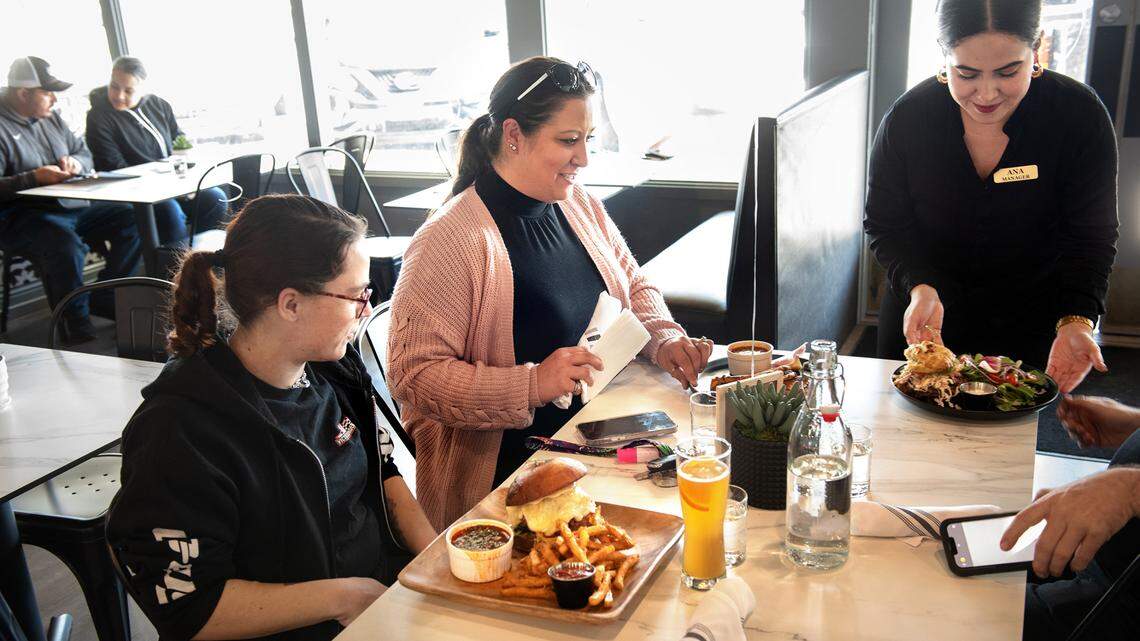
You’re at a coffee shop, and before the barista hands you your morning latte, the iPad on the register asks you: How much would you like to tip?
It’s a Friday night, and you’re paying a $5 cover fee with your credit card to enter a buzzing rooftop bar downtown. The card reader presents you with various percentages. Which one do you choose?
You stop at a convenience store for a snack on your road trip. There’s a jar on the counter. Add a tip?
“Tipping culture” is a hotly debated topic that seems to come up every time you’re dining out or grabbing a drink. You’ve probably heard the question before: Has tipping gotten out of hand?
“It’s a nuanced conversation that’s just kind of annoying at this point,” said Tim Linaberry, who has worked at roughly 15 restaurants in multiple states, including Mallards and Galleto Ristorante in Modesto.
“You don’t haggle on your prices at the grocery store. You don’t go be like ‘You know what, can I pay $1 for this lemon or do I have to pay $1.50? Should I pay more? Will I get a better lemon?’”
The often split-second decision of choosing when and how much to tip is ultimately an individual one.
To help you navigate this question, our service journalism team surveyed our readers across Northern California, spoke with experts who have studied the history and sociology of tipping, a financial adviser and two community members who have worked in the service industry for more than a decade. Here’s what they had to say:
How much should you tip?
People are becoming more familiar with tipping, said Amanda Shigihara, associate professor of sociology at California State University, Sacramento.
And there’s a larger pressure to tip more these days, she said.
“We eloquently call it ‘tip-flation,’” said Joseph Eschleman, a financial adviser and president of Towerpoint Wealth in Sacramento. “... It seems like the whole tipping culture has changed and certainly, for the most part, the expectation has increased for better or for worse.”
Eschleman said there’s no rule of thumb on tipping. It’s situational, he said, and it depends on where you are, who you’re tipping and why you’re tipping.
He said it’s customary to tip 18 to 20% when you’re going out to eat. If you’re grabbing takeout or getting food delivered, Eschleman said he’ll tell clients to tip between 10 and 12%. If you’re taking a rideshare or taxi, he said he thinks you should tip 15% of the fare, or more if the driver is helping you with your bags.
Tipping has gotten out of hand, said Sacramento resident Peter Lee, referring to a time when a smog check spot asked for gratuity on its credit card machine.
In two reader surveys, The Sacramento and Modesto Bees asked individuals to submit their thoughts on the latest tipping norms. More than 100 responses came in from Northern California readers.
While it wasn’t a scientific study, many people who responded said they prefer to tip about 10 to 20% or more when they go to a sit-down restaurant (more than 50% of respondents in Modesto said they tip 20% or more). For bars and coffee shops, most gratuity preferences range from zero to 20%, while at salons and barbershops, people said they tip from 10 to 20% or more.
Lee said he looks at three factors when it comes to tipping: cleanliness, quality of service and food. If the establishment that he’s visiting meets those standards, he’ll leave a 20 to 25% tip.
If there’s room for improvement, he’ll opt for a 15% tip, said Lee, who has worked in the restaurant industry for 13 years as a server, kitchen chef and general manager at five different eateries.
Linaberry, the former server from Modesto who now lives on the East Coast, said he thinks 20% is a standard amount to tip at places where you’re building a rapport, having a conversation or getting to know your server because you’re going to be with them for a while.
At places like Chipotle and Starbucks, where customers are performing single transactions, Linaberry said there’s a distinction to be made in how much workers should be tipped versus restaurant servers. He said he didn’t know what the “correct answer” is for how much you should tip during single transactions.
Both Lee and Linaberry also filled out the reader survey.
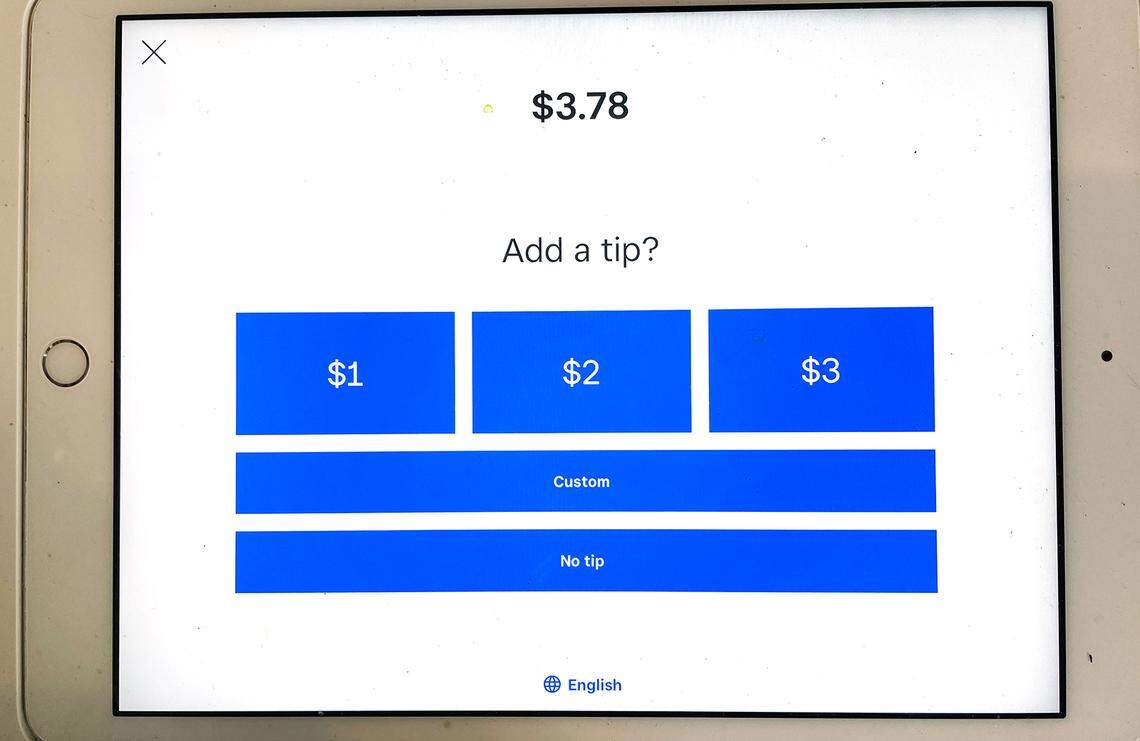
Many businesses have adopted digital point-of-sale systems, where customers can put a tip down on their bill, right in front of their servers.
“That really makes me feel uncomfortable,” Lee, of Sacramento, said. “I usually do not tip to-go’s, unless it’s my regular restaurant that I’ve been going to at least like two or three years, but if they’re looking at me like that, I try to tip them at least like 5 or 8% sometime.”
But since seeing community threads on Reddit with users discussing their experience with tipping customs, he said he’s not going to tip.
“I’m not going to join the trend,” he said, “or I’m not going to be pressured to tip.”
In times when you’re facing POS systems that are suggesting tip amounts, Eschleman said to be careful.
“It just gets back to some personal discretion or responsibility to not just blindly click one of the buttons, but to spend three seconds thinking about it,” he said. “Click the custom tip and then tip what you think’s appropriate, rather than what they’re suggestively putting out there to do.”
Ultimately, there’s no real rule book on it. Eschleman added that there are some situations where you typically will tip and others where it just feels right.
“You just have to have the moral compass to figure that out, err on the side of being generous, but not getting ripped off,” he said.
Why do Americans tip?
The practice of tipping came to the United States in the 19th century as a European “tradition” hinged upon social class and caste systems, said Dr. Angelo Williams, a UC Davis adjunct professor of African American and African studies.
America “swallowed the tradition whole,” Williams said, and it erupted post-Reconstruction era as formerly enslaved people became wage laborers.
In general, Williams said Americans in the Reconstruction era and the 1930s to 1970s resisted tipping, in part, because they believed the employer should be paying a fair, living wage.
“Minoritized groups, including Black folks but also including new immigrants and women, bear the brunt of a system best defined as ‘trickle down’ economics,” Williams said. “Where workers from Walmart to Applebee’s are obliged to accept tips as a positive, which only masks the solid class/caste tradition at our country’s origin.”
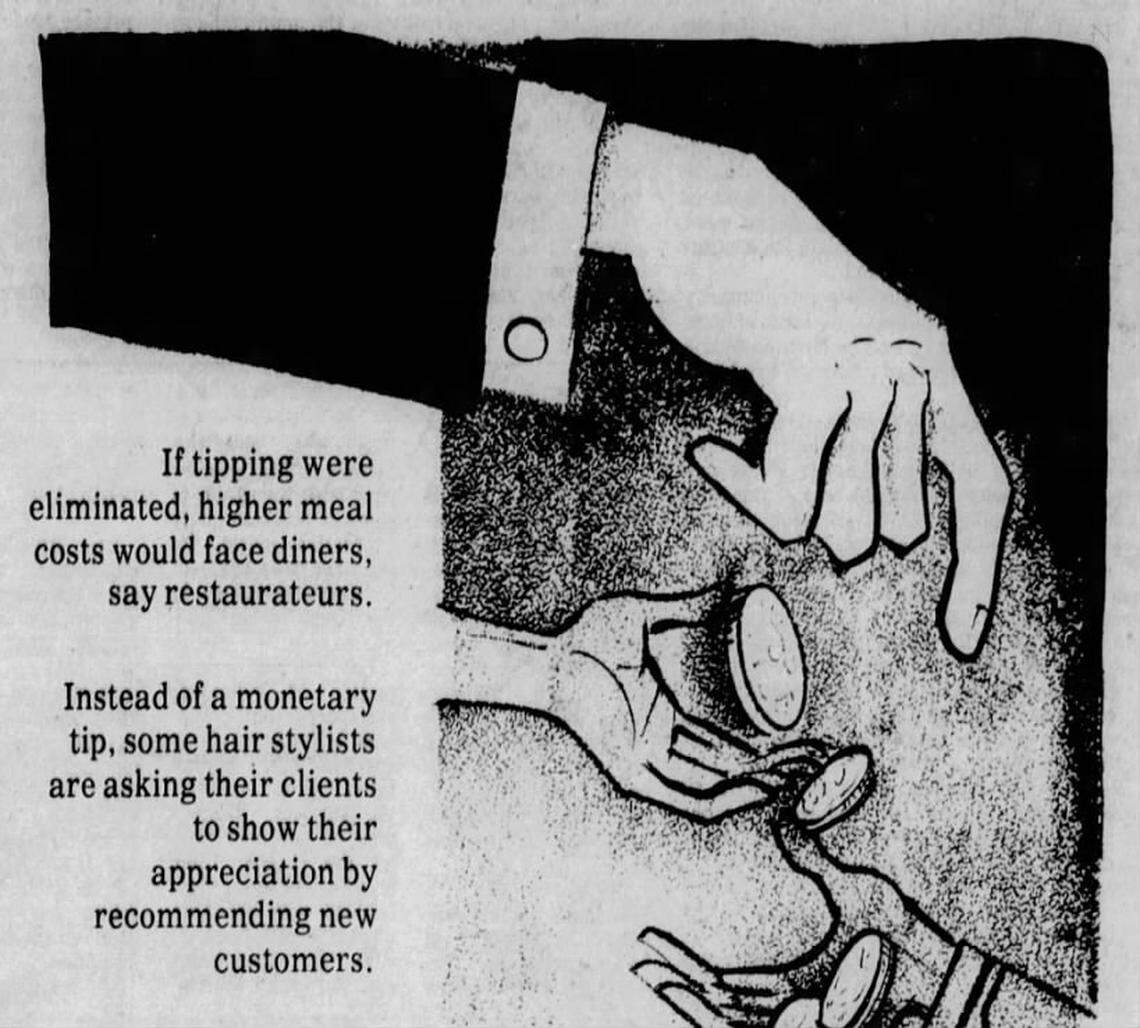
Public frustrations about the system span decades. In the 1930s, The Sacramento Bee’s pages were littered with debate: Workers in a Paris cafe went on strike, demanding fair wages. A Nevada lawmaker pushed, but ultimately failed, to outlaw tipping.
In 1978, a Placerville reader called it a “bone of contention” in response to extensive coverage on tipping etiquette and laws.
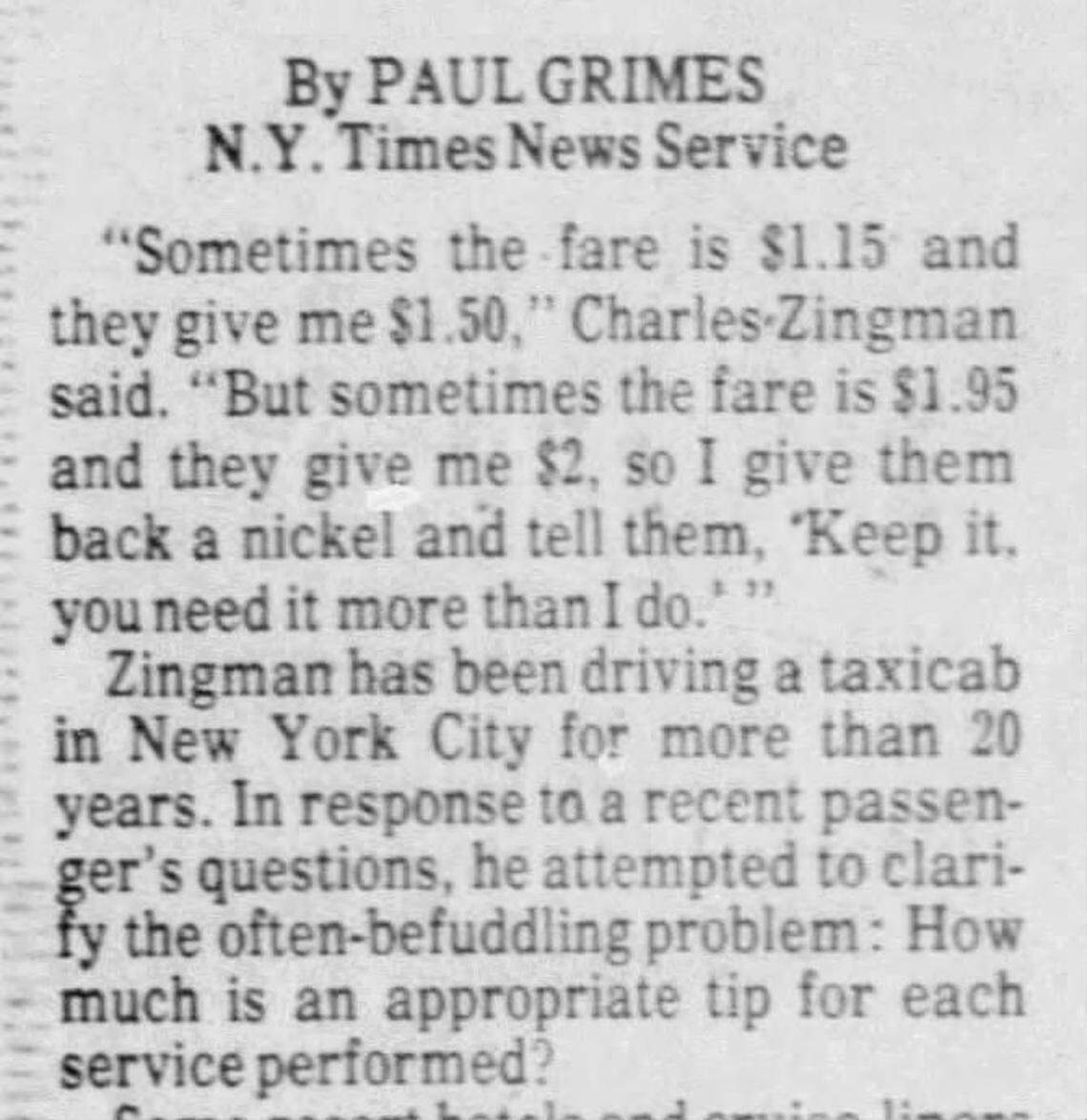
The next year, a New York Times story that appeared in The Bee quoted a Cincinnati resident, saying “One does not tip the postman, the salesclerk, the auto mechanic, the supermarket cashier. So why help in the restaurants? I think tipping has gotten out of hand (no pun meant).”
California tipping laws
California is one of seven states that require employers to pay workers full state minimum wage before tips. That means, in the Golden State, service industry workers make at least $15.50 an hour, plus tips.
It’s not the same across the country. Federal law requires tipped workers to make a base rate of only $2.13. When tips are added, it has to even out to a $7.25 minimum wage. Several states, including Kansas, North Carolina and Texas, follow this guidance. Others have either higher minimum wages or require a higher base pay before tips.
Is there a science to tipping?
It’s hard to pinpoint why or who is more likely to shell out a few more dollars when they’re eating out.
Michael Lynn, professor of consumer behavior and marketing at Cornell University, is known for his research on tipping and has released papers analyzing tipping behaviors.
In 2015, Lynn published “Service Gratuities and Tipping: A Motivational Framework,” and outlined the different motives people may have for tipping and not tipping.
Reasons why people do tip, he stated, are because they want to help servers, reward service, gain or keep favorable service in the future, gain or keep social esteem, or fulfill a sense of duty. Whereas people may not tip because they want to save money for something else or to avoid reinforcing or establishing a status or power divide between them and the server.
Shigihara, of Sacramento State, said she doesn’t think there’s a science to it.
“I think science would assume that there’s some kind of systematic process in a patron’s mind, saying ‘How am I going to calculate this,’” said Shigihara, who has been researching the restaurant industry for the past 20 years and has worked in the industry in various positions for about 14 years.
BEHIND THE STORY
MOREWhy we did this story
The California Service Journalism Team, with reporters in Sacramento and Modesto, wants to help you live happy, safe and healthy lives in our region. As inflation continues to strap budgets and the cost of living rises, we’re here to answer your questions.
It’s all subjective, Shigihara said, depending on factors like how a person is feeling that day or what they define as good service. However, while there might be some consistency about what individuals classify as good service, she said, behaviors can still change from one day to another.
In her research, Shigihara said that both patrons and employees have their stereotypes about people and tipping, assuming that groups of people will tip a certain way because of their race, class level and gender.
But she emphasized that it’s subjective — that while it might make sense to say people of lower-income backgrounds will tip less because they don’t have the funds to do so, you can also make the assumption that the same group of people will tip higher because they often have experience working in restaurant industries and better understand the need for tips.
She added that peer pressure may also be involved with why people tip, especially in cases where a server is right in front of the customer.
Shigihara said she tries to tip about 20 to 25% “with the notion that people need the money and deserve the money.”
Do you have questions about inflation, recession or cost of living?
Follow this link and fill out our form or email servicejournalists@sacbee.com. We do not accept cash tips — but story tips are welcome.
This story was originally published June 28, 2023 at 5:00 AM with the headline "Is tipping out of hand? You need a ‘moral compass’ to figure it out, California expert says."
.jpg)