‘Closer to being free.’ California LGBTQ activists attend same-sex marriage bill signing
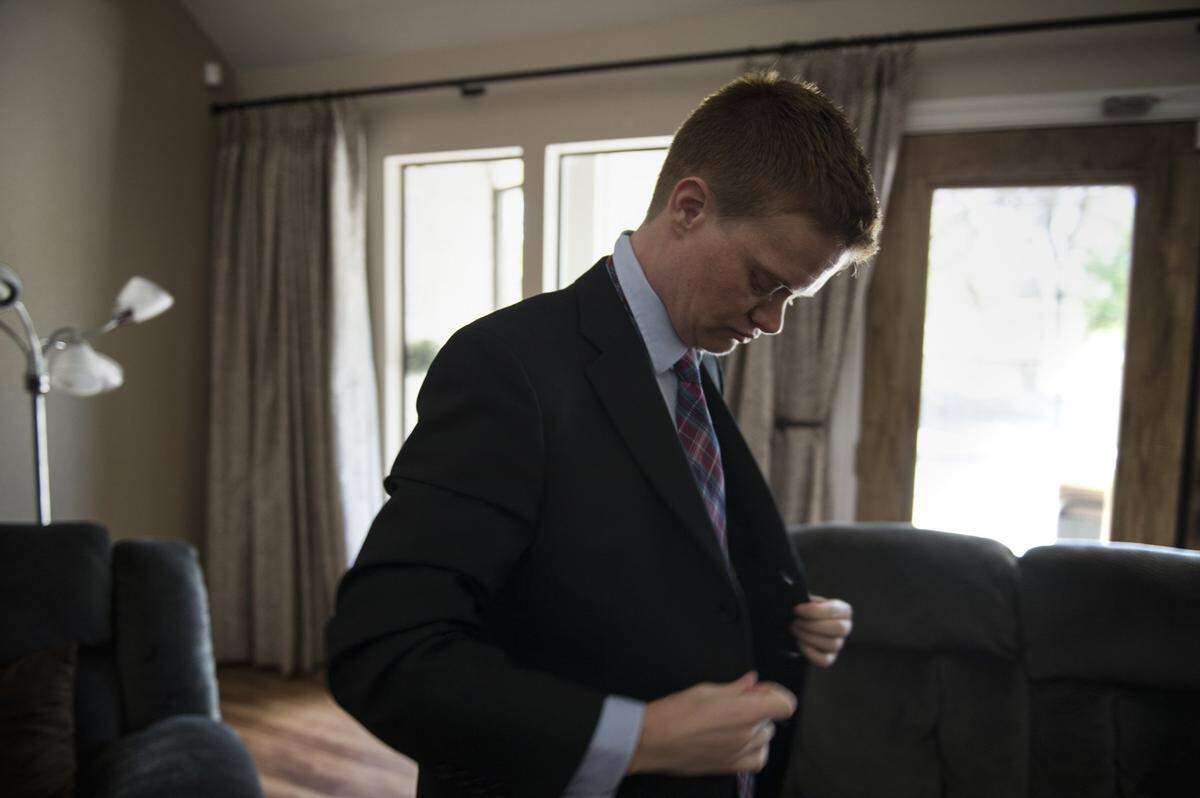
“Today is a moment in our nation’s history that we get to celebrate,” said Evan Minton, buttoning up his shirt and getting in a car Tuesday to go to the White House. “So many people brought us here.”
Minton, a transgender man, was en route to see President Joe Biden sign the Respect for Marriage Act into law. Passed by Congress following the recent Supreme Court decision on abortion, it requires the federal government to recognize same-sex and interracial marriages across the United States.
He joined several of Sacramento’s LGBTQ+ changemakers at the signing, including Ebony Harper and Elika Bernard.
Fresno’s Robin Johnston-McGehee was there with her wife, Karen. Johnston-McGehee has been at the forefront of marriage equality for more than a decade. In 2009, she helped organize an equality rally that drew thousands to Fresno to protest California’s then-ban on same-sex marriage under Proposition 8. That same year she helped lead the National Equality March in Washington, D.C. and co-founded GetEQUAL, a national advocacy group.
Sacramento man fights for transgender protections
Minton understands the importance of this moment, but also plans to continue the fight for equality.
He went through a lengthy legal battle after a Carmichael hospital in 2016 canceled his hysterectomy, a critical piece of his gender transition. He sued Dignity Health, which operates Mercy San Juan Medical Center, for discrimination with help from the ACLU Foundation of Northern California.
He was able to get the procedure a few days later at a different hospital, but he and his lawyers argued that the cancellation violated California civil rights law. Minton’s case ended up last year before the U.S. Supreme Court, which declined to hear arguments challenging a California appeals court decision that allowed the suit. The decision meant Minton’s legal proceedings against Dignity Health could continue.
President Donald Trump’s Health and Human Services Department used Minton’s case to bolster its 2019 Refusal of Care Rule, which would have allowed health providers to deny certain services on religious grounds. A federal court blocked the rule from going into effect, and the Biden administration rescinded it.
Although Minton said his “heart is so full,” he also wants to see more protections for transgender people at local, state and federal levels.
Road to Respect for Marriage Act
The Respect for Marriage Actreached the president’s desksix months after the Supreme Court overruled Roe v. Wade, which established federal abortion protections nearly 50 years ago. Its decision in Dobbs v. Jackson Women’s Health organization said abortion access was best regulated at the state level.
While Dobbs did not address same sex marriage, advocates were alarmed when justices commented on other federal protections that could potentially be revisited, including Obergefell v. Hodges, the 2015 decision that made same sex marriage the law of the land.
After many revisions that centered on religious views, the bill passed the Democratic-leaning Senate and U.S. House of Representatives. The act repeals part of the Defense of Marriage Act, signed in 1996, which said states were not required to recognize a same-sex unions signed in another state.
Every California Democrat supported the act, which was co-sponsored by California Sen. Dianne Feinstein. Six of the state’s 11 House Republicans were against it.
Bill signed amid spike in LGBTQ violence
Violence against LGBTQ+ people has spiked in the U.S., prompting federal lawmakers to hold a hearing this week. Hate crimes, especially against transgender people, have increased by over 40% since 2015, according to federal crime statistics.
“The rise in anti-LGBTQI+ extremism and the despicable policies that Republicans at every level of government are advancing to attack the health and safety of LGBTQI+ people are harming the LGBTQI+ community,” House Oversight and Reform Committee Chairwoman Rep. Carolyn Maloney said.
“We celebrate the progress that we have made today, but recognize the work still left undone to fully protect the rights of LGBTQ Americans,” California Sen. Alex Padilla said after the Respect for Marriage Act passed both congressional chambers.
People from across the country flew in to watch the signing ceremony on the White House’s South Lawn, from states with many rights for LGBTQ+ individuals and states with less.
“Whether this directly impacts you or not, with the signage of this bill, we are all closer to being free,” California’s Minton said.
This story was originally published December 13, 2022 at 2:16 PM with the headline "‘Closer to being free.’ California LGBTQ activists attend same-sex marriage bill signing."