Key COVID-19 metric hits highest point since January as California’s surge persists
Case rates for COVID-19 are declining in some parts of California including Sacramento, but the statewide test positivity rate and virus hospitalizations continue to climb as more evasive and transmissible subvariants of omicron approach dominance.
The state’s test positivity rate has grown to 13%, the California Department of Public Health reported Friday. That’s the highest rate recorded since Jan. 30, and up from 10.4% the previous Friday.
Positivity has grown nearly tenfold since April 1, when state health officials reported the metric at 1.4%.
CDPH reported California’s daily case rate as of Friday at 34.5 per 100,000 residents, a 10% decrease in the past week. But that is largely due to a decline in lab testing volume, which plummeted by 31%. Many Californians are now testing positive using rapid at-home tests, most of which go unreported to CDPH.
Test positivity continues to climb throughout most of the state. El Dorado County jumped from 11.7% to 15.7%, and Yolo County from 6.6% to 7.7%, in the past week. Los Angeles County swelled from 7.4% to 11.2%.
CDPH reported positivity in Sacramento County at 13.8%, compared to 13.1% a week earlier. Placer County declined slightly from 12.4% to 12.1%.
Vaccines roll out to young children
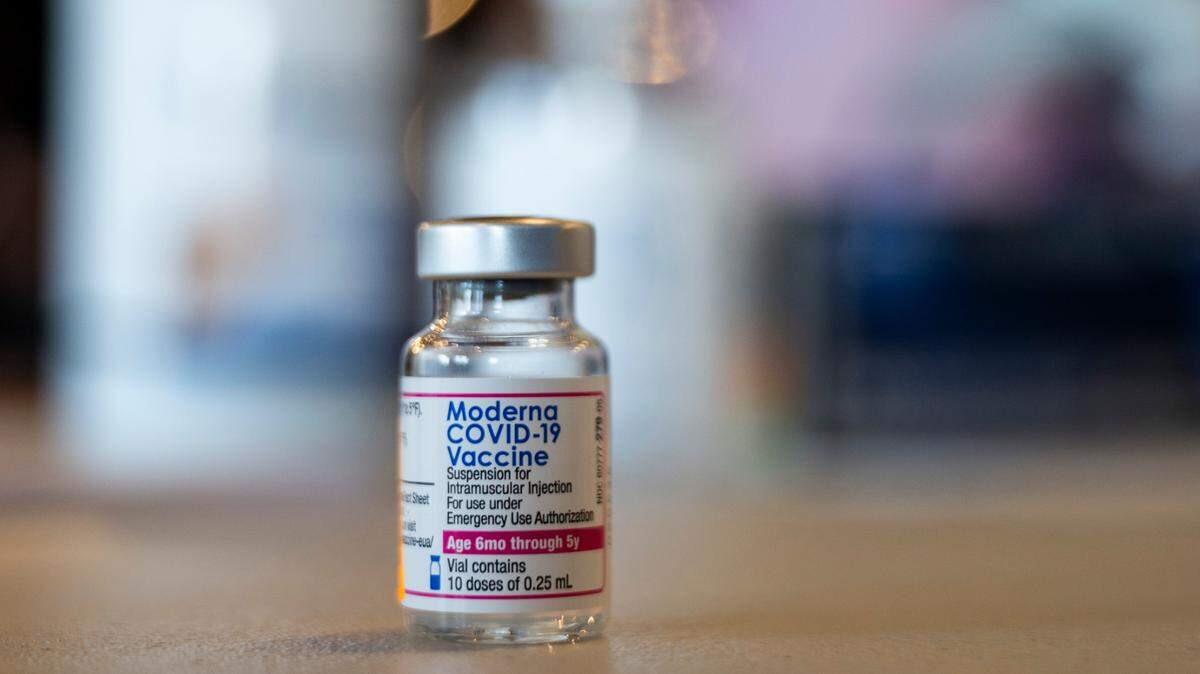
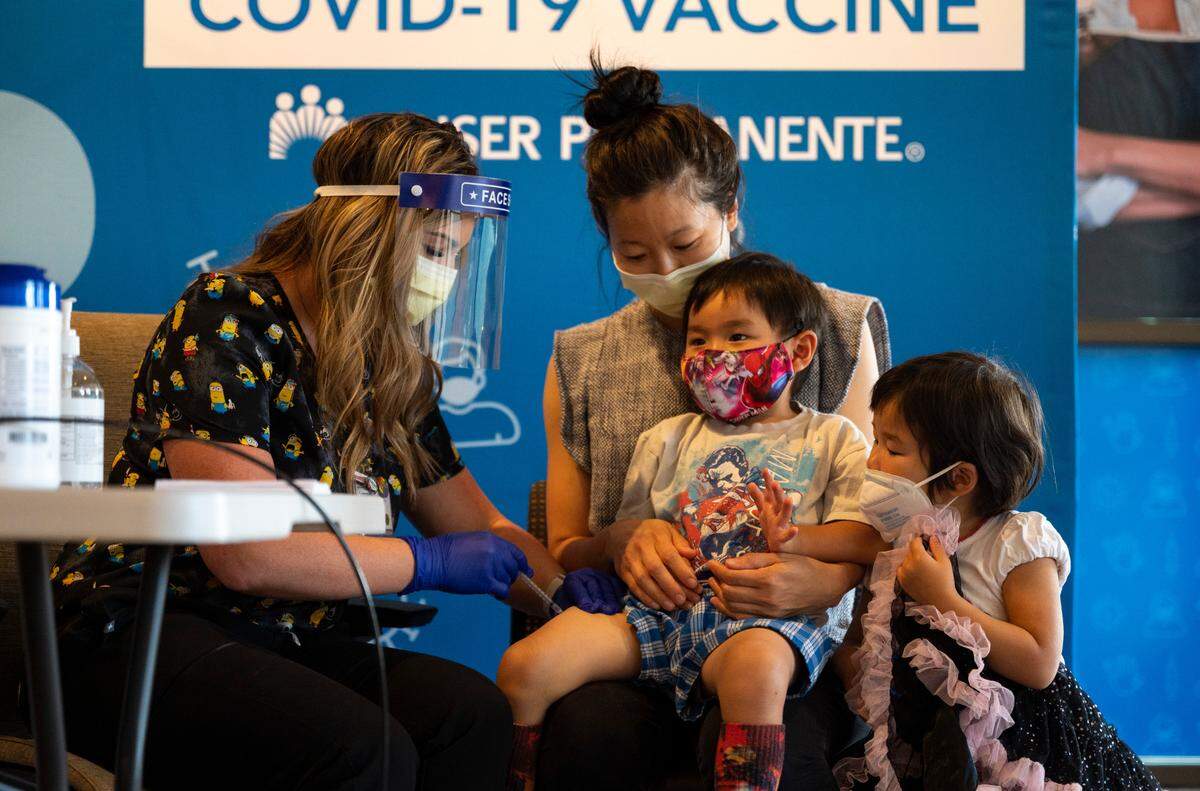
Pharmacies and health care providers began offering the COVID-19 vaccine to children 5 years old and younger this week, after the Pfizer and Moderna vaccines were cleared for U.S. use in that youngest age group.
Infectious disease experts and pediatricians are urging parents to have their kindergartners, preschoolers and infants over 6 months old vaccinated against COVID-19.
Though children are more likely than adults to display milder symptoms of COVID-19, doctors have grown increasingly concerned about long COVID.
“You could have a child who’d had relatively minor symptoms, maybe sore throat and some headache, and then go on to have fatigue for months and months,” Kaiser pediatrician Dr. Nicole Makram said this week “That can just be profoundly affecting for their families.”
BA.4, BA.5 variants may soon become dominant
Two sister subvariants of omicron known as BA.4 and BA.5 made up 37% of last week’s positive cases tested for variants in Yolo County, according to Healthy Davis Together, up from 22% the previous week.
“Next week, I expect to report that BA.4 and 5 are the dominant variants in Yolo County,” county health officer Dr. Aimee Sisson said in an interview this week.
The two variants’ growth in Yolo County has been similar to the nationwide trajectory. The U.S. Centers for Disease Control and Prevention reported the two variants growing from 23% to 35% in the past two weeks, and from 22% to 36% in the region including California.
Experts say BA.4 and BA.5 are more transmissible than the BA.2.12.1 strain that is still dominant across the U.S., and that they also appear more capable of evading immune protection. The two variants do not appear to cause more severe illness than previously seen omicron variants.
“So you’re going to see people who even just had omicron, who are going to get infected again,” Sisson said.
“So this, you know, idea that we had at the beginning of the pandemic of herd immunity and everyone would just get infected, the pandemic would be over already – unfortunately, with the amount of mutation and mutations towards immune evasion, we’re not seeing that.”
Sisson said she expects BA.4 and BA.5 becoming dominant to lead either to an increase or sustained plateau in infections.
Sacramento, Yolo still in CDC’s ‘high’ community level
The CDC as of a weekly update Thursday categorized 25 of California’s 58 counties into the “high” community level for COVID-19 danger, under a framework that considers case and hospitalization numbers.
Those 25 were: Sacramento, Yolo, Amador, Butte, Del Norte, Fresno, Lake, Kings, Madera, Marin, Mariposa, Merced, Monterey, Napa, San Benito, San Joaquin, Santa Clara, Siskiyou, Solano, Sonoma, Stanislaus, Sutter, Tulare, Tuolumne and Yuba.
CDC guidance calls for masking in public indoor places in counties classified in the high community level. Sacramento County’s move into the high level triggered Sacramento City Unified returning to a mask mandate for the final two weeks of the academic year.
Only Alameda County, which was in the high level earlier this month but has since returned to “medium,” has returned to a countywide local health order requiring indoor masking.
Public health officials in the capital region have said they would only consider re-introducing a mask order if hospitals are at risk of being overwhelmed.
“I’m not mandating masks, but I am absolutely, strongly recommending masks,” Sisson said this week. “There is a lot of COVID, a lot of SARS-CoV-2 virus circulating in the community right now. And it’s very easy to get infected, even if you’re fully vaccinated.”
Sisson said virus levels detected in Davis wastewater are higher now than at the peak of the original omicron surge.
“So what that means is that our actual case rate now could be in the 200s, even though we’re reporting it as 47,” Sisson said. “So I think that gives you a pretty good sense of just how many cases we’re missing right now.”
Hospitalizations climbing statewide, flat near Sacramento
Hospitalization figures in the capital region have held relatively flat in the past few weeks.
Sacramento County spiked to 210 patients with confirmed COVID-19 in hospital beds on June 13 but had fallen to 192 patients as of Friday’s update, according to CDPH.
Placer County jumped from 20 patients in early May to more than 70 in early June, and has fluctuated between about 70 and 85 since then, reported Friday at 86.
El Dorado County has had a single-digit virus patient total since June 10, reported Friday at six.
However, recent increases in large counties like Los Angeles and San Diego have pushed the statewide tally above 3,000 for the first time since early March, state health data show.
CDPH on Friday reported 3,126 patients in hospital beds with confirmed COVID-19, including 325 in intensive care units.
Those totals remain well below the peak of the first omicron surge in January, when more than 15,000 were hospitalized including 2,600 in ICUs. But the latest hospital tally is nearly triple the count in early May, with the ICU tally roughly doubling since then.
Sacramento-area numbers by county
Sacramento County’s latest case rate is 34.7 per 100,000 residents, state health officials said in Friday’s update, down 14% from one week earlier.
Hospitals in Sacramento County were treating 192 virus patients Thursday, state data show, down from 195 one week earlier. The intensive care unit total decreased to 19 from 27.
Placer County’s latest case rate is 24.2 per 100,000 residents, down 15% from one week earlier.
Hospitals in Placer County were treating 86 virus patients Thursday, up from 75 one week earlier. The ICU total increased to seven from five.
Yolo County’s latest case rate is 44.7 per 100,000 residents, up 1% from one week earlier.
Hospitals in Yolo County were treating three virus patients Thursday, down from eight a week earlier. The ICU total decreased to zero from three.
El Dorado County’s latest case rate is 21.9 per 100,000 residents, down 20% from one week earlier.
Hospitals in El Dorado County were treating six virus patients Thursday, up from 10 a week earlier. The ICU total increased to two from zero.
Sutter County’s latest case rate is 27.7 per 100,000 residents, up 7% from last week, and Yuba County’s is 28.1 per 100,000, down 22%, state health officials reported Friday.
The only hospital in Yuba County, which serves the Yuba-Sutter bicounty area, was treating 10 virus patients Thursday, up from eight a week earlier. The ICU tally decreased to three from four.
This story was originally published June 24, 2022 at 10:54 AM with the headline "Key COVID-19 metric hits highest point since January as California’s surge persists."