
Here comes another COVID vaccine debate as California lawmakers brace for more protests
Anti-vaccination protesters looked on from the Senate visitors gallery as California lawmakers debated the final bills of the year on a Friday evening. Earlier that week, the lawmakers had passed legislation cracking down on medical exemptions to required childhood vaccines, which had drawn hundreds of demonstrators to the Capitol.
One of them was in the gallery that evening in 2019 and threw the proceedings into chaos — she tossed a menstrual cup of blood onto the legislators below, turning the Senate chamber into a biohazard.
Sen. Steve Glazer, the unlucky lawmaker positioned underneath the protester, had to head to the doctor to be checked for blood-borne illnesses after some of it splashed on his head. The cleaning bill to sanitize the carpet and scour the tables and chairs came to $70,000.
Two years later, the coronavirus pandemic has heightened the issue of vaccines and mandates. Now, Democrats who control the state Legislature are grappling again with how to ensure students get vaccinated against COVID-19, staring down a similarly contentious vaccine debate in the year ahead.
No lawmaker has introduced a bill to alter the COVID vaccine mandate Gov. Gavin Newsom issued in October, which requires students eventually be vaccinated to attend in-person classes. But one option they’re considering would eliminate a parent’s ability to opt out a child based on personal beliefs, something school districts in areas with low vaccination rates say could keep tens of thousands of students out of class.
Anti-vaccine activists are already mounting a campaign against any possible legislation that would impose stricter mandates, and school officials are sounding alarms about the harm it could do to students who would be kept out of classrooms.
The threat of people harassing lawmakers will make passing any vaccine legislation very difficult next year, said state Sen. Richard Pan, D-Sacramento, who authored bills limiting exemptions for required childhood shots in 2015 and 2019.
The protests over those bills were largely peaceful, but in 2019 some opponents harassed lawmakers pushing the bills with death threats. Some Assembly members received bricks in the mail etched with appeals to vote against the bill. In a video he posted to Facebook, an anti-vaccine activist shoved Pan on a sidewalk downtown near the Capitol.
Pan said those tactics aim to intimidate his colleagues.
“At this point, they’re not trying to silence me because they know they can’t, but they’re trying to silence others,” Pan said. “They’re saying to other legislators, do you see what we’re doing to Sen. Pan over there? We’re going to do that to you.”
Each time the Legislature takes up a new vaccine bill, vitriol from opponents grows, Pan said. Next year, he expects that trend to continue.
“I am concerned the threats will be worse,” he said.
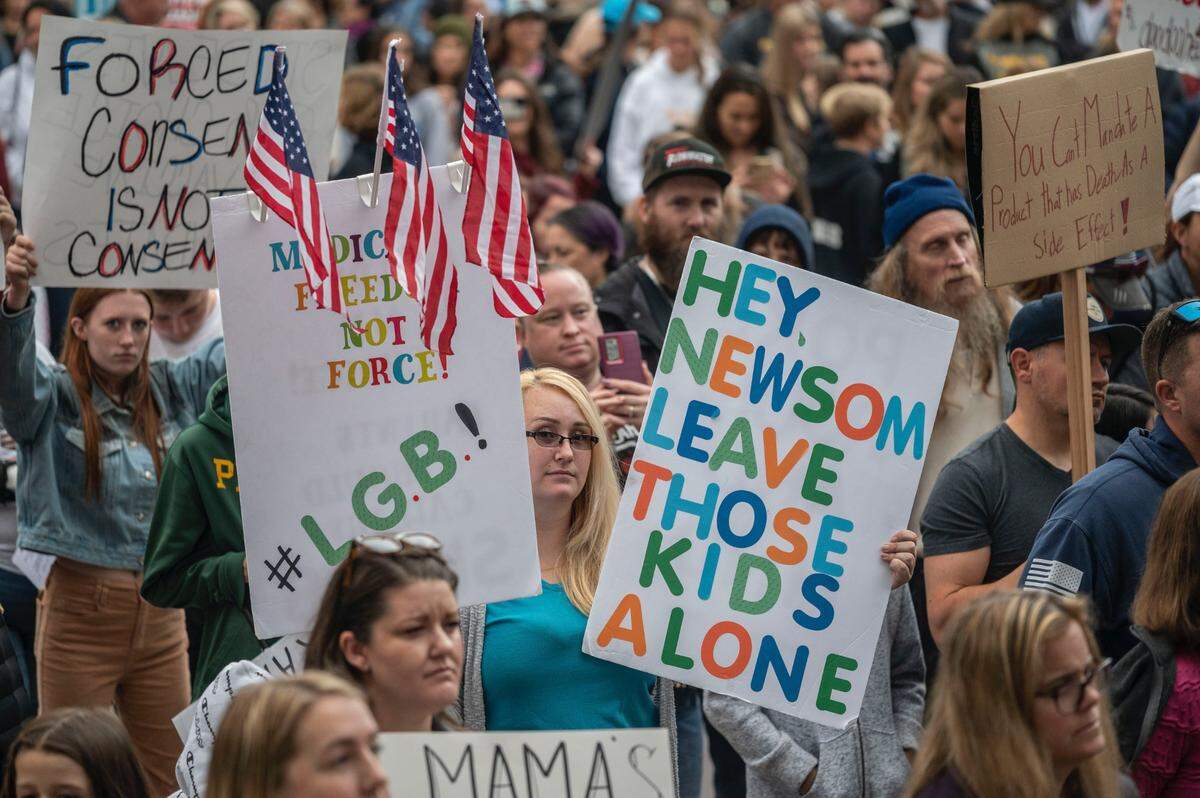
California’s COVID-19 vaccine mandate
In October, Newsom announced California students would soon need to be vaccinated against COVID-19 to attend school in person. The mandate will take effect for middle and high school grades in the academic term after the Food and Drug Administration fully approves the shots for that age group.
Currently, the vaccine is only approved for most children under an FDA emergency use authorization. If the FDA fully approves the vaccine for children over 12 by the summer, those students must be vaccinated by July 1, 2022.
Under Newsom regulation, parents can opt their children out of the vaccine based on personal beliefs. Parents simply must attest their views prevent their children from getting vaccinated and that they have reviewed the benefits and risks of vaccinations.
They don’t have that option for other required childhood shots — including measles, mumps and chickenpox — because lawmakers outlawed personal belief exemptions for those in 2015.
Last month, 15 school superintendents in El Dorado County wrote a letter to Newsom asking him to preserve the personal belief exemptions for COVID shots. If not, they said they believe many parents will choose to pull their kids out of classrooms in favor of independent study programs or other alternatives.
“It is vital that the State of California maintains the medical, religious, and personal exemptions with regard to the COVID-19 vaccination requirement,” they wrote. “We are asking for your support, to allow us to return to the business of educating our students in the safest and most normal way.”
Other California school districts had already implemented their own earlier deadlines for vaccinations, but have had to push them back.
The Los Angeles Unified School District does not allow parents to opt out of the vaccine based on personal beliefs. But the Los Angeles Times reported that the district’s mandate would mean 34,000 students would have to disenroll from in-person instruction for the upcoming school year and enroll in the district’s already overburdened independent study program. The district decided to push its deadline back to fall 2022.
Asked earlier this month on ABC’s “Good Morning America” what he thought of the situation in Los Angeles, Newsom noted that the statewide mandate does allow for personal belief exemptions.
“There’s plenty of latitude for families to make the decision,” he said. “LA is slightly different, and we’re obviously going to have to work through that.”
Previously, Newsom had said he would work with the Legislature to possibly change those exemptions.
“I’ll work with them to strengthen, to weaken, whichever direction we need to go as we iterate and try to figure out what’s best in terms of advancing our collective goals and keep people healthy and safe and keep them in in-person instruction,” the Democratic governor said in October.
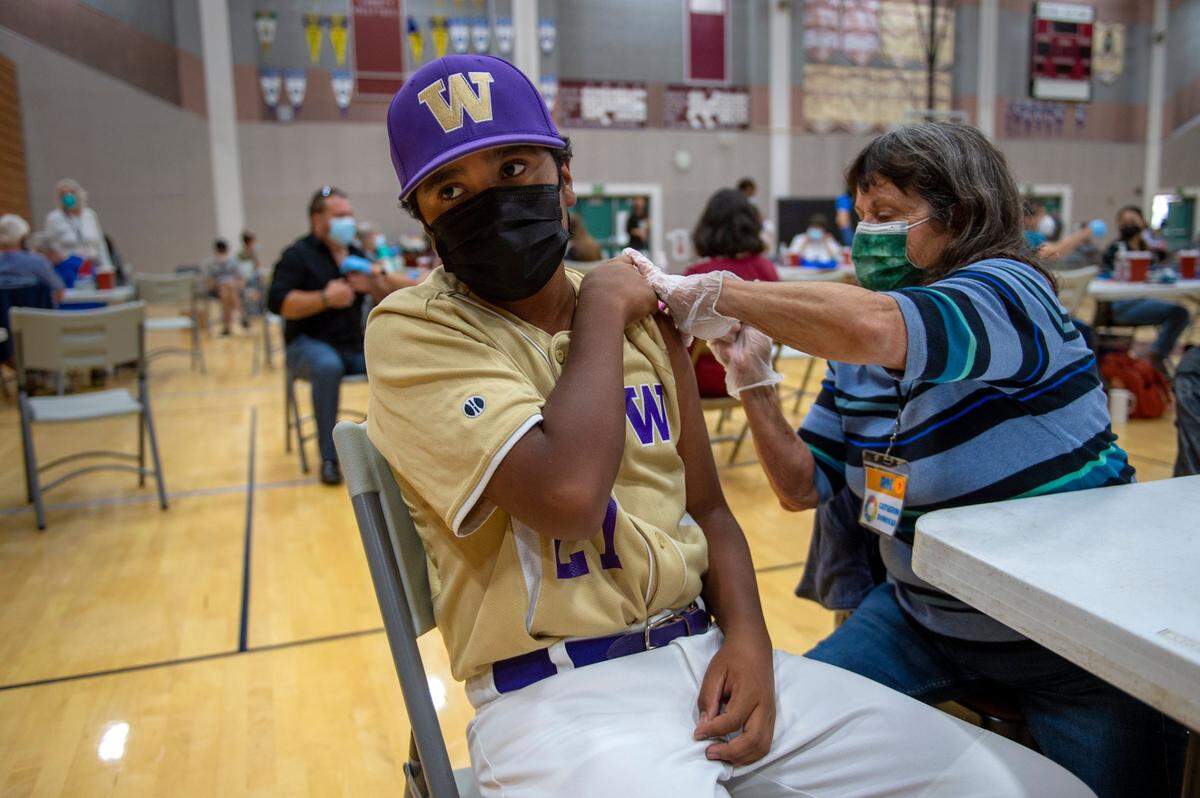
California lawmakers weigh COVID weigh legislation
After a proposal to require vaccinations to enter indoor businesses fell apart earlier this year, a group of lawmakers began working to craft a new batch of legislation that will increase vaccinations, said Sen. Scott Wiener, D-San Francisco.
“The reason we’re still in this pandemic, the reason we have new variants is because we haven’t been vaccinating people here and around the world quickly enough,” he said.
Wiener said he approved of Los Angeles Unified’s decision to push back its deadline for kids to be vaccinated, but still supported the district’s decision not to allow personal belief exemptions. He said many families may need more time to get their kids vaccinated, but that ultimately the shots should be required for every student who doesn’t have a medical exemption.
“If you have a rule with loopholes you can drive a Mack truck through, people will take advantage of that loophole, and that’s what the personal belief exemption is,” Wiener said. “There should only be medical exemptions.”
Pan said he and his colleagues are considering how they might close that loophole. Pan wrote the 2015 bill that eliminated personal belief exemptions for other required childhood shots, but said it’s not as simple as just adding the COVID vaccine to the list.
Currently, schools are only required to check for mandated shots for new students, kindergartners and seventh graders. For a COVID-19 vaccine requirement to be effective in the short term, those checks would need to be required for more students, Pan said.
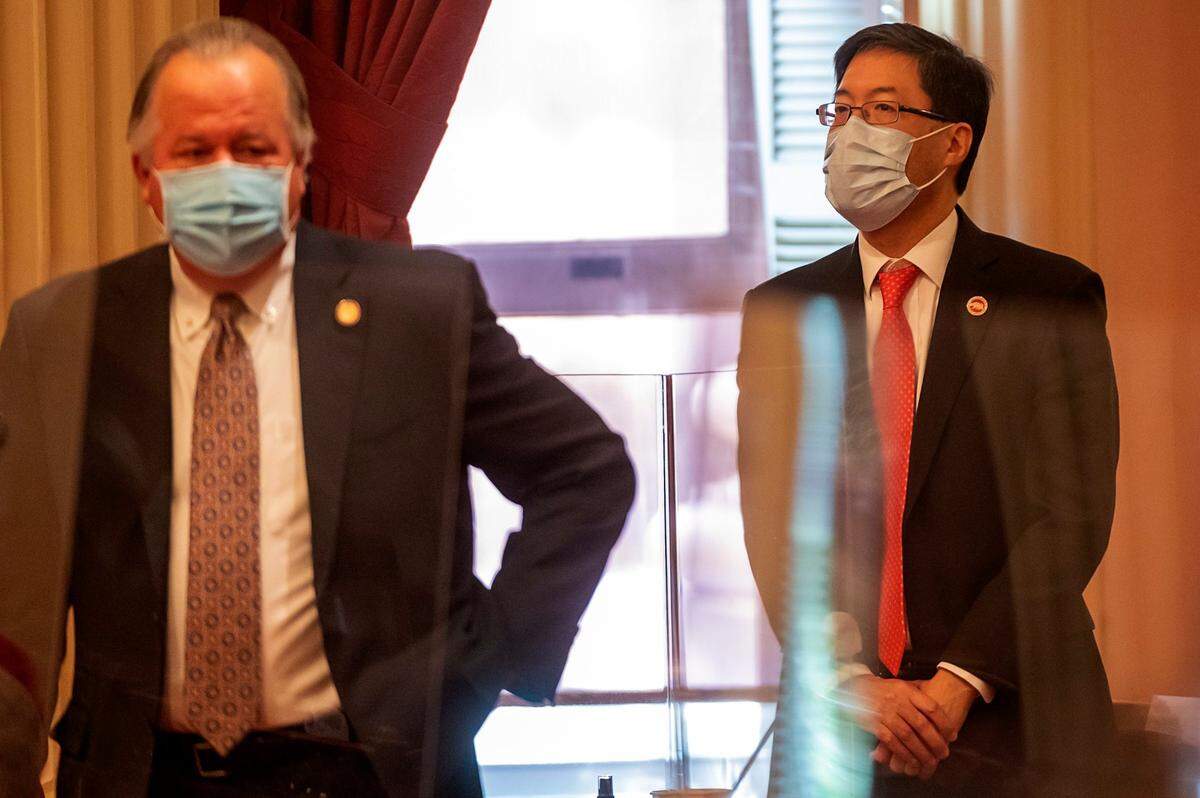
Additionally, the vaccine is so new that lawmakers don’t know for sure how many shots kids will need to be considered fully vaccinated. Pan said that makes crafting legislation to require it tricky. Unlike the governor’s mandate, which Newsom can change quickly if needed, altering anything lawmakers pass would be time consuming, putting pressure on them to get the first pass right.
Lawmakers are also weighing potential legislation to require some adults to also be vaccinated, or to require businesses to post information to consumers about vaccination policies, like restaurants do with health inspection results, Pan said.
Any legislation to close the personal belief exemption likely couldn’t pass with a so-called urgency clause, which requires a two-thirds majority to take effect immediately, Pan said. That means anything the Legislature passes related to vaccine mandates next year probably wouldn’t take effect until 2023.
In response to safety concerns raised by some parents, Pan, a pediatrician, compared the risk from vaccines to the risk presented by car safety features like seat belts and airbags. In rare cases, those features actually injure passengers, but for the most part they make people much safer.
Although the vaccines have some very rare side effects like myocarditis, or heart inflammation, that same condition is much more likely for a person who actually catches COVID-19, and the disease itself is still very dangerous, Pan said.
Opposition to vaccine mandates
Assemblyman Kevin Kiley, R-Rocklin, said he thinks Newsom’s mandate is bad policy, and that vaccine choices should be left up to parents. He said he expects any efforts to make it even more strict will have difficulty passing the Legislature.
The harm of not being able to attend school in person far outweighs the risk children face from the coronavirus, which is very unlikely to kill them, Kiley said.
“This is a decision that belongs in the hands of parents,” he said, noting the many parents organizing against the mandate. “For a lot of folks in California, it’s really put in sharp relief how misguided California’s overall approach to COVID has been, particularly when it comes to education.”
He said he condemns the instances of violence from anti-vaccine protesters, but said those events are rare.
“If you look at any issue where there are hundreds of thousands of people involved, there might be an isolated case where someone does something that goes against the way political participation is supposed to work,” he said. “That needs to be condemned, as I have done.”
In the past, many of California’s anti-vaccine activists came from wealthier communities, but a broader swath of people oppose school COVID-19 mandates, said Lisa Pruitt, a UC Davis law professor who studies rural-urban conflicts.
“The prior stereotype of the vaccine hesitant parents in California was a sort of affluent, free thinker type constituency,” she said. “I think what we’ve seen with a lot of the pandemic restrictions up until now has been, it’s certainly overlapped with that constituency, but it’s also broader – less educated, more rural folks.”
Some parents may be willing to get the shots, but may not believe it’s safe to give their kids, Pruitt said. She pointed to the debate around masking in schools, which has sparked protests, as a benchmark for gauging how intense opposition will be to COVID vaccine mandates. Emotions will undoubtedly run higher when it comes to vaccines, she said.
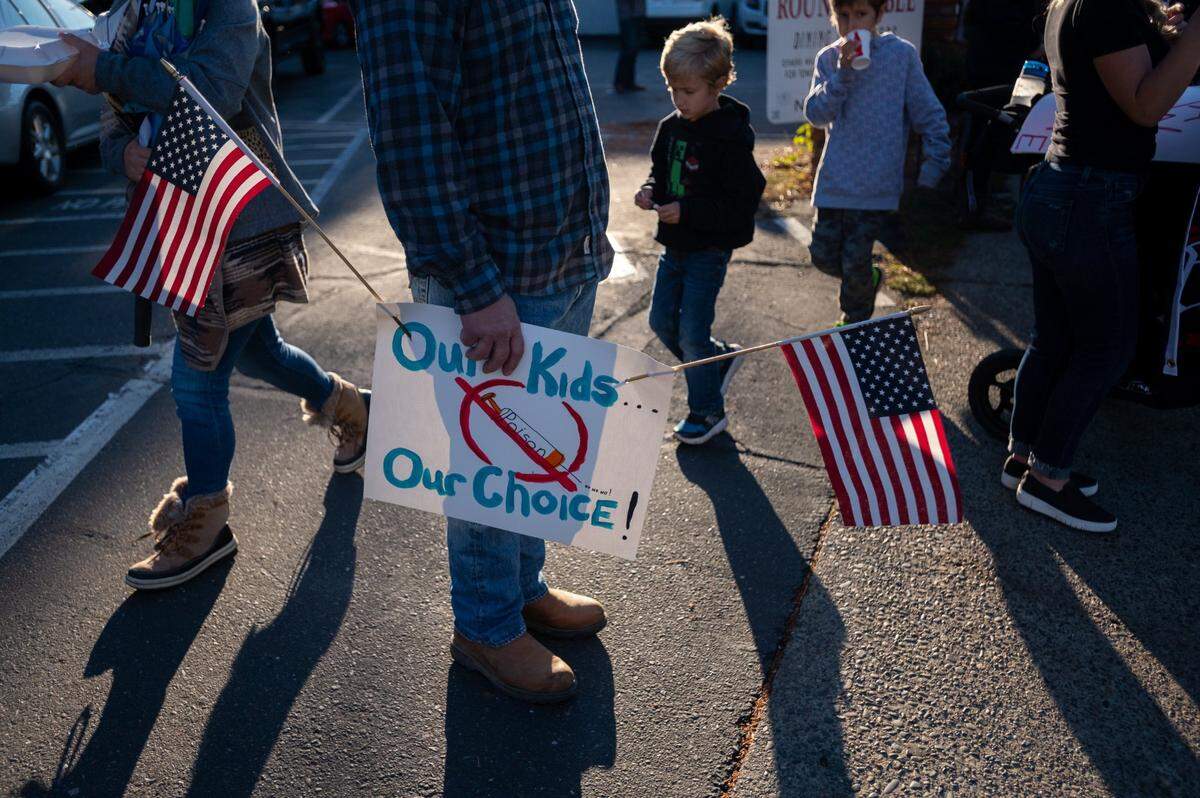
The issue is especially charged as people consider the consequences if the mandates keep unvaccinated kids out of class.
“We’re starting to think about this public health crisis as not just about COVID, but the public health crisis of our young people’s mental health,” she said.
The problem of kids not being able to attend in-person classes is serious, but not as serious as the thousands of people who could potentially die if the virus continues to spread because of low vaccination rates, said Glazer, the state senator who was hit by blood in 2019.
Glazer, D-Orinda, said he would potentially support eliminating the personal belief exemption for COVID vaccines if the shots receive full FDA approval for kids and are widely available to all, and if public health experts determine eliminating the exemption is necessary for public health.
He noted that despite the blood-throwing incident, the Senate still proceeded with its work that evening in 2019. He went home to shower after he was hit, then came back to vote on the remaining bills of the year.
“It didn’t stop the Senate from completing its work, and I hold that up high because I still feel strongly that that’s our obligation irrespective of these types of illegal acts,” he said. “We must not be deterred.”
This story was originally published December 29, 2021 at 5:00 AM with the headline "Here comes another COVID vaccine debate as California lawmakers brace for more protests."