
After a bear mauled a woman in Tahoe, will California kill the bears breaking into homes?
Doctors had to sew up the bites and claw marks after a black bear attacked a woman in her Tahoe Vista kitchen in late October, an attack that left her upstairs covered in her blood.
Before her wounds healed, Tahoe’s bear activists called the woman’s family “bear killers,” deposited feces outside her house and blamed her for the bear trap officials put in her driveway to try to kill the bear.
Dr. Laurel-Rose Von Hoffmann-Curzi — a 66-year-old physician who is being treated for cancer — was the second person to be mauled inside a home this year on California’s side of Lake Tahoe. In June, a vacation renter inside a Meyers home shot a nearly 500-pound bear after it pushed him over and put its mouth around his arm. It didn’t bite down, and the man wasn’t hurt. Animal rights activists lashed out at him, too.
Dangerous encounters such as these in and around homes have become increasingly common in the Tahoe Basin, despite a decades-long campaign to get communities to lock up trash and food that lure bears from the wilderness. The question now has become whether an increase in bear conflicts in Tahoe is enough to cause a change in California’s bear management policies.
Some experts are calling for state wildlife officials to kill bears that exhibit the most fearlessness around people or repeatedly break into homes.
“When you have bears that are showing that kind of level of habituation and disregard and lack of fear of people, then, you know, quite honestly, for bear management, some of those bears probably do need to be removed from the population,” said Jon Beckmann, an adjunct faculty member at the University of Nevada, Reno, who extensively studied the Tahoe Basin’s black bears with the Wildlife Conservation Society, a research-based nonprofit.
The state’s Department of Fish and Wildlife nearly always leaves the decision to kill a bear up to property owners in the wake of a break-in. After state officials issue lethal permits, bear traps must be on the property owners’ land. On Tahoe’s generally small lots, that usually puts them in clear view of activists.
Von Hoffmann-Curzi called California’s Tahoe bear management policy a form of bureaucratic cowardice.
“I think that’s atrocious. I think that’s absolutely wrong. I don’t know why we have a Department of Fish and Wildlife if they don’t manage fish and wildlife,” Von Hoffmann-Curzi said. “I think it’s because they’re not wanting to directly deal with the (activists), and so they’re putting the onus on the homeowner. I think that’s a government function.”
Department of Fish and Wildlife director Charlton “Chuck” Bonham said his game wardens and biologists aren’t afraid of the blowback from animal rights activists, and they will kill a bear if it attacks someone or if it’s acting truly dangerous.
That’s what his department unsuccessfully tried to do after Von Hoffmann-Curzi was attacked on Oct. 30. But he said California law prohibits the wildlife agency from killing bears for merely breaking into homes.
“The law dictates how this is handled,” Bonham said in an interview with The Sacramento Bee. “We can point to multiple incidents where we’ve made a public-safety decision to dispatch an animal. … And then the law says someone’s got to request a permit in order to put the animal down (for property damage).”
Bears that officials deem to be “threats to public safety ... may be killed at any time without a permit,” reads the wildlife department’s official bear policy. Bears “habituated to humans” can be “humanely euthanized” by department staff “after consultation with the chain-of-command.”
Yet that rarely happens. State officials estimate that since 2017 they’ve killed fewer than five Tahoe bears they’d deemed to be too habituated or a threat to public safety.
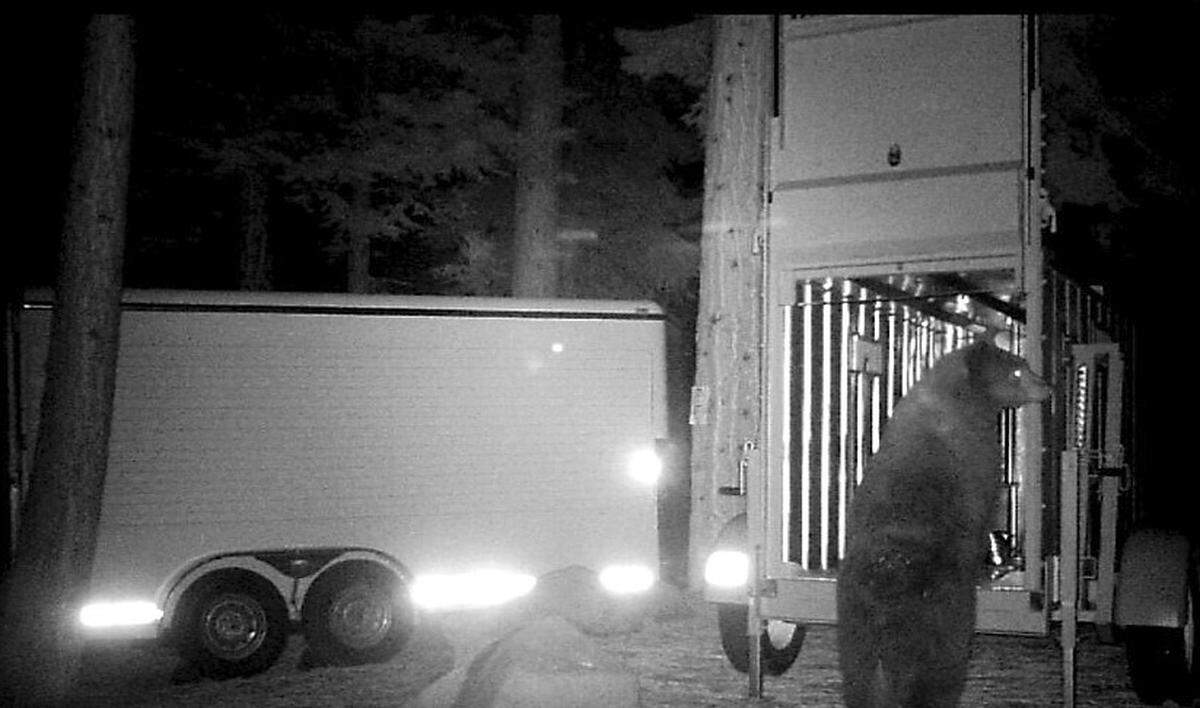
That’s in stark contrast to what happens on Nevada’s side of Lake Tahoe.
Since 2015, biologists and wildlife officers in that state have killed 36 bears after making the judgment call that the bears’ behavior was unsafe, said Ashley Sanchez, a spokeswoman for the Nevada Department of Wildlife.
State officials in California are deeply wary of a public relations crisis that would come from the perception that government officials are killing bears. And animal rights activists are a powerful political force: They successfully persuaded the Legislature to ban bear hunting with dogs a few years ago, and, this year, they briefly proposed a statewide ban on any sport hunting of bears.
Biologists say Tahoe’s bear population is growing and that wildfires and drought this year pushed them farther into the basin.
During the Caldor Fire, bears wandered freely through evacuated towns, leading to a substantial uptick in residents reporting potentially dangerous bear encounters to authorities. Several families also returned to find that their houses had been spared from flames but had been ransacked by bears.

“Let’s just be honest,” Bonham said. “There are more human-wildlife conflicts happening with these bears in Tahoe, and it seems like that’s true every successive year.”
In recent years, Bonham’s department has ramped up an awareness campaign to try to reduce conflicts, and his biologists have been trapping and tagging bears to learn which ones are repeat offenders. But he said state officials are likely going to need to do more in the coming years as part of an “all of the above” strategy that uses a host of different methods to reduce conflicts. He said that could mean the state has to kill the most dangerously habituated bears “once we’re certain we have an offending animal.”
‘Started flaying me’
Von Hoffmann-Curzi woke up before dawn on Oct. 30 after hearing noises upstairs in her Tahoe Vista home.
She walked out to see what was making the commotion. By the time she took a couple of steps into the upstairs kitchen, the bear that had been rooting through her freezer attacked her.
“He flew at me and started flaying me and tearing me up,” she told The Bee.
Weeks later, Von Hoffmann-Curzi said she remains troubled by the bear’s behavior. She said her family, whose primary residence is in Orinda, had just arrived at the home the night before. There was very little food in the house and no garbage to lure the bear inside. The bear also acted as if she were the intruder in its lair — not the other way around, she said. After it mauled her, she said, the bear twice bluffed as if it were going to come at her again.

She said it left only when she threw at it the only thing she could reach — a quilt — and her husband and son came out. Her nightgown and upstairs floor were covered in her blood.
After the attack, doctors at UC Davis Medical Center sewed multiple layers of stitches in her face. She developed abscesses from the deep, bruising bites on her breast and abdomen. The risk of infection from the still-healing wounds caused her doctors to postpone the chemotherapy treatment she’s undergoing for a form of non-Hodgkin’s lymphoma.
The severity of her injuries didn’t matter to animal rights activists once they spotted the bear trap Placer County placed on her driveway after state wildlife officials declared the bear a safety threat and had to die.
First, someone approached her son outside the home and called him a “bear killer,” she said.
Later, someone left what appeared to be both human and bear feces outside the home, she said.
Someone sneaked onto the property and dumped cleaning chemicals inside the large barrel-shaped trap, a common — but illegal — technique activists have used for years to try to dissuade bears from climbing inside, said Joshua Huntsinger, Placer County’s agricultural commissioner.
Then Tahoe’s Bear League effectively blamed Von Hoffmann-Curzi for the encounter, telling the group’s nearly 33,000 Facebook followers that the bear was lured inside by ice cream in her freezer and avocados ripening in her kitchen.
In a post partly written in a first-person account from the bear’s perspective, the Bear League also alleged Von Hoffmann-Curzi had left the door open and that she’d blocked the bear’s escape route, a claim Von Hoffmann-Curzi said is not true.
“We are … not comfortable about the fact that this local Tahoe Vista bear will be killed if he goes into the trap that is set in the driveway of the unsecured house he easily entered to eat avocados and ice cream on that fateful early morning,” concludes the post, which misspells Von Hoffmann-Curzi’s first name.
“Hopefully, the memories of Laura Rose’s (sic) screams and the nightmare of being trapped inside her house will keep him far far away from that neighborhood for a very long time.”
‘Bears should not die’
Short of a mauling or other aggressive bear behavior, California usually punts the controversial decision to kill a bear to those living where the break-in occurred. State officials will give them what’s known as a “depredation permit” if a resident has taken appropriate steps to keep bears away, such as bear-proofing trash. Local agricultural authorities will place a trap on their lot.
Just because permits are issued, it doesn’t mean a bear will die.
Since 2017, California officials have granted 71 depredation permits to property owners, but only 13 bears were killed, according to state officials.
Critics say California’s depredation system leads to so much harassment from local activists that many other people have decided it’s not worth having a bear killed, even in cases where the bears exhibited dangerous behavior. For years, residents with bear traps on their properties have been bombarded with threats, taunts and vandalism.
In Tahoe, the bears are given pet names like “Butterscotch” and “Rascal.” They’re regularly seen sauntering through subdivisions, walking among sunbathers on crowded Lake Tahoe beaches and relaxing with their cubs in backyard fountains.
The activists say no bear should die because they’re being irresponsibly lured by humans leaving out food and by not securing their garbage in bear-proof receptacles and not locking their homes.
Scientific studies in the Tahoe region have shown that neighborhoods where garbage is locked up in bear-proof bins dramatically reduce reports of problem bears, yet some Tahoe communities still do not mandate the containers. Biologists and activists also agree on another point: The tens of thousands of Tahoe tourists continue to contribute greatly to the problem because they don’t know or disregard proper “Bear Aware” behavior when it comes to trash and stowing away food.
The activists, meanwhile, also downplay the severity of the attacks in homes, saying the bears were merely startled and not trying to hurt anyone.
“Killing bears has never and will never be the solution — another bear will quickly take the dead bear’s place,” said Ann Bryant, the executive director of the Tahoe-based non-profit Bear League.
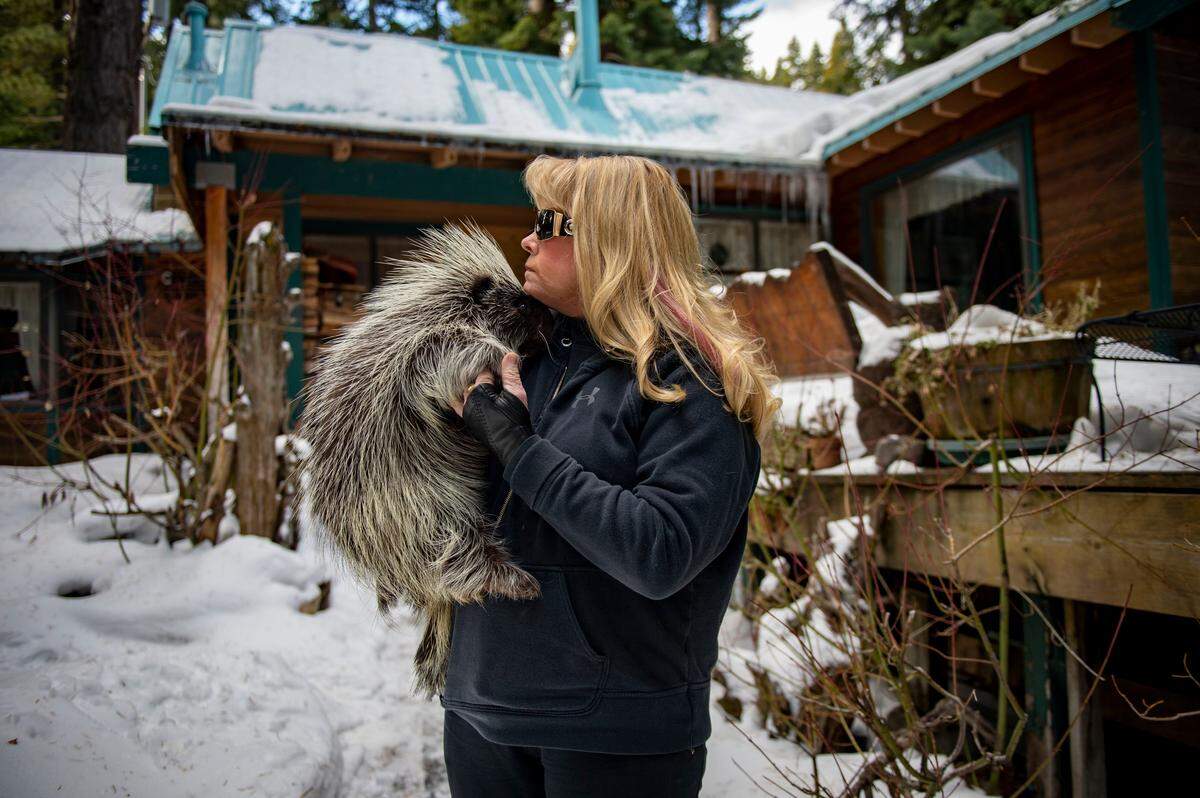
“Bears should not die because some people are ‘irresponsible,’ ” Bryant said in an email. “We humans are supposedly the ‘intelligent species.’ Let’s act like it and stop killing wildlife for taking advantage of our mistakes.”
Along with coaching people to properly stow trash and bear-proof homes and vehicles, the Bear League for years has served as a sort of unofficial animal control agency, with its own bear-conflict hotline and teams of volunteers who’ll respond when called to haze bears away from homes. The Bear League said this year alone, it helped shoo away 23 “unwelcome furry guests” that had sought to use Tahoe area homes’ crawl spaces as winter hibernation dens.
The Bear League also will use its sizable social media presence to heavily criticize those who have a destructive bear killed.
Bonham, the wildlife agency director, has criticized the organization in the past for orchestrating harassment campaigns.
The Bear League says it does not participate in any harassment.
Instead, Bryant has said Tahoe residents lash out on their own because they deeply love the region’s bears.
‘A ridiculous place to draw a line’
Despite some trash-eating bears weighing more than 500 pounds and being strong enough to kill a person, black bears in the wild are normally timid creatures that almost always run off when approached by a human.
Fatal human attacks by black bears are extremely rare, though they do happen in North America from time to time. No documented fatal bear attacks have occurred in California since the larger and more aggressive grizzly bears were killed off after the Gold Rush.
Huntsinger, the Placer County agricultural official, said he’s troubled by what activists now consider acceptable behavior in Tahoe’s most fearless black bears.
“I think that’s a ridiculous place to draw a line — to say if you have food in your house, that entitles the bear to break in — and that it’s the people’s fault for having food in their own home,” he said.
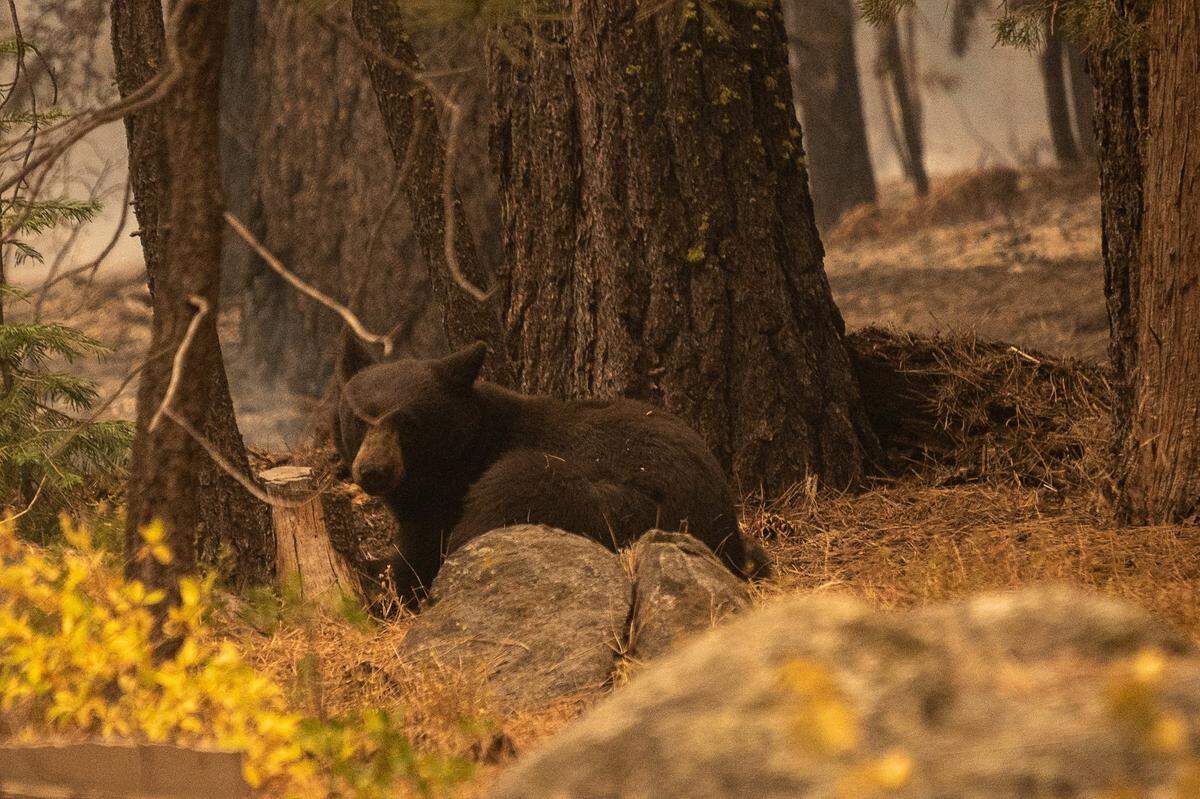
Aggressive bears going after people’s food isn’t happening just in neighborhoods, he said.
Huntsinger has received reports of certain Tahoe bears “bluff charging” families enjoying meals at picnic tables at campgrounds, he said. The bear’s goal: Frighten the people away so it can eat their food.
This fall, the state reported that one such male bear — a sickly, older one with plastic and metal tags in its ears — was so aggressive that a man camping with his family in Alpine County near Hermit Valley had to shoot and kill it because it wouldn’t leave the family and its food alone.
This bear had a history of aggressive behavior in the Tahoe area. State officials had trapped it in 2020 after it had entered local businesses on Lake Tahoe’s North Shore. It became known as the “Safeway Bear” and the “Chevron Bear.”
State officials said the bear also had a history of crashing cookouts around Kings Beach, at one point helping itself to someone’s birthday cake.
When it was trapped, California biologists pierced its ears with the identifying ear tags and put a GPS tracking collar around its neck. They released the bear into a remote area of El Dorado County in the hopes it would stay away from populated areas.
State officials speculated it grew sickly and starving in the wild, away from the human food to which the nearly 15-year-old bear had been accustomed, and it returned to its aggressive behavior when it encountered the campers.
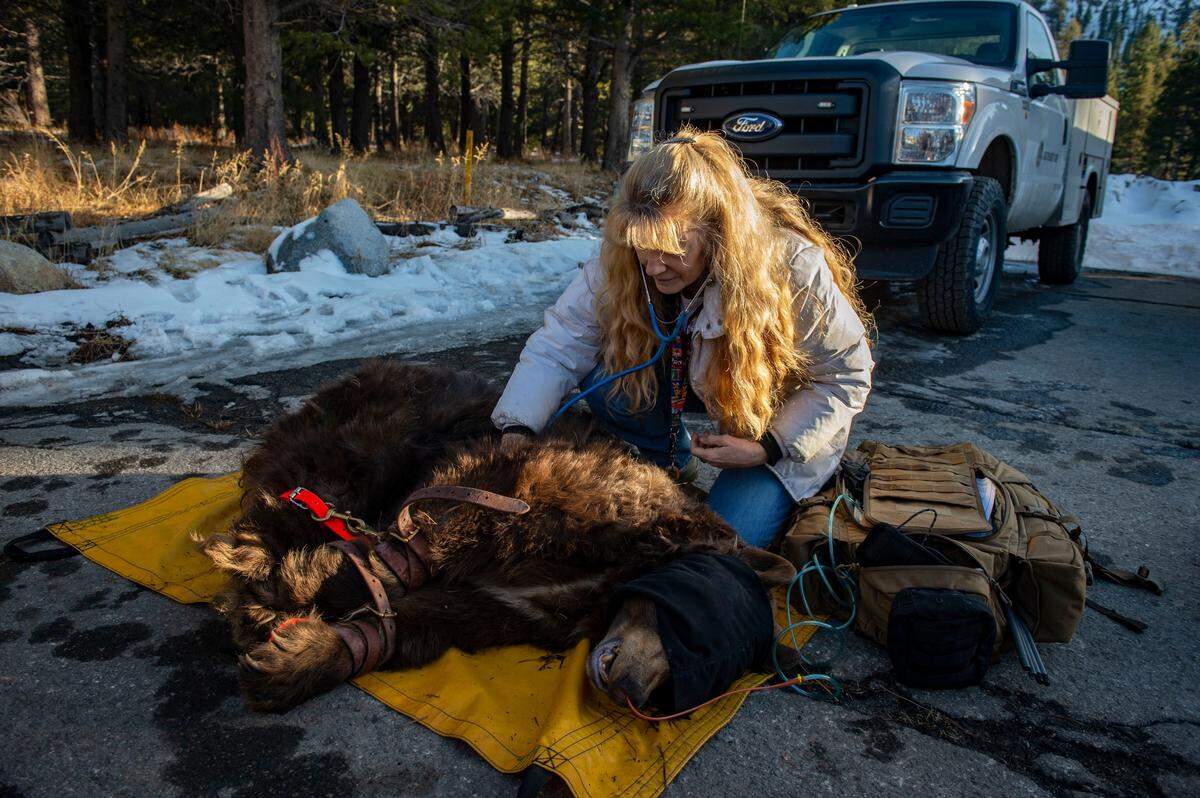
A younger bear with a tag in its ears was recently filmed exhibiting similar behavior.
In a video shared last month on the video-sharing platform TikTok, a bear with a yellow plastic tag in its ear nonchalantly wanders into an Olympic Valley 7-Eleven.
The bear doesn’t flinch in the video when a woman is screaming at it to try to get it to leave the convenience store. Later, deputies responded and “hazed the bear away” outside the store with a nonlethal round shot from a firearm early in the morning of Nov. 13, according to state wildlife officials. They noted that an unlocked dumpster was outside the store.
“This situation could have been prevented by taking actions to lock up trash,” said Jordan Traverso, a spokeswoman for the Department of Fish and Wildlife. “Proper storage of food and garbage is vital.”
She said the tag in the TikTok bear’s ear indicates it had likely been captured as part of California’s “Trap, Tag and Haze” study — one of the ways officials on California’s side of the lake have recently ramped up their efforts to try to prevent and to understand why there are so many bear conflicts.
A captured bear’s ear is pierced with a numbered ear tag before it’s sent on its way, usually after a few painful paintball gunshots to reinforce the notion that humans should be avoided.
Before a bear’s release, the biologists collect DNA samples from its saliva, hair and blood to later be compared with samples collected following a bear home break-in.
‘We’re powerless’
Biologists say killing a few problem bears won’t hurt Tahoe’s overall bear population. Tahoe’s bears — like the rest of the black bear population in California and Nevada — are not endangered.
Officials say bear numbers are growing substantially in both states. Beckmann, from the University of Nevada, Reno, said one study he participated in in the early 2000s found that Tahoe has the second densest black bear population in North America — numbers that he said have likely only gotten larger. There have been no recent population estimates.
Biologists said the bears in Tahoe’s populated areas are exceptionally well-fed, to the point that female bears are regularly seen with three or even four cubs, an usually high number for a bear in the wild.
Biologists say an unhealthy dependence on human food and fearlessness around people have become generational problems. Biologists said the conflicts are going to persist since the mother bears are teaching their cubs to break into homes and to have no fear of humans.
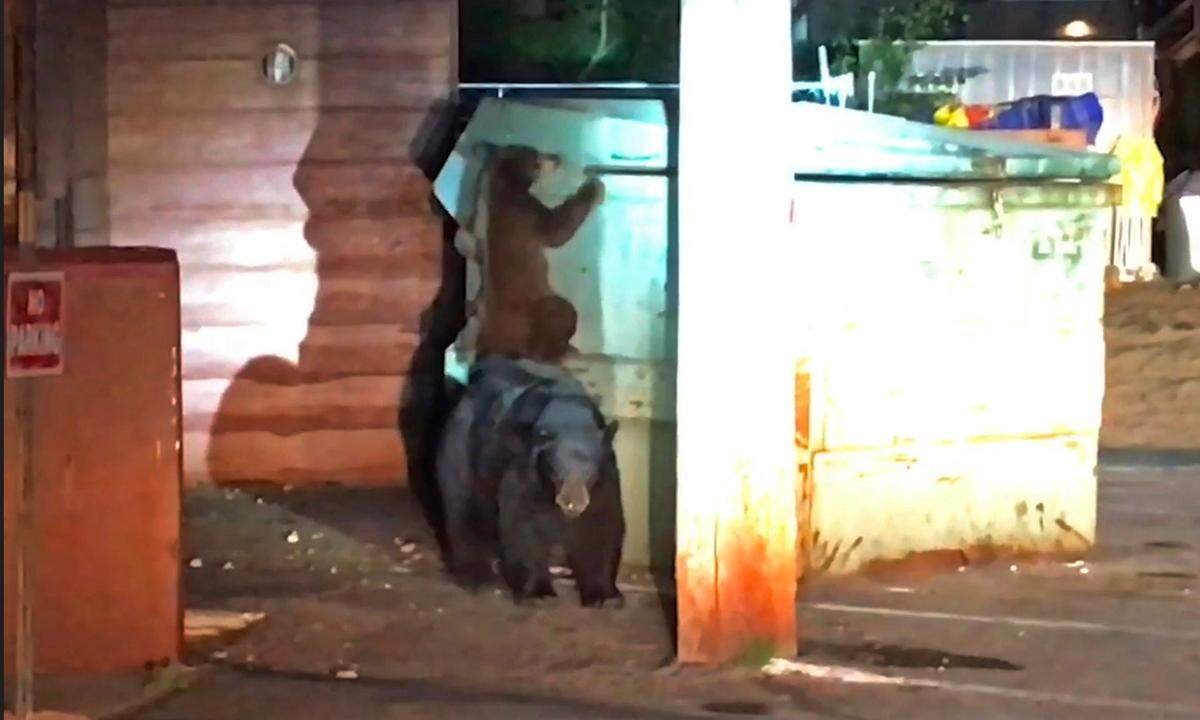
Bonham, the head of the state’s wildlife agency, said any plans to kill more bears in Tahoe will need to be part of a “toolkit that has all the options in it” to try to reduce the conflicts, such as possibly hazing bears with dogs and trapping some of the habituated bears and releasing them far from Tahoe to study whether they can adapt in the wild.
Whatever the state ends up trying, Bonham said there’s only so much his department can do with a small staff and when too many Tahoe neighborhoods continue to attract bears by not using bear-proof garbage containers.
Bonham said he also has to be mindful of the sentiment of the state’s 39 million residents, most of whom love the state’s wildlife and wouldn’t support the idea of his employees killing too many of Tahoe’s bears in the prime habitat into which humans have moved.
“We also have to put ourselves in the shoes, figuratively, of the animals, which is our mission in part as well,” Bonham said. “I think for the most part, more people than not would be supportive of the department’s policy.”
The bear that attacked Von Hoffmann-Curzi never entered the trap, which was removed from her driveway after a week.
State officials said a female bear with a cub climbed inside it at one point. The state released the animals after DNA from the bear’s saliva inside Von Hoffmann-Curzi’s home proved they weren’t the bears that attacked her.
Von Hoffmann-Curzi and some others in the neighborhood believe the state gave up the hunt for the bear far too soon, she said. They worry the bear that attacked her will hurt someone else.
“It’s something we’re powerless to deal with,” she said.

This story was originally published December 5, 2021 at 5:00 AM with the headline "After a bear mauled a woman in Tahoe, will California kill the bears breaking into homes?."