Gray wolf in SLO County has been missing for more than a month. ‘We’re trying to be hopeful’
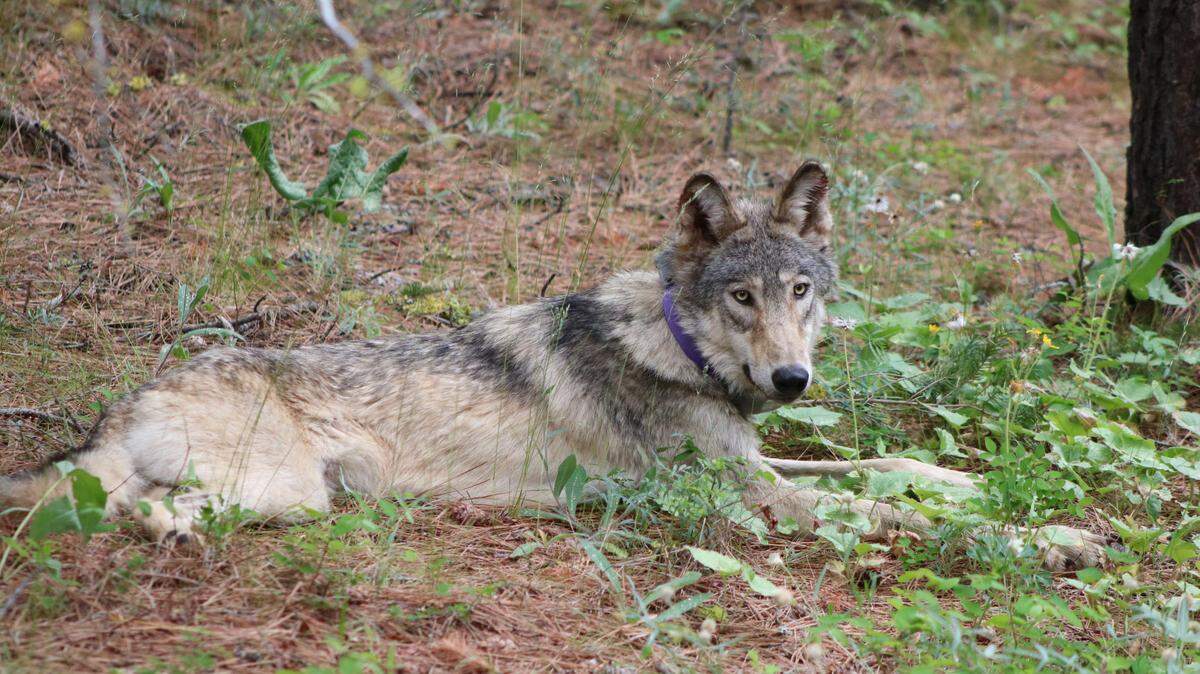
The lone gray wolf detected in San Luis Obispo County in early April has gone missing, the California Department of Fish and Wildlife says, and experts are increasingly pessimistic about his whereabouts.
OR-93 journeyed nearly 1,000 miles from his birthplace in the Mt. Hood region of Oregon to San Luis Obispo County on April 5.
The 2-year-old wolf’s GPS collar stopped emitting pings around the same time, which means that the CDFW has not received a location reading from the collar in nearly eight weeks.
Typically, the department would receive about four updates a day from the collar letting researchers know where the wolf was about once every six hours, Traverso said.
“We don’t know what happened,” Traverso said. “There are a number of possibilities — and there are optimistic possibilities, and there are pessimistic possibilities.”
“As each day goes by without any kind of collar reading, we are starting to feel a little bit more pessimistic about it,” she added.
Traverso said that the CDFW flew a plane in areas where researchers guessed the wolf would be two weeks ago in an attempt to locate the collar using radio telemetry, but to no avail. The agency plans plan to fly again later this week, she said.
But that plan is not exactly guaranteed to work.
OR-93 was traveling about 16 miles a day before the signal on his collar went dead. So if he kept traveling at that rate since the last signal was received by the CDFW on April 5, he could be more than 800 miles away.
“We don’t know where we’re supposed to be looking,” Traverso said. “So the plan now is to try and do those low flyovers, try to get those radio hits, but pretty much statewide.”
And there might not even be a signal to pick up, she said.
“The collar could have a dead battery,” Traverso said. “It could be the collar could have been destroyed. It could be that the wolf is healthy, but he’s been denning in, like, a rock cave and not coming out as much because maybe he did find a lady wolf.”
“We’re trying to be hopeful,” she said.
Gray wolf traveled from Oregon to SLO County
OR-93 was the first known gray wolf to travel to the Central Coast since 1826.
Leaving Oregon in search of a new pack or mate, the wolf entered California on Feb. 4 and then ventured through northern California counties.
By mid-March, the wolf was in Tuolumne County, and then by late March, he had entered Fresno County.
OR-93 then entered San Benito County after crossing Highway 99 and Interstate 5.
He crossed into Monterey County on April 1 and then came into San Luis Obispo County after crossing Highway 101 on April 5.
There are other gray wolves in California, particularly in the northern region of the state. But OR-93 may be the first gray wolf to travel this far south after the species was nearly eradicated in California by the late 1800s.
That’s made his journey so fascinating for researchers.
“We lost wolves because we killed them all,” Amaroq Weiss, the senior West Coast wolf advocate for the Center for Biological Diversity, told The Tribune in April. “This is just an incredible thing to have a species that we tried to wipe from the face of the world, coming back into our state.”
Weiss and Traverso both noted that it’s illegal to kill wolves in California. They are protected under the state Endangered Species Act.
What to do if you encounter a wolf
According to Weiss, wolves “don’t want anything to do with humans,” so it’s incredibly unlikely that you’ll see OR-93.
If you’re out hiking with your dog, however, it may be safer to keep it on a leash, she said. That’s because a wolf may see the dog as a threat to its territory.
The CDFW says that wolves, like all wild animals, should never be fed or approached.
Should you have a close encounter with a wolf, which is exceedingly rare, the CDFW advises the following:
- Do not run. Maintain eye contact.
- Act aggressively. Make noise while retreating slowly.
- If the wolf does not retreat, continue acting aggressively by yelling or throwing objects.
It’s also uncommon for wolves to attack and feed on livestock, according to the CDFW.
The CDFW has several recommendations for how to discourage livestock depredation by wolves:
Those include making your property less attractive to wolves.
- Remove diseased or dying animals from areas where they can attract wolves. Do not leave these animals out in the open.
- Dispose of carcasses in properly constructed and maintained carcass pits.
- Carcass pits should be routinely burned or covered with dirt. o Carcass pits should be at least 8 feet deep and located away from livestock, homes, outbuildings, etc.
- Surround carcass pits with predator-resistant fencing can further reduce the chances of attracting wolves.
- Haul away carcasses to a rendering facility or commercial landfill.
- Fence or pen livestock at night using permanent or portable fencing.
The agency also suggests using a fladry line, a series of cloth flags hung at intervals along a rope or fence line. Wolves can be reluctant to cross fladry lines for 30 to 60 days, the CDFW said.
In addition, the CDFW says landowners can install flashing lights, triggered by motion sensors, around the perimeter of sensitive areas such as calving areas. Lights should be moved regularly to increase effectiveness.
Livestock owners should use multiple dogs to guard livestock, the agency said.
“In most situations, livestock guarding dogs can be effective at alerting people to the presence of wolves but not in actually keeping wolves away,” the CDFW said, adding that the “effectiveness of livestock guarding dogs is dependent on breeding and training.”
“Dogs may be seen as competition by wolves,” the agency said. “Dogs should not be allowed to chase or attack wolves as this may result in the injury to or death of the dog. Do not allow dogs near active wolf den sites.”
This story was originally published May 27, 2021 at 9:25 AM with the headline "Gray wolf in SLO County has been missing for more than a month. ‘We’re trying to be hopeful’."